If you've spent any time in the cannabis wellness space, you've almost certainly heard of Rick Simpson Oil, or RSO. It's not your typical cannabis product. We're talking about a thick, dark, tar-like oil that’s incredibly potent and completely unrefined.
What really makes RSO different is that it's a full-spectrum oil. Think of it as a complete botanical snapshot of the cannabis plant. It doesn't just isolate one or two compounds; it captures everything—all the cannabinoids, terpenes, and flavonoids working together just as they do in nature.
The Complete Picture of RSO
To really get what RSO is, you have to look past the simple definitions. This isn’t just another concentrate. It’s the physical embodiment of a whole-plant philosophy, built on the idea that the plant's natural synergy is its greatest strength.
This is a stark contrast to refined oils that isolate specific molecules like THC or CBD. RSO is intentionally left whole and unadulterated to harness a principle known as the "entourage effect."
Understanding the Entourage Effect
The best way I’ve found to explain the entourage effect is to think of a symphony orchestra. A solo violin can produce a beautiful melody, no doubt. But it's nothing compared to the power and depth you get when the entire orchestra—the strings, brass, woodwinds, and percussion—plays in harmony. The sound becomes something far greater than any single instrument could achieve on its own.
That’s exactly what’s happening inside a full-spectrum oil like RSO. All the different plant compounds work together as a team:
- Cannabinoids: These are the heavy lifters like THC and CBD that interact directly with our bodies' internal systems.
- Terpenes: These aromatic oils give cannabis its distinct smell—from pine to citrus—and they bring their own unique supportive properties to the table.
- Flavonoids: These are plant compounds that contribute to the overall therapeutic profile, adding another layer of support.
This collaborative action is precisely why so many people looking for serious, comprehensive support from cannabis gravitate toward RSO. The belief is that the sum is far more powerful than its individual parts.
For a quick reference, here’s a table breaking down the key characteristics of RSO.
RSO Quick Facts At a Glance
| Characteristic | Description |
|---|---|
| Type | Potent, unrefined, full-spectrum cannabis extract. |
| Appearance | Thick, dark, tar-like, and sticky. |
| Key Feature | Contains the complete profile of plant compounds (cannabinoids, terpenes, flavonoids). |
| Core Principle | Based on the "entourage effect," where compounds work synergistically. |
| Origin | Created in 2003 by Rick Simpson, a patient seeking a personal health solution. |
| Common Use | Primarily used for therapeutic and wellness purposes, not recreational. |
This table provides a snapshot, but the story behind RSO is just as important as its chemical makeup.
A Patient-Centered Origin
What truly sets RSO apart is its origin story. This oil wasn't developed in a corporate lab for profit. It was created by a patient, for patients. Rick Simpson’s journey was a personal quest for health, and his motivation was to share what he learned freely with others.
This grassroots background has cemented its reputation as a powerful tool for people who are actively involved in their own wellness.
Since Rick Simpson first shared his methods in 2003, his oil has had a massive impact on how people view cannabis for health. As acceptance has spread, the demand for potent, whole-plant extracts has skyrocketed. Cannabis market trends show that concentrates like RSO are a growing segment, a clear sign that more and more people are recognizing their value.
The Story Behind Rick Simpson Oil

To really get what RSO is, you have to look past the chemistry and into its backstory. This isn’t a product cooked up in a corporate lab. RSO was born from one man’s health crisis and his determination to find a solution when nothing else worked. It’s a story about cannabis, sure, but it's also about grit, patient empowerment, and the power of sharing knowledge freely.
The story starts with Rick Simpson, a Canadian engineer. His life changed course in the late 1990s after a workplace accident left him with post-concussion syndrome and a relentless ringing in his ears. When conventional options failed to bring him any real relief, he turned to medical cannabis and found it made a profound difference in his symptoms.
That early experience was just the beginning.
A Diagnosis And A Drastic Measure
In 2003, Simpson received a much scarier diagnosis: three concerning spots had appeared on his arm and neck. He remembered his earlier success with cannabis and recalled a 1975 study he'd read, which suggested that certain cannabinoids could fight problematic cells in mice.
This prompted him to take a bold step. He created his own highly concentrated, full-spectrum cannabis oil. Using potent, high-THC indica strains, he extracted the thick, dark oil that would soon be known as RSO. He applied it topically to the concerning areas, put bandages over them, and waited. He later reported that when he removed the bandages four days later, the growths were gone.
What he did next is what truly set RSO apart.
An Open-Source Philosophy
Instead of patenting his method or trying to sell it, Simpson chose to give it away. He published his simple recipe online for anyone to use, free of charge. He firmly believed that everyone should have the ability to make their own wellness aids from basic, affordable materials.
"The open-source nature of RSO is its defining characteristic. It was never intended to be a brand but rather a method—a gift of knowledge from one patient to another, empowering individuals to take an active role in their own wellness journey."
This decision sparked a global, patient-led movement. By refusing to profit from his discovery, Simpson fostered a community built on shared experience and mutual support. This is why, even today, RSO stands as a powerful symbol of patient empowerment and self-advocacy. His story provides a compelling backdrop for anyone exploring this unique oil.
RSO Potency and Composition: What's Really Inside the Syringe?
What truly makes RSO stand out in a sea of cannabis products is just how raw and powerful it is. This isn't your typical refined oil; it's a concentrated, whole-plant extract meant to deliver the complete, unadulterated profile of the original cannabis. This is the entire point, and it’s the key to understanding why so many people turn to it for serious health support.
The potency of RSO isn't just one number on a lab report. While the THC content is definitely high—often clocking in between 50% and 90%—the oil's real strength comes from its full chemical symphony. We're talking about all the major and minor cannabinoids, the aromatic terpenes, and even the plant's flavonoids, all working together.
RSO and FECO: What’s the Difference?
As you dig into this topic, you'll likely come across another acronym: FECO, which stands for Full Extract Cannabis Oil. People often use "RSO" and "FECO" to mean the same thing, but there's a small but significant technical difference.
While both are full-spectrum extracts, the term FECO specifically means that a food-grade solvent, like ethanol, was used to pull the compounds from the plant. This method is incredibly efficient at capturing everything the plant has to offer, resulting in a pure, potent oil that keeps the plant's natural synergy intact. For a deeper look at the nuances, our detailed guide on the differences between FSO and RSO breaks it down even further.
Ultimately, knowing these terms helps you ask for the right thing: an unrefined oil that contains every valuable part of the plant.
The Entourage Effect: Stronger Together
The entire philosophy behind RSO is built on a concept called the entourage effect. This is the idea that all the different compounds in cannabis work in synergy. Think of it like a symphony orchestra—the violin is beautiful on its own, but its sound becomes something much more profound and powerful when combined with the cellos, woodwinds, and percussion.
In RSO, this "orchestra" includes:
- Cannabinoids: These are the main instruments, with compounds like THC and CBD interacting directly with your body's systems.
- Terpenes: These are the aromatic compounds responsible for the distinct smells of cannabis, from earthy pine to bright citrus. They don't just provide scent; they play their own therapeutic roles.
- Flavonoids: These plant compounds add another layer of potential benefits, working right alongside the cannabinoids and terpenes.
This synergy is precisely why the "whole-plant" approach is so important. An oil containing only isolated THC is like hearing that solo violin; it’s just not going to have the same rich, full-bodied impact as the entire orchestra playing in harmony.
The true value of RSO lies in this botanical teamwork. Instead of getting fixated on the THC percentage, it’s more useful to appreciate that the magic comes from the interaction between hundreds of different compounds.
Why the Whole Plant Is Greater Than the Sum of Its Parts
Focusing only on getting the highest THC number can be a bit shortsighted. While THC is a powerhouse molecule, its effects are often shaped, softened, and even enhanced by all the other compounds present in a true full-spectrum oil. For instance, certain terpenes can influence how THC interacts with your cannabinoid receptors, potentially making the experience feel more calming or more energizing.
This complex dance of molecules is why finding high-quality, properly made RSO is so critical. A lab-tested, multi-strain oil ensures you’re getting a diverse and robust profile of all these essential compounds. It’s a philosophy that respects the plant's natural complexity rather than trying to reduce it to a single active ingredient.
At the end of the day, understanding RSO means appreciating what’s inside it. It’s a commitment to the idea that the cannabis plant, in its most complete form, offers the most potential. This knowledge empowers you to seek out products that honor that principle, so you can get the full benefits the plant has to offer.
How to Use RSO Safely and Effectively
Starting with RSO is a deeply personal journey, and knowing how to approach it safely is the most important part. The whole point is to find the right amount for your body’s unique needs, and the golden rule here is always "start low and go slow." This approach helps you build a tolerance gradually, manage the powerful effects, and work toward your goals with confidence.
The thick, sticky nature of RSO also requires a little know-how. It's not like other cannabis products, so getting familiar with the main ways to use it will set you up for a much smoother experience.
Primary Methods of Administration
There are three main ways people use RSO. Each has its own benefits and things to consider, so the method you pick will likely depend on your goals, comfort level, and what you’re trying to achieve.
- Oral Ingestion: This is by far the most common method. You can swallow the oil directly or, more practically, mix it into food. When you eat RSO, it gets processed by your liver, which can lead to powerful, long-lasting effects that you feel throughout your body. For this reason, it's often the top choice for systemic support.
- Topical Application: RSO can be applied right onto the skin. This method is typically used for localized issues, since the cannabinoids interact with receptors right where you apply them without entering the bloodstream in large amounts. Because of this, it generally won't produce any psychoactive effects.
- Suppository Use: When used rectally, RSO takes a unique path through the body that bypasses the liver. This allows for the absorption of a high concentration of cannabinoids without the intense psychoactive "high" that comes with swallowing it. For many, this is an incredibly valuable option.
No matter which route you choose, getting the dose right is critical. That's why you’ll almost always find RSO packaged in a syringe—it makes measuring out precise amounts much easier.
The Cornerstone of Safe Use: Start Low and Go Slow
The single most important rule for anyone new to RSO is to begin with an incredibly small dose and increase it very slowly over time. This process is called titration. A standard starting dose is tiny—no bigger than a single grain of rice, taken just once a day.
This gradual increase gives your body time to adjust to the high concentration of cannabinoids, especially THC. Rushing it can lead to overwhelming psychoactive effects and discomfort, which completely defeats the purpose of the regimen.
The "start low and go slow" method isn't just a friendly suggestion; it is the fundamental principle of a successful RSO journey. Patience and consistency are your best friends here, helping you find the dose that works for you.
For a deeper dive into this process, you can find a comprehensive breakdown of RSO dosing protocols that will help you lay out a more structured plan.
A Clear Path to Finding Your Dose
Following a structured titration schedule is the best way to get started. While everyone's plan will look a little different, a common approach involves slowly building up the dose over several weeks until you reach a stable maintenance level.
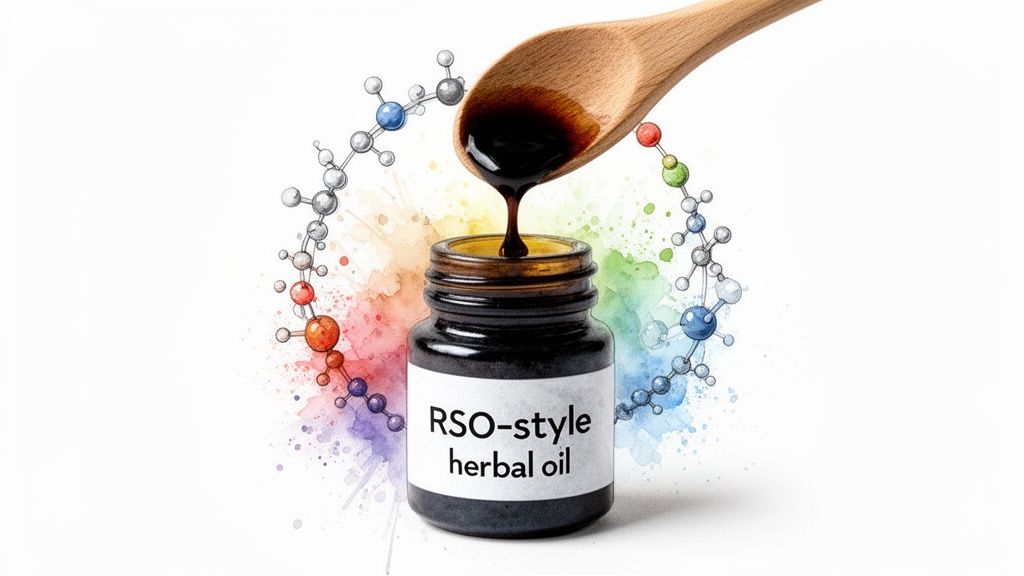
This visual below helps explain why this "whole plant" approach is so important. The various compounds in the plant—cannabinoids, terpenes, and flavonoids—work together to produce an effect that is greater than any one of them could achieve on its own.
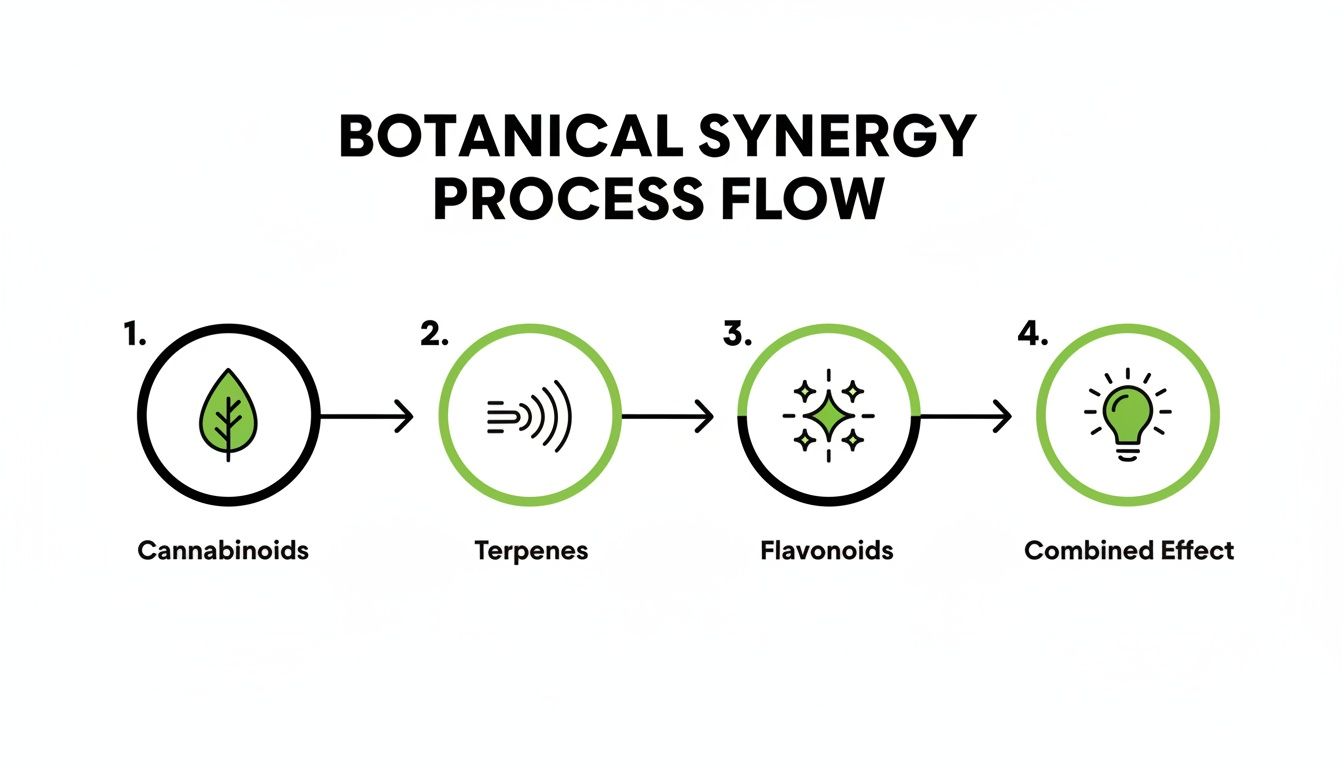
This synergy is exactly why a full-spectrum oil like RSO is so valued—you’re getting the benefit of the entire team of compounds working in concert.
Here’s a sample schedule to give you a concrete idea of what titration looks like in practice.
Beginner RSO Titration Schedule Example
This table illustrates how a new user might gradually increase their RSO intake. Remember, this is just an example—your own pace may be faster or slower. The key is to listen to your body.
| Week | Daily Dosage Goal | Administration Tip |
|---|---|---|
| 1 | A half-grain of rice per day, building to 1 full grain | Take your dose in the evening. This helps you get used to the effects while you're relaxing or sleeping. |
| 2 | Double the dose from the previous week (e.g., 2 grains) | Split your dose into two—one in the morning and one in the evening—to maintain more consistent levels in your system. |
| 3 | Double the dose again (e.g., 4 grains) | Continue splitting the dose. Pay close attention to how you feel and adjust if the effects are too strong. |
| 4 | Continue doubling until you reach your target maintenance dose | Once you find a dose that feels right, you can maintain it. Many people aim for around 1 gram per day. |
This structured approach removes the guesswork and helps you find your ideal dose safely and methodically. Always allow at least a few days at each new dosage level before increasing again.
Practical Tips for a Smooth Experience
Managing your RSO regimen gets easier with a few simple tricks. Given the oil's thick consistency and potent nature, these habits can make a big difference.
- Warm the Syringe Slightly: RSO is famously thick. Gently warming the syringe in your hands or in a cup of warm (not hot) water for a minute will make the oil flow much more easily.
- Mix with a Carrier Fat: Let's be honest, RSO has an intense, earthy taste. Mixing your dose with a fatty food like peanut butter, coconut oil, or a small piece of avocado not only makes it more palatable but can also help your body absorb it better.
- Stay Hydrated and Nourished: This might seem obvious, but it’s important. Drink plenty of water and maintain a balanced diet. Listen to your body and give it the support it needs throughout your regimen.
Finding Safe, High-Quality RSO
Knowing what RSO is and how to dose it is a great start, but it's only half the story. The other, arguably more critical half, is making sure the product you choose is safe and effective. Your health is the number one priority, which means understanding the potential side effects and, crucially, knowing how to spot high-quality RSO in a market where quality can vary.
Like any powerful concentrate, RSO can have side effects, especially when you're just starting out. They’re usually mild and tied to the high THC concentration—think dizziness, sleepiness, or just feeling a bit too "heavy." The best way to sidestep these is to take the "start low and go slow" mantra seriously. It gives your body a chance to get acquainted with the oil without feeling overwhelmed.
How to Spot the Real Deal
The burden of quality control often lands squarely on your shoulders. It's a tough spot to be in, because counterfeit or poorly made products can be more than just ineffective—they can be dangerous. To protect yourself, you have to become a savvy consumer.
A trustworthy product always comes with proof. Here are the non-negotiables you should look for before you buy:
Third-Party Lab Testing: This is the absolute most important factor. Every single batch of oil should be tested by an independent lab to verify its purity and potency. This isn't just a nice-to-have; it's a fundamental safety check.
A Complete Certificate of Analysis (COA): Don't just trust a website's claims—ask to see the actual COA. This lab report is the product's report card, breaking down its exact cannabinoid and terpene content and, just as importantly, confirming it's free of pesticides, heavy metals, and leftover solvents.
Clear Production Methods: Good producers are proud of their work. They’ll be upfront about where their cannabis comes from, which strains they use, and their exact extraction process.
Navigating the RSO world requires you to do your homework. Your health doesn't just depend on the oil, but on the integrity of the people who made it. A lack of verifiable testing is a massive red flag—one you should never ignore.
The Problem with Untested Products
The risks of using untested RSO are no joke. Without a proper lab analysis, you're flying blind and have no real idea what you're putting into your body.
Some of the biggest dangers include:
Residual Solvents: If the extraction isn't handled by an expert, solvents can be left behind in the final oil.
Wildly Inaccurate Potency: An untested product could be far weaker or stronger than you think. This makes accurate dosing a guessing game and dramatically increases the risk of uncomfortable side effects.
Hidden Contaminants: Cannabis is a bioaccumulator, meaning it sucks up whatever is in its environment—pesticides, heavy metals from the soil, mold, you name it. A good producer tests for all of it to make sure their oil is clean.
This is precisely why finding a trusted source is so critical. Here at RSOhelp.com, our entire mission is to help people make safe and informed choices. We offer resources and guidance to connect you with U.S.-based producers who meet the highest quality standards, ensuring you get authentic, lab-tested RSO you can feel confident about. When it comes to your health, you deserve that peace of mind.
Answering Your RSO Questions
It's completely normal to have a lot of questions when you're first looking into RSO. Let's tackle some of the most common ones head-on to give you the clarity you need to move forward.
How Long Does It Take for RSO to Work?
How you take RSO really dictates how quickly you'll feel it. If you're taking it orally—swallowing it directly or with food—it has to make its way through your digestive system first. Because of that, you can expect to wait anywhere from 60 to 90 minutes to feel the initial effects, with the full impact coming on even later.
Using it on your skin is a different story altogether. Topical effects are generally felt only in the area where you apply the oil, and the onset is much more gradual. It's less about an immediate feeling and more about supporting a specific area over time.
Will RSO Make Me Feel High?
Yes, absolutely. With its high concentration of THC, RSO is psychoactive, and feeling "high" is a very real part of the experience, especially at the beginning.
But here’s the key: the entire "start low and go slow" dosing protocol is designed to help your body build a tolerance. By increasing your dose slowly, you allow your system to acclimate, which helps manage the psychoactivity so it doesn't feel overwhelming. This is how people find a therapeutic dose that works for them without the side effects getting in the way. For those wanting to avoid the high entirely, suppositories are often used because that route of administration largely bypasses the psychoactive effects.
What Is the Difference Between RSO and CBD Oil?
Think of RSO and CBD oil as two entirely different tools, built for different jobs. RSO is a powerful, whole-plant extract that's known for its incredibly high THC content. People seek it out for serious, targeted therapeutic support.
The core difference comes down to their chemical makeup and what they're intended to do. RSO uses the full power of the cannabis plant, THC included, to create a potent "entourage effect." CBD oil, on the other hand, usually has little to no THC and is typically used for more general wellness. Their effects and applications aren't really in the same league.
At RSOhelp.com, we know that starting with RSO can feel like a lot to take in. Our goal is to cut through the noise with clear, trustworthy information and point you toward high-quality, lab-tested RSO. If you're looking for one-on-one guidance and want to connect with vetted producers in the U.S., check out our free consultation services. We are here to support your wellness journey every step of the way.