
When exploring the world of cannabis extracts, two terms frequently appear: full spectrum and live resin. While they are often grouped together, they are fundamentally different products. This difference comes down to one critical factor: the starting material.
Full spectrum extracts are typically made from dried and cured cannabis plants. Live resin, on the other hand, is produced using fresh, flash-frozen plant material. This single decision at the beginning of the extraction process sends these two products down completely different paths, resulting in vastly different chemical profiles and intended applications. This article is for educational purposes only and is not a substitute for professional medical advice.
Defining Full Spectrum and Live Resin Extracts
To understand the distinction between full spectrum extracts and live resin, one must begin with the state of the cannabis plant itself. This initial choice ultimately determines the final blend of cannabinoids, terpenes, and other compounds in the extract, which in turn shapes its potential effects and primary uses.
The contrast is entirely about the plant material. A full spectrum extract is made from cannabis that has been dried or cured, a process that inevitably changes the plant's original chemical signature. Live resin, by contrast, is extracted from plants that were flash-frozen immediately after harvest. This technique is designed to preserve a chemical profile that is as true to the living plant as possible.
This difference also creates a significant divide in typical potency. While some full spectrum hemp products are limited to 0.3% THC, cannabis-derived extracts like live resin can feature THC levels ranging from 45% to over 90%.
| Feature | Full Spectrum Extract | Live Resin |
|---|---|---|
| Starting Material | Dried and Cured Plants | Fresh, Flash-Frozen Plants |
| Primary Goal | Capture a wide array of cannabinoids. | Preserve volatile terpenes and fresh flavor. |
| Terpene Profile | Varies; some volatile terpenes are lost during curing. | Rich and complex; closer to the living plant. |
| Typical Cannabinoid State | Often decarboxylated (activated), especially in products like RSO. | Not always fully decarboxylated; may contain acidic cannabinoids. |
The Role of Starting Material
A full spectrum extract is designed to capture the entire suite of cannabinoids and terpenes present in the plant after it has gone through the traditional drying and curing process. This aging allows certain cannabinoids to mature or transform—for instance, THC can degrade into CBN—which creates a unique, therapeutically dense profile. If you wish to learn more about this method, you can read our guide on full spectrum THC.
Live resin takes an entirely different approach. Its main purpose is to preserve the volatile terpenes that are quickly lost during the curing phase. By flash-freezing the plant right off the stalk, extractors essentially create a "snapshot" of the living plant's aromatic and flavor profile. The result is a product celebrated for its incredibly vibrant and true-to-flower sensory experience.
How Extraction Methods Shape the Final Product
The final chemical makeup of any cannabis extract is a direct reflection of how it was made. When comparing a full spectrum extract like RSO to live resin, their differences begin long before extraction. It all comes down to the starting material and the specific goals of the process.
Full spectrum oils, including Rick Simpson Oil (RSO), begin with cannabis that has been harvested, dried, and cured. This traditional post-harvest process is a crucial step. As the plant cures, some of the most volatile aromatic compounds—the monoterpenes—naturally dissipate. This allows other cannabinoids to develop and concentrate, creating the distinct profile these extracts are known for. Solvents like food-grade ethanol or CO2 are then used to pull out this rich blend of compounds.
Live Resin: A Snapshot of the Living Plant
Live resin production is a different discipline. Instead of drying and curing, the cannabis plant is flash-frozen at extremely cold temperatures immediately after being cut down. This single step is key to the entire process, as it preserves the plant's chemical profile exactly as it was while alive.
From there, the frozen plant material is put through an extraction, which typically uses hydrocarbon solvents like butane and propane in a specialized closed-loop system. This method is exceptionally effective at capturing the fragile terpenes that would have been lost during curing. The end result is a concentrate that smells and tastes remarkably like the living plant—a chemical "snapshot" prized for its intense aroma and flavor.
This infographic clearly illustrates how the starting material for each extract sets the stage for the final product's unique characteristics.
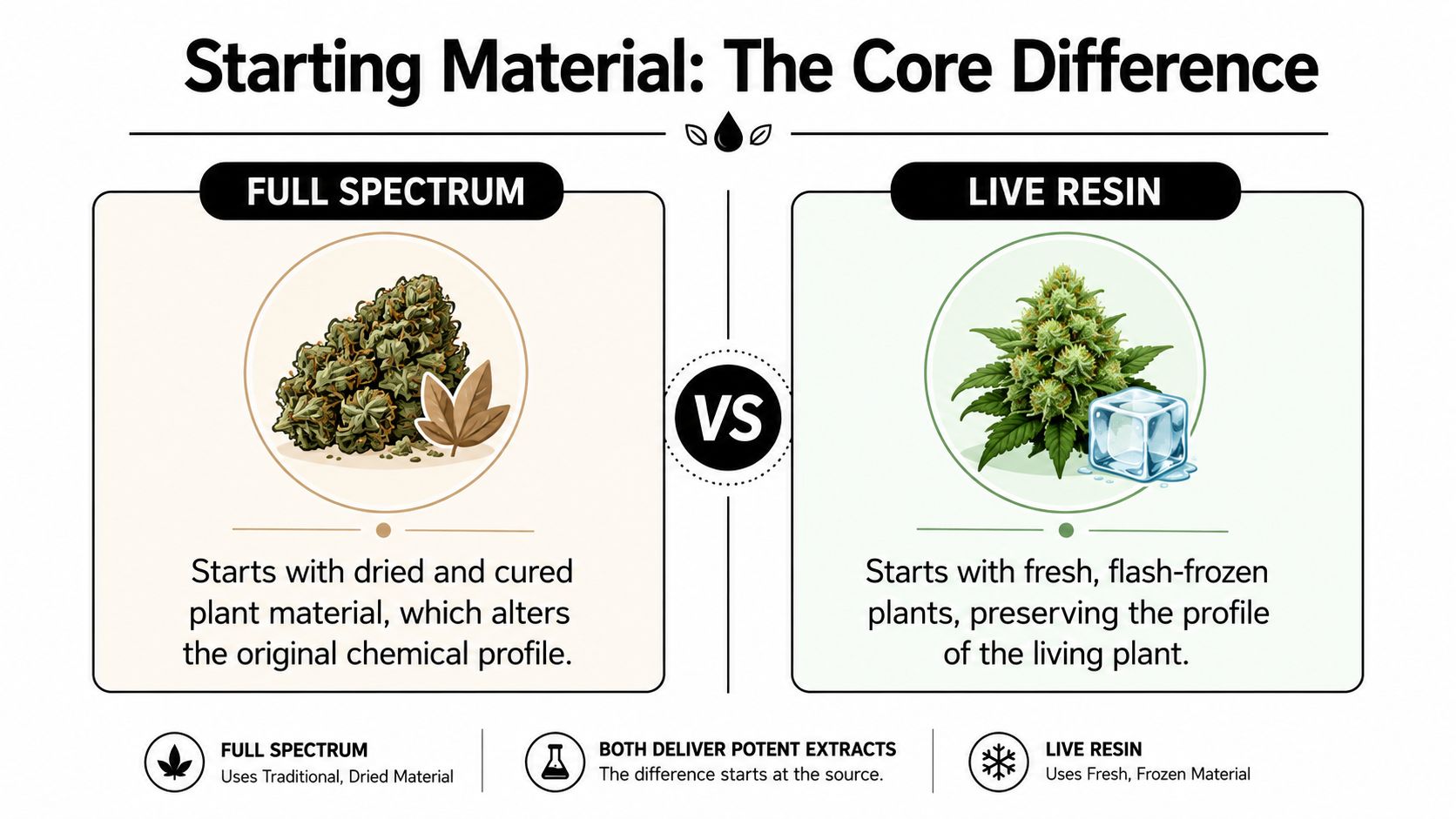
As you can see, the decision to use cured flower versus fresh-frozen material is the fundamental choice that leads to two very different types of cannabis extract.
Extraction Process and Final Profile Comparison
To fully grasp the differences, it helps to see the processes side-by-side. The following table breaks down how each step, from harvest to final oil, impacts the cannabinoid and terpene profile you end up with.
| Attribute | Full Spectrum Extract | Live Resin |
|---|---|---|
| Starting Material | Dried and cured cannabis flower and trim. | Freshly harvested cannabis plants, flash-frozen. |
| Pre-Extraction | Curing process allows for terpene loss but cannabinoid maturation. | Flash-freezing preserves the full, "living" terpene and cannabinoid profile. |
| Common Solvents | Ethanol, CO2, or other solvents. | Hydrocarbons (butane, propane) in a closed-loop system. |
| Terpene Profile | Lower concentration of volatile monoterpenes; richer in heavier sesquiterpenes. | High concentration of a wide range of volatile terpenes, creating a robust aroma. |
| Cannabinoid Profile | Contains cannabinoids that have matured or converted during curing (e.g., THC degrading to CBN). | Reflects the exact cannabinoid ratios present in the living plant at harvest. |
This comparison shows that neither process is inherently "better"—they are simply engineered to produce different outcomes. The choice depends entirely on the desired end product and its intended application.
Key Insight: Curing flower for full spectrum extracts can naturally create compounds not prominent in the living plant, like Cannabinol (CBN) from THC degradation. In contrast, flash-freezing for live resin is designed to preserve the original terpene and cannabinoid ratios with maximum fidelity.
While both full spectrum extracts and live resin are designed to deliver a wide array of plant compounds, their unique production paths ensure they excel in different ways. For a deeper dive into the technical details, you can learn more about the nuances of extracting cannabis oil. Ultimately, choosing between them comes down to the desired chemical profile and intended use.
Comparing Cannabinoid and Terpene Profiles
When analyzing a full spectrum extract versus a live resin, you are examining two different chemical philosophies. Both capture a wide array of plant compounds, but the extraction method fundamentally changes which compounds take center stage. The final profile of cannabinoids and terpenes in each is a direct result of how the plant was handled from harvest to bottle.
Full spectrum oils made from cured cannabis, like a traditional Rick Simpson Oil (RSO), are designed to maximize cannabinoid content. The purpose of drying and curing, followed by extraction, is to yield a finished product loaded with decarboxylated (or "activated") cannabinoids. This makes them suitable for oral or topical use where a dense concentration of ready-to-use compounds is desired.
Live resin, on the other hand, presents a different chemical narrative. Its primary attribute is a high concentration of preserved terpenes. By flash-freezing the plant immediately after harvest, producers lock in the volatile, aromatic compounds that would otherwise be lost during curing. This is what gives live resin its powerful fragrance and flavor, creating a distinct experience.
The Entourage Effect in Each Profile
The "entourage effect" is a useful theoretical framework for viewing these differences. The theory suggests that cannabinoids and terpenes work synergistically, creating effects greater than the sum of their individual parts. How this plays out is unique to each extract.
- Full Spectrum (RSO-Style): Here, the entourage effect is primarily driven by a robust team of activated cannabinoids like THC, CBD, CBN, and CBG. Terpenes are present, but the profile often favors the heavier, more resilient terpenes that can withstand the curing and extraction process.
- Live Resin: With live resin, the entourage effect is significantly influenced by a bright and diverse terpene profile. High levels of delicate monoterpenes—such as myrcene, limonene, and pinene—play a substantial role in modulating the overall experience.
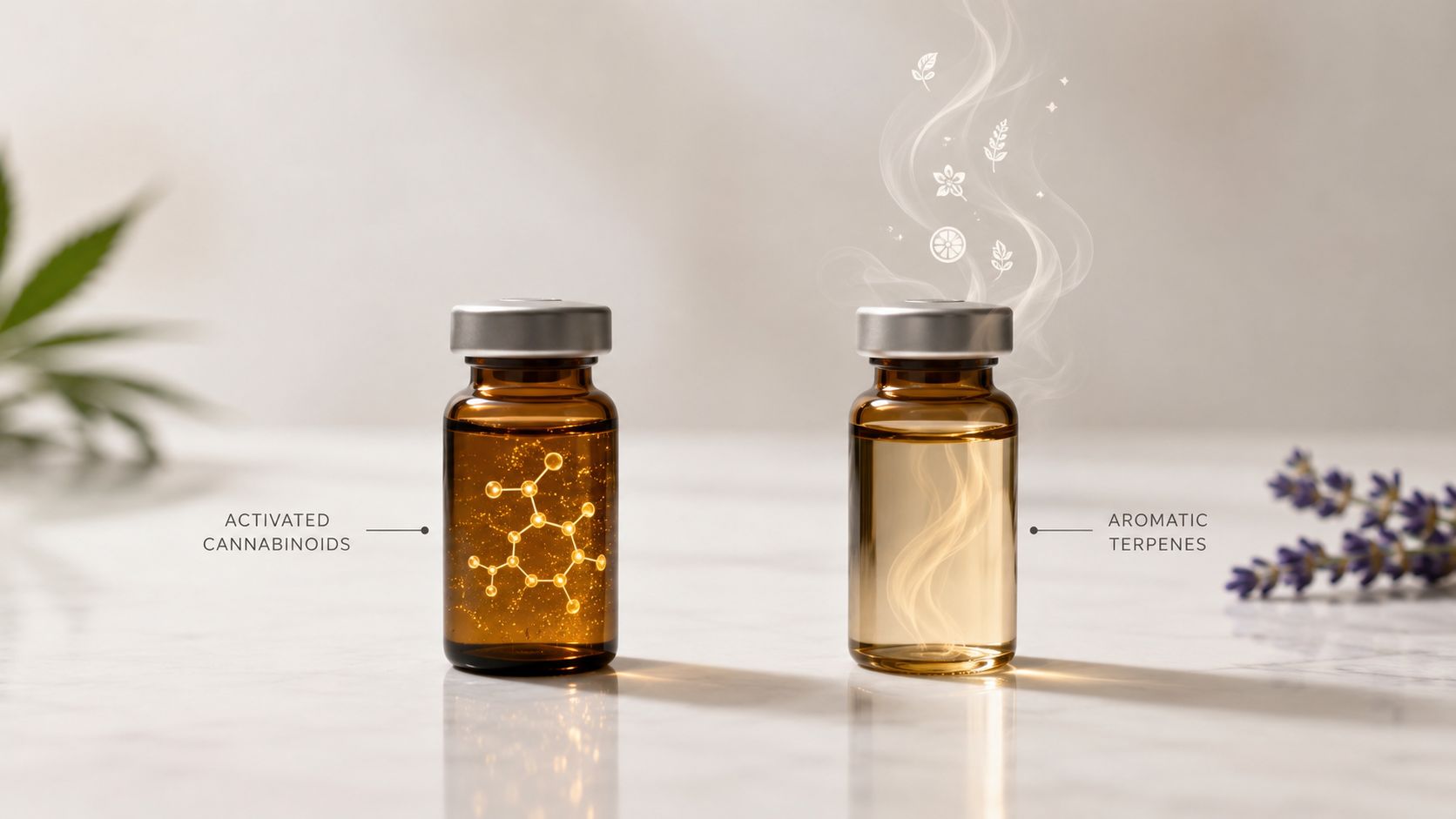
Ultimately, one is not "better" than the other; they are engineered for different purposes. One is designed for a potent cannabinoid payload, while the other is crafted for an intensely aromatic and flavorful experience.
Cannabinoid State: Why Decarboxylation Matters
The most critical distinction for many users is the state of the cannabinoids. Full spectrum extracts designed for oral use, like RSO, almost always undergo full decarboxylation. This heating step converts the raw, acidic cannabinoids (THCA and CBDA) into their active, orally bioavailable forms (THC and CBD). Without this step, they would not be as effective when ingested.
Live resin processing, by contrast, is a low-temperature affair meant to preserve terpenes. As a result, it is often not fully decarboxylated, leaving a significant portion of the cannabinoids in their acidic state. While compounds like THCA have their own unique properties, they do not provide the same effects as activated THC or CBD.
Key Takeaway: A full spectrum extract from cured plants is defined by its rich, mature, and activated cannabinoid profile. Live resin is defined by its fresh, vibrant, and volatile terpene profile. This fundamental chemical divide should guide your choice, depending on the intended use. Always consult a licensed medical professional for guidance tailored to your specific health situation.
Potency, Bioavailability, and Intended Application
When discussing the "potency" of a cannabis extract, it is common to focus on the THC percentage. However, that number only tells part of the story. True potency relates to the overall character of the effects, which are shaped by the product's entire chemical profile and how the body absorbs it.
Ultimately, the most critical factor in choosing between a full spectrum extract and live resin is the intended application.
A full spectrum oil like RSO derives its strength from a dense concentration of activated cannabinoids. It is specifically made for oral or suppository use, where a high, sustained dose of cannabinoids is the primary objective. Live resin's potency is different. It is defined by high THC levels working in concert with a vibrant terpene profile, a combination well-suited for inhalation and its rapid effects.
Bioavailability and Administration Methods
How you use a product directly impacts its bioavailability—the amount of active compounds that reach your bloodstream. This is a crucial consideration when comparing Full Spectrum vs. Live Resin.
Oral Full Spectrum Oil: When an oral full spectrum oil is ingested, it must pass through the digestive system and be processed by the liver. This "first-pass metabolism" filters out a significant portion of cannabinoids. The effects that do set in, however, tend to last much longer.
Inhaled Live Resin: Vaping or dabbing live resin sends cannabinoids and terpenes directly to the lungs, where they are absorbed into the bloodstream. This method offers high bioavailability and an almost immediate onset of effects.
Because of these fundamental differences in delivery, the two extracts are not interchangeable. One is engineered for a slow, systemic release, while the other is built for speed and short-term impact.
For anyone following a specific dosing protocol, understanding bioavailability is essential. The oral administration of RSO is a deliberate choice, valued for its prolonged, systemic effect, even though the absorption rate is technically lower than inhalation.
Matching the Extract to Your Objective
The appropriate choice depends on your primary goal. Are you seeking a flavorful, aromatic experience with immediate effects? Or are you looking for a dense, long-acting cannabinoid product for a structured health regimen?
Live resin is often preferred by those who prioritize the sensory experience of cannabis—the rich aroma and taste that evoke fresh flower. Its high terpene content and rapid onset make it a choice for managing acute symptoms that may benefit from quick relief.
A full spectrum cannabis oil, on the other hand, is designed for a completely different purpose. Its value lies in its ability to deliver a consistent, high dose of activated cannabinoids over an extended period. This focus makes it a standard for serious, long-term protocols where cannabinoid density and consistency are the primary considerations. For those navigating complex health issues, this is not a trivial distinction. It is essential to consult with a licensed medical professional to determine which approach is most appropriate. Individual results may vary.
Why RSO Is a Unique Full Spectrum Application
When discussing Full Spectrum vs. Live Resin, it is important to understand where Rick Simpson Oil (RSO) fits. RSO is a type of full-extract cannabis oil (FECO). It is made from dried and cured cannabis, which firmly places it in the full spectrum family. However, its production and intended use set it apart from most other extracts, especially live resin.
The objective of a traditional RSO protocol is to deliver a heavy, consistent, and potent dose of fully activated cannabinoids. This is accomplished through a specific method: using a solvent like food-grade ethanol to pull everything from the plant, then carefully heating the oil in a process called decarboxylation. That heating step is what converts acidic cannabinoids (like THCA) into their active forms (like THC), making them effective when taken orally.
Why Live Resin Is Not a Substitute for RSO
This is where the distinction becomes absolutely critical for users. Live resin is designed to preserve delicate, volatile terpenes. It is made from flash-frozen plants and extracted at low temperatures to capture fresh aroma and flavor. While that creates a unique sensory experience, it also means the cannabinoids often are not fully decarboxylated or "activated."
If you were to swap live resin for RSO in a structured regimen, you would be using a product with a completely different chemical makeup. You would likely miss out on the dense concentration of activated cannabinoids that RSO protocols are specifically designed to deliver.
Key Consideration: RSO is a purpose-built oil. Its creation prioritizes cannabinoid activation and density above all else. Its reported effects are based on its complete, mature, and decarboxylated profile, not its flavor or aroma.
For anyone following an established RSO protocol, substituting it with live resin is not recommended. The two oils are engineered for entirely different goals. While both are potent in their own right, RSO's specific formulation is tailored for applications where its cannabinoid profile is the main event. You can dive deeper into the nuances by reading our guide on the differences between FSO and RSO.
For those trying to understand these differences as part of a personal health strategy, professional guidance can offer a tailored discussion. It is always vital to speak with a licensed medical professional before starting any new health regimen. This article is intended for educational purposes, and individual results can and will vary. Further research is needed.
Frequently Asked Questions
Navigating the world of cannabis extracts can bring up many questions. This section addresses some of the most common inquiries regarding full spectrum extracts and live resin. The goal is to provide clarity so you can make more informed decisions. Please remember, this is for educational purposes. It is always best to consult with a licensed medical professional before starting any new health-related regimen.
Can Live Resin Be Used Instead of RSO for a Dosing Protocol?
This is a critical question, and the short answer is no, they are not considered interchangeable for this purpose. While both are potent extracts, live resin is generally not a direct substitute for RSO in a structured dosing plan.
The reason comes down to their creation and chemical profile. RSO is made from dried, cured cannabis and is fully decarboxylated—a heating process that "activates" cannabinoids like THC and CBD for oral use. Live resin is designed to preserve the volatile terpenes from fresh-frozen plants. The extraction often skips the full heating step, meaning its cannabinoids can remain in their raw, acidic forms (like THCA). Using live resin in place of RSO would mean you are using a completely different chemical profile, which would likely produce different outcomes from those associated with established RSO protocols.
Which Extract Is Considered Stronger?
"Stronger" depends on the intended effect. It is more useful to consider what each extract is strong at. Their strengths lie in different areas.
Live Resin often feels "stronger" due to its intense sensory experience. Its high concentration of terpenes delivers a powerful flavor and aroma. This, combined with high THC percentages, can lead to a rapid and potent effect, especially when vaped or dabbed.
Full Spectrum Oil (like RSO) is "stronger" in a different sense. Its strength is in the dense, broad-spectrum blend of activated cannabinoids. The potency is not based on aroma but on the combined potential of its whole, decarboxylated chemical profile. For someone seeking sustained, systemic effects from oral use, the cannabinoid density of RSO is its defining strength.
Ultimately, the perception of an extract's strength is tied directly to the user's goal.
Does Full Spectrum Oil Always Contain THC?
Yes, a true full spectrum oil will always contain some THC. By definition, it includes the complete range of cannabinoids, terpenes, and flavonoids from the original plant, and THC is a natural part of that profile. The key difference is the amount of THC, which depends on whether the plant was hemp or cannabis.
- In hemp-derived full spectrum products, THC content is legally capped at 0.3% by dry weight in some jurisdictions. This trace amount does not typically cause psychoactive effects but is considered by some researchers to be vital for the entourage effect.
- In cannabis-derived products like RSO, the THC content is much higher and is a core component of the oil's intended effect profile.
Always check the Certificate of Analysis (COA) to see the exact cannabinoid breakdown.
Why Is Lab Testing Important for Both Products?
Third-party lab testing is non-negotiable for both full spectrum and live resin extracts. A comprehensive Certificate of Analysis (COA) is the only way to truly know what is in your product and, just as importantly, what is not.
First and foremost, the COA is a safety check. It helps confirm the product is free from harmful contaminants, such as:
- Pesticides
- Heavy metals
- Residual solvents (a particular concern for solvent-based extracts like live resin)
- Mold and mildew
Beyond safety, a COA provides transparency. It gives you a precise, verified breakdown of the cannabinoid and terpene content. This data allows you to confirm a product's potency, understand its specific chemical makeup, and make decisions based on facts, not just marketing claims. Any reputable provider should make this document readily available.
At RSOhelp.com, we are dedicated to providing clear, evidence-based education to help you navigate your options safely. For families seeking personalized guidance, we invite you to schedule a consultation.