If you're reading about hash oil extractors, there's a good chance you're not looking for engineering trivia. You're probably a patient, caregiver, or family member trying to sort through confusing terms while thinking about Rick Simpson Oil, full-extract cannabis oil, or another concentrated product for therapeutic use.
That confusion is understandable. People often use the words hash oil, RSO, FECO, concentrate, extract, and butane hash oil as if they all mean the same thing. They don't. The equipment, the chemistry, and the safety profile can be very different. For someone focused on health, those differences matter far more than the marketing language.
The most important question isn't which machine looks impressive. It's whether the final oil is clean, consistent, and appropriate for therapeutic use. That means understanding how extraction works at a basic level, why some systems are much riskier than others, and why professionally produced, lab-verified oil is the responsible path.
This article is for educational purposes only. Individual results may vary. Further research is needed. Consult a licensed medical professional.
Introduction Understanding Hash Oil Extractors
A hash oil extractor is a system for separating desirable compounds from cannabis plant material. In practice, that usually means trying to collect cannabinoids such as THC and a range of other plant compounds into a concentrated oil or resin.
For patients exploring RSO dosing protocol, buy Rick Simpson Oil online safely, or questions about full-spectrum vs distillate, the extractor itself can seem like the central issue. It isn't. The extractor is only one part of the process. The larger issue is whether the method leaves behind contaminants, alters the composition in unwanted ways, or creates a product that can't be verified with proper testing.
Some extraction systems use chemical solvents such as ethanol or butane. Others use mechanical separation, relying on pressure, heat, water, ice, or filtration. Each approach changes what ends up in the final product. That matters because therapeutic users often want a full-spectrum product rather than a stripped-down distillate. Full-spectrum products aim to preserve a broader range of cannabinoids and plant compounds, while distillates are more narrowly refined.
In clinical discussions, patients also ask how these products might interact with the body. Simple receptor language can help. CB1 receptors are found heavily in the nervous system, and CB2 receptors are more associated with immune-related signaling. Researchers also study cannabinoid-related mechanisms involving apoptosis (programmed cell death), angiogenesis (blood vessel formation), and metastasis (spread of disease). That research is part of a serious integrative discussion, but it doesn't remove the need for product safety.
Practical rule: If a product is being considered for therapeutic use, purity matters as much as potency.
A final point often gets missed. The term hash oil extractor can describe both industrial equipment and improvised home setups. Those are not remotely equivalent from a safety standpoint. When readers understand that distinction, many of the most dangerous misconceptions fall away.
Solvent-Based Extraction Systems
Commercial extraction often relies on a solvent that dissolves cannabinoids and terpenes away from the plant material. The solvent carries those compounds into a liquid phase, and then trained operators remove the solvent under controlled conditions to leave behind concentrated oil.
Two solvent families appear often in patient discussions. One is ethanol, which is commonly associated with full-extract oils. The other is hydrocarbons, especially butane, which are associated with BHO. The core idea is simple even if the machinery isn't: the solvent does the pulling, and the system then has to separate that solvent back out safely.
Why closed-loop systems matter
Professional hydrocarbon extraction isn't a loose tube, a tray, and a heat source. According to Technology Networks' guide to BHO extraction, butane hash oil extraction requires a closed-loop hydrocarbon extractor system in which high-purity butane circulates through packed cannabis biomass, followed by active or passive solvent recovery. That process is designed to ensure the final extract contains less than 500 ppm residual solvent as part of industry safety standards.

Closed-loop means the solvent is contained within the extraction system rather than escaping into the room. That's important for two reasons. First, it reduces leak and ignition risk. Second, it supports controlled recovery and purification so the end product is less likely to carry unwanted solvent residue.
A simple way to picture the process:
- Plant material is prepared so the solvent can contact it efficiently.
- The solvent passes through the biomass and dissolves target compounds.
- Plant solids are separated from the cannabinoid-rich solution.
- The solvent is recovered under controlled conditions.
- The concentrated oil is further refined or tested before packaging.
Readers who want a broader educational overview of extracting cannabis oil can compare these concepts with other methods, but the key point remains the same. Solvent-based extraction only becomes remotely appropriate for therapeutic products when professional containment, solvent recovery, and batch testing are in place.
Why this matters for patients
For a non-specialist, the machine can look like a technical detail. It isn't. The extractor determines whether there is meaningful control over contamination, consistency, and purification.
That matters for oral products as well. Many people using RSO take it by mouth, where first-pass metabolism in the liver changes how cannabinoids are processed before they reach the bloodstream. Because absorption is already variable, introducing an unverified extract adds another layer of uncertainty. In a therapeutic setting, uncertainty is the opposite of what you want.
Solventless Extraction Methods
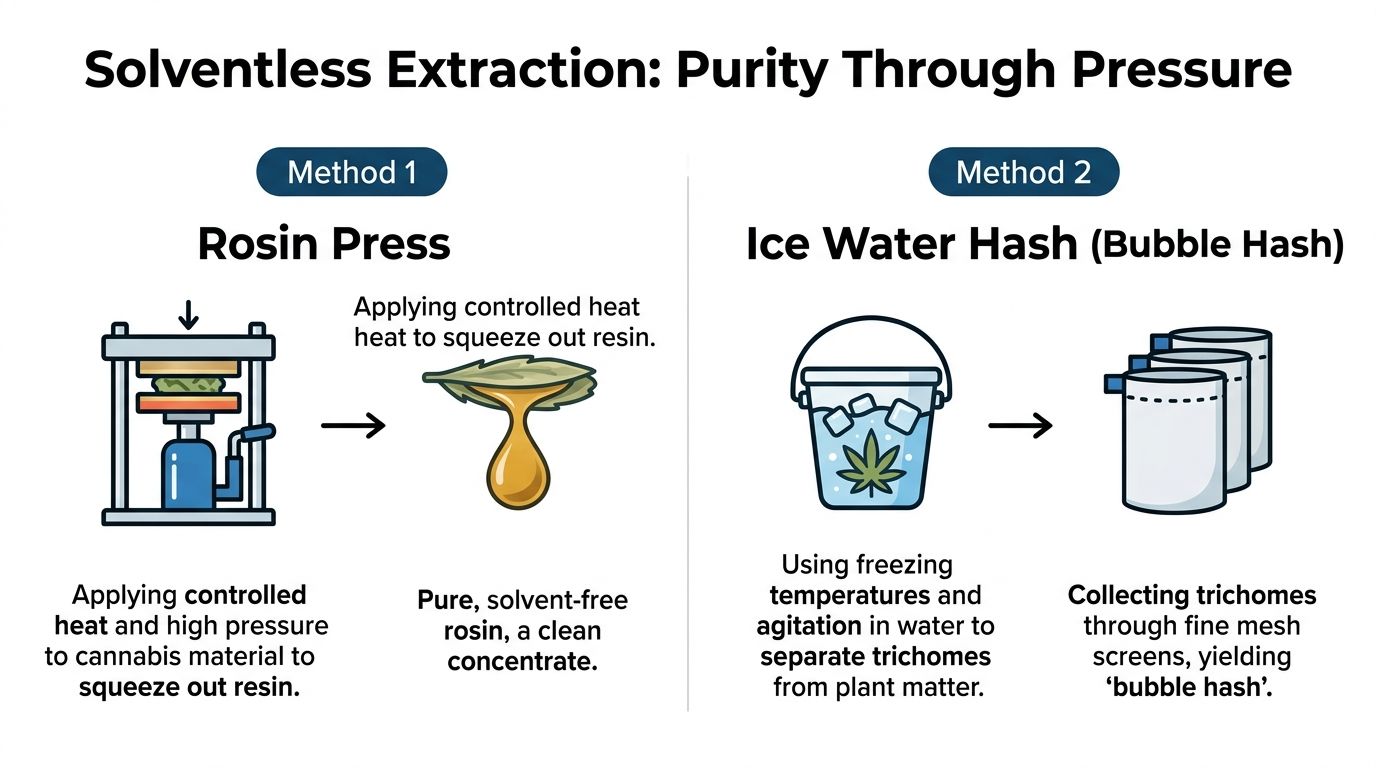
Not all hash oil extractors rely on chemical solvents. Solventless extraction uses physical separation instead. That usually means either squeezing resin out with controlled heat and pressure, or separating trichomes from plant matter with cold water, ice, and filtration.
This difference is important because patients often hear "extracted" and assume solvents were automatically involved. That's not always true. In solventless systems, the goal is to isolate resin mechanically rather than dissolve it chemically.
Rosin press and ice water hash
A rosin press uses pressure and heat to force resin from cannabis flower, sift, or hash. No butane or ethanol is involved. The result is a solvent-free concentrate, often valued for a clean profile and relatively direct processing.
Ice water extraction works differently. According to Making.com's overview of THC extraction, the machine used for solventless mechanical separation agitates biomass with water and ice, physically separating cannabinoid-rich trichomes from plant material without chemical solvents. The same source explains that this process preserves the full-spectrum terpene profile and relies on screens typically in the 73 to 110 micron range, with properly performed extracts achieving THCA concentrations exceeding 60%.
That sounds technical, but the principle is straightforward. Cold makes trichomes brittle. Agitation knocks them loose. Fine screens catch the desirable resin while letting much of the plant debris pass through or remain separated.
Strengths and tradeoffs
For patients and caregivers, solventless methods have one obvious appeal. They don't carry the same residual chemical solvent concern as hydrocarbon or solvent-heavy systems. That's a real advantage in a health-focused discussion.
Still, solventless doesn't automatically mean medically appropriate. Product quality still depends on clean starting material, careful handling, and proper storage. If the biomass carries mold, pesticides, or other contamination, changing the extraction category doesn't solve that problem.
A practical comparison helps:
| Method | Main separation approach | Main safety advantage | Main limitation for therapeutic use |
|---|---|---|---|
| Rosin press | Heat and pressure | No chemical solvent in the process | Can vary in consistency and composition |
| Ice water hash | Cold water, ice, agitation, screens | No residual solvent issue from extraction | Requires strong process control for cleanliness |
| Solvent-based systems | Chemical dissolution and recovery | Can produce very concentrated full extracts when done professionally | Requires rigorous purging and testing |
Solventless methods reduce one category of risk. They don't remove the need for verification.
For readers researching multi-strain RSO oil or comparing concentrated products, confusion often arises. Solventless concentrates can be excellent products. They are not identical to RSO or FECO, and they shouldn't be treated as interchangeable without understanding the intended use.
Evaluating Extraction Methods for Therapeutic RSO
For therapeutic use, the question isn't which extraction style wins in the abstract. The question is which method produces an oil that is full-spectrum, consistent, and verifiably clean. That's the standard patients should care about.
Traditional RSO is a full-spectrum, unrefined cannabis extract. According to Commencement Bay Cannabis' RSO guide, RSO typically ranges between 60% and 90% THC and has a thick, tar-like consistency because the process pulls cannabinoids, terpenes, and flavonoids from the whole plant using a solvent such as ethanol or naphtha followed by purging. That profile is one reason many patients seeking a fuller extract compare RSO vs edibles or ask whether full-extract oils differ from more refined concentrates.
Full-spectrum goals and practical limits
If the therapeutic goal is a broad extract, solvent-based methods have historically been central because they can pull a wide set of compounds from the plant. That's one reason FECO and RSO discussions often center on ethanol-style extraction rather than rosin or sift.
At the same time, a broad extract isn't automatically a good extract. It can also carry waxes, unwanted residues, or contaminants if the process isn't controlled. Potency alone doesn't answer the quality question.
This matters especially in serious health conversations that mention the blood-brain barrier, receptor signaling, or preclinical work on apoptosis and angiogenesis. Those mechanisms may be part of an evidence-aware conversation, especially in a case review or integrative discussion, but none of them justify using unverified oil. A poorly made extract doesn't become appropriate because the topic is medically serious.
Why comparison has to include contamination risk
Here is the cleaner way to evaluate common approaches for therapeutic oil:
- Solvent-based professional extraction can support true full-extract products when purification and testing are rigorous.
- Solventless concentrates avoid residual solvent concerns, but they may not replicate the composition or dosing behavior of classic RSO.
- Home methods of any kind introduce uncertainty that therapeutic users can't easily measure.
A second factor is dosing consistency. Some patients use concentrated oil orally, while others ask about sublingual use or RSO suppositories. Route matters because it changes onset and metabolism. With oral use, first-pass metabolism can make effects slower and less predictable. With sublingual use, some absorption occurs more directly into the bloodstream. According to Green Goods' RSO education page, a small sublingual dose approximately the size of a grain of rice is described as about 0.5 mg THC, held under the tongue for 30 to 60 seconds, with effects often beginning within 15 to 45 minutes. Those figures underscore why consistency matters. If the oil itself is inconsistent, dose planning becomes much harder.
Clinical takeaway: The best extraction method for therapeutic use isn't the most dramatic one. It's the one that produces a predictable oil with documented purity.
For patients asking whether full-spectrum is always better than distillate, the answer depends on the use case. Full-spectrum products may preserve a broader cannabinoid and terpene profile. Distillates are more refined and narrower. Neither category should be chosen without considering testing, intended route, and medical oversight.
The Critical Dangers of DIY Hash Oil Extraction
The largest gap in public understanding isn't how extraction works. It's how dangerous amateur extraction can become, both immediately and in the final product.
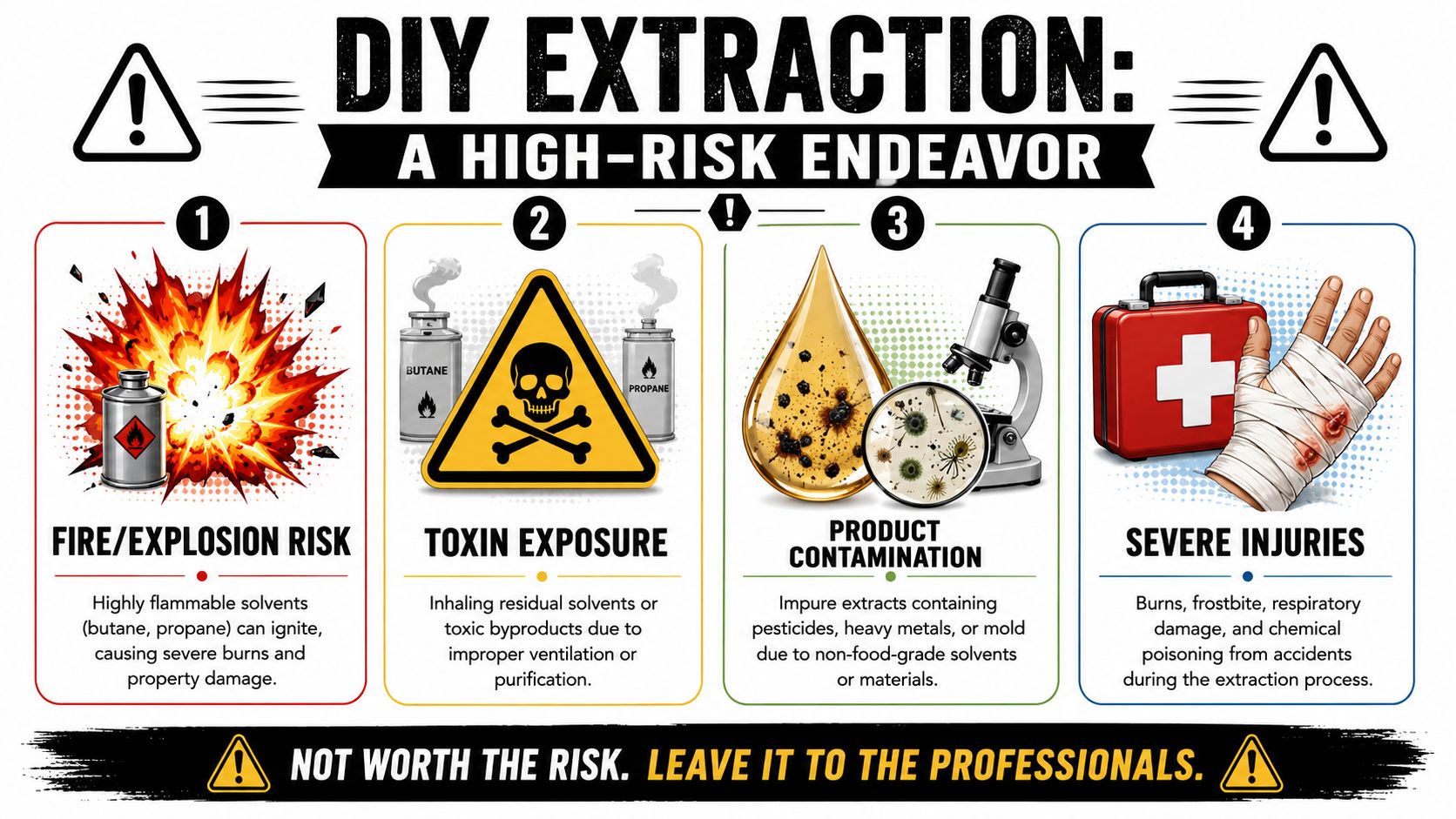
Home discussions often focus on yield, potency, or convenience. That framing misses the actual hazard. Volatile solvents can ignite. Improper purging can leave chemical residues in the oil. And people seeking therapeutic products may then inhale or ingest material that was never professionally evaluated.
Explosion and fire risk
The clearest danger comes from butane. It is highly flammable and volatile. In an unventilated room, garage, shed, or improvised workspace, vapor accumulation can turn a mistake into an explosion.
A documented example shows how serious that risk can be. In May 2019, a DEA-led operation in San Diego dismantled an illegal BHO extraction lab that was 15 times larger than a previous BHO lab tied to a deadly explosion. The seized equipment was capable of producing about 25 pounds of hash oil per cycle, with an estimated street value of $454,000 per cycle, according to the DEA press release on the San Diego BHO lab operation. Those details are extreme, but the lesson is simple. Unregulated extraction can scale into a public safety threat very quickly.
For readers trying to understand the wider context around extract hemp oil, the practical message is the same across plant types. Solvent handling is not a casual kitchen process.
To see how these risks are discussed visually, this short video offers a general illustration of the problem.
The hidden risk of residual solvents
Fire risk is visible. Residual solvent exposure is not. That makes it easier to underestimate.
The verified data on this point is troubling. Amateur purging methods often fail to remove 15% to 20% of residual butane, leading to inhalation of toxic impurities. Separate NIH-cited language notes that "a portion of butane used likely remains within the product" depending on producer skill and environmental conditions. For a healthy recreational user, that would already be concerning. For a medically vulnerable patient, it's harder to justify.
A home producer also can't reliably confirm what else is present. If the starting material carries pesticides, heavy metals, or microbial contamination, concentration can make that problem worse rather than better.
A short risk summary is useful here:
- Immediate physical harm can come from ignition, burns, frostbite, or chemical exposure.
- Invisible product risk can come from residual solvents that remain after poor purging.
- Therapeutic uncertainty increases when the cannabinoid profile and contaminants are unknown.
- Household exposure becomes a concern when caregivers, children, or other family members share the same space.
If a patient needs oil for serious symptom management, the answer can't be "probably purged enough."
Recommended Alternatives to Home Extraction
Once DIY extraction is off the table, the next question is more productive. How do you identify a therapeutic product that has been prepared responsibly?
The safest path is to obtain professionally produced oil that includes batch-specific lab verification. For readers focused on buy Rick Simpson Oil online safely or comparing RSO oil price against quality markers, this is the initial step in their decision-making process.
What to look for in a trustworthy product
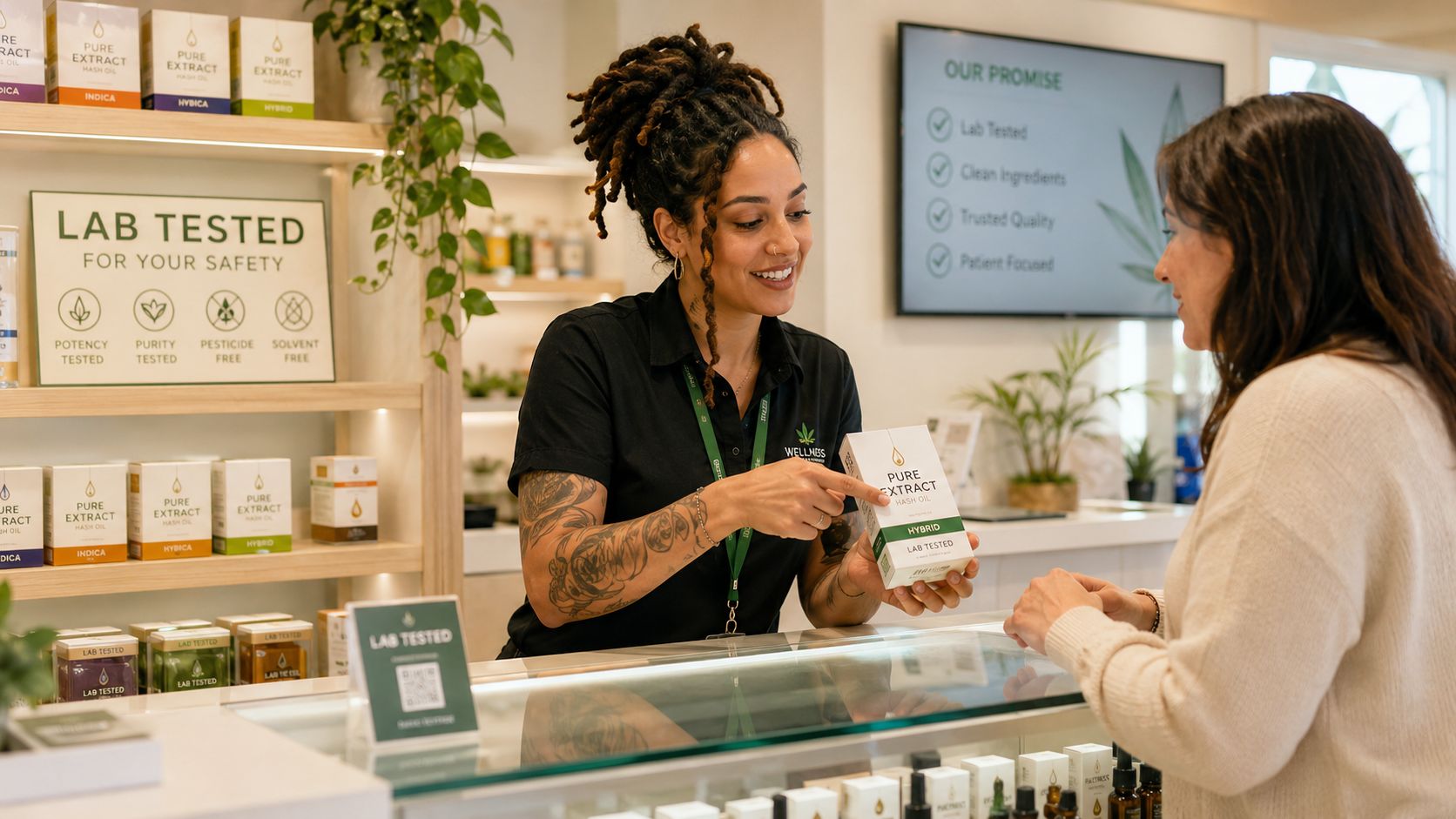
A trustworthy RSO product should include a Certificate of Analysis, often called a COA. According to Try CannaVine's explanation of what makes an RSO product trustworthy, an independent third-party lab COA verifies that the product passed state-mandated tests for purity and safety, including residual solvent testing showing that no unsafe solvent residues remain from ethanol or naphtha extraction.
That document matters more than branding or anecdotal praise. A COA gives patients something objective to review. It can confirm potency and help identify whether the product was screened for contaminants relevant to therapeutic use.
When reviewing options for buying hash oil safely, pay attention to whether the seller provides current, readable lab documentation rather than vague assurances.
A practical checklist for patients and caregivers
Use a simple screening process:
- Ask for the COA first: If the seller can't provide batch-specific third-party testing, that's enough reason to walk away.
- Check residual solvent results: This is especially important for oils made with ethanol or hydrocarbon-related processes.
- Review cannabinoid profile: Patients using an adjunctive approach often need consistency, not just a high THC headline.
- Look for contaminant screening: A serious therapeutic product shouldn't leave questions about purity unanswered.
- Discuss route and dosing with a clinician: Oral, sublingual, and other forms can behave differently in the body.
Another important point is legal and regional variation. In Ohio, for example, Main Street Health's RSO guide notes that extract products legally cannot exceed 70% THC, and most RSO naturally falls within the 50% to 70% THC range there, with residual solvent testing remaining essential. That kind of variation is one more reason patients shouldn't rely on assumptions based on labels alone.
Why professional sourcing fits therapeutic use
Patients managing complex illness don't need extraction adventures. They need products with a stable profile, tested purity, and enough transparency to support informed conversations with care teams.
This is also the point where evidence-aware restraint matters. Preclinical research suggests cannabinoids may interact with pathways related to apoptosis, angiogenesis, and metastasis. Those are serious areas of study. But therapeutic discussions should stay grounded. A lab-verified oil can support an integrative discussion with a clinician. A homemade extract usually can't.
Conclusion Making an Informed Safety-First Decision
Understanding hash oil extractors helps you ask better questions, but it shouldn't push you toward making oil at home. For therapeutic use, the extractor itself matters less than the final result: an oil that is full-spectrum when appropriate, consistently prepared, and independently verified for safety.
DIY extraction introduces risks that are hard to see until something goes wrong. Some are immediate, such as fire or chemical exposure. Others are quieter, such as residual solvents or inconsistent composition. Neither belongs in a serious health plan.
For patients and caregivers considering Rick Simpson Oil for cancer, symptom support, or another adjunctive approach, the responsible choice is professionally produced, lab-tested oil reviewed alongside licensed medical care. Individual results may vary. Further research is needed. Consult a licensed medical professional.
Frequently Asked Questions About Cannabis Extraction
Is hash oil the same thing as RSO
No. Hash oil is a broad term for concentrated cannabis extracts. RSO is a specific type of full-spectrum, unrefined cannabis oil associated with solvent extraction and a thick, tar-like texture. Some concentrates are highly refined and narrow in composition, while RSO is generally discussed as a fuller extract.
Why are hash oil extractors risky for home use
The main issue is control. Home setups often can't contain volatile solvents safely or verify that purging was adequate. That creates risks of fire, explosion, and chemical residue in the final product.
Does solventless always mean better for therapeutic use
Not automatically. Solventless products avoid residual chemical solvent concerns from the extraction step, which is valuable. But therapeutic suitability still depends on clean source material, proper handling, storage, and reliable testing.
What should a patient check before buying RSO
Start with the COA. Then review potency, residual solvent results, and broader contaminant screening. If the seller can't show independent third-party testing, that's a serious warning sign.
How do full-spectrum and distillate differ
A full-spectrum product aims to preserve a wider range of cannabinoids and plant compounds. A distillate is more selectively refined. Some patients prefer full-spectrum products for a broader profile, but the right choice depends on the use case, route of administration, and medical guidance.
Can RSO be used with conventional treatment
That decision belongs in a medical conversation. An evidence-aware approach doesn't treat cannabis as a replacement for oncology or other standard care. It treats it as a topic for careful review, especially when patients are considering symptom support or an adjunctive approach.
| Question | Short answer |
|---|---|
| Are all hash oil extractors the same | No. Solvent-based and solventless systems work very differently |
| Is DIY extraction appropriate for patients | It isn't a responsible option for therapeutic use |
| What's the most important buying criterion | Independent third-party lab verification |
| Does higher potency mean safer or better | No. Purity and consistency matter just as much |
| Should patients self-manage without medical input | No. Consult a licensed medical professional |
Patients and caregivers who want a calmer, evidence-informed place to learn about RSO, dosing, safe sourcing, and lab-tested product selection can visit RickSimpsonOil.info. The site focuses on practical education, health-first decision-making, and confidential guidance for people trying to manage complex choices responsibly.