If you've spent any time in a pet store or browsing online forums recently, you've probably seen pet hemp oil pop up. It’s quickly becoming a go-to for owners looking for a natural way to support their furry family members' health and happiness.
But what is it, really? Think of it less like a medicine and more like a supplement that works with your pet’s own body to find balance. It's specifically made for animals and is completely non-psychoactive, meaning it won't get them "high." Instead, the goal is to help manage common issues and just give their overall vitality a gentle boost.
Understanding Pet Hemp Oil and Its Role in Wellness
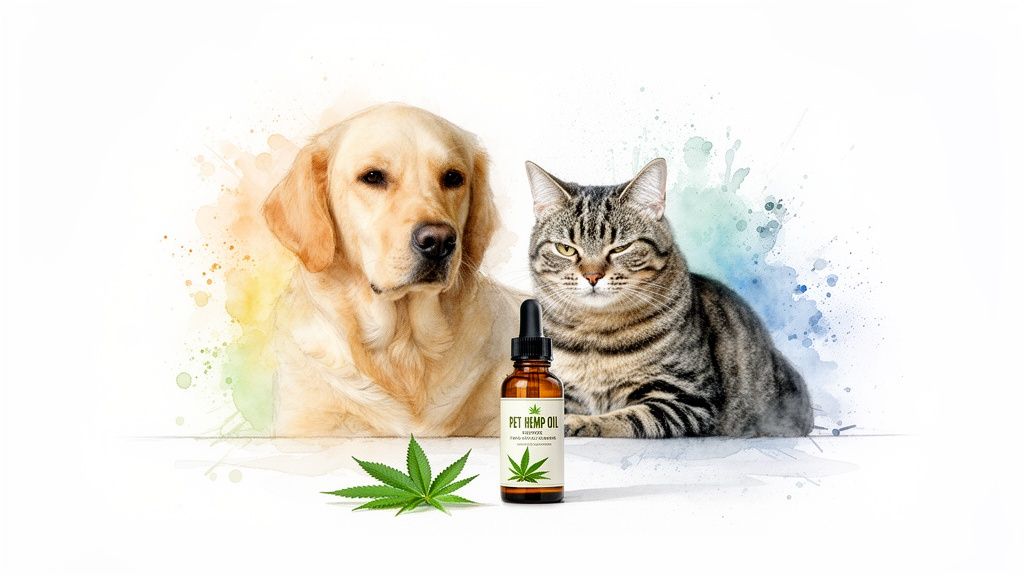
Let's face it, our pets aren't just animals living in our houses anymore. They're family. That fundamental shift in how we view them has completely changed the game for pet care. We're no longer satisfied with the old standards; we want natural, gentle, and effective ways to keep them healthy.
This is exactly where pet hemp oil comes into the picture. It aligns perfectly with the growing desire for plant-based wellness solutions that work with a pet’s body, not against it. It’s about supporting their innate ability to stay balanced and well.
The Rise of Natural Pet Wellness
This isn't just a niche trend—it's a movement. The numbers tell the story: the global pet CBD oil market, valued at USD 331.0 million, is expected to skyrocket to USD 3,939.1 million by 2033. That explosive growth is driven by pet parents like you, who are hearing more and more about its potential to help with everything from calming a nervous dog to soothing an older cat's stiff joints. You can dive deeper into the findings on the growing pet CBD market to see the full scope.
Our goal with this guide is to cut through the noise and give you a clear, responsible look at pet hemp oil. We want to arm you with the information you need to make smart choices that always put your pet's safety and well-being first. We'll cover it all, from the basic "what is it?" to choosing a quality product and using it the right way.
At its core, pet hemp oil is about providing supportive care. It's an approach that respects the animal's natural systems, aiming to enhance quality of life through balance rather than intervention.
Setting Expectations for This Guide
The world of hemp products can feel like a maze of confusing terms and conflicting information. It doesn't have to be. We're going to break it all down in a simple, straightforward way.
Here’s what you can expect to learn:
- Key Differences: We'll clearly explain how pet hemp oil is different from other cannabis-derived products, so you can easily tell the safe options from the unsuitable ones.
- Potential Benefits: We’ll walk through the most common reasons people use it, like promoting a sense of calm or supporting mobility in senior pets.
- Safety and Dosing: You'll get practical advice on how to give your pet hemp oil safely and effectively.
- Product Selection: We’ll give you a simple checklist to help you spot high-quality, trustworthy brands in a crowded market.
By the end, you'll feel confident enough to explore pet hemp oil as a potential part of your pet's wellness routine—always with the guidance of your veterinarian, of course.
Comparing Pet Hemp Oil to Other Cannabis Products
When you first start looking into wellness options for your pet, the jargon can feel like a different language. Terms like "hemp oil," "CBD oil," and "hemp seed oil" get thrown around almost interchangeably, but they are worlds apart in what they do. Getting them straight isn't just a good idea—it's absolutely critical for your pet's safety.
The real difference comes down to two things: which part of the plant is used and what compounds are actually in the bottle. This simple distinction determines the product's purpose, how it will affect your pet, and whether it’s safe. Giving your pet a product meant for humans, or even just the wrong type of hemp product, can unfortunately lead to serious trouble.
Pet Hemp Oil Versus Hemp Seed Oil
This is one of the most common mix-ups. Many well-intentioned pet owners grab a bottle of hemp seed oil from the shelf, thinking it’s the same thing as the pet hemp oil they've heard about. While they both originate from the hemp plant, their purpose and contents couldn't be more different.
Hemp seed oil is just that—oil pressed from the seeds of the plant. It's a fantastic nutritional supplement, loaded with healthy omega-3 and omega-6 fatty acids. But here’s the key: it contains virtually no cannabinoids. Think of it as a superfood, like adding flaxseed or fish oil to your pet's diet. It’s great for promoting a shiny coat and healthy skin, but it won't do anything for calming nerves or soothing achy joints.
Pet hemp oil, on the other hand, is an extract made from the plant's flowers, leaves, and stalks. This is where all the beneficial cannabinoids (like CBD) and aromatic terpenes live. This type of oil is specifically designed to work with your pet’s endocannabinoid system, helping to support balance, well-being, and a sense of calm.
The most critical takeaway is this: Hemp seed oil provides nutrition, while pet hemp oil provides support for the body's internal balancing systems. They are not interchangeable.
Why Human Cannabis Products Are Unsafe for Pets
It’s tempting to think you could just share your own cannabis products with your furry friend, but this is an incredibly dangerous path to go down. Products made for people, especially anything with significant amounts of THC, can be downright toxic to animals.
Here’s why: dogs and cats have a much higher number of cannabinoid receptors in their brains compared to humans. This biological difference makes them profoundly more sensitive to THC's psychoactive effects. What might be a mild dose for a person can cause a terrifying and harmful reaction in a pet.
For a closer look at how some potent extracts are sometimes adapted for animal use under very strict veterinary supervision, you can read our detailed guide on RSO for dogs and pets. But it must be stressed, this is absolutely not a do-it-yourself situation and always requires professional guidance.
Understanding Different Oils for Pet Safety
To make a truly informed choice, you have to know what you’re looking at. This table highlights the crucial differences between pet hemp oil, hemp seed oil, and other extracts to help you choose the safest option for your companion.
| Oil Type | Primary Compounds | Main Use for Pets | THC Content | Safety Note |
|---|---|---|---|---|
| Pet Hemp Oil (Broad-Spectrum) | Cannabinoids (like CBD), Terpenes | Supports calm, joint health, and overall wellness. | Non-detectable (0.0%) | Formulated for pet safety and is non-psychoactive. |
| Hemp Seed Oil | Omega Fatty Acids, Vitamins | Nutritional supplement for skin and coat health. | None | Considered a food product; does not provide cannabinoid support. |
| High-Potency Full-Spectrum Extracts (Human-Grade) | High levels of THC, CBD, and other cannabinoids. | Intended for human therapeutic use. | High (often >20%) | Extremely dangerous for pets. Can cause toxicity and severe adverse reactions. |
This comparison makes it clear why sticking with a product specifically formulated for pets is the only responsible path. A quality pet hemp oil is crafted with your pet's unique body and sensitivities in mind, delivering the wellness benefits you’re looking for without the risks of THC. Anything else is a gamble you should never take with your companion's health.
How Pet Hemp Oil Can Support Your Companion's Health
When you're looking for ways to help your pet feel their best, you've likely come across pet hemp oil. People are drawn to it for a simple, heartfelt reason: they want to see their companions comfortable, happy, and living life to the fullest. This natural supplement isn't a magic bullet, but it works with your pet's body to help maintain balance, offering support for some of the most common challenges our furry friends face.
So, how does it work? It all comes down to the endocannabinoid system (ECS), a complex network of signals and receptors found in pretty much all mammals—including your dog or cat. Think of the ECS as your pet's internal regulator, constantly working behind the scenes to keep things like mood, comfort, and immune responses on an even keel. The compounds in hemp oil simply give this system a helping hand, allowing it to do its job more effectively.
This supportive role is why so many pet owners notice positive changes. It's not a cure, but a tool that partners with your pet’s natural biology to promote overall well-being. By enhancing the body's own ability to find and maintain balance, hemp oil can be a powerful addition to a holistic care plan.
Supporting Joint Mobility and Comfort
It's tough watching a beloved pet slow down. The stiff joints, the hesitation before a jump, the shorter walks—these are signs of aging that can be heartbreaking. This is easily one of the most common reasons owners first start exploring pet hemp oil. The hope is to support their comfort and help them move with a little more freedom, so they can enjoy their golden years.
The compounds in hemp oil can help soothe the occasional aches and stiffness that come with a long, active life. By supporting a healthy inflammatory response, the oil can contribute to better joint function and overall physical wellness. This is a game-changer for older pets and even active, younger breeds who could use a little extra support to stay limber.
In fact, this is such a common use that it's driving the entire market. Applications for joint pain relief have claimed the largest share of revenue for pet hemp oil products, as a growing population of senior pets fuels the demand for natural support. The market is projected to skyrocket from USD 302.50 million to an incredible USD 2,227.58 million by 2034. You can dig deeper into the growth of the global pet CBD market and see what's behind this trend.
By helping manage discomfort, pet hemp oil can dramatically improve an animal's quality of life. The goal is to see them moving more freely—playing, walking, and engaging with the family just like they used to.
Promoting Calm During Stressful Events
The sudden crash of thunder or the pop of fireworks can send even the bravest dog into a panic. Other everyday events, like car rides, vet visits, or even just being left alone, can be major sources of stress. As an owner, it's awful to watch your companion tremble, pant, or hide in fear, feeling like there's nothing you can do.
This is another area where pet hemp oil can offer some gentle, steadying support. It works with brain receptors that influence mood and anxiety, helping to promote a sense of calm without making your pet drowsy or loopy. It doesn’t sedate them; it just helps them cope better with whatever is causing them stress.
Giving your pet a dose of hemp oil before a known trigger can make a huge difference.
- Before a thunderstorm: Administering the oil about an hour before a storm is expected can help your pet stay more relaxed.
- For separation anxiety: Using it as part of a consistent daily routine can help take the edge off the stress of being alone.
- Leading up to a vet visit: A dose beforehand can make the experience less traumatic for everyone involved.
The idea is simply to help your pet feel more secure and less overwhelmed by their surroundings.
Maintaining Overall Vitality and Wellness
Beyond specific issues like joint stiffness or situational stress, many people use pet hemp oil as a daily supplement to support their pet's overall health. It's a lot like how we might take a multivitamin. By supporting the endocannabinoid system, you're helping to maintain a system that plays a role in nearly every aspect of health.
Consistent use can contribute to a healthy immune response, support good digestive function, and even promote healthy skin and a shiny coat. It's a proactive way to invest in your pet's long-term health from the inside out. By helping their body maintain its natural equilibrium day in and day out, you're supporting their vitality for years to come.
A Practical Guide to Safe Dosing and Administration
Figuring out the right way to give your pet hemp oil can feel like a big responsibility. The most important thing to remember is that there's no single "correct" dose. Every animal is an individual, and their needs will vary based on their size, metabolism, and overall health.
That's why your very first step—before you even open the bottle—should be a chat with your veterinarian. They have the full picture of your pet's health history and can offer personalized advice to get you started safely and effectively. Think of your vet as your most trusted partner on this journey.
The Golden Rule: Start Low and Go Slow
If there’s one piece of advice to take away, it’s this: start low and go slow. This simple mantra is the key to safely introducing pet hemp oil. It minimizes the risk of giving too much and gives you the chance to see exactly how your pet responds. You’re patiently trying to find that “sweet spot” where they get the support they need without any unwanted effects.
It’s a bit like tuning a guitar. You don’t just crank the knobs randomly. You make small, careful adjustments until you hit the perfect note. Dosing hemp oil is the same—it’s a gradual process of finding what works best for your pet.
Your goal is not to give the most oil, but the least amount necessary to achieve the desired support. This conservative approach is the safest and most effective way to begin.
This simple infographic illustrates the core areas where pet wellness can be supported through a balanced approach.
This process visualizes how supporting mobility, calm, and vitality are interconnected steps in promoting your pet's overall well-being.
A Step-by-Step Titration Example
The fancy word for this gradual increase is "titration." All it means is adjusting the dose in small, planned steps over time. This lets your pet’s body get used to the oil and helps you pinpoint their ideal amount with real precision.
Let’s walk through a practical example for a medium-sized dog:
- Week 1 (The Introduction): Start with a tiny amount, maybe just one or two drops once a day. This isn't about seeing results yet; it's just about introducing the oil to their system.
- Week 2 (Observe and Adjust): If your pet seems perfectly fine with the starting dose, you can bump it up to one or two drops twice a day (morning and evening).
- Week 3 (Slow and Steady Increase): If you feel they need more support, you can now slowly add one drop every few days. The trick is to only make one small change at a time and then wait several days to see how they do before adjusting again.
- Ongoing (Finding Maintenance): Once you see the positive changes you were hoping for—maybe they seem more comfortable on their daily walk or less anxious during a thunderstorm—you’ve found their maintenance dose. There’s no reason to increase it further.
Methods of Administration
How you give the oil can make a difference in how quickly it works and, frankly, how easy your life is. Each method has its own benefits.
- Directly in the Mouth: For the fastest absorption, you can place the drops under your pet’s tongue or on their gums. The oil gets absorbed directly into the bloodstream through the mucous membranes in the mouth.
- Mixed with Food or Treats: This is usually the easiest, no-fuss option. Just add the drops to their favorite meal or a high-value treat. The only trade-off is that it might take a little longer to kick in since it has to go through the digestive system first.
- Applied to a Paw: This is a great trick, especially for picky cats. Put a drop on top of their paw, and their natural grooming instinct will take care of the rest.
Signs to Watch For
Part of the "start low, go slow" philosophy involves being a good observer. You need to know what to look for if the dose is a bit too high. While pet hemp oil is typically very well-tolerated, giving too much can cause some mild, temporary side effects.
Keep an eye out for these signs:
- Lethargy or Drowsiness: Your pet might seem unusually sleepy or just less interested in their usual activities.
- Upset Stomach: This can show up as loose stools or a temporary lack of appetite.
- Increased Thirst: You might notice they're spending more time at the water bowl than usual.
If you spot any of these, don't worry. It's just a signal to dial the dose back to the last amount that they handled well. These effects almost always disappear quickly once the dose is lowered.
How to Choose a High-Quality Pet Hemp Oil
As pet hemp oil has become more popular, the market has been flooded with options. This can make it incredibly tough to tell a quality product from a questionable one. As a pet owner, the best thing you can do is learn how to spot the difference yourself, looking past flashy marketing to find real proof of a product’s worth.
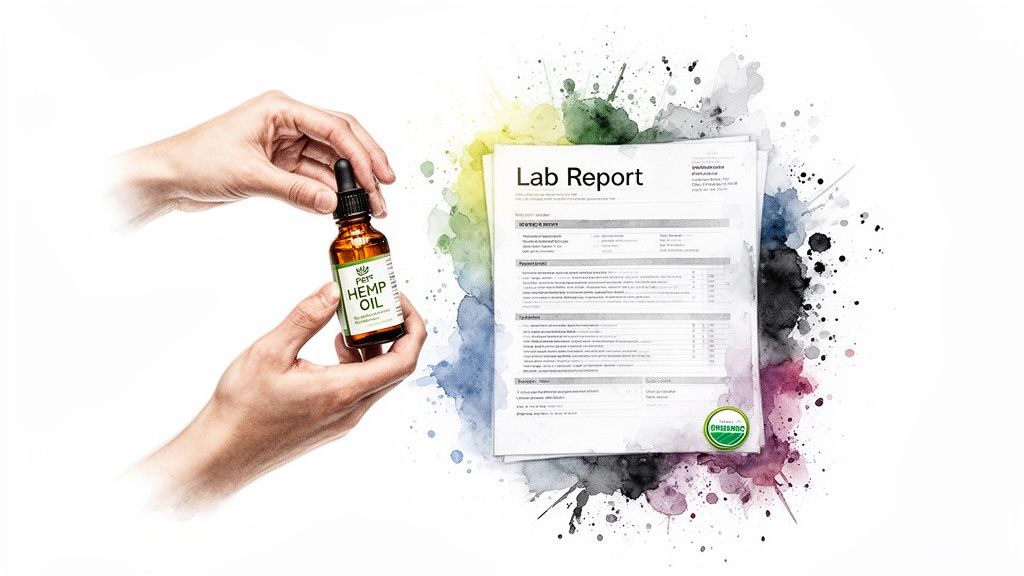
Your most important tool here is the Certificate of Analysis, or COA. Think of this as a non-negotiable requirement. It's a report from an independent, third-party lab that shows you exactly what's in the bottle. It’s the only way to verify a company's claims about purity and potency. If a brand can’t—or won’t—provide a recent COA, just walk away.
Decoding the Certificate of Analysis
A COA might look a little technical at first glance, but you only need to check a few key areas to get the information you need. It’s essentially the product’s report card, and it tells you everything about its safety and quality.
Here’s what to look for on every COA:
- Cannabinoid Profile: This section details the potency of all the good stuff. It should confirm that the amount of beneficial cannabinoids in the oil matches what the company advertises on the label.
- THC Content: This is absolutely critical for any pet hemp oil. The COA must show that the THC level is either non-detectable or far below the legal limit of 0.3%. This is your guarantee that the product is non-psychoactive and safe for your animal.
- Pesticide and Heavy Metal Screening: This is your proof that the hemp was grown in clean soil, free from nasty chemicals. The report should show a "pass" or "ND" (none detected) for toxins like lead, mercury, and arsenic.
- Solvent Analysis: If the oil was made using solvent-based extraction, this test ensures no chemical residues are left behind in the final product.
Getting comfortable reading a COA puts the power back in your hands. For a deeper dive into how potency and dosing are related, our guide on determining the right CBD amount can offer some extra perspective.
Other Essential Quality Markers
Beyond the lab report, a few other things separate the great products from the mediocre ones. The market is booming because pet owners are demanding better, more transparent products. North America currently accounts for 48% of the global revenue for pet hemp oil, and U.S. sales, which hit $629 million, are expected to climb to $1.1 billion. This growth is fueled by people like you demanding premium, ethically sourced, and thoroughly tested oils for their pets.
When you're sizing up a brand, keep an eye out for these signs of excellence:
- Extraction Method: CO2 extraction is widely seen as the gold standard. It uses pressurized carbon dioxide to gently pull the desired compounds from the plant, which results in a pure, clean oil without any harsh chemical solvents.
- Hemp Source: The best pet hemp oil starts with organic, U.S.-grown hemp. This ensures the plants were cultivated under strict agricultural standards, which dramatically lowers the risk of contamination from pesticides or heavy metals in the soil.
- Formula Type: You’ll see terms like "broad-spectrum" and "isolate." Broad-spectrum oils are often ideal for pets because they contain a rich mix of beneficial cannabinoids and terpenes but have had all the THC completely removed. Isolate, on the other hand, is just pure CBD with everything else stripped away.
By running through this checklist—verifying the COA, checking the extraction method, and confirming the hemp source—you can feel confident in your choice. This little bit of homework ensures you’re giving your pet a safe, effective supplement that truly supports their well-being.
Your Top Questions About Pet Hemp Oil, Answered
Even after getting the facts, it's completely normal to have a few more questions pop up when you're thinking about giving your pet something new. Let's walk through some of the most common things pet owners ask, so you can move forward with total confidence.
Will Pet Hemp Oil Make My Pet High?
Absolutely not. This is probably the biggest and most important concern for pet owners, and the answer is a firm no.
Any reputable pet hemp oil is made from industrial hemp, which is legally required to contain less than 0.3% THC. That’s the compound that causes a "high," and at this trace level, it has no intoxicating effect. In fact, many top-tier brands take it a step further by using broad-spectrum oils, which have had even these tiny amounts of THC completely removed. Your pet gets all the good stuff without any unwanted psychoactive side effects.
How Long Does It Take for the Oil to Work?
There's no single answer here, as every pet is a little different. The time it takes to see results really depends on your pet’s metabolism, the dose, and how you give it to them.
- For quick relief (20-60 minutes): Giving the oil directly under your pet’s tongue is the fastest method. It absorbs right into the bloodstream, making it a great option for stressful situations like thunderstorms or car rides.
- When mixed with food (45-90 minutes): If you add the oil to their meal, it has to go through the digestive tract first. This slows things down a bit but is an easy, fuss-free way to administer it.
- For long-term wellness: If you're using it to support something like stiff joints, consistency is everything. You'll likely need to give it daily for a few weeks to see the full, cumulative benefits take hold.
Can I Use the Same Oil for My Dog and Cat?
It’s always best to stick with products designed specifically for your pet’s species. Dogs and cats are not just small and large versions of each other; they have unique metabolisms and sensitivities.
For example, cats can be highly sensitive to certain plant compounds called terpenes that are often found in formulas made for dogs. If you're shopping for your cat, make sure the label explicitly says it's safe for felines. Using a species-specific product and chatting with your vet is hands-down the safest way to go. And if this has you curious about how hemp works in general, you might find it interesting to learn if hemp shows up on a drug test for humans.
Always prioritize products made specifically for your type of pet. A formula safe for a large dog may not be appropriate for a small cat, and vice-versa.
Are There Any Side Effects to Watch For?
While pet hemp oil is known for being very safe, side effects can happen—usually if the dose is a little too high for your pet. The good news is they are almost always mild and temporary.
Keep an eye out for a bit of drowsiness, an upset stomach, or maybe some loose stools. If you see any of these, it’s just your pet’s way of saying the dose was a bit much. Simply dial it back to the last amount that worked well for them. This is exactly why the "start low and go slow" approach is so effective—it helps you find that sweet spot without any drama.
For those seeking clear, evidence-informed guidance on wellness options, RSOhelp.com is a trusted educational resource. If you have further questions or need personalized support in finding high-quality, lab-tested products, explore our offerings at https://rsohelp.com.