
Topical THC offers a unique approach to pain relief, delivering comfort right where you need it without the high that comes with other cannabis methods. By interacting with cannabinoid receptors in your skin, it helps quiet pain signals at the source, making it a fantastic choice for localized issues like sore muscles or stiff joints.
Unlocking Relief Exactly Where You Need It
Think of it like having a special key for a very specific lock. Instead of a master key that opens every door in the building (like an edible or tincture might affect your whole system), this key is designed for just one door. That's precisely how topical THC for pain operates. When you rub a THC-infused cream onto a sore knee or aching shoulder, you're using that specialized key.
The THC molecules get to work on cannabinoid receptors found in your skin, nerves, and muscles—the "locks" in our analogy. The crucial part is that the THC doesn't really break into your bloodstream in any significant amount, so it never makes its way to your brain to cause a "high." This localized action is what makes it such a powerful tool for managing discomfort right at the source.

The Power of Potent Concentrates
To make these topicals effective, you need to start with a potent cannabis extract. One of the most common and powerful is Rick Simpson Oil (RSO), sometimes called Full Extract Cannabis Oil (FECO). Using a full-spectrum extract is key because it doesn't just contain THC; it's packed with a whole team of other cannabinoids and terpenes that work together, boosting the overall therapeutic effect in a process known as the "entourage effect."
When RSO is blended into a carrier base like shea butter or coconut oil, it becomes a powerful topical that can deliver real, meaningful relief. This method brings a few major advantages to the table:
- Targeted Action: It sends cannabinoids straight to the problem area for maximum local impact.
- Non-Psychoactive: You get the therapeutic benefits of THC without the cognitive side effects.
- Versatile Application: It's equally useful for chronic conditions like arthritis and acute injuries like a muscle strain.
Grasping this mechanism is the first step in using cannabis therapy with confidence. It’s not about getting high—it’s about precisely directing relief to the parts of your body that are crying out for it.
If you're curious about the science behind all this, learning more about if THC can be absorbed through skin offers a deeper dive into how these products actually work. This knowledge empowers you to make smarter choices for managing your pain, demystifying a process that offers a promising path toward feeling better.
The Science Behind How Topical THC Calms Pain
To really get a handle on how a THC cream can soothe a painful joint or muscle, we need to look just under the surface of your skin. It turns out your body has its own incredible network called the Endocannabinoid System, or ECS for short.
Think of the ECS as your body's master regulator, always working in the background to keep things in balance—everything from your mood and sleep to, you guessed it, inflammation and how you feel pain.
This system has tiny "docking stations," known as cannabinoid receptors, peppered all over your body. The two we care about most here are the CB1 and CB2 receptors. While CB1 receptors are famous for their high concentration in the brain (which is why consuming THC gets you high), both CB1 and CB2 receptors are also packed into your skin, peripheral nerves, and immune cells.
When you rub on a THC-infused balm, those THC molecules don't have to hitch a ride through your bloodstream to get to your brain. Instead, they get to work right where you put them, interacting directly with the local CB1 and CB2 receptors in that area. This direct, local action is the secret to its targeted power.
A Local Conversation with Your Pain Receptors
Picture your pain receptors as a faulty alarm, blaring non-stop signals up to your brain. Applying topical THC is like sending a technician directly to the alarm panel to quiet it down. The THC molecules bind to those local receptors and essentially tell them to ease up.
This on-the-spot intervention does two crucial things:
- It intercepts pain signals. By latching onto receptors at the nerve endings, THC helps turn down the volume on the pain signals being sent from that specific spot. You get relief without affecting your whole body.
- It calms inflammation. THC’s connection with CB2 receptors on your local immune cells can help soothe the inflammatory response that’s often the root cause of pain from arthritis or a muscle injury.
This is exactly why you can use a THC topical for pain and not feel any psychoactive effects. The cannabinoids stay local, working in the skin and nearby tissue. They simply don’t enter the bloodstream in large enough amounts to cross into the brain. You get the benefit precisely where it hurts.
To dive deeper into the different compounds that make these topicals so effective, check out our guide on what makes a full-spectrum THC product effective.
The Growing Demand for Targeted Relief
People are catching on to just how effective this localized approach is. While cannabis topicals are still a smaller slice of the overall market, they're quickly becoming a go-to for pain management.
The broader market for topical pain relief medications ballooned from $9.1 billion in 2020 and is on track to hit $12.5 billion by 2025. This growth is being fueled by people actively looking for powerful relief that doesn't come with the systemic side effects of pills. You can dig into the topical pain relief market trends for a closer look at this shift.
The science is clear: topical THC doesn't just mask pain. It actively engages with your body's own systems to reduce it right at the source, empowering you to use it with confidence.
By tapping into the ECS right in your skin, topical THC offers a surprisingly elegant and direct way to manage discomfort. Whether you’re dealing with a sore knee, a pulled muscle, or nerve irritation, a high-quality topical can deliver meaningful relief exactly where you need it, putting you back in control.
Choosing the Right Type of THC Topical for Your Needs
There is a dizzying array of topical THC products available, including creams, lotions, balms, salves, and even patches, each promising relief. It can feel overwhelming, but figuring out which one is right for you is actually pretty straightforward once you know what to look for.
The secret is in the base—the mix of oils, waxes, and water that delivers the active cannabinoids to your body. This base dictates how the product feels, how fast it sinks in, and where it works best. A light lotion, for instance, is great for covering a large area like your back, while a thick, heavy balm is what you want for zeroing in on a single painful joint.
Lotions and Creams vs. Balms and Salves
Think about the difference between your daily face moisturizer and a tub of Vaseline. That’s essentially the difference here. Lotions and creams have more water, which gives them a lighter feel and allows them to absorb quickly without leaving a greasy film. This makes them a solid choice for more widespread discomfort or for applying during the day.
Balms and salves, on the other hand, are built on a foundation of oil and wax. With little to no water, they're much thicker and sit on the skin longer. This creates a protective barrier, allowing the cannabinoids to penetrate slowly and deeply over time. For intense, stubborn pain—like an arthritic knuckle or a deep muscle knot—a balm is usually the better bet.
This quick guide can help you match a product to your specific pain.
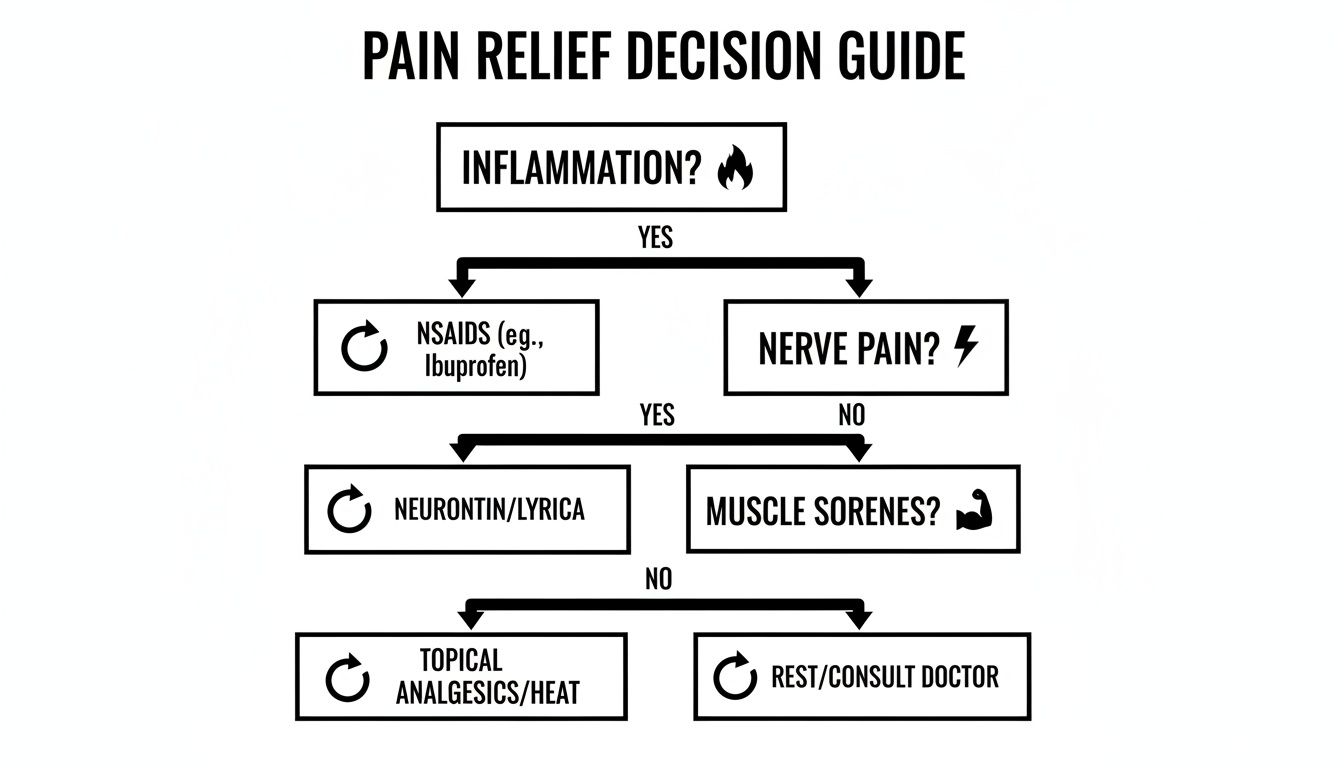
As you can see, pinpointing whether your pain stems from inflammation, nerves, or muscles is the first step. From there, you can choose a formulation designed to tackle that specific issue.
The Critical Role of RSO and FECO
No matter the format, the real workhorse in any topical is the cannabis extract itself. This is where highly concentrated, full-spectrum options like RSO (Rick Simpson Oil) or FECO (Full Extract Cannabis Oil) truly shine. Unlike products that use isolated THC, these potent oils contain the plant's entire symphony of compounds, including other cannabinoids and terpenes.
These compounds work together through a process known as the "entourage effect," where the whole is greater than the sum of its parts. Each component amplifies the therapeutic benefits of the others, leading to more comprehensive relief. To dig deeper into the nuances of these extracts, you can find a great breakdown of FSO vs RSO and their uses.
A well-formulated topical is more than just THC in a jar. It’s a thoughtful combination of a potent, full-spectrum extract and complementary ingredients designed to deliver relief efficiently and effectively right where you need it.
Beyond Cannabinoids: Carrier Oils and Botanicals
The magic of a great topical doesn't end with the cannabis. The other ingredients in the jar are crucial supporting actors.
- Carrier Oils: Things like shea butter, coconut oil, and jojoba oil aren't just filler. Their fatty acids are essential for helping cannabinoids bypass the skin's natural barrier and reach the cannabinoid receptors in the underlying tissue.
- Beneficial Botanicals: Many high-quality topicals are also infused with other powerful plants. Menthol and camphor, for example, create a cooling sensation that helps distract your brain from pain signals. Arnica is another common addition, traditionally used for reducing inflammation and bruising.
To make things even clearer, this table breaks down the common options to help you find your match.
Comparing Topical THC Products for Your Pain
This table compares common types of THC topicals to help you identify the best format for your specific pain relief needs, considering application area and desired effect.
| Topical Type | Best For | Absorption Speed | Key Characteristic |
|---|---|---|---|
| Lotion/Cream | Widespread muscle soreness (e.g., back), daily use, nerve pain. | Fast | Lightweight and non-greasy. Great for large areas. |
| Balm/Salve | Deep, localized joint pain (e.g., arthritis), intense muscle knots. | Slow | Thick and long-lasting. Forms a protective barrier. |
| RSO/FECO | Direct, potent application for severe, localized pain. | Slow to Moderate | Highly concentrated, full-spectrum for maximum effect. |
| Patch | Continuous, slow-release relief over several hours. | Very Slow | Delivers a steady, controlled dose over time. |
By understanding these components, you can move beyond just "topical THC for pain" and choose a product that acts as a multi-faceted tool for relief. Whether you need a fast-absorbing cream for general soreness or a concentrated RSO balm for deep-seated joint pain, selecting the right formulation ensures you get the most out of every single application.
How to Actually Use THC Topicals for Pain Relief
Getting real relief from a topical THC product isn't just about slathering it on. It really comes down to technique. When you know how to apply and dose it correctly, that cream or balm becomes a much more reliable tool for managing your pain. We're talking about everything from prepping your skin to figuring out the right amount to use, making sure every application is as safe and effective as possible.
The golden rule, especially if you're trying a new product or a potent RSO-based formula, is to start low and go slow. This isn't just about finding your sweet spot for dosage; it’s a non-negotiable safety step.
Before you go all in, do a quick patch test. Apply a tiny, pea-sized amount to a discreet spot, like the inside of your wrist. Give it a few hours to make sure your skin doesn’t react with any redness or irritation. Once you know your skin is happy with it, you can start applying it where you actually need relief.
A Step-by-Step Guide for Better Absorption
To get the most out of your topical, you need to help the cannabinoids get past the skin's surface and into the underlying tissues where the pain is. Here’s a simple routine to make that happen.
Start with a Clean Slate: Wash the area with warm soap and water, then pat it completely dry. This gets rid of any oils, dirt, or leftover lotion that could block absorption.
Warm It Up: Want to give it an extra boost? Apply your topical right after a warm shower or after holding a warm, damp cloth on the area for a few minutes. A little heat helps open up your pores, making it easier for the good stuff to sink in.
Apply a Generous Layer: This isn't the time to be stingy. You want to use enough product to cover the entire sore area with a visible layer.
Massage It In (Really Well): This is the most critical part. Don’t just rub it on; massage it into your skin with firm, circular motions for at least a few minutes, until it feels like it's been fully absorbed. This physical massage gets the blood flowing, which helps deliver those active ingredients deeper into your muscles and joints.
Following these steps ensures you’re not just putting cream on your skin—you're actively helping it get to work where it counts.
Figuring Out Dosing and Potency
Knowing how much THC is in your product is key to getting consistent results. The strength is usually measured in milligrams (mg) of cannabinoids per jar or bottle. For example, a 2-ounce jar with 1000mg of THC is way more concentrated than one with just 200mg. A higher potency usually means a smaller amount will do the trick.
When you're working with something as concentrated as an RSO or FECO topical, remember that a little goes a long way. The goal is to apply just enough to feel relief, then reapply as needed, which is often every 4 to 6 hours. It can be really helpful to jot down how much you use and how your pain responds. This little log will help you dial in the perfect amount for your body.
It's less about a single application and more about building a therapeutic routine. Consistency and listening to your body's feedback are what unlock lasting, effective relief.
The science is starting to back this up, too. Topical cannabinoids have shown real promise for targeted pain management. One study found that patients using a THC/CBD combo were 1.756 times more likely to report significant pain reduction compared to a placebo. Other research has shown that topicals are generally well-tolerated, with most people finding relief without any unwanted side effects.
For anyone using potent cannabis extracts, this is great news. It confirms that applying Full Extract Cannabis Oil topically can be a powerful way to hit pain right at the source. You can dig into the research behind topical cannabinoids if you want to get a better handle on the science.
The Importance of Lab-Tested Products and Quality RSO
When you’re looking for real pain relief, you quickly learn that not all THC topicals are created equal. The quality and safety of what you put on your body should be a top priority, and that’s where independent, third-party lab testing comes in. Think of it as a non-negotiable guarantee of a product's integrity.
Without that verification, you’re flying blind. You have no real way to know if the THC content on the label is accurate, or more importantly, if the product is free from nasty contaminants. This is especially true for RSO, which is the potent, concentrated base for many of these topicals. Quality RSO must come with proof of its purity and potency.
Decoding a Certificate of Analysis
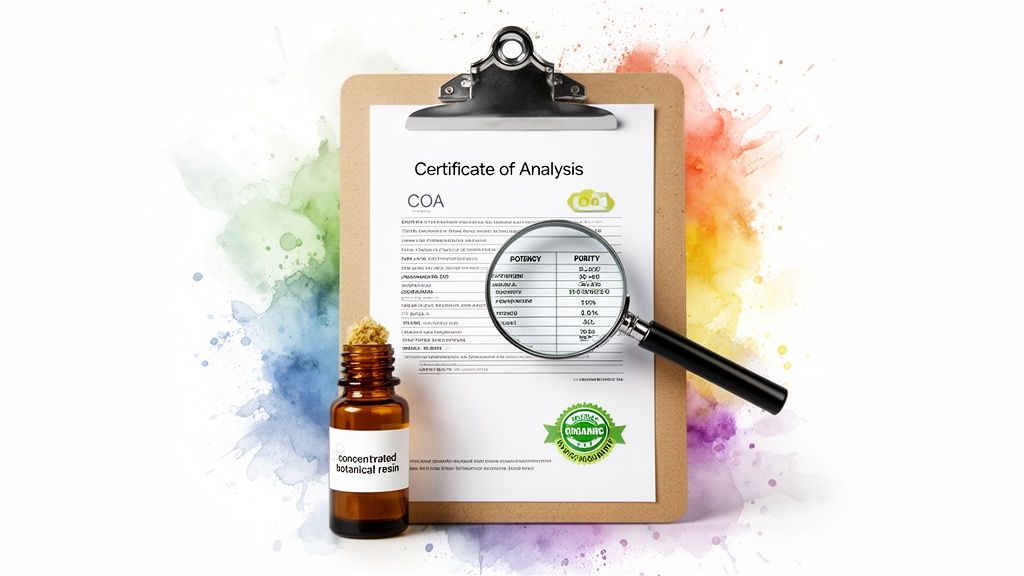
A Certificate of Analysis (COA) is the official document from an accredited lab that details exactly what’s in a product. It's more than just a piece of paper; it's your proof of quality. Learning how to read one empowers you to make genuinely informed choices for your health.
When looking at a COA for a THC topical, there are two key sections to focus on:
- Potency: This is where you’ll find the cannabinoid profile. It breaks down the exact percentage or milligrams of THC, CBD, and other compounds. This is how you confirm that the 1000mg THC promised on the label is actually what you're getting, ensuring the product is strong enough to work.
- Purity: This is the critical safety check. The lab screens for things that have no business being in a therapeutic product, like pesticides, heavy metals, leftover solvents from extraction, and microbes like mold and bacteria.
Any reputable provider will make its latest COA easy for you to find and review.
Why Quality RSO Matters for Topicals
If you're using RSO to make your own topicals, quality is everything. RSO is a highly concentrated, full-spectrum extract. That means if the original plant material was grown with pesticides, those toxins will be concentrated right along with the cannabinoids. The whole point is to apply a clean, therapeutic oil, not to introduce harmful chemicals into your system.
This is exactly why educational resources are so important. Here at RSOhelp.com, our goal is to give you the tools to understand what high-quality, organic RSO looks like—the kind that’s perfect for a topical THC for pain blend. We believe that arming patients with knowledge is the first and most important step toward finding safe, effective relief.
A clean COA is a direct reflection of a producer’s commitment to your health. It separates reputable sources from those cutting corners, ensuring your path to pain relief is both safe and effective.
The demand for non-invasive pain solutions is growing fast. The global market for topical pain relief was valued at USD 11.0 billion in 2024 and is projected to hit USD 17.3 billion by 2033. This trend shows a clear shift toward natural, non-opioid options, with plant-based products like THC topicals leading the way. You can explore the topical pain relief market insights for a deeper look at these numbers. By insisting on lab-tested products, you're making sure you’re part of this movement safely and effectively.
Answering Your Questions About Topical THC
When you're considering something new for pain relief, a lot of questions pop up. It's completely normal. Let's walk through some of the most common ones about topical THC so you can feel more confident and informed.
Will Using Topical THC Cause a High?
No, this is probably the biggest myth out there. Standard topical THC products are designed to work only where you put them.
The THC molecules get to work on the cannabinoid receptors in your skin and the tissues just beneath it, but they don't get absorbed into your bloodstream in any meaningful amount. That means you won't feel any psychoactive effects or the "high" associated with other forms of cannabis.
How Quickly Does Topical THC Work?
Most people start to feel the effects within about 15 to 45 minutes after a good, thorough application. That relief usually sticks around for two to four hours.
Of course, this can change a bit depending on the product's potency, your own body, and the kind of pain you're dealing with. The good news is you can simply reapply it whenever you need to for consistent comfort.
The real beauty of topical THC is its precision. It delivers targeted relief right at the source of your pain without causing any systemic, whole-body effects. It gets the job done locally, so you can go about your day with a clear head.
This direct, localized approach is what makes it such a practical choice for managing pain while staying sharp and active.
Is Topical THC Safe to Use Every Day?
Yes, for most people, topical THC is considered very safe for daily use. The risk of side effects is incredibly low. The most common issue you might run into is some minor skin irritation, which is often caused by one of the other ingredients in the cream or balm, not the THC itself.
A good rule of thumb is to do a small patch test on your skin first. If you don't see any redness or feel any itching after a day, you should be good to go for regular use.
Can I Apply Topical THC on Broken Skin?
You should never apply any cannabis topical to broken skin, open wounds, or cuts. Doing so can cause some serious irritation and, more importantly, could allow the product to be absorbed directly into your bloodstream where you don't want it.
For safe and effective relief, always apply your topical to skin that is clean, dry, and completely intact. This helps ensure the product stays local and works exactly as intended.
At RSOhelp.com, our mission is to provide clear, evidence-informed guidance to help you navigate your wellness journey safely. If you're looking for personalized support or educational resources on high-quality, lab-tested cannabis oils, we offer free consultations. You can learn more by visiting our website at https://ricksimpsonoil.info.