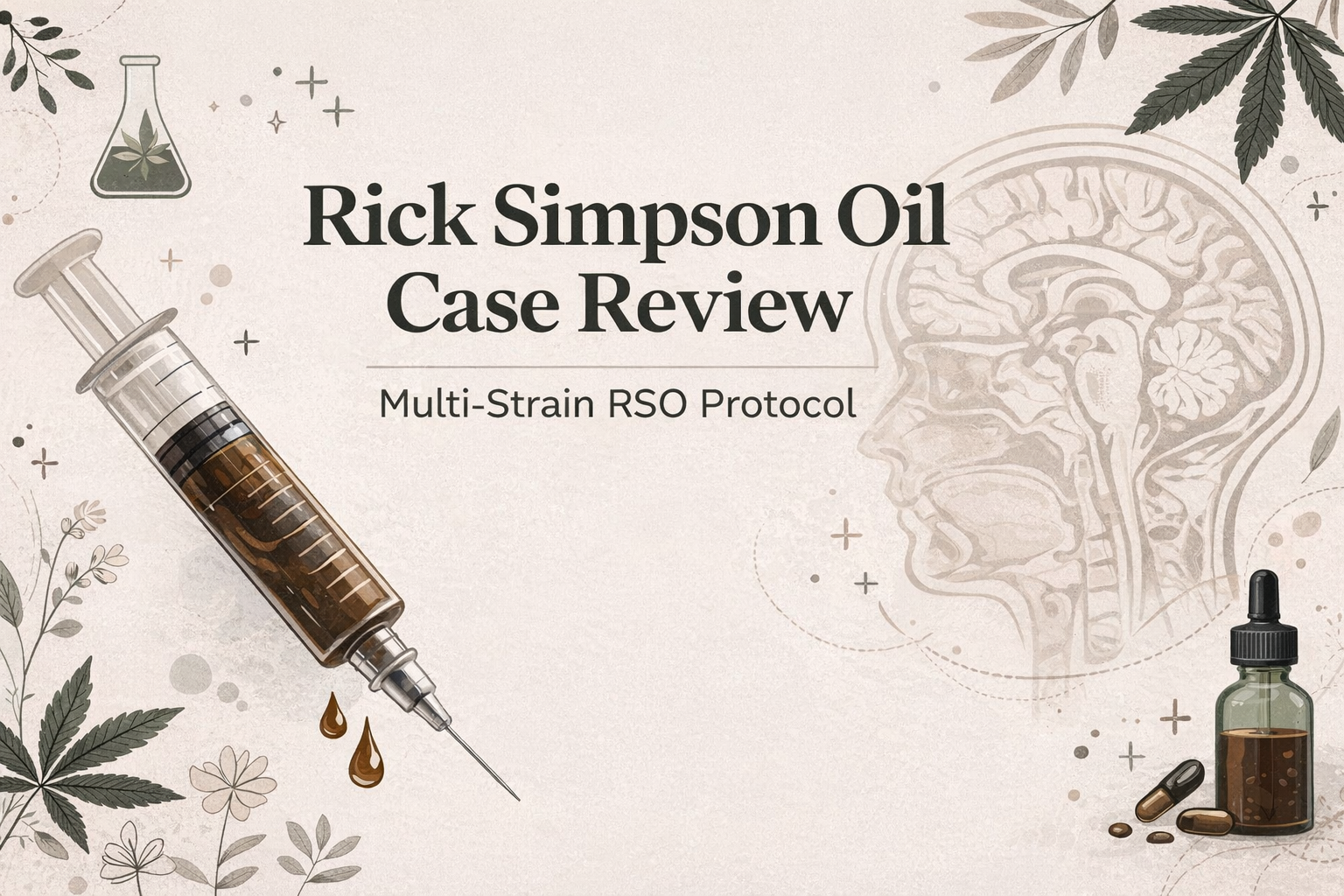
When Hayden’s family was told to begin making memories after a diagnosis of grade 4 medulloblastoma, they contacted Brian Turner at RSO Help to explore whether a structured Rick Simpson Oil protocol could be introduced as part of an integrative approach. What followed was a multi-route, multi-strain full extract cannabis oil regimen that coincided with measurable imaging changes over several months.
This article presents that experience as a case review, not as a universal medical claim, and places it within the broader context of cannabinoid research and integrative oncology.
The Diagnosis and Treatment Background
In 2023, Hayden was diagnosed with grade 4 medulloblastoma, one of the most aggressive forms of pediatric brain cancer. He underwent chemotherapy and radiation as part of conventional treatment.
According to family reports, radiation negatively affected his thyroid and pituitary gland, contributing to persistent headaches and nausea. Despite these interventions, meaningful tumor regression had not been observed. At that point, the family sought additional options and reached out to RSO Help to discuss whether Rick Simpson Oil could be incorporated alongside ongoing medical care.
Understanding Rick Simpson Oil
Rick Simpson Oil, often referred to as RSO or full extract cannabis oil (FECO), is a concentrated whole-plant cannabis extract. Unlike distillate products that isolate THC, RSO retains a wide spectrum of cannabinoids and plant compounds, including THC, CBD, CBG, and various minor cannabinoids and terpenes.
The rationale behind this type of extract is that multiple compounds may act together in a complementary manner. Because RSO preserves this broader chemical profile, it is often used in protocols that emphasize full-spectrum cannabinoid exposure.
The RSO Protocol in This Case
According to RSO Help, Hayden’s protocol involved three methods of administration: rectal dosing, oral dosing, and a nasal spray formulation. The regimen was individualized and gradually increased based on tolerance.
Rectal administration was introduced to allow cannabinoids to enter systemic circulation while partially bypassing first-pass metabolism in the liver. This approach is sometimes used in high-dose protocols to reduce psychoactive intensity while increasing overall cannabinoid intake.
Oral Rick Simpson Oil was added and carefully ramped over time. Oral cannabinoids are processed through the liver and converted into active metabolites that may produce longer-lasting systemic effects.
A nasal spray formulation containing RSO, CBD, CBG, and organic MCT oil was also used. This delivery method is sometimes explored in neurological conditions due to its potential to support cannabinoid access to the central nervous system.
The protocol was not standardized but adjusted continuously based on Hayden’s response and tolerance.
Multi-Strain RSO Formulation
A defining feature of this case, as reported by RSO Help, was the use of a multi-strain Rick Simpson Oil rather than a single-strain extract.
Brian Turner cultivates and rotates approximately twenty cannabis strains in his oil production. This approach is informed by research suggesting that different cannabis strains may produce different biological responses. Laboratory studies have shown that certain strains may interact differently with specific cell types, while others may not produce the same effect.
Because the cannabis plant contains hundreds of compounds that are still being studied, a multi-strain formulation is intended to broaden cannabinoid and terpene diversity rather than relying on a single profile. In this case, predominantly indica-dominant strains were used, and the oil included THC, CBD, and CBG.
Reported Clinical Observations
According to family communication and follow-up imaging:
On the first day of administration, Hayden’s headaches and nausea reportedly resolved.
Six weeks after beginning the protocol, MRI imaging reportedly showed approximately 60 percent tumor reduction.
Several months later, follow-up imaging reportedly showed no detectable tumor.
During that timeframe, no additional alternative cancer therapies were reported. These observations are specific to this case and should be understood as reported outcomes rather than definitive proof of causation.
Research Context: Cannabinoids and Cancer
Preclinical research has explored how cannabinoids may interact with cancer-related pathways. Laboratory findings suggest cannabinoids may influence processes such as programmed cell death, tumor growth, and blood vessel formation.
These findings are primarily based on cell and animal studies. Human clinical research remains limited, and further studies are required to determine how these mechanisms translate into clinical outcomes.
As regulatory environments evolve, access to structured research is expected to expand.
Use Alongside Conventional Treatment
Cannabis-based products are commonly used by patients undergoing chemotherapy for symptom management, including support for nausea, appetite, sleep, and discomfort. Some laboratory data suggests cannabinoids may influence how certain cancer cells respond to treatment, although this remains an area of ongoing research.
When combining cannabinoids with conventional therapies, careful monitoring is recommended, particularly for medications metabolized through liver pathways. Patients considering Rick Simpson Oil should consult licensed healthcare providers before beginning use.
Interpreting Case Evidence
Case reviews provide valuable insight but do not replace controlled clinical trials. Individual outcomes may vary based on factors such as tumor type, patient biology, cannabinoid composition, dosing strategy, and timing.
Hayden’s case represents one instance in which a multi-strain Rick Simpson Oil protocol coincided with reported symptom improvement and imaging changes. It contributes to ongoing discussion but should not be interpreted as a predictable or guaranteed outcome.
Conclusion
This case review documents an experience in which a family, after contacting Brian Turner at RSO Help, implemented a structured multi-strain Rick Simpson Oil protocol involving rectal, oral, and nasal administration. Reported symptom changes and follow-up imaging occurred during the course of that protocol.
Rick Simpson Oil continues to be widely discussed within integrative oncology conversations. While early research suggests potential biological interactions, comprehensive clinical validation is still developing.
For individuals researching RSO oil for cancer, the most important considerations remain product quality, professional guidance, individualized dosing, and realistic expectations. Case reports such as this one help inform the conversation, but responsible decision-making requires both careful evaluation and ongoing medical oversight.
FAQ
Is Rick Simpson Oil proven to cure cancer?
There is currently no large-scale clinical evidence establishing RSO as a cure. Research is ongoing.
Why use multi-strain RSO oil?
Different strains contain varying cannabinoid profiles. A multi-strain approach may broaden overall compound exposure.
Is rectal dosing commonly used with RSO?
Some protocols include rectal dosing to improve tolerability at higher doses, though approaches vary.
Can RSO be used with chemotherapy?
Some patients use it alongside treatment, but medical supervision is recommended.
Disclaimer: This article is for educational purposes only and does not constitute medical advice. Individual outcomes may vary. Always consult a licensed healthcare professional before making treatment decisions.