
When exploring the potential benefits of Rick Simpson Oil (RSO), the discussion centers on its high concentration of THC and its whole-plant, full-spectrum composition. This combination is thought to induce the "entourage effect"—a proposed synergistic interaction between all of the plant's compounds. This article is for educational purposes only, and it is critical to understand that individual results may vary. Further research is needed to validate many of the reported outcomes.
Understanding Rick Simpson Oil and Its Potential Benefits

Rick Simpson Oil is a thick, dark, unrefined cannabis extract. Its tar-like appearance is the result of a specific extraction method designed to preserve the complete profile of botanical compounds from the cannabis plant. This makes it fundamentally different from many other cannabis products.
While some extracts isolate specific compounds, RSO is formulated to be a full-spectrum oil. It is characterized by high concentrations of tetrahydrocannabinol (THC), often ranging from 60% to 90%, alongside a full cast of other cannabinoids, terpenes, and flavonoids.
The Entourage Effect in Preclinical Theory
The key to understanding the scientific interest in RSO is a concept known as the entourage effect. This theory proposes that cannabis compounds work more effectively together than they do in isolation.
Consider an orchestra. A single violin—representing an isolated cannabinoid—can produce a clear note. However, the full orchestra, with all its sections working in concert, creates a symphony with greater depth and complexity. In RSO, THC is the dominant compound, but its effects are thought to be modulated and enhanced by dozens of other compounds working in harmony.
This full-spectrum approach is what defines RSO and makes it a focal point in discussions around cannabinoid-based wellness strategies.
Reported Therapeutic Applications
Due to its potency and full-spectrum profile, RSO is being explored by individuals as a potential adjunctive approach for various health challenges. This interest is reflected in market data, where consumer demand for high-potency concentrates is growing. The hash oil market, which includes products like RSO, was valued at $3.14 billion in 2024. Industry reports suggest 65% of medical cannabis users in the U.S. have used concentrates for managing symptoms like pain and inflammation. You can learn more about these market trends for RSO and other extracts.
The table below summarizes some of the most discussed applications for RSO, based on case reviews and early-stage scientific interest. This information should be viewed as a starting point for further research and a structured discussion with a licensed medical professional.
Reported Therapeutic Areas for RSO Use
| Therapeutic Area | Potential Mechanism of Action | Level of Evidence |
|---|---|---|
| Palliative Support in Oncology | May help manage nausea, appetite loss, and severe pain associated with conventional cancer treatments by interacting with CB1 and CB2 receptors. | Primarily anecdotal and preclinical; some clinical studies on individual cannabinoids (e.g., THC for nausea). |
| Chronic Pain Management | High THC content may modulate pain signaling in the central nervous system and reduce inflammation. Reported use for neuropathic pain, arthritis, and fibromyalgia. | Preclinical and a growing number of clinical studies on cannabinoids for pain; RSO-specific evidence is limited. |
| Sleep and Mood Regulation | The sedative effects of THC and certain terpenes (like myrcene) may help induce sleep. May influence neurotransmitter systems involved in anxiety and mood. | Anecdotal and supported by clinical data on THC's effects on sleep and anxiety, though responses can vary widely. |
While these reported applications are compelling, they are not yet validated by large-scale clinical trials. The scientific community is still working to establish a comprehensive evidence base.
Any consideration of using RSO must begin with a consultation with a licensed medical professional. They can help weigh the potential benefits against the risks and ensure it is a suitable option for your unique health situation. For those seeking guidance, educational platforms like RSOhelp.com can provide resources to help navigate this complex topic.
How Cannabinoids in RSO May Interact with the Body

To understand the potential benefits of Rick Simpson Oil, it is necessary to examine how its compounds may interact with the body's internal signaling network. This network is known as the endocannabinoid system (ECS), which functions as a master regulator working to maintain internal balance, a state scientists call homeostasis.
The ECS is involved in regulating numerous physiological processes, including pain perception, inflammation, mood, appetite, and sleep cycles.
At the core of this system are cannabinoid receptors, which are docking sites located on cells throughout the body. Using a lock-and-key analogy, receptors are the locks, and cannabinoids (like those in RSO) are the keys. When the correct key fits a lock, it activates a signal, instructing the cell on its next action.
CB1 and CB2: The Body's Primary Cannabinoid Receptors
The two most well-researched cannabinoid receptors are CB1 and CB2.
- CB1 Receptors: These are predominantly found in the brain and central nervous system. THC's strong binding affinity for CB1 receptors is responsible for its psychoactive effects and also influences processes like pain signaling, memory, and appetite.
- CB2 Receptors: These are concentrated in peripheral organs and immune cells. Activation of CB2 receptors is a key mechanism being studied for its potential to manage inflammation and immune responses.
The primary psychoactive compound in RSO, THC, has a powerful affinity for CB1 receptors. This direct engagement allows THC to directly influence neurological processes and pain perception, which is central to many of its reported effects.
A Look at the Preclinical Science
It is important to state clearly that the following mechanisms have been observed primarily in preclinical laboratory studies (in vitro and in vivo models), and it cannot be assumed that the same outcomes occur in the human body. However, this preclinical research is a significant driver of scientific interest in cannabinoids.
Researchers have explored how high concentrations of cannabinoids might affect abnormal cells. Two cellular processes often discussed in this context are apoptosis and anti-angiogenesis.
Apoptosis is the scientific term for programmed cell death. It is a natural and necessary bodily function for removing old or damaged cells. Some laboratory studies suggest that certain cannabinoids may trigger this process in specific abnormal cell lines.
Another area of interest is anti-angiogenesis. This refers to the inhibition of new blood vessel formation, which tumors require to grow and metastasize. By disrupting this vascular supply, a tumor's growth could theoretically be limited. These are fascinating preclinical findings, but substantial human research is required for validation.
The Full-Spectrum Advantage: The Entourage Effect
A crucial aspect of RSO is its nature as a full-spectrum extract. This means it contains the complete profile of compounds from the source cannabis plant—not just THC, but also other cannabinoids, aromatic terpenes, and flavonoids.
The theory that these compounds work more effectively in synergy is known as the entourage effect.
Terpenes, for example, may help THC bind more effectively to receptors or may offer their own anti-inflammatory properties. This holistic approach is what distinguishes RSO from many other cannabis products.
Ultimately, each individual's endocannabinoid system is unique, which is why responses to RSO can be highly personal. Navigating this area requires careful consideration. Families seeking guidance can schedule a consultation through educational resources like RSOhelp.com, which can provide a solid foundation for approaching the topic safely and effectively.
An Adjunctive Approach for Pain and Inflammation
Among the reasons individuals explore Rick Simpson Oil, few are more prevalent than the search for relief from chronic pain and inflammation. For those experiencing persistent discomfort, RSO is often discussed as a potent tool to complement an existing care plan.
The body's pain registration is a complex signaling process between the site of injury and the brain. Early research provides insight into how cannabinoids might interact with this system. THC, in particular, appears to interact with CB1 receptors in the central nervous system, potentially modulating the intensity of pain signals before they are fully processed by the brain.
Simultaneously, the inflammatory response is heavily influenced by CB2 receptors, which are abundant on immune cells. When these receptors are activated, they may help regulate the release of inflammatory proteins called cytokines. The theory is that the rich blend of compounds in RSO works synergistically to help maintain balance in this process, which could be significant for inflammatory conditions like arthritis.
How It Might Work on Pain and Inflammation
RSO’s potential impact is viewed as a coordinated effort rather than a single action. Examining these different pathways helps explain why this potent extract has garnered significant attention from patients and researchers.
Here is a breakdown of the key mechanisms under investigation:
- Modulating Pain Signals: By binding to CB1 receptors in the brain and spinal cord, THC may alter pain perception, potentially making it feel less intense.
- Regulating Inflammation: Cannabinoids engage with CB2 receptors on immune cells, which may help moderate pro-inflammatory signals at the source of irritation.
- The Entourage Effect: Terpenes like myrcene and caryophyllene, along with minor cannabinoids, possess their own analgesic and anti-inflammatory properties, potentially creating a synergy that enhances THC's effects.
This multi-pronged approach is what distinguishes a full-spectrum extract like RSO from products containing isolated cannabinoids. The goal is not merely to mask pain but to address the underlying inflammation that is often the root cause. It is important to remember that more robust clinical research is needed to confirm these effects.
Systemic vs. Localized Application
The method of administration can significantly influence the type of relief experienced. The delivery method determines whether the effects are systemic (felt throughout the body) or localized (confined to a specific area).
For widespread conditions such as fibromyalgia or rheumatoid arthritis, oral or sublingual (under the tongue) administration is a typical approach. When ingested, cannabinoids are processed by the liver and distributed via the bloodstream, allowing them to interact with CB1 and CB2 receptors system-wide. This can provide a foundation for systemic relief but is almost always accompanied by the strong psychoactive effects of RSO.
Conversely, for localized issues like a sore joint or muscle, topical application may be more suitable. When RSO is incorporated into a cream and applied to the skin, cannabinoids can penetrate the tissues and interact with local receptors without entering the bloodstream in significant amounts. This allows for targeted relief while avoiding an intense psychoactive experience, making it a viable option for individuals sensitive to THC.
Ultimately, every individual's body is different, and results can vary. It is essential to discuss any strategy for managing pain with a qualified medical professional. For families seeking more information, RSOhelp.com offers educational resources to help navigate these complex topics.
The Role of RSO in an Integrative Oncology Discussion
Of all topics surrounding Rick Simpson Oil, its connection to cancer generates the most hope, debate, and misinformation. It must be stated unequivocally: RSO is not a cure for cancer. It should never be used to replace conventional treatments such as chemotherapy, radiation, or surgery prescribed by an oncologist.
The most responsible way to view RSO in an oncology context is as a potential adjunctive therapy. This means considering it a complementary tool used alongside, not in place of, standard medical care. For many patients, the goal is not to address the cancer with RSO, but to manage the debilitating side effects of the treatments that do.
Palliative Support and Improving Quality of Life
For many individuals undergoing cancer treatment, the primary reported benefit of RSO is palliative. The focus is on improving their quality of life during an incredibly challenging period. The high concentration of THC and other cannabinoids in RSO is what users often turn to for help managing the harshest aspects of their treatment.
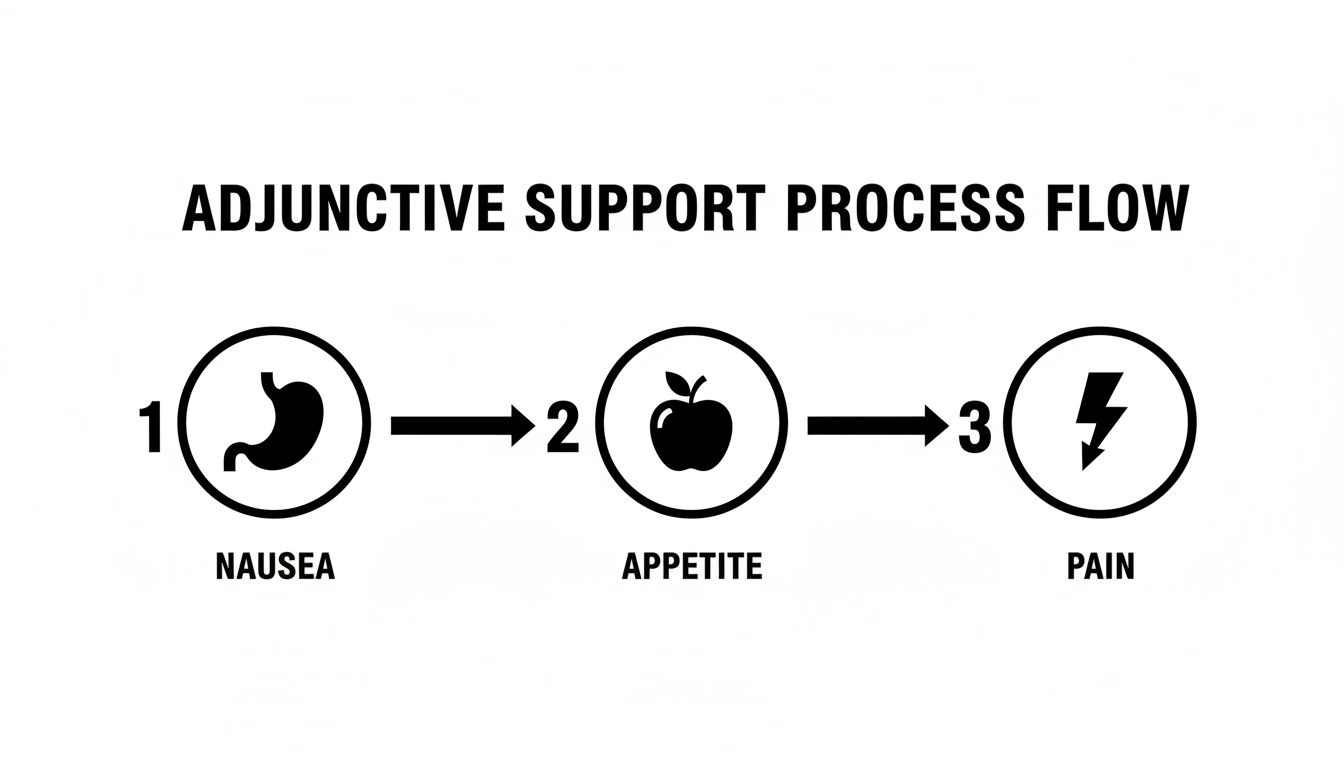
Some of the most frequently reported palliative uses include:
- Managing Nausea and Vomiting: Potent cannabinoids, particularly THC, are known for their interaction with brain receptors that regulate the nausea reflex, offering potential relief from this common side effect of chemotherapy.
- Stimulating Appetite: "Chemo mouth" and suppressed appetite can lead to significant weight loss and weakness. Many explore RSO for its potential to help stimulate hunger.
- Addressing Severe Pain: The analgesic properties of cannabinoids may offer an additional layer of pain management, supplementing prescribed pain relief protocols.
These effects are not guaranteed, and each person's experience is unique. The focus is squarely on symptom management to help patients feel stronger and better tolerate their primary medical treatments.
A Look at the Preclinical Research
The modern interest in RSO was largely ignited by personal anecdotes, later followed by a wave of preclinical scientific investigation. The narrative began in 2003 when Canadian engineer Rick Simpson claimed he used a homemade cannabis concentrate on his own basal cell carcinoma after reading early medical studies. While this specific case was never verified in a clinical trial, it launched a global grassroots movement. You can learn more about the market history of cannabis oil on intelmarketresearch.com.
It is vital to distinguish between what occurs in a petri dish and what occurs in the human body. In preclinical lab settings, scientists have observed cannabinoids triggering cellular processes like apoptosis and anti-angiogenesis.
Apoptosis is a pre-programmed self-destruct sequence for cells, the body’s natural method for clearing out old or damaged cells. Anti-angiogenesis is the process of blocking the formation of new blood vessels, essentially cutting off the supply lines that tumors need to grow.
These lab findings are scientifically compelling and justify further research. However, they cannot be used to claim that RSO can treat or cure cancer in humans. We are a long way from understanding if these mechanisms have any real-world clinical impact.
How to Integrate RSO with Conventional Care
If a patient and their physician decide that incorporating RSO is a reasonable option for symptom management, open communication is paramount. An oncologist needs a complete picture of all substances being taken to monitor for potential drug interactions and ensure the primary treatment plan remains safe and effective. An adjunctive approach means using RSO to support a patient through their primary treatment, not interfere with it.
For anyone wishing to explore this topic further, our guide on RSO oil for cancer offers a more extensive review, always with a focus on safety and responsible use. This is a complex subject that demands careful consideration and professional medical supervision.
A Practical Guide to RSO Dosing and Administration
When beginning with Rick Simpson Oil, the most important consideration is its potency. This is a highly concentrated cannabis extract, and its effects can be powerful, especially for new users. The guiding principle is to start low and go slow. This careful approach allows the body to acclimate safely.
This method is called titration. It involves a gradual increase in dosage over days or weeks, rather than starting with a large amount. This process helps the body build tolerance to the strong psychoactive effects of THC while identifying the optimal dose for an individual's needs.
The Foundational "Start Low and Go Slow" Method
The most common starting point for a novice RSO user is a dose approximately the size of a single grain of rice. This small amount serves as a baseline to observe the body's response without causing overwhelming effects.
While Rick Simpson's original 90-day protocol is well-known, it is crucial to understand that RSO dosing is highly individualized. An individual's reaction depends on their body chemistry, prior cannabis experience, and health objectives. There is no "one-size-fits-all" dose.
For a more detailed breakdown and examples of a structured schedule, our guide on RSO oil dosing is an excellent resource.
Comparing RSO Administration Methods
The method of administration significantly impacts how RSO works—specifically, its onset time and the amount your body absorbs. This is known as bioavailability, which refers to the percentage of a substance that reaches the bloodstream to produce an effect.
The table below outlines the most common methods for using RSO, clarifying the trade-offs between them.
| Administration Method | Estimated Bioavailability | Typical Onset Time | Best Suited For |
|---|---|---|---|
| Oral (Swallowing) | 6-20% | 60-120+ minutes | Long-lasting, full-body systemic effects. |
| Sublingual (Under the Tongue) | 15-35% | 15-45 minutes | Faster onset for systemic effects than swallowing. |
| Topical (On the Skin) | Low (localized) | 15-30 minutes | Targeted relief for localized issues without psychoactivity. |
| Rectal Suppository | 50-70%+ | 10-30 minutes | Maximum systemic absorption with minimized psychoactivity. |
Choosing the right method depends on your personal goals. For long-lasting, systemic support, oral and sublingual methods are popular. For purely localized issues, topical application is preferred. For those seeking the highest bioavailability while mitigating the intense psychoactive high, suppositories offer a unique alternative.
Individualization Is Key
It cannot be overstated: your RSO journey is your own. What works for one person may not be appropriate for another. A slow, patient titration schedule, combined with careful self-monitoring, is the only way to find the precise dose that provides benefit without causing discomfort.
The goal of a proper dosing protocol is not to feel overwhelmed, but to find a sustainable therapeutic level. It is a marathon, not a sprint, and patience is essential for a safe and effective experience.
This methodical approach ensures you can explore the potential of RSO in a controlled and manageable way. Due to these complexities, many families find it helpful to seek personalized guidance. Always consult a qualified medical professional before starting any new health regimen.
How to Find Quality RSO and Read Lab Reports

With RSO becoming more widely available, a critical question arises: how can one verify the quality of the product? The quality, purity, and potency of RSO can vary dramatically.
This is where independent, third-party lab testing becomes an absolute necessity. It is the only reliable safeguard and the clearest indicator of a producer's commitment to quality and safety. A trustworthy RSO source will readily provide a Certificate of Analysis (COA) for every batch.
Decoding a Certificate of Analysis
A COA can appear complex, but focusing on a few key sections allows for a quick assessment of an oil's quality.
Here’s what to look for:
- Cannabinoid Potency: This section shows the concentration of active compounds, especially THC. For a product to be considered genuine high-potency RSO, the THC concentration should be between 60-90%. This confirms the product has the expected therapeutic strength.
- Terpene Profile: Terpenes are aromatic oils that contribute to the entourage effect. A comprehensive lab report will list dominant terpenes like Myrcene or Limonene, providing insights into the oil’s potential effects.
- Safety Screenings: This is arguably the most critical section, confirming the oil's purity. Look for "Pass" or "ND" (None Detected) for harmful contaminants like pesticides, heavy metals (e.g., lead, arsenic), and residual solvents from the extraction process.
A clean, detailed COA is more than a document—it is an assurance of safety and quality that separates therapeutic-grade oil from a product with unknown risks.
Single-Strain vs. Multi-Strain RSO
Oils may be labeled as "single-strain" or "multi-strain." While RSO from a single, potent Indica strain can be effective, many experienced producers prefer blending several strains.
Creating an oil from multiple Indica-dominant strains can result in a richer, more diverse spectrum of cannabinoids and terpenes. This broader profile is thought to amplify the entourage effect, potentially leading to a more comprehensive and balanced therapeutic outcome.
This focus on quality is driving growth in the global cannabis oil market, valued at $1.206 billion in 2024. Consumers are demanding transparency, and reputable producers are responding with fully-tested, high-potency oils. You can explore more details about the growing RSO market here.
Finding a product that meets these standards can be daunting. To help you get started, we've put together a guide on where you can buy cannabis oil safely. Your top priority should always be to insist on a verified lab report for any RSO you consider.
Frequently Asked Questions About Rick Simpson Oil
This section addresses common questions about Rick Simpson Oil and its benefits. This information is for educational purposes only. Always consult with a qualified medical professional before beginning any new health protocol.
What Is the Main Difference Between RSO and CBD Oil?
The primary difference lies in their chemical profiles and resulting effects. RSO is a potent, full-spectrum cannabis extract known for its very high concentration of THC—typically 60-90%. THC is the compound responsible for the psychoactive effects often associated with cannabis.
Conversely, CBD oil is specifically formulated to be non-psychoactive. While both originate from the cannabis plant family, RSO's potential is linked to its high-THC, whole-plant composition. CBD oil is chosen by individuals seeking potential benefits without intoxicating effects.
Can I Use RSO During Chemotherapy?
This is a decision that must be made in consultation with your oncologist. Some patients report using RSO to help manage challenging side effects of chemotherapy, such as nausea and pain. However, there is a potential for cannabinoids to interact with certain cancer medications.
Open communication with your medical team is non-negotiable to ensure your safety and avoid compromising your treatment plan. Never alter or stop your prescribed medical care without your doctor's explicit guidance.
Why Is a Slow Dosing Schedule So Important for RSO?
Because RSO is highly potent, a slow and steady dosing approach—a process called titration—is essential. The high THC content can be intense and overwhelming if too much is taken too soon.
The standard recommendation is to begin with a very small amount, about the size of a single grain of rice, and increase it gradually over several weeks. This allows your body to build a tolerance to THC's powerful psychoactive effects.
This 'start low, go slow' method helps minimize discomfort and allows you to find your own minimum effective dose, prioritizing a safe and manageable therapeutic journey.
Is It Safe to Make My Own RSO at Home?
We strongly advise against attempting to make RSO at home. The extraction process typically involves highly flammable solvents, such as alcohol or naphtha. Without proper ventilation and safety equipment, the fumes can create a serious fire and explosion hazard.
Beyond the safety risks, it is nearly impossible to ensure that all toxic solvents have been fully purged from the final product without professional lab equipment. For safety and to guarantee a clean product, always obtain RSO from a reputable, lab-tested source.
Navigating the world of Rick Simpson Oil can be complex, but you do not have to do it alone. For clear, responsible educational resources, we invite you to visit RSOhelp.com. Our mission is to provide you with the information needed to make confident and safe choices on your wellness journey. You can learn more at https://ricksimpsonoil.info.