
You may be reading this because you want more control over what goes into a hemp extract. That impulse is understandable, especially when people are comparing crude plant extracts, CBD-rich oils, and products described as full-spectrum. The problem is that most explanations of how to extract hemp oil stop at the point where oil appears, even though that is only the beginning of the safety question.
A careful reader needs a different frame. Extraction changes chemistry. Chemistry determines potency, impurity load, and whether a product is even appropriate for therapeutic consideration. If you're thinking about hemp-derived oils in the broader context of cannabinoid use, including discussions around concentrated extracts such as RSO-style preparations, the safest starting point is not technique. It is clarity about the end product, the legal category, and the need for verification.
This article is for educational purposes only. Individual results may vary. Further research is needed. Consult a licensed medical professional.
Understanding the Objective Before You Extract Hemp Oil
A person buys dried hemp, follows a simple online recipe, and ends up with a dark, sticky oil. The visual result can feel reassuring. In practice, that moment answers only one question: plant material was dissolved and concentrated. It does not answer the harder questions about cannabinoid profile, residual solvents, THC status, contaminants, or whether the material is suitable for any therapeutic discussion.
The first task is definitional. Hemp oil is a loose label used for several different products that share very little beyond the plant source. Under U.S. commercial and legal usage, hemp-derived material is generally separated from marijuana-derived material by a THC threshold set in policy after the 2018 Farm Bill. The term itself still creates confusion, because hemp seed oil is a food oil with negligible cannabinoids, while hemp extract is produced from cannabinoid-bearing plant material and may be formulated for CBD content or a broader phytochemical profile.
That distinction sets the objective for everything that follows.
Why the target product changes the whole process
If someone says they want to extract hemp oil, they may be referring to very different end products:
- A seed-derived nutritional oil with no meaningful cannabinoid target
- A crude whole-plant extract that retains a wide mixture of compounds
- A CBD-rich extract intended to be more consistent from batch to batch
- A higher-purity intermediate for later formulation into another product
Each option leads to a different process logic. Seed pressing is not cannabinoid extraction. A crude extract may preserve more of the plant's native mixture, but it also carries more unwanted material that may need removal. A refined CBD-rich product usually requires tighter control over extraction, cleanup, and verification.
A useful way to frame the decision is this: choose the chemistry first, then choose the method. Readers who want context on concentrated cannabinoid preparations often start with broader guides on extracting cannabis oil and defining the intended end product, but the same caution applies here. The process only makes sense once the endpoint is clear.
Extraction is a selection process
Extraction works like a filter with preferences. Different methods pull different groups of molecules from the plant, and they do so with different levels of selectivity. A review of extraction approaches notes that supercritical CO2, ethanol, and related methods can yield meaningfully different cannabinoid, terpene, wax, chlorophyll, and impurity profiles, with consequences for later refinement and standardization, as summarized in this review of extraction method differences and downstream chemistry.
That is why the difference between a fuller extract and a more purified one should be treated as a chemical question, not a branding question. A broader extract may preserve more minor constituents. A more purified material may be easier to standardize, test, and formulate with precision. Neither category is automatically better. The safer choice depends on the intended use, the legal limits that apply, and whether the final material can be verified analytically.
A clinical way to frame the goal
In lab terms, obtaining oil is only an intermediate outcome. The ultimate aim is a material with a defined composition, controlled impurity burden, and documented compliance with applicable limits.
That frame prevents three common errors. First, people often assume appearance reflects quality. It does not. Dark oil can be highly contaminated, and pale oil can still contain unacceptable residues. Second, people often treat "natural" as if it means chemically simple. Plant extracts are mixed systems that may contain cannabinoids, terpenes, waxes, pigments, pesticides, heavy metals, microbial contaminants, and process residues. Third, people often assume any extraction method can be adjusted to reach the same result. In reality, the starting material, solvent behavior, temperature, and post-processing steps all shape the final composition.
For readers approaching hemp extraction with therapeutic interest, this point is central. The biological behavior of a product changes with composition, so the extraction target has to be defined before any technical step begins. A product intended for oral CBD delivery raises different questions from a crude resin intended for further refinement. Safety, legality, and interpretability all depend on that distinction.
If the goal is informed decision-making, judge the process by the tested properties of the final material. Yield alone is a poor standard.
Non-Negotiable Safety Protocols and Equipment
Solvent-based extraction can expose people to fire, chemical vapor, skin injury, and contaminated final product. That risk exists even when the procedure looks simple on video. A stove, hot plate, enclosed garage, or improvised indoor workspace is not an acceptable setting for handling volatile solvents.
This is not optional. If you can't create a controlled environment with proper ventilation and emergency planning, you shouldn't attempt solvent-based extraction at all.
The minimum safety baseline
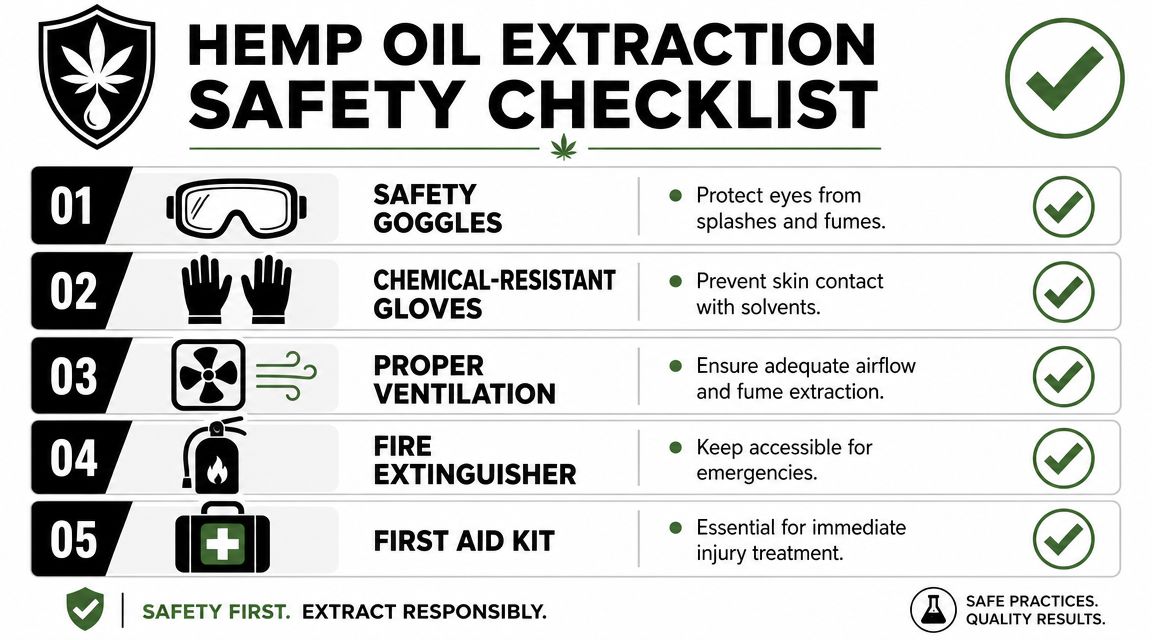
Before any attempt to extract hemp oil, several controls have to be in place:
- Eye protection: Safety goggles protect against solvent splashes and airborne particles.
- Hand protection: Chemical-resistant gloves reduce skin exposure.
- Protective clothing: A lab coat or similarly protective outer layer reduces contamination of skin and clothing.
- Ventilation: A certified fume hood is the appropriate standard. If that isn't available, the environment should still provide strong airflow and complete separation from ignition sources.
- Emergency readiness: A fire extinguisher and first-aid kit need to be immediately accessible.
People often focus on the solvent container and forget the vapor. Vapor is the more dangerous part in many practical settings because it can spread, accumulate, and ignite away from where the liquid is sitting.
Why ordinary household spaces fail
A kitchen creates multiple hazards at once. There may be pilot lights, heating elements, electrical switching, poor vapor control, and food-contact surfaces. A garage can be just as unsafe if it is enclosed, cluttered, or connected to appliances.
The issue isn't whether an extraction can be done there. The issue is that the environment doesn't reliably control the hazard.
Practical rule: If the room can't safely manage flammable vapor, it isn't a workspace for solvent extraction.
A second problem is contamination. Dust, residues, unstable temperatures, and non-laboratory containers all affect the final material. Even if no fire occurs, poor control can leave behind unwanted solvent, waxes, or degraded compounds.
Engineering controls matter more than confidence
People with strong motivation sometimes underestimate how much industrial extraction depends on equipment design rather than personal care. Closed systems, recovery systems, pressure-rated equipment, and validated purification steps are doing much of the safety work.
For readers trying to understand the broader process rather than improvise it, this educational overview of extracting cannabis oil helps place the workflow in context. It is much easier to respect the risk once you see how many steps stand between raw plant material and a verified finished extract.
A stop point worth respecting
Don't proceed if any of these are missing:
- No reliable ventilation: Stop.
- No appropriate PPE: Stop.
- No plan for solvent recovery or waste handling: Stop.
- No path to product testing afterward: Stop.
A cautious researcher would rather abandon a batch than create an unsafe one. That mindset is the right one here.
An Overview of Solvent-Based Extraction Methods
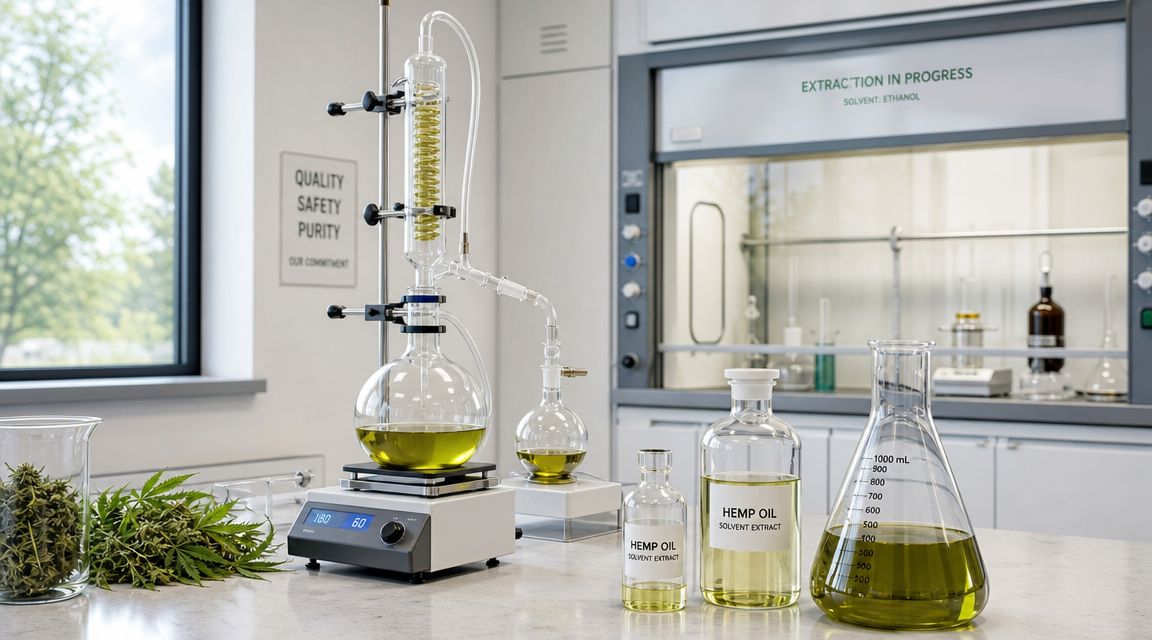
Solvent-based extraction works because cannabinoids and related plant compounds dissolve into an appropriate solvent. In plain terms, the solvent separates desired compounds from plant material, producing a crude extract that then requires further cleanup. That sounds straightforward, but the crude phase contains much more than the target cannabinoids.
What ethanol extraction is doing chemically
Food-grade ethanol is commonly discussed because it can dissolve cannabinoids efficiently. It also tends to pull other compounds, including chlorophyll, waxes, fats, and pigments. That is why ethanol extraction often leads to more post-processing than many first-time readers expect.
An industrial review of cannabinoid extraction describes a practical workflow built around ethanol extraction followed by winterization, ethanol recovery, and distillation. In one benchmark process, the crude extract stands for 8 to 12 hours, and one patented process used about 8 to 10 L of ethanol per kg of cannabis material, followed by filtration media such as charcoal, clay, and silica before final distillation, according to this industrial review of cannabinoid extraction and purification workflows.
That benchmark is useful for context. It shows how far industrial practice is from the idea of a quick wash followed by evaporation.
Why crude oil is not a finished product
A dark, sticky extract may look potent, but appearance doesn't tell you whether ethanol has been fully removed or whether waxes and unwanted residues remain. Incomplete solvent removal can create a direct safety concern. Incomplete dewaxing can reduce purity and complicate later processing.
The same industrial review makes that point indirectly by showing how many purification stages are used before a final distillate is considered acceptable. Those steps are not decorative. They solve real chemical problems.
For readers comparing extraction styles and terminology, this overview of how CBD is extracted can help clarify why solvent choice and refinement steps affect the finished material so strongly.
The main risks in solvent-based extraction
The risks fall into two categories.
| Risk category | Why it matters |
|---|---|
| Process hazard | Flammable solvent vapor can ignite during handling, transfer, heating, or evaporation. |
| Product hazard | Residual solvent, waxes, and co-extracted impurities can remain in the final oil if cleanup is inadequate. |
A motivated beginner often worries about yield first. A clinical reviewer worries about impurity control first. That difference in priorities changes every decision.
Crude extract should be treated as an intermediate material, not a ready-to-use oil.
What this means for therapeutic consideration
If the intended use is health-related, especially oral use, a crude unverified extract creates too many unknowns. Potency may vary. Residual solvent may remain. The cannabinoid profile may not match the label or the user's assumption.
That doesn't make solvent extraction wrong per se. It means the method only makes sense when paired with adequate engineering, refinement, and testing. Without those, the process is incomplete.
Exploring Safer Solventless Extraction Techniques
People who want to avoid flammable solvents often look toward solventless extraction. That instinct is reasonable. A solventless approach removes one major category of risk, namely solvent vapor and residual solvent exposure.
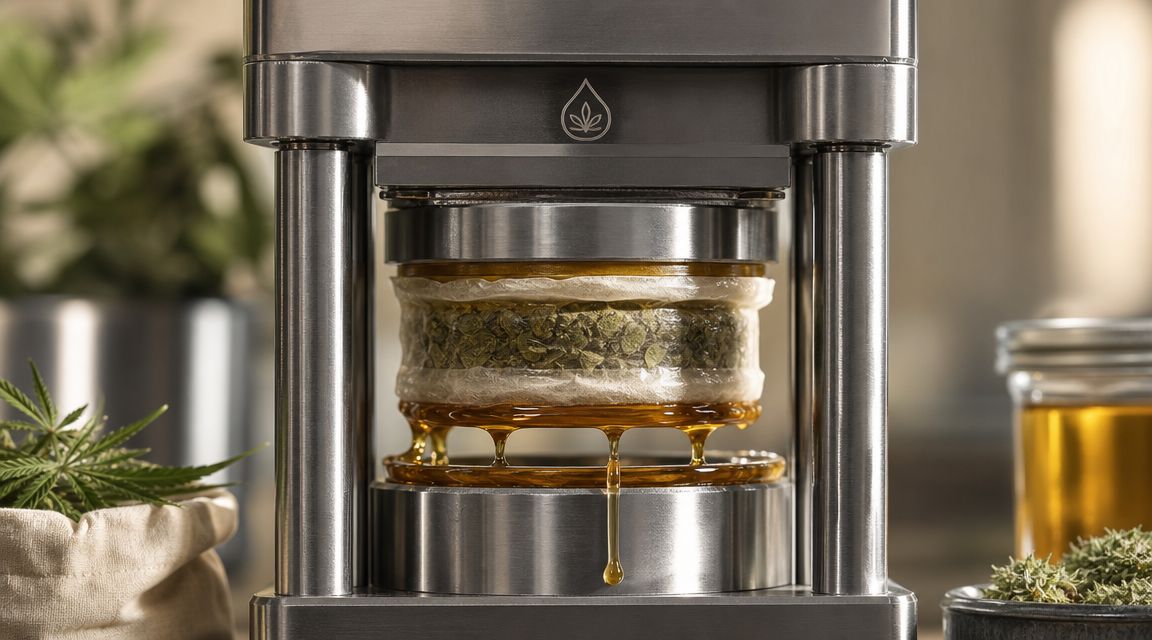
The most familiar example is rosin pressing, where plant material is compressed between heated plates so that resin is expressed mechanically. The process is simpler in concept than solvent extraction, but simpler doesn't mean identical in outcome.
What solventless methods improve
The clearest advantage is that you're not introducing a solvent that later has to be removed. That reduces concern about residual ethanol or similar contaminants. It also changes the practical safety profile of the workspace.
That matters for non-specialists because many extraction injuries are linked not to the plant, but to the handling of volatile chemicals. Solventless methods lower that part of the risk burden.
What solventless methods do not solve
They do not automatically create a standardized medicinal product. The final material can still vary by starting material, temperature, pressure, and handling. It may still need thoughtful storage and, depending on the intended use, further characterization.
A rosin press also doesn't create the same extract profile as a highly refined cannabinoid ingredient. If someone is comparing a broad resinous extract with a purified CBD-rich product, they are comparing different chemical endpoints.
| Factor | Solvent-Based (Ethanol) | Solventless (Rosin Press) |
|---|---|---|
| Primary mechanism | Dissolves cannabinoids into solvent | Uses heat and pressure to express resin |
| Fire and vapor risk | Higher because volatile solvent may be present | Lower because no extraction solvent is used |
| Post-processing burden | Often greater because chlorophyll, waxes, and solvent must be addressed | Often lower for solvent removal, though product cleanup and handling still matter |
| Typical product character | Can support crude extracts, refined oils, and further purification | Often retains a resin-like profile shaped by pressure and heat |
| Best fit | Operations with proper controls and refinement capacity | Users prioritizing simpler mechanics and avoiding solvents |
A short visual example helps make the process easier to picture:
Choosing based on the end use
If a person is comparing options for therapeutic consideration, the decision should rest on three questions:
- What chemistry is desired in the final product?
- Can the process be performed safely and consistently?
- Will the final material be tested?
For some readers, the right conclusion won't be to press rosin or run ethanol. It will be to avoid home extraction entirely and focus on understanding how finished products are verified. That is often the more responsible path.
Critical Post-Processing Decarboxylation and Refinement
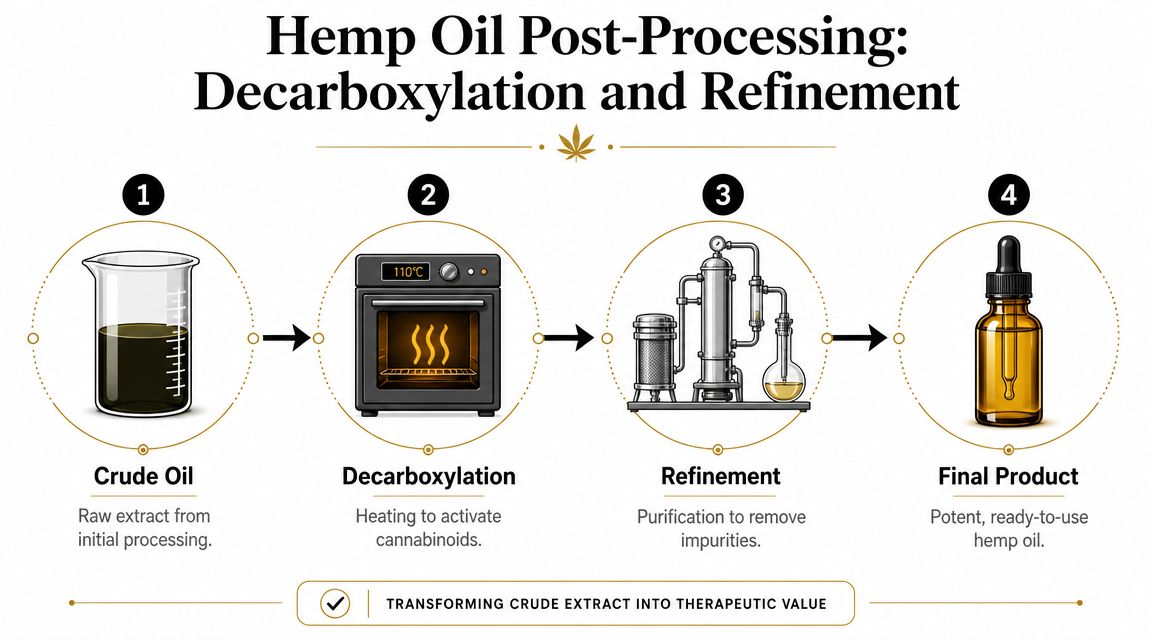
Crude extract is an intermediate. Post-processing determines whether that intermediate becomes a more usable and more predictable oil, or remains a chemically mixed material with unresolved impurities.
Decarboxylation changes the cannabinoid form
Raw plant cannabinoids often exist in acidic forms, such as CBDA or THCA. Decarboxylation uses heat to convert those forms into CBD and THC. That reaction matters because cannabinoid form affects product behavior and intended use.
The problem is control. Too little heat can leave the conversion incomplete. Too much heat or poor handling can degrade sensitive compounds and alter the profile in unwanted ways.
Post-processing is where a promising extract can either become more consistent or become less reliable.
This is also where readers interested in cannabinoid therapeutics often need to pause. Discussions around receptor activity, apoptosis, angiogenesis, metastasis, or blood-brain barrier penetration only make sense if the product itself has been chemically defined with reasonable confidence. Otherwise, mechanism talk becomes speculation disconnected from the material in hand.
Refinement removes what extraction also brings along
Refinement can include winterization, filtration, and distillation. These steps are used to reduce fats, waxes, pigments, and other unwanted components. Each variable matters, including temperature, solvent strength, contact time, and the way the material is cooled.
A comparative study summarized in a technical review found that 96% ethanol was the most efficient among tested solvents for CBD recovery from hemp inflorescences, and the same review notes that crystallization in hexane at −20 °C or below for 24 to 72 hours, followed by recrystallization for another 24 to 72 hours, can yield THC-free CBD crystals above 99 wt% when conditions are tightly controlled. It also warns that under-controlled cooling and inadequate dewaxing can trap impurities, as described in this review of extraction variables, crystallization, and common failure points.
That information should be read as a lesson in complexity, not as a home recipe. The main takeaway is that purity depends on control.
Failure points that matter in real life
A few recurring mistakes explain why two extracts made from similar plant material can end very differently:
- Inadequate dewaxing: Waxes remain suspended and reduce clarity or purity.
- Poor cooling control: Impurities stay trapped instead of separating cleanly.
- Weak solvent selection for the intended goal: Yield and selectivity suffer.
- Assuming one cleanup step is enough: It often isn't.
If the intended use is oral or otherwise therapeutic, these aren't cosmetic flaws. They are quality and safety issues.
Potency, Testing, and Product Verification
The biggest weakness in any untested extract is not appearance. It is uncertainty. Without laboratory data, you don't know cannabinoid potency, residual solvent burden, or contaminant status.
That uncertainty becomes especially important when people are considering concentrated oils in a health context. Dosing can't be thoughtful if concentration is unknown. Interpretation of response can't be meaningful if the material itself hasn't been characterized.
What a Certificate of Analysis needs to answer
A useful Certificate of Analysis, or CoA, should help answer several practical questions:
- Potency: How much CBD, THC, and other measured cannabinoids are present?
- Residual solvents: Has the processing solvent been adequately removed?
- Contaminants: Were pesticides, heavy metals, or other unwanted substances screened?
- Consistency: Does the batch match the product description?
A patient-oriented source emphasizes that extraction is only one step and that the final oil still needs testing for potency, residual solvents, and contaminants, while also noting the value of understanding CoAs before choosing a product for a particular use, as explained in this patient-focused discussion of CBD oil processing and verification.
Why this matters more than home yield
People often ask how much oil they can get from raw material. That isn't the first clinical question. The first clinical question is whether the extract can be verified.
A product with modest yield and strong verification is safer than a larger batch with unknown potency and unknown contamination. The same principle applies when evaluating storage stability. If you are trying to protect product integrity after preparation or purchase, this guide to whether cannabis oil goes bad is a useful companion read.
If there is no reliable testing, there is no reliable way to talk about consistent dosing.
Therapeutic consideration requires restraint
For patients, caregivers, and clinicians, that point matters. Cannabinoid products are sometimes discussed as adjunctive options in oncology or symptom-support settings. Those conversations should stay evidence-aware and integrated with conventional care. They should also be grounded in verified product quality.
A careful approach doesn't promise outcomes. It asks whether the material is what it claims to be, whether the route of administration fits the formulation, and whether the product can be used in a measured, medically supervised way.
Frequently Asked Questions About Hemp Oil Extraction
A common safety problem starts the same way. Someone sees a dark, clear extract, assumes it looks pure, and treats appearance as proof of quality. In extraction work, that is like judging drinking water by color alone. Many of the relevant hazards cannot be seen.
Common questions and direct answers
| Question | Answer |
|---|---|
| Is hemp oil the same as CBD oil? | The label alone does not answer that. Hemp seed oil is a food oil pressed from seeds and does not contain meaningful cannabinoid levels. Hemp extract oil is made from cannabinoid-containing plant material and may contain CBD, minor cannabinoids, terpenes, and other plant compounds depending on the method used. |
| What makes a hemp extract legally distinct in the U.S.? | The legal category depends on how the product is defined under applicable federal and state rules, including whether it falls within the hemp THC limit referenced earlier in the article. That is only the starting point. Product form, source material, testing records, and state-specific restrictions also matter. |
| Can I assume a homemade extract is safe if it looks clean? | No. A visually clean extract can still contain residual solvent, pesticides, heavy metals, microbial contamination, or a very different cannabinoid concentration than expected. Appearance is a poor safety screen. Analytical testing is the useful standard. |
| Is solventless extraction automatically better? | Solventless methods remove one class of risk, but they do not remove all risk. Heat, oxidation, poor filtration, microbial contamination from raw plant material, and inaccurate labeling can still make a product unsuitable for therapeutic consideration. |
| Why do people talk about decarboxylation after extraction? | Cannabinoids can exist in acidic and neutral forms, and heat shifts that balance. The practical point is dosing and intended use. If decarboxylation is uncontrolled, the final composition can drift away from what the maker believes they produced. |
| Should cannabis extracts replace conventional treatment? | They should be considered, if at all, within licensed medical care, especially when serious illness, prescription drugs, pregnancy, liver disease, or pediatric use is involved. A verified product does not replace diagnosis, monitoring, or standard treatment. |
One principle ties these answers together. Extraction is only the first half of the problem. The second half is proving what is in the container, what is not in the container, and whether the product can be used with a margin of safety.
Further research is needed. Individual responses vary. Consult a licensed medical professional before using any cannabinoid product.
If you're trying to make sense of concentrated cannabis oils, dosing logic, extraction differences, or how to evaluate lab-tested products with more confidence, RickSimpsonOil.info offers structured educational guidance for patients, caregivers, and first-time users who want a more careful and evidence-aware starting point.