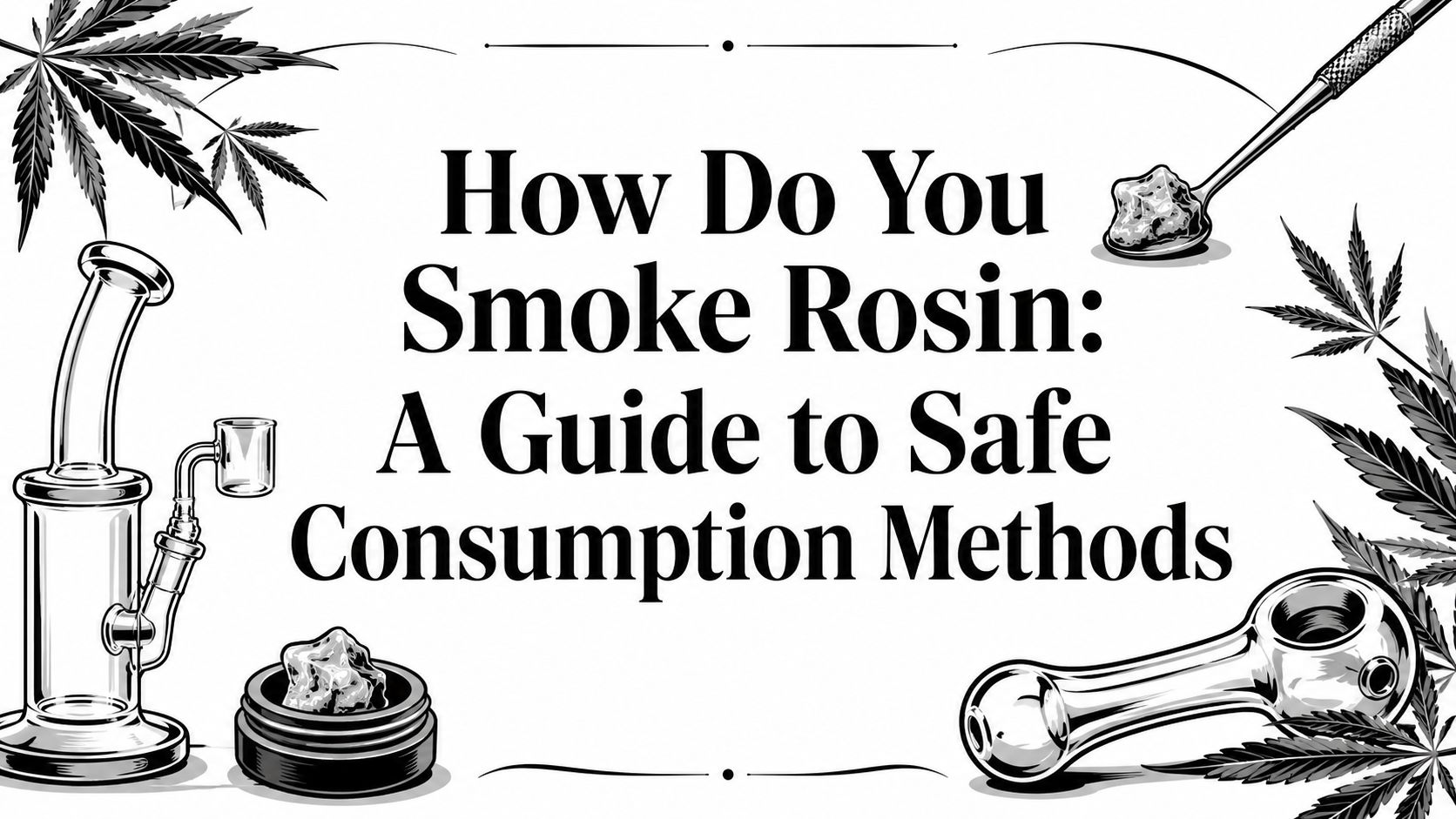
If you're asking how do you smoke rosin, you're probably not looking for a novelty. You're trying to use a potent cannabis extract in a way that matches a real goal. That might be fast symptom relief, less material per session, or a cleaner concentrate format than solvent-based extracts.
That framing matters. Rosin is not flower with a stronger label. It's a concentrated product, and the way you consume it changes onset, intensity, throat feel, flavor, and dose control. For people already familiar with therapeutic extracts such as RSO, that difference is even more important. Inhaled concentrates tend to act quickly and wear off sooner, while oral or suppository-based products fit a different kind of protocol.
Rosin became widely popular in modern commercial use because it's solventless, and one educational source notes that live rosin has been around since about 2015 and gained traction because it's made without chemical solvents such as butane or alcohol, as described in this overview of live rosin. That popularity doesn't mean every method is equally useful. Some methods are efficient and controlled. Others waste product, irritate the airway, or create dosing problems that catch new users off guard.
Introduction to Rosin in a Therapeutic Context
People often search for a simple answer. Put it in a rig, a pen, or on top of flower. That's technically true, but it leaves out the part that matters most in practice. The best way to smoke rosin depends on what you're trying to accomplish.
For a person managing short-lived breakthrough symptoms, inhalation can make sense because the effect is felt quickly. For someone building a structured cannabinoid routine, a rapid-onset concentrate may not serve the same purpose as an oral extract. Rosin fits a very different use pattern than RSO, even when both are cannabis extracts.
Why route of administration matters
The same concentrate can feel very different depending on the device. A controlled e-rig session may allow a cautious inhalation with less waste. A bowl topped with too much rosin can burn unevenly, taste harsh, and hit harder than expected. The product hasn't changed. The delivery system has.
Practical rule: Choose the method that gives you the lowest effective dose with the least irritation and the most predictable repeatability.
Rosin's place in cannabis use is fairly new in commercial terms. As noted earlier, it gained traction around 2015 because the solventless format appealed to users who wanted a concentrate made with heat and pressure rather than chemical solvents. That means smoking rosin isn't an old standalone tradition. It's an adaptation of dabbing, vaping, and flower smoking to a newer concentrate type.
The therapeutic lens is different from the recreational lens
A recreational discussion often centers on flavor, texture, or strain prestige. A therapeutic discussion starts elsewhere:
- Symptom timing: Do you need fast onset or steady duration?
- Dose control: Can you reliably repeat the amount each time?
- Airway tolerance: Does inhalation irritate you?
- Functional outcome: Are you aiming for brief relief or a longer protocol window?
Those are better questions than asking how to smoke it. They also help explain why some people keep rosin for targeted, rapid use and rely on other extracts for broader scheduling.
Understanding Rosin as a Solventless Concentrate
Rosin is made by applying heat and pressure to cannabis material, which separates out the resinous compounds without using chemical solvents. In simple terms, it's a mechanical extraction. Instead of dissolving compounds and then removing a solvent later, the process presses out the concentrate directly.

That extraction profile is a major reason rosin appeals to cautious consumers. If you want a broader primer on solvent and non-solvent methods, this guide on how CBD is extracted gives useful context for thinking about purity, process, and end-product behavior.
Why rosin feels different from flower
Flower is the whole plant material prepared for combustion or vaporization. Rosin is the concentrated resin fraction. That means you aren't inhaling the same type of product in a smaller form. You're using a much denser preparation.
One verified consumer education source reports that live rosin commonly tests in the 65% to 85% THC range, which is far above standard dried flower, and that's why very small starting amounts are routinely recommended in this potency overview. That's the main reason people get into trouble with rosin. They treat it like enhanced flower when it is a concentrate that requires deliberate dosing.
The process affects the final experience
Rosin technology has roots in low-cost pressing methods, including hair-straightener-style approaches described in educational and technical discussions. For live rosin, producers commonly start with fresh-frozen cannabis, convert it to bubble hash, and then press it. That process doesn't just affect marketing language. It changes texture, melt behavior, and how cleanly the material can be consumed.
A practical way to think about it is this:
| Product form | What it means for use |
|---|---|
| Flower | Familiar, less concentrated, easier to over-combust without surprise intensity |
| Rosin | Potent, sticky, better suited to concentrate tools or very sparing use with flower |
| Live rosin | A rosin subtype tied to fresh-frozen starting material and often valued for aroma and flavor preservation |
Rosin rewards precision. It doesn't reward casual loading.
That precision starts before the first inhale. If you know you're using a high-potency solventless concentrate, it becomes obvious why device choice, amount, and heat level matter so much.
Primary Methods for Consuming Rosin Safely
The three most common routes are dabbing, using a concentrate-compatible vape device, and adding a small amount to flower. They don't offer the same control. Dabbing is usually the most technically repeatable option.

If you're comparing inhaled concentrate formats more broadly, this article on rosin edibles vs regular helps clarify how route changes the experience even when the source material sounds similar.
Dabbing gives the most control
With a dab rig or e-rig, you preheat the surface, place a very small amount of rosin on it with a dab tool, and inhale as it vaporizes. Consumer technical guidance identifies this as the most repeatable route and emphasizes low-temperature starts to preserve volatile terpenes and avoid scorching, as described in this rosin how-to guide.
What works well in practice is restraint. A small load is easier to vaporize evenly, tastes better, and is less likely to puddle, overflow, or burn. A large glob usually creates the opposite result. You waste material, lose flavor, and make the session harsher.
Best use case: someone who wants strong control over amount and heat.
Main drawback: the setup can be less convenient, especially with a traditional torch-based rig.
E-rigs and concentrate pens favor convenience
A purpose-built concentrate device can be a practical middle ground. It usually removes some of the variability that comes with manual heating. That's helpful for users who don't want to guess whether the surface is too hot or too cool.
Still, the same principle applies. Keep the load small. Rosin is sticky, and overpacking the chamber can create residue and uneven heating. A device designed for concentrates can work well. A device meant for dry herb usually won't.
Here is a short visual overview for readers who prefer to see the process in action:
Adding rosin to flower is simple but less precise
Some people smoke rosin by placing a small amount on top of a packed bowl or working it through flower in a joint. This is straightforward and doesn't require dedicated concentrate hardware. It can also be an acceptable option for someone who already tolerates flower and wants a modest potency increase.
The problem is consistency. Rosin is sticky, so it may burn unevenly, sink into the bowl, or create hot spots. The inhale can also become harsher because you're combining concentrate with combustion.
A careful approach usually looks like this:
- Use a small amount: Think in terms of a light enhancement, not a thick layer.
- Spread it thinly: Thin distribution helps reduce clumping and uneven burn.
- Pair with enough flower: The flower acts as a base and helps the rosin combust more evenly.
A bowl or joint can work, but it isn't the cleanest way to judge how much rosin you actually consumed.
What doesn't work well
The most common errors are easy to avoid once you understand the material:
- Overheating the surface: This scorches the concentrate and degrades flavor.
- Loading too much at once: More isn't more efficient. It often means more waste.
- Using the wrong device: Rosin belongs in concentrate-capable hardware, not equipment built only for dry flower.
- Treating rosin like a routine smoke: Its potency profile makes that approach unreliable.
For people asking how do you smoke rosin safely, this is usually the shortest honest answer: use a concentrate-specific device, start with a very small amount, and keep the temperature lower than your instincts might suggest.
Guidance on Dosing, Temperature, and Terpene Preservation
A common therapeutic mistake is treating rosin like a stronger version of flower instead of a fast-acting concentrate. That usually leads to two problems at once. The dose rises too quickly, and the heat goes too high.

For someone used to structured oral extracts, this is the main adjustment. Rosin delivers effects within minutes, so dosing has to be paced in real time. RSO works on a slower schedule and is often approached with a planned protocol. If you need a refresher on that oral route, this overview of what RSO oil is explains why the two extracts are used differently.
Start with a test dose, then wait
A rice-grain-sized amount is a reasonable starting point for many adults using rosin by dab or vaporizer, especially if they do not use concentrates regularly. The therapeutic goal is simple. Find the lowest amount that produces the effect you want with the fewest unwanted effects.
Take one small inhalation. Wait long enough to judge onset, head pressure, airway irritation, and symptom relief before adding more.
That pause matters.
With inhaled concentrates, people often overshoot because the first draw feels smooth and the effect has not fully settled in yet. For pain flares, nausea, or breakthrough symptoms, careful titration usually works better than trying to finish a larger dab in one step.
Clinical mindset: Dose for symptom control and function, not maximum intensity.
Lower temperatures usually give cleaner results
Temperature shapes nearly everything about a rosin session. It affects flavor, throat feel, vapor density, and how much of the extract is scorched instead of inhaled. Reviews of cannabis vaporization research, including guidance summarized by the Alcohol and Drug Foundation, note that lower-temperature vaporization reduces combustion-related exposure compared with smoking, which supports the general harm-reduction case for gentler heat.
For rosin specifically, the practical rule is straightforward. Start lower, then increase only if the material is not vaporizing well enough for your device.
| Temperature approach | Likely result |
|---|---|
| Lower temperature | Better terpene expression, smoother inhale, more control over flavor and irritation |
| Higher temperature | Harsher vapor, faster terpene loss, greater chance of burnt residue and waste |
The trade-off is real. Very low settings can leave puddling or incomplete vaporization. Very high settings produce bigger clouds but often at the cost of comfort and flavor. For a health-focused user, preserving tolerability usually matters more than chasing visible vapor.
Terpene preservation affects more than taste
Terpene preservation is often framed as a flavor issue. In practice, it also affects how manageable the session feels. Lower-temperature use tends to be easier on the throat, and many patients notice they can judge the effect more clearly when the inhale is not harsh.
Storage matters too. Keep rosin sealed, cool, and away from light and repeated heat exposure. Oxidized or dried-out rosin is harder to handle, easier to overheat, and less consistent to dose.
Good rosin technique comes down to repeatability. Small loads, controlled heat, and a short waiting period between inhalations give you a more reliable read on whether rosin fits your therapeutic goals.
Rosin vs RSO A Comparison for Therapeutic Application
Rosin and RSO can both be potent cannabis extracts, but they don't fill the same role. A person deciding between them should think first about route, timing, duration, and dose structure, not just potency.

If you want a dedicated primer on the oral extract side, this introduction to what RSO oil is explains the form, appearance, and common educational use cases in more detail.
Fast inhalation versus structured systemic use
Rosin is usually inhaled. That means a fast onset and a shorter functional window compared with oral oils. For some people, that's exactly the point. They want targeted, rapid relief and don't want to wait for digestion and metabolism.
RSO is typically approached very differently. Oral use passes through digestion and first-pass metabolism in the liver. Some users also explore suppository administration depending on the context and guidance they receive. Either way, the pattern is more protocol-driven than dab-driven.
A therapeutic comparison looks like this:
| Consideration | Rosin | RSO |
|---|---|---|
| Typical route | Inhalation | Oral or suppository use |
| Onset pattern | Rapid | Slower |
| Duration pattern | Shorter | Longer |
| Best fit | Immediate, situational use | Structured, sustained routines |
Why this distinction matters
A verified review of the information gap around rosin points to a key issue for therapeutic users. The unanswered question isn't only how to smoke rosin. It's how to choose the route that offers the lowest effective dose with minimal irritation, especially given rosin's high-THC, rapid-onset profile, as discussed in this scientific review context.
That gets to the heart of the comparison. Rosin may be suitable when speed matters. RSO may be more relevant when someone is building a longer-duration cannabinoid strategy. Neither should be framed as a universal answer.
A practical decision framework
Ask these questions before choosing:
- Need relief quickly? Rosin may fit better.
- Need longer coverage? RSO is often the more logical format.
- Sensitive airway? Inhalation may be less appealing.
- Need exact repeatability over time? Protocol-based oral use may be easier to track.
For readers with serious health concerns, this article is for educational purposes only. Individual results may vary. Further research is needed. Consult a licensed medical professional. Rosin and RSO can be part of an integrative discussion, but neither should be treated as a substitute for individualized medical care.
Frequently Asked Questions About Rosin Use
What is the difference between rosin and live rosin
Patients often ask this after seeing both labels at a dispensary and assuming they will feel the same.
The distinction starts with the input material. Live rosin is generally made from fresh-frozen cannabis that is first turned into hash, then pressed into a solventless concentrate. Standard rosin is a broader term and may be made from cured flower, sift, or hash. In practice, live rosin often retains a brighter terpene profile, while other rosin types may feel less aromatic but still deliver a strong, fast-onset effect.
Can I use rosin in a dry herb vaporizer
Usually no. Dry herb vaporizers are built for ground flower, not sticky concentrates like rosin. Adding rosin directly to that chamber can foul the oven, restrict airflow, and leave residue that is difficult to clean.
Some people place a very small amount between layers of flower, but that is a workaround, not a true concentrate method. For cleaner dosing and less device wear, use equipment designed for concentrates. Guidance from Planet of the Vapes explains why concentrate-specific setups are the safer fit.
How should I store rosin
Store rosin in a sealed container, away from heat, oxygen, and light. That protects texture, aroma, and cannabinoid stability.
For short-term use, a cool, dark place is usually adequate. For longer storage, refrigeration can help preserve terpenes, but let the container come to room temperature before opening it so moisture does not collect inside. Clean handling matters. Repeated warming, touching, and reopening will degrade the product faster.
Is smoking rosin the same as dabbing rosin
The terms overlap in casual conversation, but they are not the same method.
Dabbing heats rosin on a hot surface so the active compounds are inhaled as vapor. Smoking rosin usually means adding it to flower in a joint, bowl, or blunt, where combustion plays a larger role. From a therapeutic standpoint, dabbing usually offers faster onset and better dose control, while smoking with flower can be harsher on the airway and less predictable. That trade-off matters for anyone trying to match the method to symptom timing or respiratory tolerance.
What is the safest starting approach for a beginner
Start low, use a concentrate-capable device, and stop after a very small inhalation to assess the effect. Rosin is not the best first choice for every patient, especially anyone sensitive to THC spikes or airway irritation.
This is one of the clearest differences from RSO. Rosin is often chosen for rapid relief. RSO is usually chosen for slower, more structured dosing. If your goal is immediate symptom interruption, inhaled rosin may make sense. If your goal is steadier, repeatable coverage over time, an oral extract protocol may fit better.
If you're comparing concentrate formats and trying to match them to a real therapeutic goal, RickSimpsonOil.info offers educational guidance on RSO, dosing strategy, administration routes, and extract comparisons for patients, caregivers, and first-time users.