While you can technically smoke RSO, it's not a good idea for a few critical reasons. This oil was never meant to be inhaled; it was specifically developed for oral and topical use. Trying to smoke it is not only a waste of a potent product but also introduces health risks you don't need to take.
The Critical Question: Can You Smoke RSO?
It's one of the first questions people ask when they start learning about Rick Simpson Oil (RSO): "Can I smoke it?" The short and simple answer is no. RSO wasn't designed for inhalation. Its creator, Rick Simpson, developed the protocol with oral ingestion in mind, aiming for powerful, long-lasting effects that come from processing it through the digestive system.
Just look at the stuff. RSO is a thick, unrefined, full-spectrum extract. Unlike the clean, refined concentrates made for dabbing or vaping, RSO is packed with other plant materials like fats, waxes, and chlorophyll. When you try to burn all that, you get a harsh, acrid smoke that’s incredibly unpleasant and hard on your lungs.
Why Oral Use Is The Gold Standard
To get the full health benefit RSO is known for, your body needs to absorb it in a way that keeps its unique chemical profile intact. That’s why the proven methods are:
- Oral Ingestion: Swallowing RSO allows it to be processed by the liver. This metabolic process, known as the "first-pass effect," can actually convert THC into a more potent compound, 11-hydroxy-THC, leading to stronger, more sustained effects that can last for hours.
- Sublingual Application: If you place the oil under your tongue, it can absorb directly into the bloodstream. This bypasses the digestive system for a faster onset of effects compared to swallowing it.
- Topical Application: Applying RSO directly to the skin is another intended use, perfect for targeting specific, localized areas.
Choosing the right method isn't just a matter of personal preference—it's about making sure the product works safely and effectively. It’s about aligning with the very reason it was created. For anyone looking for clear, reliable advice on how to use RSO properly, resources like RSOhelp.com are great for promoting safe and healthy practices.
This visual breakdown really drives home the key differences between using RSO as intended and the unsafe alternative of smoking it.
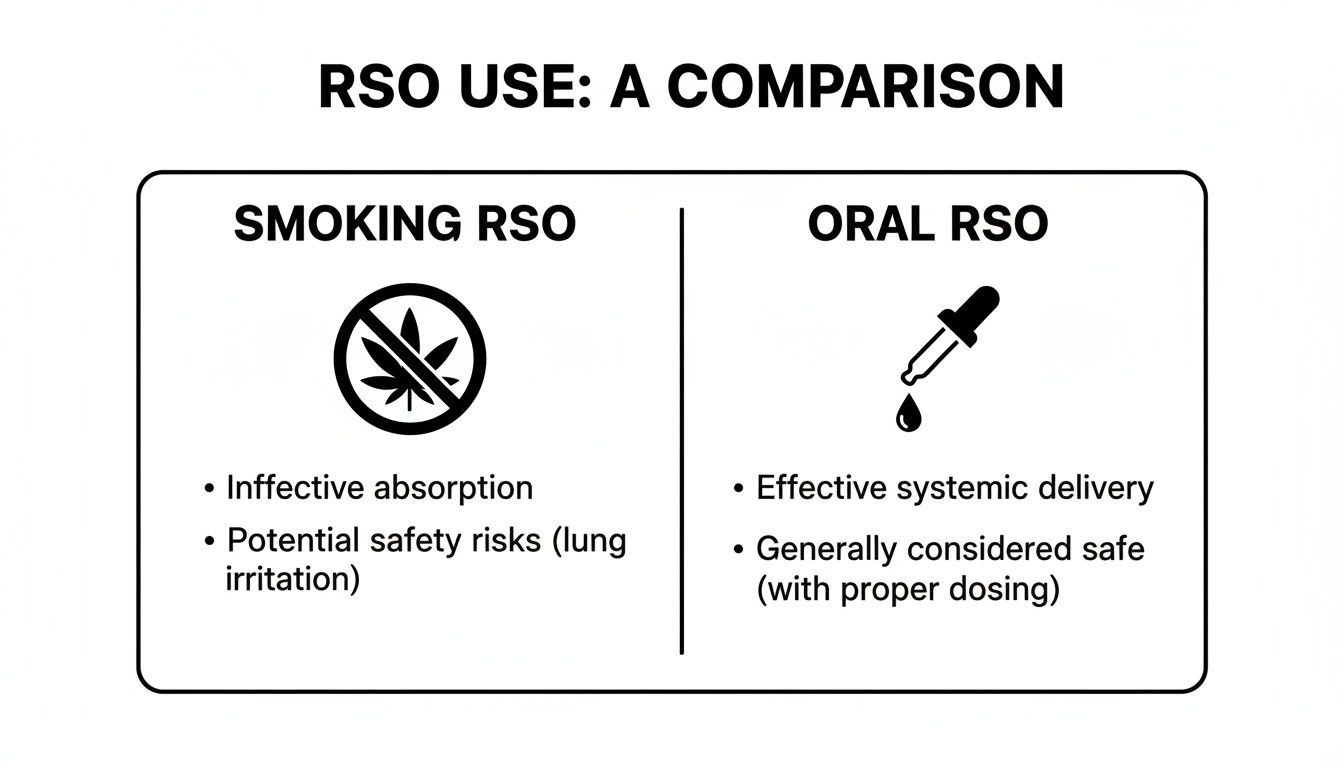
As the infographic shows, it’s not much of a contest. Oral use is all about safety and maximizing effectiveness, while smoking is an inefficient, potentially harmful dead end.
Smoking RSO vs Oral Ingestion At a Glance
To make it even clearer, here’s a quick table breaking down why oral ingestion is the superior method. This is a quick comparison of the key differences in effectiveness, safety, and efficiency between smoking Rick Simpson Oil and using it as intended.
| Attribute | Smoking RSO | Oral Ingestion (Recommended) |
|---|---|---|
| Effectiveness | Poor. High temperatures destroy many cannabinoids and terpenes before they can be inhaled. | Excellent. Preserves the full spectrum of compounds for maximum benefit. |
| Safety | Risky. Inhaling residual solvents and plant matter poses significant lung health risks. | Safe. Avoids all risks associated with combustion and inhalation. |
| Efficiency | Very Inefficient. A large portion of the oil is wasted through combustion. | Highly Efficient. The body absorbs and metabolizes the cannabinoids effectively for long-lasting results. |
| Onset & Duration | Faster onset but much shorter duration. | Slower onset (30-90 mins) but much longer duration (4-8 hours). |
| Experience | Harsh, unpleasant taste and acrid smoke. | Can be mixed with food to completely mask the strong, earthy flavor. |
In short, the comparison speaks for itself. Oral ingestion delivers the full power of RSO in a safe, efficient, and long-lasting manner, which is precisely what the oil was designed to do.
What Makes RSO Different From Inhalable Concentrates
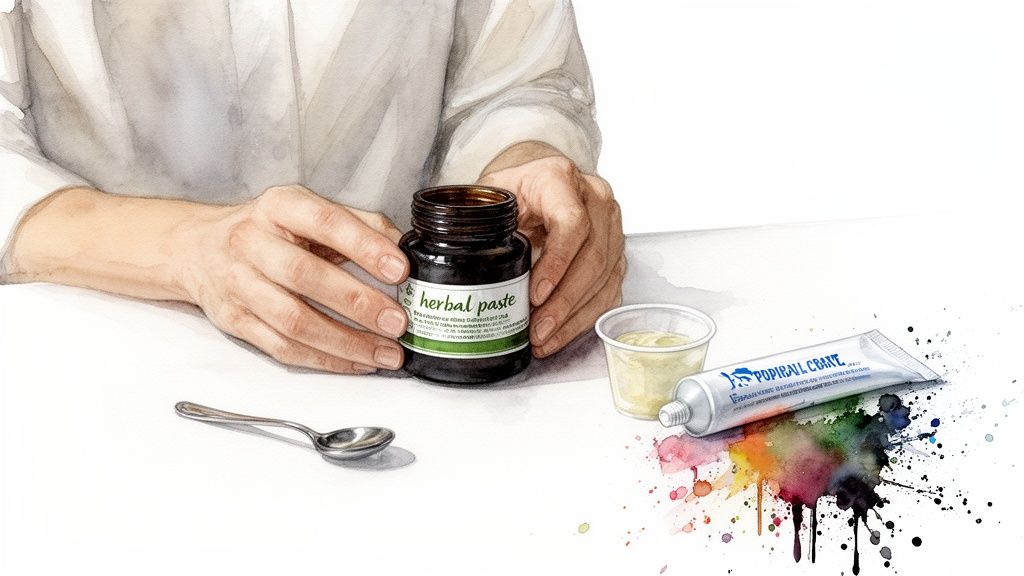
To really get why the answer to "can you smoke RSO?" is a hard no, we need to look at what makes it so different from other cannabis products. At its core, RSO is worlds apart from concentrates made for inhalation, like wax, shatter, or live resin. It’s better to think of it as a dense, unrefined health paste rather than a purified oil.
That thick, tar-like consistency is your first big clue. Concentrates designed for smoking or vaping go through extensive purification to get rid of unwanted plant materials. RSO, on the other hand, is made to be a full-spectrum extract. That means it holds onto everything—not just cannabinoids and terpenes, but also the plant fats, lipids, and even chlorophyll.
These extra compounds are perfectly fine when eaten or applied to the skin, but they are absolutely not meant for your lungs. Trying to burn them results in harsh, acrid smoke that’s both unpleasant and seriously irritating. It's like the difference between a high-quality, filtered cooking oil and raw, unprocessed crude oil—you wouldn’t put the crude stuff in a sensitive engine.
The Problem With Combustion and Plant Matter
When you apply a flame to RSO, you're not just neatly vaporizing cannabinoids. You're combusting all that extra plant gunk right along with them. This creates a nasty double-whammy: a terrible smoking experience and the destruction of the very compounds you’re trying to benefit from.
The whole point of RSO is to deliver the full, unadulterated profile of the plant's health-promoting compounds. Smoking it completely defeats the purpose, as the intense heat incinerates the delicate synergy between cannabinoids and terpenes before they can do any good. For a deeper dive into how different extracts are made, check out our guide comparing RSO vs Rosin.
This destruction of valuable compounds is a huge deal. Not only does the sticky, viscous oil make a mess of pipes and vapes, but burning it also annihilates the delicate terpenes and cannabinoids that create the entourage effect. In fact, some studies show you can lose up to 70% of the potency when combusting an oil like this compared to just eating it.
Preserving the Entourage Effect
The "entourage effect" is a critical concept for understanding why RSO is so effective for so many people. It’s the theory that all the different compounds in cannabis—cannabinoids like THC and CBD, plus the aromatic terpenes—work together in synergy. The combined effect is far more powerful than what any single compound could achieve on its own.
Here's how different consumption methods stack up:
- Oral Use: This method preserves that delicate chemical orchestra. It allows your body to absorb the full spectrum of compounds just as nature intended.
- Smoking: This shatters the synergy. The extreme heat of a flame degrades most terpenes and fundamentally alters the cannabinoids, completely undermining the reason for using a full-spectrum extract in the first place.
When you try to smoke RSO, you're essentially taking apart the very thing that makes it a sought-after health product. This is precisely why its proponents and guides always steer people toward oral or topical use—methods that align with the oil's original, health-focused purpose.
The Hidden Waste: Why Smoking RSO Is Ineffective
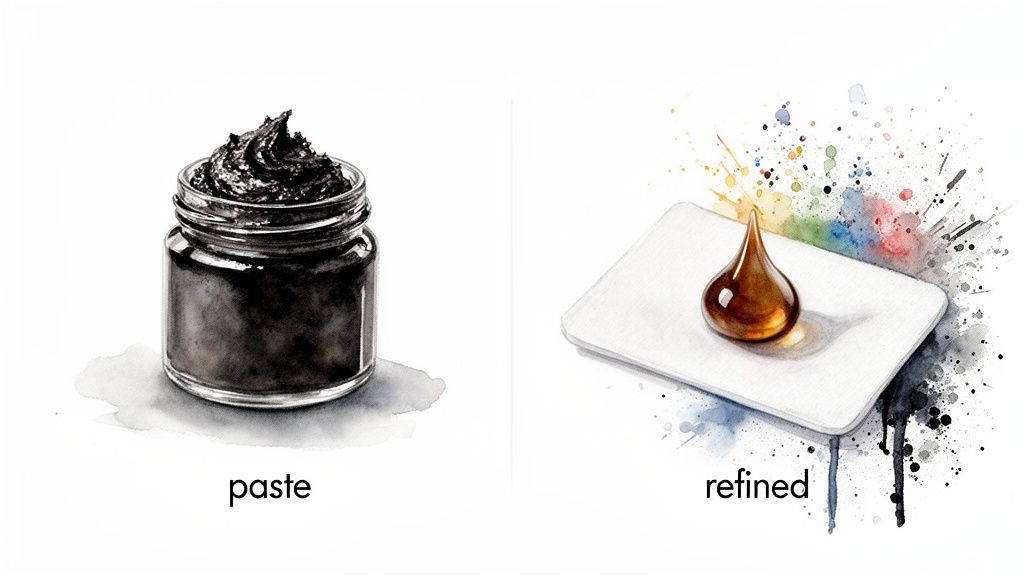
To really get a feel for just how inefficient smoking RSO is, it’s helpful to understand what happens when that thick, unrefined oil meets an open flame. The intense heat sparks a destructive chemical reaction called pyrolysis. This process doesn't just heat the oil; it incinerates the very compounds you’re trying to benefit from, turning a potent product into little more than harsh smoke.
Think of it like preparing a nutrient-rich, gourmet meal and then burning it to a crisp. All the carefully cultivated flavors and vitamins are destroyed, leaving behind a charred, useless mess. That's a perfect analogy for what happens to the valuable cannabinoids and terpenes in RSO when you try to smoke them.
The Chemical Breakdown of Combustion
When you light up RSO, the intense heat doesn’t gently vaporize the oil—it completely degrades its chemical structure. The delicate terpenes, which contribute the aroma, flavor, and their own health benefits, are the first to go. They're extremely volatile and are destroyed almost instantly by direct flame, long before you can inhale anything useful.
Right behind them, the cannabinoids themselves—the very compounds responsible for the oil's primary effects—also begin to break down. This degradation absolutely tanks the oil's overall potency. You're not just getting a weaker effect; you're fundamentally wasting the product and the full-spectrum benefits that make RSO so sought-after in the first place.
The core value of RSO lies in its complete, whole-plant profile. Combusting it is a counterproductive act that eliminates the very synergy that oral ingestion is designed to preserve, wasting both product and potential.
This brutal process means a huge portion of the oil's health-promoting power is lost forever. Instead of being absorbed by your body, these precious compounds are simply converted into carbon and other useless byproducts in the smoke.
Quantifying the Loss of Potency
This loss of effectiveness isn't just a theory; it's substantial. The combustion process can obliterate a massive percentage of the active compounds. While taking RSO orally allows for a slow, methodical absorption, smoking turns a potent, full-spectrum extract into a low-efficiency delivery system with severely diminished returns.
Put simply, smoking RSO is an incredibly wasteful and ineffective way to use it.
By choosing to smoke this oil, you're paying for full-spectrum benefits but only receiving a tiny, degraded fraction of them. It completely undermines the entire purpose of using such a carefully crafted extract. For anyone serious about preserving the full integrity of RSO, mixing it into food is a far more effective route. You can find out more by checking out our guide on cooking with RSO.
The difference in efficiency is night and day, making oral or topical methods the only logical choice for anyone seeking the oil's intended health outcomes.
Why Smoking RSO Can Be Bad for Your Health
It’s not just that smoking RSO is a waste—it introduces real health risks that you simply don't have to worry about with oral or topical use. The core danger comes down to what RSO is made of and, crucially, what it was never intended for. Getting a handle on these risks is key for anyone putting their well-being first.
A major concern is the potential for inhaling residual solvents. The process to create RSO often uses solvents, and the standards for something you eat are worlds apart from something you inhale. When you burn even tiny amounts of leftover solvent, you can create nasty byproducts that go straight into your lungs.
The Problem with Burning Crude Plant Extracts
The most immediate risk is tied to how unrefined RSO is. A true Rick Simpson Oil is a full-spectrum extract, which means it’s loaded with a lot more than just cannabinoids. It’s full of other plant materials that are perfectly fine to eat but cause a lot of trouble when you set them on fire.
These extra compounds include things like:
- Plant Fats and Lipids: These waxy substances produce a harsh, acrid smoke that’s incredibly irritating to your throat and lungs, which can easily lead to respiratory inflammation.
- Chlorophyll: This is the green pigment in plants. When burned, it tastes terrible and adds to the overall harshness of the smoke.
Think about it this way: cooking with olive oil is great, but lighting it on fire fills the room with a cloud of choking, lung-searing smoke. That's essentially what you're doing when you try to smoke the fats and waxes in RSO. It’s a recipe for serious respiratory irritation. You can dive deeper into how these extracts are made in our guide on THC extraction for oils.
Why Inhalable Concentrates Are So Different
Products actually made for smoking or vaping—like distillate or live resin—go through extra steps to get rid of all that unwanted plant gunk. This purification process, called winterization, is designed for one reason: to filter out the fats, waxes, and lipids.
This filtering step is what makes a concentrate clean and smooth enough to inhale safely. Because RSO is meant to be eaten, it skips winterization entirely, leaving in all the raw plant compounds that are great for your digestive system but terrible for your lungs when burned.
The takeaway here is simple: RSO's chemical makeup just isn't compatible with being inhaled. Trying to smoke it is not only a waste of good oil but also a direct invitation for unnecessary and avoidable respiratory irritation. For anyone using RSO for health reasons, sticking to oral or topical methods is the only logical choice. The risks of smoking it just aren't worth it.
The Right Way to Use RSO for Safety and Best Results
So, we've established why trying to smoke RSO is a bad idea. Let's talk about how you should be using it to get the full benefits safely. Using Rick Simpson Oil correctly is actually pretty straightforward, and sticking to the intended methods ensures you get its full health potential without the risks that come with combustion.
The two best, expert-recommended ways to use RSO are by mouth or on your skin. These methods keep the oil’s powerful mix of cannabinoids and terpenes intact, letting them work together just as they’re supposed to. It’s about moving away from a harmful approach and embracing one that genuinely supports well-being.
Oral and Sublingual: The Gold Standard for RSO Use
The most common and effective way to take RSO is orally. This lets your body process the full spectrum of compounds in the oil, leading to long-lasting, full-body effects. If you're new to RSO, the golden rule is to start incredibly small—think a dose no bigger than a single grain of rice.
Here’s a simple way to do it:
- Measure Your Dose: Carefully squeeze out a tiny amount, about the size of half a grain of rice. You can put it on a spoon, a small piece of a cracker, or even just the tip of your finger.
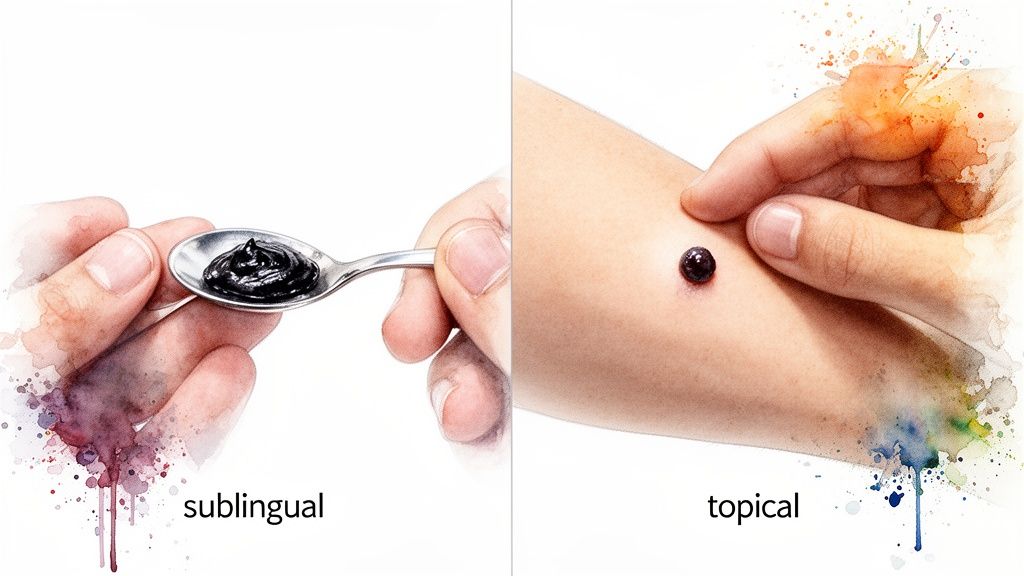
- Go Sublingual (Recommended): For quicker effects, place the oil under your tongue and hold it there for about 60-90 seconds before swallowing. This lets it absorb directly into your bloodstream, bypassing the digestive system for a faster onset.
- Use a Carrier Fat: If you swallow the RSO right away, it helps to take it with something fatty, like a spoonful of peanut butter or a bit of coconut oil. Fats help your body absorb the cannabinoids much more efficiently.
This "start low and go slow" mantra is everything. It gives you the chance to see how your body reacts and find the smallest dose that gives you the effects you need without feeling uncomfortable.
The goal here is health benefit, not an intense psychoactive experience. Finding the right dose is a journey of patience and paying attention to your body. For a more personalized plan, resources like RSOhelp.com can offer fantastic support in building a safe and effective dosing schedule.
Topical Application for Targeted Relief
Another fantastic way to use RSO is to apply it right onto your skin. This method is perfect for tackling localized problems—like a sore joint or a patch of irritated skin—without any psychoactive effects at all. The cannabinoids get to work on the receptors in your skin, right where you put them.
Using RSO topically couldn't be simpler:
- Apply a small amount of the oil directly to the area you want to treat.
- Gently massage it into the skin until it’s mostly absorbed.
- You might want to cover the area with a bandage to keep the oil from rubbing off on your clothes.
This approach delivers the cannabinoids precisely where they're needed most. By sticking to these proven methods—oral and topical—you’re using the oil exactly as it was designed, setting yourself up for a safe, effective, and beneficial experience.
A Few Lingering Questions About Using RSO
Even with all the details covered, a few common questions tend to pop up. Think of this as a quick FAQ to clear up any final uncertainties and help you feel completely confident in how to handle this potent extract the right way.
What Should I Do If I Already Smoked RSO?
If you’ve already tried smoking RSO, the first thing to do is not to panic. The biggest risks are temporary—things like lung irritation from the thick, unrefined smoke and a potential cough or sore throat from whatever byproducts were created.
The main takeaway here is simply not to do it again. You’ve learned that smoking is a very inefficient way to use RSO, meaning you missed out on most of the benefits anyway. Just switch over to one of the recommended methods, like oral or topical use, to get the intended effects. Of course, if you have any respiratory issues that don't go away, it's always a good idea to check in with a health professional.
Is Vaping RSO a Safer Alternative to Smoking?
You might be thinking, "What about vaping?" Unfortunately, vaping RSO isn't a good idea either and comes with a similar set of problems. Its incredibly thick and sticky texture is a nightmare for most vape pens; it will clog and ruin the hardware in no time. People sometimes try to solve this by adding thinning agents, but that just introduces a new set of chemicals you'd be heating and inhaling.
True RSO is full of plant lipids, fats, and chlorophyll. These are compounds your lungs are not designed to handle. If you want to inhale, it's much safer to stick with products specifically made for vaping, like distillate or live resin, which have been properly refined for that purpose.
Bottom line: just like smoking, trying to vape RSO is both ineffective and a potential health risk. Use products designed for the device you have.
How Long Does RSO Take to Work Orally?
When you take RSO orally, the time it takes to kick in is a whole different ballgame compared to inhalation. How you take it really matters.
- Sublingual (Under the Tongue): If you hold the oil under your tongue, it can get into your bloodstream pretty quickly. You'll likely feel the effects within 15 to 45 minutes.
- Oral Ingestion (Swallowed): When you swallow RSO directly or mix it into food, it has to go through your digestive system first. This process slows things down considerably, with onset taking anywhere from 60 minutes to 2 hours, sometimes even longer depending on your metabolism and if you have a full stomach.
The real advantage of taking RSO orally is how long the effects last. You can expect sustained effects for 4 to 8 hours, which is far longer than you’d get from any form of inhalation.
Where Can I Find Reliable RSO Dosing Information?
Getting the dose right is everything, especially when you're just starting out. The golden rule is to start low and go slow. A widely accepted starting dose is an amount the size of half a grain of rice. From there, you can gradually increase it every few days as you get a feel for how your body responds.
For more structured and personalized advice, it's smart to turn to resources that specialize in RSO education. A great example is RSOhelp.com, a platform dedicated to providing guidance on safe use. They can help you figure out a dosing schedule that makes sense for your specific situation, ensuring you're using the product effectively right from the start.
Here at RickSimpsonOil.info, our commitment is to provide clear, well-researched guides that empower you to use RSO safely. We encourage you to check out our free consultations and other resources for more support on your wellness journey.