

Sciatica can wear people down in a very specific way. The pain may start in the low back or buttock, then travel down the leg, and by evening it often feels harder to ignore. Many readers looking for the best edibles for sciatica pain are not searching for a trendy product. They're trying to answer a practical question: what might help when nerve pain keeps returning, especially at night, without making the rest of treatment more confusing.
That question matters because sciatica is commonly managed conservatively, not with invasive treatment, according to StatPearls on sciatica. In real life, that often means people are juggling physical therapy, activity modification, nonsteroidal anti-inflammatory drugs, and sleep disruption all at once. Some then consider cannabinoid products as an adjunct.
The usual online advice is too broad. It treats all edibles as if they serve the same purpose. They don't. A better way to think about product choice is to match it to the pattern of pain. Some people need help with persistent nighttime symptoms. Others are hoping for something that works quickly during a sudden flare. That difference changes the discussion.
Introduction Navigating Sciatica Pain with Cannabinoids
Many people with sciatica can manage through the day, then notice the pain more sharply once they lie down. The leg starts burning, aching, or zapping at the worst possible time. Sleep breaks up. By morning, the question feels urgent: what kind of cannabinoid product, if any, fits this pattern?
A useful starting point is to stop looking for one “best” edible and start matching the product to the timing of the pain. Sciatica often behaves differently at 2 p.m. than it does at 2 a.m. That difference matters because oral cannabinoid products are usually chosen as much for duration as for ingredients.
Clinical perspective: The better choice is often the product that fits the rhythm of your symptoms, not the one that gets the most attention online.
For a person whose pain predictably intensifies in the evening, a longer-lasting oral option may make sense. For a person dealing with a sudden flare and hoping for quick relief, an edible may be a poor fit because onset is slower and timing is harder to predict.
This pattern also creates confusion about RSO, standard gummies, capsules, and tinctures. They are often grouped together in casual discussion, but they do not act the same way in the body. Choosing between a pre-measured gummy and a concentrated full-spectrum oil is less like picking a favorite brand and more like choosing between different tools for different jobs.
A practical framework starts with four questions:
- When does the pain peak: Is the problem mainly overnight discomfort, or sudden daytime flares?
- How long do you need coverage: Are you trying to stay asleep, or reduce a shorter episode of pain?
- How precise must dosing be: Would a fixed serving help, or do you need very small dose adjustments?
- How sensitive are you to THC: That affects whether a CBD-dominant, balanced, or THC-forward product is more reasonable to discuss
This article uses that framework throughout. The goal is not to rank products in the abstract. The goal is to help you understand which type of cannabinoid product may fit your pain pattern, and where caution matters most.
Understanding How Cannabinoids May Affect Nerve Pain
Sciatica often feels different from routine back pain because the problem may involve an irritated or compressed nerve, not just sore muscle or joint tissue. People describe it as burning, tingling, stabbing, or electric pain that travels from the low back into the buttock or leg. That pattern helps explain why symptom relief can be inconsistent from one product to another.

Why nerve pain feels different
Nerve pain is partly a signaling problem. The nerve itself can become irritated, and the nervous system may start sending louder or more distorted danger messages than the tissue damage alone would suggest. A strained muscle usually feels local and mechanical. Sciatica often radiates, zaps, or lingers in a way patients find harder to predict.
Inflammation can still play a role, but it is only part of the picture. That is one reason a product that seems helpful for general aches may feel less useful for shooting leg pain or nighttime nerve burning.
Cannabinoids are discussed in this context because the body has an endocannabinoid system involved in pain signaling, stress response, inflammation, and internal balance. Researchers are still working out the details, but the practical takeaway is straightforward. Cannabinoids may influence how pain signals are processed, not only whether pain exists.
CB1 and CB2 in simple terms
CB1 receptors function mainly in the brain and nervous system. They are more closely tied to pain perception, sensory processing, and the psychoactive effects associated with THC.
CB2 receptors are discussed more often in relation to immune activity and inflammatory signaling. CBD does not act like a simple on off switch at CB2, but it is often included in formulas for its broader effects on signaling pathways that may relate to pain and inflammation.
That distinction helps explain why two oral products with the same total milligram number can feel very different. A THC-forward product may change pain perception more noticeably for some patients. A balanced formula with THC and CBD may feel steadier or more tolerable for others, especially when inflammation and sensitivity appear to overlap.
For readers who want more condition-specific background, this educational guide on cannabis options for sciatica adds useful context.
Good product selection starts with the type and timing of pain, then works backward to the cannabinoid profile.
The impact on product selection
This biology does not prove that one edible or extract will work for every person with sciatica. It does give a better framework for choosing what to discuss with a clinician or dispensary pharmacist.
If the main problem is prolonged evening pain or repeated waking overnight, a longer-acting oral option may fit the pattern better than a product chosen only for strength. If the problem is a sudden daytime flare, the more important question is whether an edible is too slow or too unpredictable for that job. That is the decision point many articles skip.
Cannabinoids are usually best viewed as an adjunct to standard sciatica care, not a substitute for evaluation, physical therapy, or other treatment when those are needed. The goal is a better match between symptom pattern, cannabinoid profile, and route of administration.
Comparing Edibles Full Spectrum RSO and Other Routes
A common sciatica mistake is choosing the product that sounds strongest, then judging it too quickly. Route of administration often matters more than the label on the package because route determines how fast the effects begin, how long they last, and how precisely you can repeat the dose.
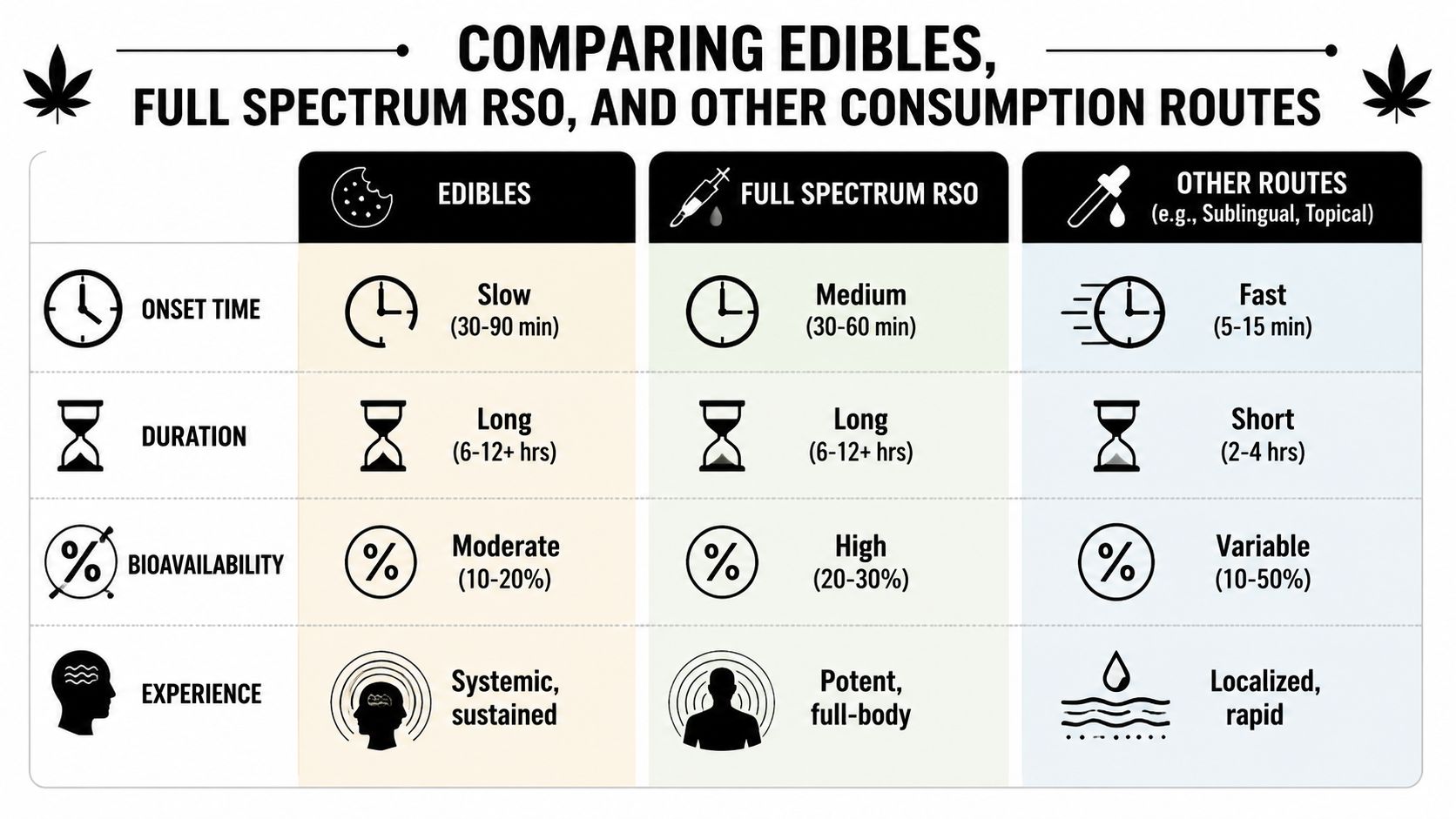
For sciatica, the practical question is simple. Are you trying to cover a predictable block of pain, such as the evening hours or overnight sleep, or are you trying to respond to a fast daytime flare? Those are different jobs. A longer-acting oral option may suit the first pattern. It often fits the second pattern poorly.
Standard edibles such as gummies and capsules
Gummies, chocolates, and capsules are usually the easiest oral products to use consistently. Each serving is premeasured, which helps patients repeat the same dose instead of guessing. That matters when you are trying to learn what your body tolerates.
Their main limitation is timing. Oral edibles can take a while to begin working, and the onset can feel inconsistent from one day to the next because food intake, metabolism, and individual sensitivity all affect absorption. For someone whose sciatica ramps up every night around the same time, that slower curve may be acceptable. For someone who needs relief during a sudden spike after sitting, driving, or bending, it may feel too delayed.
Full-spectrum RSO
RSO belongs in a separate category because it is both concentrated and flexible. Instead of taking a fixed 5 mg or 10 mg serving in a gummy, a patient can start with a very small measured amount and adjust more gradually over time. That flexibility appeals to people who want tighter control over titration.
The tradeoff is precision. A gummy comes with a built-in boundary. RSO asks the patient to create that boundary carefully, which is harder for beginners and easier to get wrong. Full-spectrum extracts may also feel different from simpler edible formulas because they contain a wider mix of plant compounds. Readers who want a clearer breakdown of extract types can review this guide to FSO and RSO differences.
Other routes such as tinctures and topicals
Tinctures and oils are often chosen by patients who want something between a traditional edible and a more immediate option. Depending on the product and how it is used, they may allow somewhat faster adjustment and easier dose changes than a gummy. That can be helpful if symptoms shift through the day rather than following a single evening pattern.
Topicals serve a narrower role. They may help with surrounding muscle tension in the low back, buttock, or hip, but sciatica pain usually originates from irritation or compression affecting a deeper nerve pathway. A cream on the skin may support comfort around the area without fully addressing the radiating leg pain that defines classic sciatica.
A practical comparison
| Route | Best fit | Main advantage | Main limitation |
|---|---|---|---|
| Gummy or capsule | Nighttime or planned symptom control | Consistent serving size | Slow onset |
| Full-spectrum RSO | Patients who want flexible titration and a broad extract profile | Adjustable dosing | Requires careful measuring |
| Tincture or oil | People who want a middle ground between speed and duration | Easier to adjust dose | May need more frequent use |
| Topical | Surface discomfort or surrounding muscle tension | Non-oral option | Limited reach for deeper nerve symptoms |
Decision rule: Match the route to the pain pattern. For predictable evening or overnight sciatica, a slower oral option may be reasonable. For acute daytime flares, an edible is often too slow to be the first choice.
What “best” usually means in practice
The best edible for sciatica is usually the one that fits the timing of the problem and can be used safely with repeatable dosing. Strength alone is a poor guide. A patient waking at 2 a.m. from burning leg pain has a different goal from a patient trying to stay functional through a workday with intermittent flare-ups.
Choosing an Evidence Informed Cannabinoid Profile
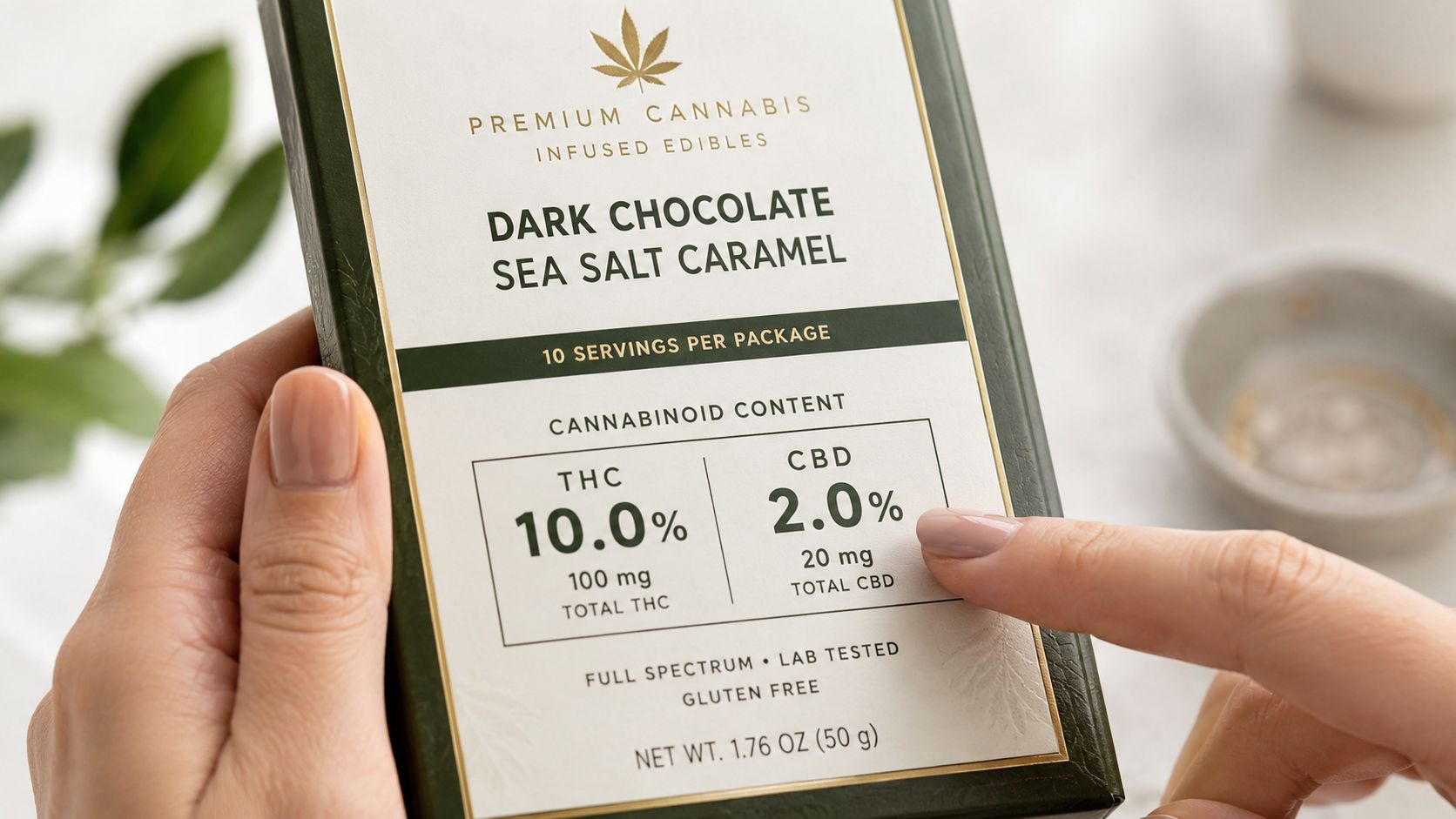
A patient with sciatica may stand in front of a dispensary menu and see three products that all promise relief, yet each one may behave differently in the body. The label often matters as much as the edible form itself, because the cannabinoid profile helps predict whether a product is more likely to support overnight pain control, reduce irritation, or cause side effects that make daily function harder.
THC dominant products
In cannabinoid therapy for sciatica, THC is commonly described as the primary analgesic compound. That is why THC-forward products often attract attention from people dealing with sharp, intrusive, radiating pain that interrupts rest.
The tradeoff is tolerance. THC can also impair attention, coordination, and judgment, and some patients feel anxious, dizzy, or overly sedated even at modest doses. That matters most for anyone who is new to cannabis, older, sensitive to psychoactive effects, or trying to remain functional during the day.
For that reason, THC-dominant edibles usually fit planned evening use better than unpredictable daytime flares.
CBD dominant products
CBD is often discussed for its anti-inflammatory and calming potential. For some people with sciatica, that profile may make more sense when symptoms feel irritated, inflamed, or physically tense rather than sharply electric.
CBD-dominant products are also easier for many patients to approach because they are generally less intoxicating. The limitation is practical. A CBD-only edible may feel too mild for severe nerve pain, especially if the main problem is burning or stabbing discomfort that wakes someone from sleep.
Balanced or full-spectrum formulas
Balanced formulas often make the most sense when symptoms are mixed. A person may have nerve pain, surrounding muscle guarding, and sleep disruption all at once. In that setting, relying on only one cannabinoid can be like trying to manage a complex pain pattern with a tool built for only one part of the job.
Full-spectrum THC and CBD products are frequently discussed for neuropathic pain because they combine THC's pain-relieving role with CBD's moderating and anti-inflammatory potential. Some clinicians and educators describe this as the entourage effect. Apollo Cannabis explains the concept in its discussion of medical cannabis for sciatica pain relief. In plain language, a broader extract may feel more balanced than a product built around a single isolated cannabinoid.
A practical way to choose
Instead of asking which edible is strongest, ask which profile matches the pattern of pain.
- Sleep-disrupting nighttime sciatica: A balanced or THC-inclusive oral product is often the profile patients examine first for longer coverage.
- THC sensitivity or milder inflammatory discomfort: A CBD-dominant option may be easier to tolerate.
- Mixed symptoms that shift through the day: A full-spectrum formula may offer a broader effect, especially when no single symptom defines the whole picture.
Earlier evidence summaries have also helped explain why low-dose THC remains part of the conversation around sciatica. That does not prove one product is best for every patient. It does support a more careful approach: choose the cannabinoid profile based on timing, symptom pattern, and tolerance, not marketing language or total milligrams alone.
Developing a Responsible Dosing and Titration Protocol
At 10 p.m., a person with sciatica takes an edible because the burning pain down the leg is building again. Forty-five minutes later, nothing seems different, so they take more. An hour after that, both doses begin to peak. The result is not better pain control. It is an avoidable period of feeling too impaired, too sedated, or just uncomfortable.
That pattern is common because oral cannabinoids are slow and variable. They can fit long-duration or overnight pain, but only if the dosing plan respects the delay between swallowing a product and feeling the full effect.

Start low and go slow
For sciatica, the goal is not to chase the fastest sensation. The goal is to learn how your body responds, then match the dose and timing to the pain pattern you are trying to treat. A small evening dose for overnight pain is a different decision from using a concentrated product for severe, persistent symptoms.
Start with one product. Keep the time of use consistent for several trials. Wait long enough before deciding whether it helped. If you change the product, dose, and schedule all at once, you lose the ability to tell what caused benefit or side effects.
A careful first trial usually looks like this:
- Choose a low-demand evening. Do not test an edible before driving, work, childcare duties, or any task that requires quick judgment.
- Use one clearly labeled product. Consistency matters more than chasing a higher milligram number.
- Take the smallest practical starting amount. With oral THC, less is often easier to interpret.
- Wait for the full window of effect before redosing. Oral products can build slowly.
- Repeat the same plan before increasing. One trial does not tell you everything.
For a more detailed explanation of cautious oral planning, this guide to edible dosage and stepwise titration can help you set a safer routine.
Safety rule: If you are wondering whether to take more because nothing has happened yet, wait longer.
Match the protocol to the job
This article's main decision point matters here. Sciatica pain is not always the same problem at every hour of the day.
If your main issue is overnight pain or sleep disruption, an edible may make sense because the effect lasts longer. In that situation, timing becomes part of the treatment plan. Taking it too late can mean peak effects arrive after you wanted to be asleep, or linger into the morning.
If your main issue is sudden spikes of pain that need quick relief, edibles are often a poor fit. They act more like a slow-release option than an on-demand tool. RSO can also last a long time, but because it is concentrated, dose changes need even more caution.
That distinction helps prevent a common mistake. People sometimes judge a product as “not working” when the problem is that the method does not match the timing of the symptom.
Use a symptom journal
Memory is unreliable, especially when pain and sleep loss are already affecting concentration. A simple journal turns the process into an observation exercise instead of guesswork.
Record:
- what product you used
- how much you took
- what time you took it
- when you first noticed any effect
- whether leg pain, burning, tingling, or restlessness changed
- whether sleep improved
- how you felt the next morning
Patterns often show up after several entries. A product may not erase pain, yet still reduce bedtime agitation or the number of overnight wake-ups. For many patients, that is a meaningful benefit.
A short visual overview may help reinforce those basics:
Titration should be predictable
Good titration is quiet, slow, and a little boring. That is a strength, not a weakness.
Increase only after you have repeated the same dose enough times to judge it fairly. If side effects appear, return to the last tolerable dose or stop and reassess. With RSO and other concentrated products, very small amount changes can produce noticeably different effects, so careful measurement matters.
Use these checkpoints each time you adjust:
- Pain target: Did it help the symptom you meant to treat, such as overnight burning pain or bedtime restlessness?
- Timing: Did the effects begin early enough to support sleep, or too late to be useful?
- Mental comfort: Did you feel calm and functional, or foggy and uneasy?
- Next-morning function: Were you clear enough for routine activities?
- Consistency: Did the same dose behave similarly on more than one occasion?
A responsible protocol is less about finding the “strongest” edible and more about building a repeatable plan. That is how patients reduce avoidable side effects and learn whether an edible, or a concentrated option like RSO, fits the pattern of their sciatica symptoms.
Safety Considerations and Professional Medical Guidance
This article is for educational purposes only. Individual results may vary. Further research is needed. Consult a licensed medical professional.
Sciatica has many causes, and cannabinoid products don't correct the underlying problem by themselves. They may fit into an adjunctive plan, but they shouldn't push aside evaluation, physical therapy, or other appropriate care. That's especially important if symptoms are changing, spreading, or becoming harder to manage.
Product quality matters. Choose products that are independently lab-tested for potency and purity, and avoid unregulated sources that don't provide clear testing information. A certificate of analysis should be easy to access and understandable enough to confirm what's in the product.
Medication interactions and individual tolerance also matter. A patient already taking sedating medications, sleep aids, or other pain treatments should be especially cautious and discuss cannabinoid use with a licensed clinician before making changes.
Frequently Asked Questions About Edibles For Sciatica
Are edibles the best choice for sudden sciatica flares
A common scenario is pain that spikes after a long drive, a workout, or an awkward movement, and you want relief soon. In that setting, edibles are usually not the first match because they take time to pass through digestion before effects are felt.
EVN CBD's overview of edibles for sciatica pain describes oral edibles as a slower-onset option, with effects that may begin in about 30 minutes to 2 hours and last much longer than inhaled methods. That timing makes them more useful for planned, sustained coverage, such as evening pain that tends to build, than for sudden breakthrough symptoms.
What type of edible makes the most sense at night
Nighttime use is usually a timing question more than a product hype question. If pain predictably ramps up after dinner or wakes you in the middle of the night, a longer-acting oral product may fit that pattern better than something brief.
A helpful way to think about it is to match the product to the rhythm of the pain. Gummies with measured servings are often easier for beginners who want consistency. More concentrated oral options may suit patients who already understand their tolerance and need longer coverage. Many people start with a balanced THC and CBD formula, then adjust cautiously based on sedation, mental effects, and next-morning grogginess.
Is RSO better than gummies for sciatica
RSO and gummies solve different problems.
Gummies are like a pre-portioned medication cup. The serving is easier to track, which lowers the chance of taking too much by accident. RSO is more like a concentrated liquid extract that allows flexible dosing, but it asks more of the user because measuring small amounts accurately takes care and patience.
For sciatica, the better option depends on the pain pattern you are trying to address. If you need a simple, repeatable evening routine, gummies may be easier to use responsibly. If you need longer-duration coverage and already know how to titrate carefully, RSO may be worth discussing with a clinician.
Should I use THC, CBD, or both
The answer often depends on what the pain feels like and when it shows up. Some patients are looking mainly for pain reduction at night. Others are trying to blunt a burning, radiating discomfort while staying functional during the day.
THC is more often associated with noticeable pain relief, but it also carries a higher risk of intoxication, anxiety, and sedation. CBD is often chosen for a gentler effect profile, though it may feel less dramatic. Combination products are common because they may offer a broader effect than either cannabinoid alone, especially when the goal is sustained symptom control rather than a quick change you can feel right away.
Can cannabinoids replace physical therapy or standard treatment
Cannabinoids are better viewed as one tool in a larger plan. Sciatica is a symptom pattern, not a single disease, and the underlying cause still matters.
That means oral cannabinoids may have a role in comfort, sleep, or symptom management, while physical therapy, medical evaluation, and other treatments address function and cause. Patients usually do best when they match the product form to the pain pattern and keep the rest of their care plan in place.
If you're comparing gummies, full-spectrum oils, and concentrated extracts and want a more structured, safety-focused explanation, RickSimpsonOil.info offers educational guides on RSO, oral dosing, product comparisons, and careful titration. Families and patients seeking clearer decision support can also use the site to review practical information before speaking with a licensed medical professional.