
If you're using a THC-rich product such as RSO or another full-spectrum extract, you've probably heard some version of the same advice: add CBN for sleep, add CBN to smooth out the high, or use both for a stronger nighttime effect. That advice is common. The evidence behind it is much less settled.
CBN and THC together is a topic where marketing often moves faster than human research. That doesn't mean the combination is useless. It means patients and caregivers need a careful framework for thinking about it, especially when they're trying to interpret product labels, lab reports, and sleep-focused claims.
This article is for educational purposes only. Individual results may vary. Further research is needed. Consult a licensed medical professional. If you're using cannabinoids alongside oncology care, pain treatment, or other prescription therapies, an integrative discussion with your care team matters.
Understanding the Interest in Combining CBN and THC
Many people arrive at this question in a practical way, not an academic one. A patient takes a THC-dominant oil at night and feels too stimulated. A caregiver sees a label that says "CBN + THC sleep formula" and wonders whether that pairing is more targeted. Someone using a full-spectrum extract hears that CBN may make THC feel gentler or more sedating.
Those questions make sense because THC, or tetrahydrocannabinol, is the cannabinoid widely associated with the classic cannabis "high." It can also affect appetite, mood, perception, and sleepiness, though the experience varies. CBN, or cannabinol, is another cannabinoid that gets discussed most often in nighttime products.
What confuses readers is that CBN is often described in very confident language, especially around sleep, while the human evidence remains limited. In clinical education, that's a signal to slow down and separate three different ideas that often get blended together:
- What people report feeling
- What a product is designed to contain
- What controlled human studies have shown
Clinical perspective: A symptom story and a pharmacology claim aren't the same thing. Both matter, but they answer different questions.
In full-spectrum oils, including RSO or FECO-style extracts, you're rarely dealing with a single isolated compound anyway. You're dealing with a cannabinoid profile, terpene profile, route of administration, and a person's own sensitivity. That's why a simple statement like "CBN boosts THC" is usually too crude to be helpful.
How CBN and THC Interact Within the Body
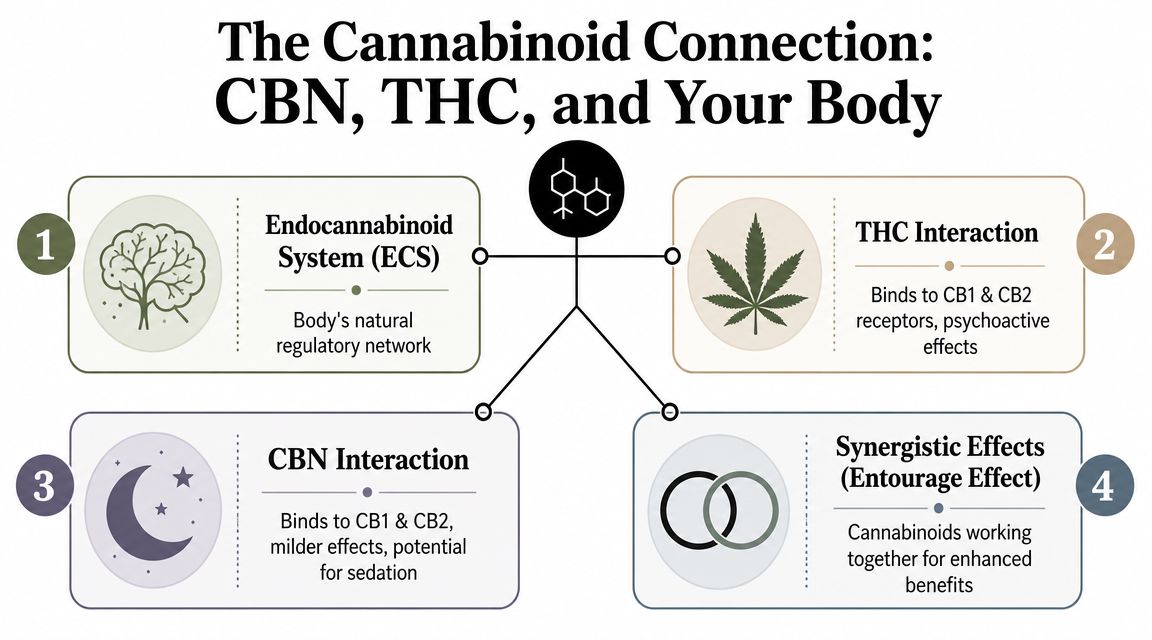
The easiest way to understand this combination is to start with the endocannabinoid system, often shortened to ECS. Think of the ECS as a signaling network that helps the body regulate functions such as mood, appetite, stress response, and sleep-wake rhythms. Cannabinoids from the plant interact with parts of that network, especially CB1 and CB2 receptors.
THC is the stronger actor in this pair. If the receptor is a lock, THC is a key that fits well enough to produce clear effects, especially at CB1, which is linked to many of the psychoactive and perceptual effects people notice. CBN appears to interact more weakly.
Why THC usually dominates the experience
When people take both compounds together, THC often drives the most obvious acute effects. That includes intoxication, altered perception, and the feeling that the dose has "kicked in." CBN may still contribute to the overall experience, but current human data doesn't show a strong, predictable ability to reshape THC's short-term effects.
A useful analogy is audio mixing. THC is often the lead instrument. CBN may be part of the track, but that doesn't mean it's controlling the whole sound.
Where the entourage effect fits
The entourage effect is the idea that cannabinoids and other plant compounds may influence each other when taken together. It's a reasonable concept and one reason many patients prefer full-spectrum products over isolates. But it's often used too loosely.
Saying the entourage effect might exist is different from saying a specific pair, such as CBN and THC, has a proven and reliable clinical outcome in humans. That's where many product claims stretch beyond the evidence.
Here are the main points to keep straight:
- THC has stronger direct activity: It's usually the main reason a product feels intoxicating or sedating.
- CBN appears weaker at the receptor level: That doesn't make it irrelevant, but it does make strong synergy claims harder to prove.
- Whole-plant products are more complex: Terpenes, other cannabinoids, and the dose itself may shape the final experience.
The body doesn't read a marketing label. It responds to the actual chemical profile, the dose, and the route of use.
Why route of use also matters
With oral products such as RSO, first-pass metabolism adds another layer. The liver transforms cannabinoids before they fully circulate, which can make timing and intensity less predictable than inhaled use. That's one reason a person may attribute an effect to CBN when the bigger factors may be oral THC dose, meal timing, or the broader extract profile.
Reviewing the Evidence for Synergistic Effects
The strongest patient-facing claim is usually the simplest one: CBN plus THC is a stronger sleep combination than THC alone. It's appealing, easy to market, and not yet well established in controlled human research.
A key evidence point comes from a peer-reviewed review that discussed a controlled human study in 15 healthy male volunteers. In that study, 20 mg oral THC combined with 40 mg CBN showed "no quantitative or temporal difference" in subjective drug effects compared with THC alone, and the review also noted that CBN didn't appear to affect blood THC levels (peer-reviewed review of CBN and THC interactions).
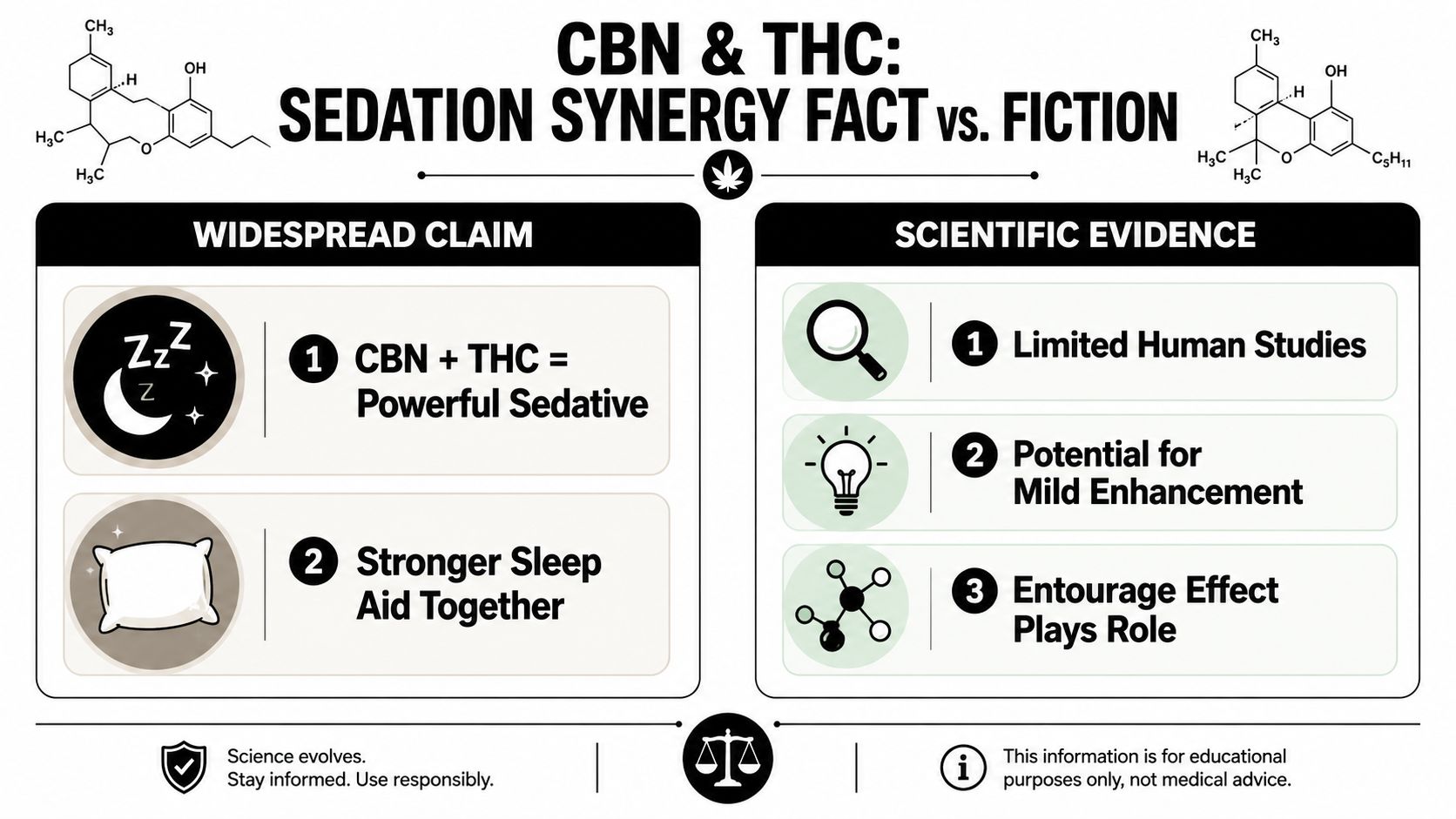
That finding doesn't prove no one will ever feel a difference. It does show that a widely repeated claim about CBN reliably changing THC's acute effects is ahead of the human evidence base.
What this study does and doesn't mean
A controlled study gives us a cleaner signal than anecdotes, but it doesn't answer every real-world question. Patients vary. Products vary. Full-spectrum extracts vary even more. Still, controlled data matters because it tests whether a claim holds up when variables are reduced.
Here's the practical takeaway:
| Question | What the evidence supports |
|---|---|
| Does CBN definitely intensify THC's acute effects? | Human evidence is limited and doesn't clearly support that claim |
| Does CBN clearly change blood THC levels? | The review noted it did not appear to |
| Are sleep-marketing claims settled science? | No, they're not |
Why some people still report a stronger nighttime effect
There are several plausible reasons. One is expectation. Another is that full-spectrum products contain more than CBN and THC. Terpenes and minor cannabinoids may shape the experience, and so can dose timing, food intake, and individual sensitivity.
That's why comparing isolated claims with full-spectrum reality is so important. If you're sorting out cannabinoid labels, this comparison of CBN vs CBD in full-spectrum products can help clarify where product language often gets muddy.
Important distinction: "People report it helps me sleep" is not the same as "human trials show CBN reliably modifies THC in a predictable way."
For a motivated patient or caregiver, that distinction is useful. It keeps you open-minded without being overly credulous.
Safety, Quality, and Full-Spectrum Product Integrity
The most overlooked issue isn't just whether CBN and THC together feel different. It's whether the product contains the intended profile in a stable, verifiable form.
CBN has a special quality problem attached to it because it can arise as THC degrades over time. A public explainer notes that fresh cannabis typically contains very little CBN, while aged or improperly stored cannabis can reach 2 to 10% CBN as THC breaks down (discussion of CBN as a marker of THC degradation).
That matters because a label that highlights CBN doesn't always tell you whether the CBN was deliberately formulated, naturally present in a stable full-spectrum profile, or increased because the material aged or was stored poorly.
What to look for on a lab report
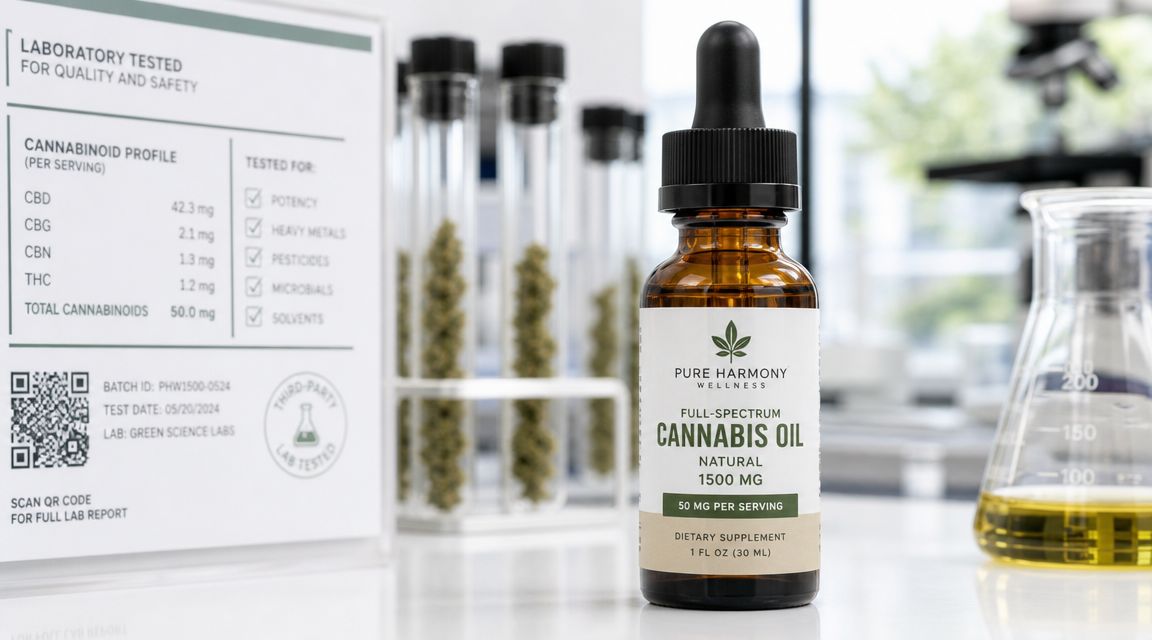
For patients using concentrated oils, a current Certificate of Analysis is not optional. It should help you answer practical questions, not just decorate a product page.
Check for:
- Cannabinoid profile: You want to see THC and CBN listed clearly, not implied with vague blend language.
- Batch-specific testing: A current batch report is more useful than a generic document reused across products.
- Storage relevance: If a product is marketed for consistency, the cannabinoid profile should support that claim over time.
- Contaminant screening: Patients using concentrated extracts should know whether the product was screened for common impurities.
A full-spectrum product can be valuable, but only if the profile is known and reproducible. If you want a deeper primer on how these products differ from isolates or distillates, this guide to full-spectrum oil and whole-plant extract considerations is a useful companion.
Why this matters more in RSO and FECO contexts
RSO and FECO-style oils are concentrated. That concentration can be useful, but it also means small profile differences may matter more. If a patient thinks they're choosing a targeted CBN-and-THC product for nighttime use, but the issue is degraded THC or inconsistent storage, the label becomes misleading even if the product isn't intentionally deceptive.
Ask a simple question: Is this CBN present by design, or is it present because the original THC profile changed?
That question protects patients from one of the biggest gaps between cannabinoid marketing and product reality.
Dosing Strategies for CBN and THC in RSO
With RSO, the most responsible approach isn't to chase a fashionable ratio. It's to titrate carefully. Full-spectrum extracts aren't like a single-ingredient medication where one active compound tells the whole story.
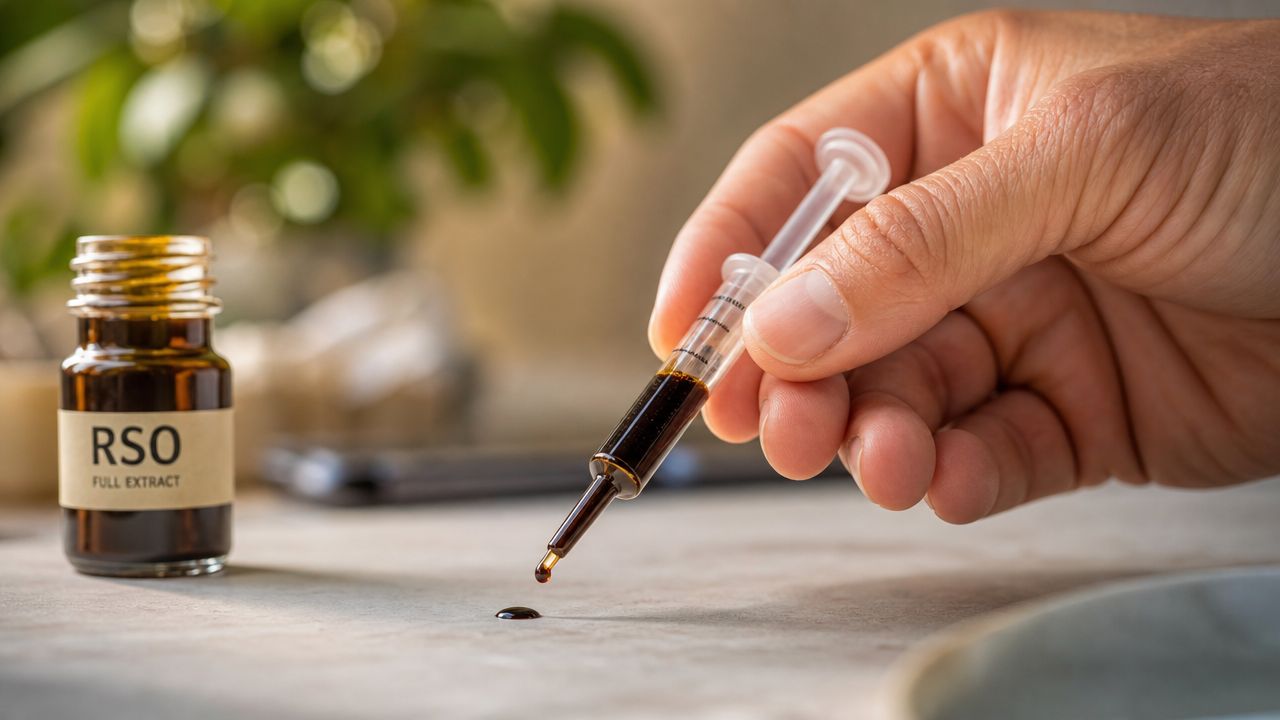
Start by identifying what you're using. Is the oil THC-dominant with trace CBN, or is it marketed as a nighttime formula with a noticeable CBN component? Your lab report gives you the starting map.
A practical titration mindset
Patients often make dosing harder than it needs to be by changing several variables at once. They increase the amount, change the time of day, and switch products in the same week. That makes it almost impossible to tell what's helping.
A better approach is slower and more disciplined:
- Keep the product consistent first. Don't compare three oils at once.
- Track timing and response. Note sedation, alertness, appetite, and next-morning grogginess.
- Adjust one variable at a time. If you change the amount, keep the timing the same for a while.
- Respect oral onset. RSO can take time to declare itself.
For readers who want a more detailed framework, this resource on RSO oil dosing and titration strategy can help organize the process.
Reading the profile instead of guessing the profile
If the lab report shows a small amount of CBN, don't assume it will dramatically reshape the experience. If it shows a more noticeable amount, don't assume the effect came from CBN alone. In full-spectrum oils, the profile works as a cluster.
Practical rule: Change the dose because your symptom response supports it, not because a label promises a certain cannabinoid mood.
This overview may also help some readers understand how patients think about oral extract use in real life:
Some families seek consultations for this exact reason. The challenge usually isn't access to product information. It's interpreting a full-spectrum profile without turning every new cannabinoid on the label into a separate promise.
Impact on Drug Testing and Legal Status
If you're using CBN and THC together, you should assume there is a meaningful risk of failing a cannabis drug test. From a practical standpoint, this isn't a subtle issue.
CBN is closely related to THC, and products that combine them often raise the same workplace or screening concerns patients already associate with cannabis. Whether the CBN is described as hemp-derived or comes from another source may not protect you in a real-world testing context.
Two realities to keep in mind
- Drug testing is usually blunt: It often isn't designed to reward fine distinctions between product marketing categories.
- Cannabis laws vary by location: CBN's status can be tied to source, formulation, and local rules.
This is an area where readers should be cautious, not optimistic. If testing, employment policy, or travel status matters for you, verify the rules that apply in your own setting. Consult a licensed medical professional and, when needed, qualified legal guidance in your jurisdiction.
Frequently Asked Questions and Conclusion
Is there an ideal THC to CBN ratio
No single ratio has been established as ideal for everyone. The right approach depends on the actual product profile, your sensitivity to THC, and the symptom you're trying to address.
Can I take CBN and THC with other medications
Possibly, but that doesn't mean it's risk-free. Cannabinoids can complicate medication planning, especially in people using sedating drugs, psychiatric medications, pain medicines, or complex oncology regimens. Consult a licensed medical professional.
Does time of day matter
Yes. Many people reserve this combination for evening use because THC-rich oral products can impair attention, reaction time, and next-day functioning in some individuals. The timing should fit your response, not just the product label.
Does more CBN always mean better sleep support
No. A higher CBN level doesn't automatically mean a better nighttime effect. In some cases, it may also raise a product-quality question about age, storage, or profile consistency.
Should I choose isolate products or full-spectrum oil
That depends on your goals. Full-spectrum oils may offer a broader plant profile, but they also introduce more variables. Isolates are simpler to interpret, though they may not reflect the whole-plant approach some patients prefer.
The most balanced conclusion is this: CBN and THC together is a reasonable area of interest, but the clinical reality is more modest than the marketing language suggests. Human evidence is still limited. Product quality matters. Dosing needs to be individualized. For patients using RSO or FECO-style oils, a careful review of the lab report is often more useful than chasing broad claims about synergy.
This article is for educational purposes only. Individual results may vary. Further research is needed. Consult a licensed medical professional.
If you're looking for a more structured, evidence-aware way to evaluate RSO, FECO, dosing strategy, and product quality, RickSimpsonOil.info offers patient-centered educational guides and a consultation option for families who want help reviewing lab-tested oils and full-spectrum formulations.