
When you start looking into cannabis extracts like Rick Simpson Oil (RSO), you’ll hear the term full spectrum tossed around a lot. So, what does it actually mean?
Think of it this way: full spectrum means the oil contains every last bit of the beneficial compounds found in the original cannabis plant, all working together exactly as they do in nature. It’s the difference between listening to a solo violinist and experiencing the rich, layered sound of a full symphony orchestra.

What Makes an Extract "Full Spectrum"?
To really get it, you have to appreciate that the cannabis plant is a complex chemical factory. It’s not just about THC and CBD. The plant produces hundreds of different compounds, and a true full spectrum extract aims to capture all of them in one potent oil.
This whole-plant philosophy means preserving the major cannabinoids (like THC and CBD) alongside the minor ones (like CBG and CBN). But it doesn’t stop there. It also keeps the aromatic terpenes—the molecules responsible for the plant’s distinct smell and flavor—and the flavonoids, which have their own unique properties. The entire goal is to keep this natural symphony perfectly intact.
Keeping the Band Together
Why all the fuss about preserving every little compound? It all comes down to a fascinating idea known as the "entourage effect," a topic we'll dive into more deeply soon. In short, this theory suggests that all these compounds work better together than they do alone. Each one enhances the effects of the others, creating a result that’s greater than the sum of its parts.
A full spectrum oil gives you the entire cast of natural compounds, not just the headliners. This holistic approach is what many people believe makes extracts like RSO so uniquely effective for health and wellness.
This stands in sharp contrast to other types of extracts. Let's break down the main differences.
Full Spectrum vs Broad Spectrum vs Isolate At a Glance
This table offers a quick comparison to help you see how these extracts stack up against one another.
| Extract Type | Cannabinoids Present | Contains THC | Key Characteristic |
|---|---|---|---|
| Full Spectrum | All cannabinoids, terpenes, and flavonoids | Yes | Captures the entire plant profile for the "entourage effect." |
| Broad Spectrum | Most cannabinoids and terpenes | No (or trace amounts) | Offers a team effect but without the psychoactive THC component. |
| Isolate | A single cannabinoid (e.g., 99% pure CBD) | No | Pure, isolated compound with no other plant materials. |
Essentially, you have three distinct choices: the full orchestra (full spectrum), the orchestra without the lead vocalist (broad spectrum), or a single instrument playing solo (isolate).
The demand for products that deliver the complete, whole-plant experience is growing. The global cannabis oil market, which is heavily influenced by full spectrum products, was valued at USD 957 million in 2024. Projections show it reaching USD 6.18 billion by 2031, which is a massive compound annual growth rate of 31.3%. That growth clearly shows a major shift toward whole-plant wellness solutions.
Why RSO Is the Ultimate Full Spectrum Example
Rick Simpson Oil (RSO), also known as Full Extract Cannabis Oil (FECO), is the classic full spectrum product. The traditional method for making it is specifically designed to pull every valuable compound from the plant, resulting in a thick, dark, and incredibly potent oil.
Unlike more refined products, RSO is intentionally left unpurified. This ensures that none of those crucial minor compounds are accidentally filtered out or destroyed. This commitment to preserving the whole plant is the very heart of what RSO is all about. To get a better handle on these differences, it's worth taking a closer look at full spectrum vs broad spectrum extracts.
Understanding The Entourage Effect
The real magic behind the term “full spectrum” is a phenomenon called the entourage effect. This is the fundamental reason why whole-plant extracts are held in such high regard. It’s all about the synergy—the way all the natural compounds in the cannabis plant work together to create an effect far greater than what any single component could do alone.
Think of it like a world-class orchestra. A solo violinist might be breathtaking, but the power of a symphony comes from the violins, cellos, brass, and percussion all playing in harmony. Each instrument section supports and elevates the others. That's precisely how the entourage effect works in cannabis.

More Than Just THC and CBD
While THC and CBD get most of the spotlight, they're just the lead violinists. A genuine full spectrum extract contains a whole roster of supporting compounds, and each one has an important part to play.
These supporting players fall into a few key categories:
- Minor Cannabinoids: Compounds like Cannabigerol (CBG) and Cannabinol (CBN) have their own unique properties that add balance and nuance to the oil's overall effect.
- Terpenes: These are the fragrant oils responsible for the distinct aromas of cannabis—from pine and citrus to earthy and spicy notes. But they do much more than just smell good; terpenes have powerful effects of their own and can significantly shape the user's experience.
- Flavonoids: Found throughout the plant kingdom in fruits and vegetables, flavonoids contribute to pigmentation and offer antioxidant benefits, adding another layer of complexity to the oil.
This rich blend of cannabinoids, terpenes, and flavonoids creates a complex chemical symphony. The entourage effect is the beautiful music that happens when all these instruments play together perfectly.
The concept is simple but profound: 1 + 1 doesn’t equal 2; it equals 3. The combined action of these compounds unlocks a new level of potential that’s impossible to achieve when they are isolated.
How Terpenes Shape the Experience
To really grasp the entourage effect, it’s worth taking a closer look at terpenes. These aromatic molecules don't just provide scent and flavor; they actively interact with cannabinoids to modify, enhance, or temper their effects. This interaction is central to what makes a full spectrum oil so unique.
For example, someone could have completely different experiences with two oils that have the exact same THC percentage. Why? Because their terpene profiles are different. To explore this further, you can get a detailed breakdown of what’s in full spectrum THC and see how these compounds interact.
Here are just a few common terpenes and how they can steer the overall effect:
- Myrcene: One of the most common terpenes, Myrcene has an earthy, musky scent. It's often linked with calming and relaxing effects, potentially amplifying the soothing properties of certain cannabinoids.
- Limonene: With its zesty citrus aroma, limonene is known for its potential to elevate mood. When present in an oil, it may contribute to a more uplifting and clear-headed experience.
- Linalool: Also found in lavender, linalool has a delicate floral scent and is widely recognized for its potential to promote tranquility.
- Pinene: Just as the name suggests, pinene carries a crisp pine aroma. It’s often associated with alertness and focus, and it may help counteract some of the mental fogginess THC can sometimes cause.
This is exactly why preserving the plant's natural chemical fingerprint is so vital. When you start removing compounds or isolating just one, you dismantle the very synergy that makes the whole plant so effective. A true full spectrum product like a properly made RSO is a testament to this whole-plant philosophy, ensuring you get the complete orchestra for a richer, more balanced result.
How RSO Delivers a True Full Spectrum Experience
The idea of a "full spectrum" product is one thing in theory, but Rick Simpson Oil (RSO) is where that concept becomes a potent, tangible reality. The way RSO is made isn’t about fancy chemistry or high-tech refinement. It’s a straightforward, almost rustic process designed to do one thing: preserve the entire cannabis plant.
This approach makes RSO the quintessential example of a true full spectrum extract. The original goal was simple—create a pure, whole-plant oil for serious health support. That mission dictated the method, resulting in an extraction that captures everything of value without stripping away the good stuff. It's a world away from highly processed extracts that often sacrifice crucial terpenes and minor cannabinoids along the production line.
An Unrefined Approach for Maximum Benefit
What really defines RSO is its raw, unrefined character. The process is designed to grab everything—from the big-name cannabinoids like THC and CBD right down to the most delicate flavonoids and terpenes. This isn't a sloppy byproduct; it's the entire point.
By deliberately avoiding the aggressive filtering and purification steps common with other oils, RSO holds onto the plant’s original chemical blueprint. This ensures the entourage effect isn't just some theoretical benefit; it's baked into the very foundation of the oil.
This unwavering commitment to the "whole plant" philosophy is what sets RSO apart. When people wonder, "what does full spectrum mean," a vial of dark, potent RSO is the most honest answer you can give. It delivers the entire orchestra, not just a solo performance from one or two star cannabinoids.
The RSO Profile: A Complete Plant Snapshot
A genuine RSO isn’t just about THC. It contains a rich mosaic of compounds that are all believed to work together, which is exactly why it’s so highly regarded for promoting wellness.
- A Rich Cannabinoid Mix: Of course, it’s high in THC, but it also hangs on to significant amounts of CBD, CBG, and CBN, creating a balanced and powerful foundation.
- Aromatic Terpenes: The full suite of the plant's terpenes is preserved. These aromatic compounds don't just influence the oil's scent and flavor; they play a massive role in shaping its effects.
- Essential Plant Matter: Other components like chlorophyll and plant waxes also make it into the final product. While they might seem minor, many believe they play a quiet but important supporting role.
In the world of cannabis oils, the real difference often comes down to this level of preservation. You can dive deeper into the nuances by exploring Full Spectrum Oil (FSO) vs RSO to see just how much processing can change the end result.
This unrefined, whole-plant approach isn't just a niche preference; it's a major market force. The cannabis oil sector, which hit USD 1,206 million in 2024, is seeing massive growth driven by products like RSO. In fact, full-spectrum oils account for over 60% of wellness applications precisely because of their comprehensive potential. With the market projected to hit an incredible USD 7,782 million by 2032, it's clear that users and patients are voting for whole-plant solutions. You can see more on these trends in the cannabis oil market report on intelmarketresearch.com.
At the end of the day, RSO delivers a true full spectrum experience because it was designed from the ground up to do exactly that. It stands as a powerful testament to the idea that the cannabis plant, in its most complete and natural form, offers the most profound benefits.
How to Read Lab Reports for Real Full Spectrum RSO
You shouldn't have to take a company's word for it when they claim their Rick Simpson Oil (RSO) is "full spectrum." The proof is in the paperwork. Specifically, a document called the Certificate of Analysis, or COA.
This third-party lab report is your window into the exact chemical makeup of the oil. Learning how to read it is the single most important skill you can have to ensure you're getting a safe, authentic, and effective product. It cuts through the marketing noise and shows you the hard data.
A genuine full spectrum oil is essentially the concentrated essence of the original plant, with all its valuable compounds preserved.
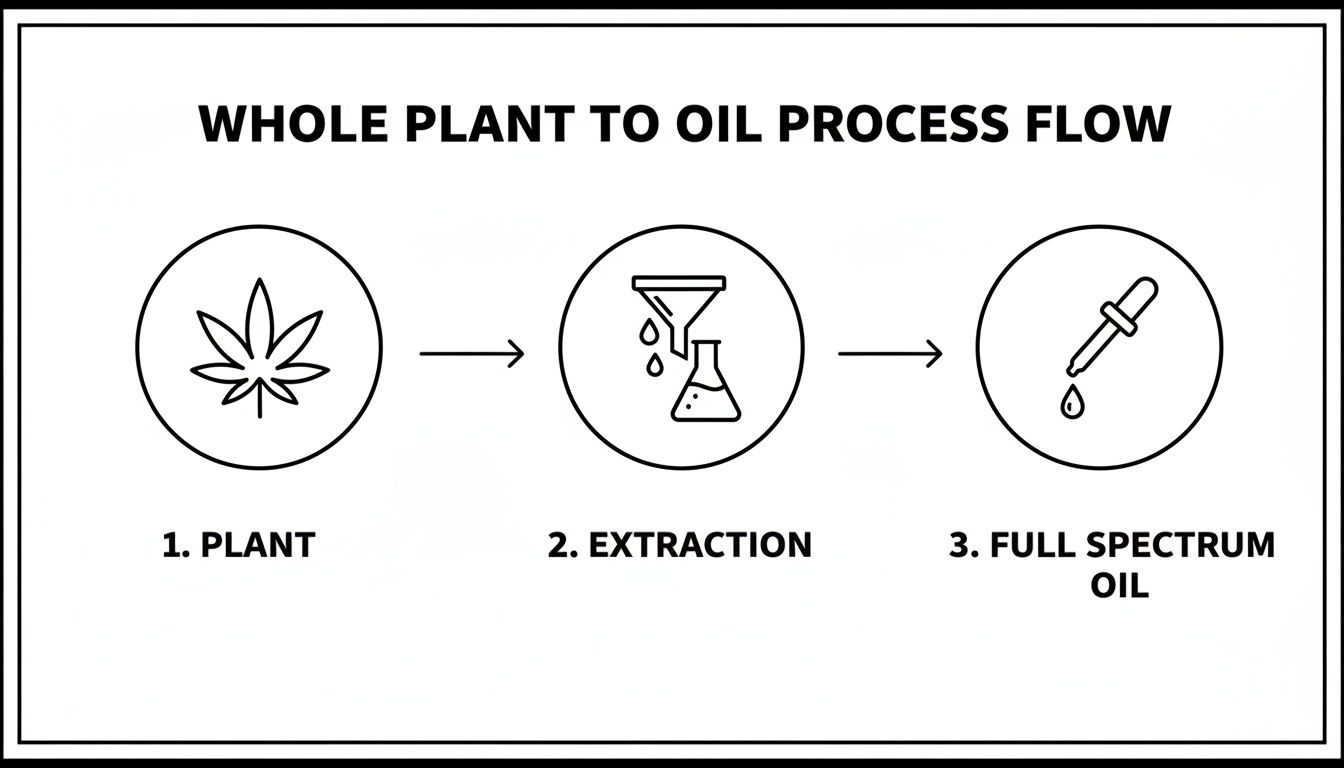
Let's break down what to look for on a COA to verify you have the real deal.
Decoding the Cannabinoid Profile
First things first, find the cannabinoid profile. This is where you’ll see if the oil offers the complete symphony of compounds or just a single, loud instrument. While a high THC percentage is expected, a true full spectrum RSO will feature a diverse cast of supporting cannabinoids.
Look for measurable amounts of cannabinoids like CBG (Cannabigerol), CBC (Cannabichromene), and CBN (Cannabinol). Their presence, even in small amounts, is a strong sign that the oil was made from the whole plant. If the report just shows a massive THC spike and virtually nothing else, you might be looking at a distillate with terpenes added back in—not true full spectrum.
Analyzing the Terpene Report
Next up is the terpene analysis. Terpenes are the fragrant oils that give the plant its unique aroma and flavor, but they also play a massive role in the oil’s effects through the entourage effect.
A rich and varied terpene profile is the signature of a high-quality full spectrum oil. A good lab report will list several, including:
- Myrcene: Earthy and musky, known for its relaxing effects.
- Limonene: Bright and citrusy, often associated with elevating mood.
- Linalool: Floral and sweet (like lavender), linked to calming properties.
- Caryophyllene: Peppery and spicy, unique for its ability to interact with the endocannabinoid system.
Seeing a robust list of terpenes tells you the extraction process was gentle enough to preserve these delicate compounds, which is crucial for the oil's full potential.
Verifying Purity and Safety
Finally, no COA is complete without a section on safety and purity. This is non-negotiable. This part of the report confirms the product is free from harmful contaminants that could do more harm than good.
A legitimate COA is a mark of transparency. If a producer is reluctant to share a recent, comprehensive lab report for their product, that's a serious red flag.
Always look for these four key purity tests:
- Pesticides: Confirms the oil is free of dangerous agricultural chemicals.
- Heavy Metals: Ensures there are no toxic metals like lead, mercury, or arsenic.
- Residual Solvents: Verifies that any solvents used for extraction have been fully and safely removed.
- Microbials: Checks for mold, mildew, and harmful bacteria.
To make this easier to digest, here’s a quick guide to reading a Certificate of Analysis.
How to Read a Certificate of Analysis (COA)
| COA Section | What It Shows | What to Look For |
|---|---|---|
| Cannabinoid Profile | The concentration of various cannabinoids (THC, CBD, CBG, etc.). | A diverse range of cannabinoids beyond just THC. The presence of minor cannabinoids is a key sign of a true full spectrum product. |
| Terpene Profile | The concentration of aromatic compounds like Myrcene, Limonene, and Linalool. | A robust list of multiple terpenes. This confirms the preservation of the plant's natural profile and potential for the entourage effect. |
| Purity & Safety Tests | Results for pesticides, heavy metals, residual solvents, and microbial contaminants. | A "Pass" or "ND" (None Detected) result for all contaminants. Never use a product that fails any of these critical safety tests. |
By methodically checking the cannabinoids, terpenes, and purity sections of a COA, you can confidently identify a safe, effective, and truly authentic RSO. This empowers you to make an informed choice that supports your wellness goals. For personalized guidance and access to fully vetted, lab-tested products, consider the support offered at RSOhelp.com.
Using Full Spectrum RSO Safely and Effectively
Knowing what "full spectrum" means is one thing, but knowing how to use it safely is what really counts. Rick Simpson Oil is a powerful, concentrated product, and respecting its potency is the absolute key to having a positive and controlled experience.
Most people who turn to RSO are doing so for serious health reasons, like finding relief or getting a good night's sleep. The magic is in the entourage effect—that complete synergy of all the plant's compounds working together. It’s a world away from isolates, which only give you one piece of the puzzle.
With RSO, you’re getting the entire toolkit the plant has to offer. That’s why it’s so often the choice for people looking for real wellness support. But because it’s so concentrated, getting the dose right isn’t just a good idea; it’s essential.
The Golden Rule: Start Low and Go Slow
If you take away only one thing, let it be this: start low and go slow. This can't be stressed enough. RSO is incredibly potent, and taking too much will be counterproductive and uncomfortable. The real goal is to find your minimum effective dose—the smallest possible amount that gives you the results you’re looking for.
Think of it like tuning a guitar. You don't just crank the tuning pegs all at once. You make small, precise adjustments until you hit the right note. Dosing RSO is the exact same process. A standard starting dose is tiny, often just the size of half a grain of rice, taken once or twice a day.
Starting this small gives your body time to get used to the powerful effects of a full spectrum oil. It also lets you clearly observe how you’re feeling without being overwhelmed.
The "start low and go slow" method isn't just a friendly suggestion; it's the foundation for using RSO safely and successfully. Rushing the process will only make you uncomfortable and make it much harder to find the dose that actually works for you.
This slow-and-steady process is called titration. It’s all about tailoring your dose to your own body. Everyone’s endocannabinoid system is different, so there’s no universal dose that works for everybody. Titration puts you in the driver’s seat.
A Practical Approach to Finding Your Dose
Finding your ideal dose is a journey, not a destination, and it requires careful observation. The plan is to increase your intake gradually over several weeks until you feel you’ve hit your sweet spot. This methodical approach keeps you in control and helps you pinpoint what works.
Here is a common framework people use to get started:
Start Small: Begin with a dose the size of a half-grain of rice, taken two or three times a day. This introduces the compounds to your system gently.
Double Gradually: After the first week, if you feel comfortable, you can double the dose. Continue doubling it roughly every four days.
Listen to Your Body: This is the most important part. Pay close attention to how you feel. If the effects ever feel too strong, simply dial it back to the previous dose where you felt comfortable.
Stay Consistent: Try to take your doses at the same times each day. This helps maintain a stable level of cannabinoids in your system, which often leads to better results.
This slow, deliberate ramp-up is the safest way to find what works for you. Remember, it's a marathon, not a sprint. This journey is personal, and having a little expert guidance can make a world of difference. For one-on-one support and help finding verified, lab-tested products, the team at RSOhelp.com offers free consultations. They can help you navigate the process with confidence and clarity.
Finding Your Way to Genuine Full Spectrum Oil
So, what have we learned? When we talk about "full spectrum," we're talking about honoring the cannabis plant's natural design. It's about getting the complete, unadulterated package—all the cannabinoids, terpenes, and flavonoids working together just as they do in the original plant. Rick Simpson Oil is perhaps the best real-world example of this philosophy, capturing that full symphony of compounds.
But here’s the crucial part: the idea is great, but the execution is everything. The wellness promise of any RSO depends entirely on its quality. To get a potent, clean, and safe product, you must insist on two things: organic and third-party lab-tested. There's simply no room for compromise on this. It's the only way to know for sure that your oil is pure and packed with the rich profile of compounds you need.
Why Transparency is Non-Negotiable on Your Health Journey
Trying to find a trustworthy source can be a confusing and stressful process, especially when you're doing it for your health. This is where getting some expert, one-on-one guidance can make all the difference. You need someone in your corner who can help you cut through the noise, verify a product's legitimacy, and point you toward suppliers who value honesty.
Your health journey deserves clarity, not confusion. The best thing you can do for yourself is to get educated and seek out expert advice—it's the safest and most effective way to reach your wellness goals.
Making a smart choice starts with having all the facts. You should be able to easily access a complete lab report (a Certificate of Analysis) and get straight answers about where the plants were grown and how the oil was made. This level of transparency isn't just a "nice to have"; it's the signature of a reliable producer and your guarantee that you’re actually getting a true full spectrum product. It's about taking control and knowing exactly what you're putting into your body.
For anyone ready to move forward with confidence, the team at RSOhelp.com is available for a free and completely confidential consultation. They can offer personalized support and help you find reputable sources for high-quality, fully verified RSO that aligns with your health goals.