You may be standing at a dispensary menu or reviewing options for a family member and seeing two labels that sound similar but can behave quite differently: rosin edibles and regular edibles. That choice can feel bigger when the goal isn’t casual experimentation, but steady symptom support, predictable dosing, and fewer surprises.
In practical terms, the phrase rosin edibles vs regular usually means comparing a solventless, fuller-spectrum edible with a more conventional edible made from a highly refined THC ingredient. Both can have a place. They solve different problems.
Patients and caregivers often get confused because the label on the front of the package may show the same THC amount, while the lived experience can still feel different. That difference usually comes from extraction method, the presence or absence of terpenes and minor cannabinoids, the way the body absorbs the product, and how easy the product is to titrate over time.
This article is for educational purposes only. Individual results may vary. Further research is needed. Consult a licensed medical professional.
Navigating the Choice Between Rosin and Regular Edibles
A simple way to think about this comparison is to ask one question first: Are you looking for precision, plant complexity, or both?
Rosin edibles are made with rosin, a solventless cannabis concentrate produced with heat and pressure. Because the process aims to preserve more of the plant’s original profile, these products are often described as fuller-spectrum. People choosing rosin are often interested in a product that feels closer to the source plant.
Regular edibles, in many legal markets, are commonly made with THC distillate. Distillate is highly refined. It tends to emphasize THC while removing much of the plant’s original aromatic and secondary compound profile. That makes it easier to produce large batches with steady dosing.
Early in the decision process, a side-by-side view helps more than marketing language.
| Feature | Rosin edibles | Regular edibles |
|---|---|---|
| Main extract style | Solventless rosin | Often THC distillate |
| Chemical profile | Broader cannabinoid and terpene profile | More THC-focused |
| Typical use case | Patients prioritizing full-spectrum character | Patients prioritizing consistency and simplicity |
| Flavor profile | More plant-forward and strain-specific | Often more neutral, with added flavoring |
| Cost pattern | Usually higher priced | Usually more budget-friendly |
| Dosing feel | Can feel more nuanced | Often feels more straightforward |
A useful clinical mindset is to separate label potency from experience quality. Two gummies can each list the same THC amount, yet one may feel flatter and one may feel more layered.
Clinical perspective: The “best” edible usually isn’t the strongest one. It’s the one you can understand, repeat, and fit safely into a broader care plan.
For people exploring cannabinoid options in an adjunctive setting, this matters even more. A product that feels appealing on first use may still be the wrong fit if it’s hard to dose consistently, interacts poorly with meals or other medications, or doesn’t match the route and timing of an existing protocol.
Understanding Extraction and Chemical Composition
The biggest difference between these products begins before they become gummies or chocolates. It starts with how the extract is made.

How rosin is made
Rosin is produced by applying heat and pressure to cannabis material or hash. No solvent is used in that pressing step. That’s why people often call it a cleaner or more direct extraction style. In plain language, it resembles the difference between a product that stays close to the original plant and one that gets refined into a narrower ingredient.
For readers who want broader background on extraction styles, this guide on how CBD is extracted helps explain why method affects the final profile.
Rosin typically integrates more of the plant’s secondary compounds into the finished edible. These compounds influence more than just aroma; they can also affect the nature of the experience.
How regular edibles are often made
Regular edibles cover a broad category. In today’s commercial market, many are infused with THC distillate, which is a highly refined extract designed for potency and uniformity. According to The Clear’s discussion of live rosin vs distillate gummies, live rosin and rosin-based gummies typically retain a THC concentration in the 40 to 70 percent range, while THC distillate used in regular gummies is often purified to 90 to 98 percent THC.
That one fact explains a lot of what patients notice.
Rosin contains less isolated THC by percentage because more of the extract is made up of minor cannabinoids, native terpenes, and other plant material. Distillate contains more THC because most of that broader material has been removed. Neither profile is automatically better. They are different tools.
Why the chemical fingerprint matters
A useful analogy is cold-pressed juice versus concentrate. The concentrated version may be standardized and efficient. The cold-pressed version may preserve more of the original character. Cannabis extracts work similarly.
When people say rosin feels “fuller,” they’re usually referring to this broader chemical fingerprint. When people say distillate feels “clean” or “predictable,” they’re usually referring to refinement and consistency.
Here are the practical consequences of that difference:
- Broader profile in rosin: More minor cannabinoids and terpenes may create a more layered subjective effect.
- Narrower profile in distillate: The effect may feel more centered on THC alone.
- Flavor differences: Rosin often tastes more plant-forward. Distillate products often rely on flavor systems to shape the edible experience.
- Batch expectations: Rosin can reflect the source flower or hash more directly. Distillate is built for standardization.
A patient doesn’t need to memorize extraction science. They only need to understand that the ingredient behind the THC number can change how the edible behaves.
Where confusion starts
Many shoppers assume that a higher purity percentage means a better therapeutic product. That isn’t always true. High THC purity can be useful when someone wants a simpler and more controlled input. But a more complex extract may better match the preferences of patients who value a fuller plant profile.
This is also where rosin differs from whole-plant oils such as RSO or FECO. Rosin can be full-spectrum in a consumer edible sense, but it isn’t the same thing as a thick whole-plant oil designed for a different route, format, and protocol style. That distinction becomes important when dosing goals are clinical rather than purely recreational.
Comparing Potency Bioavailability and the User Experience
A package may show the same THC amount on two different products. The body may still process them differently, and the user may describe the outcome in very different terms.
Potency isn’t the same as felt intensity
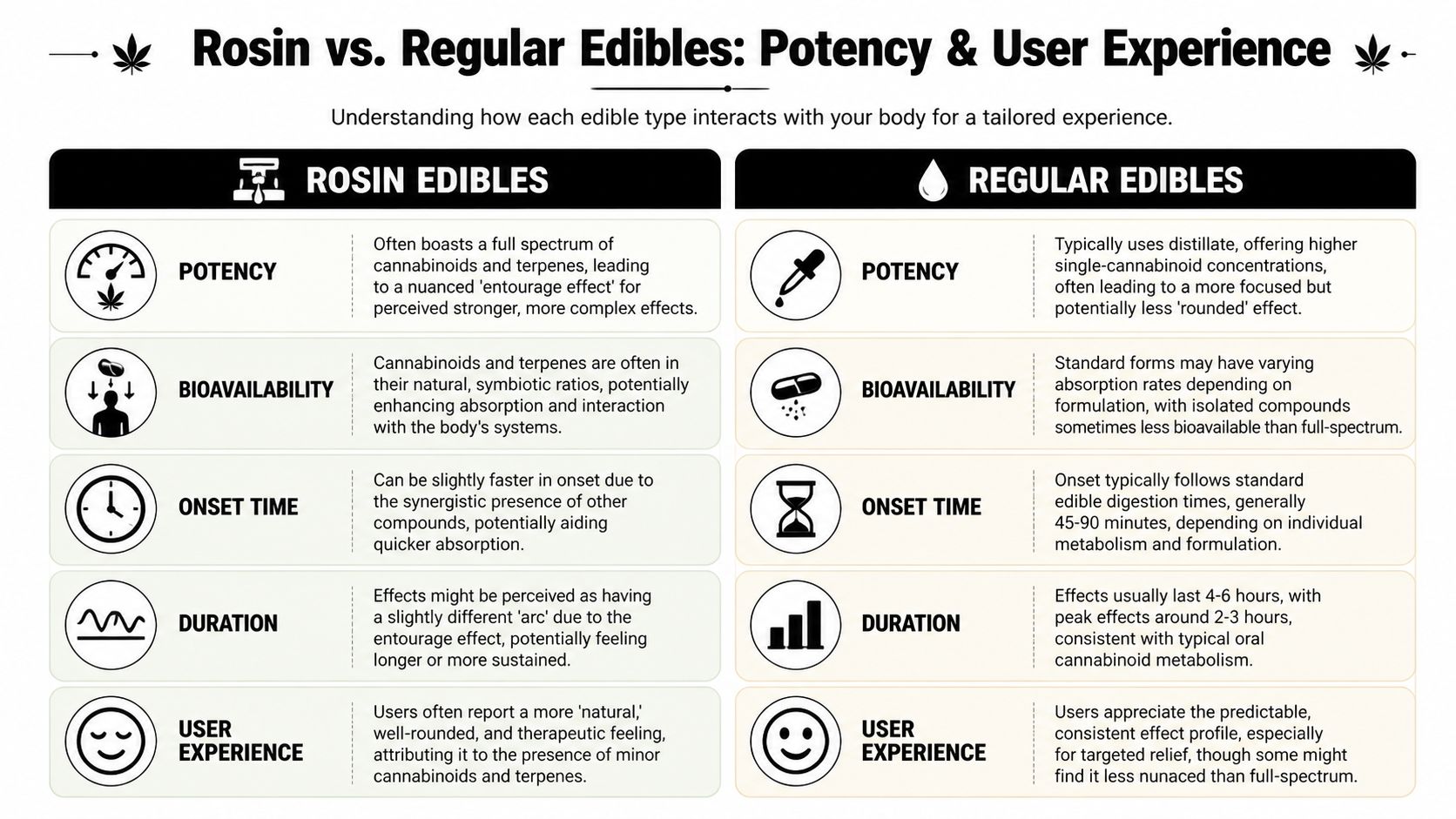
The most common misunderstanding in rosin edibles vs regular is equating THC quantity with total effect. THC matters, but it isn’t the whole story.
According to Green Herbal Care’s review of live rosin gummies vs regular gummies, rosin edibles preserve a fuller spectrum of cannabinoids and terpenes, and this profile is associated with the entourage effect. The same source notes that rosin gummies are often described as delivering a more balanced, strain-specific experience than regular gummies at equivalent THC doses. It also states that onset for both is 30 to 90 minutes.
That helps explain why one patient may say, “These two gummies both say the same dose, but the rosin one feels stronger.” In many cases, they don’t mean a harsher or more intoxicating effect. They mean the experience feels more complete, more rounded, or more distinct.
For a fuller patient-facing discussion of the same issue, this article on live resin gummies vs regular gummies may also be useful.
Bioavailability and first-pass metabolism
Once you swallow an edible, digestion and liver metabolism become central. That’s where first-pass metabolism enters the conversation. THC taken orally is converted in the liver into metabolites that can feel stronger or longer-lasting than inhaled THC.
Rosin products may complicate that pattern in a subtle way. The same Green Herbal Care source notes that terpene retention may enhance bioavailability through some sublingual absorption before swallowing, which may reduce part of the first-pass burden for some users. In real-life terms, that can contribute to a cleaner or more controlled feel for certain people, especially if they let the edible dissolve briefly rather than chewing and swallowing immediately.
This won’t make every rosin gummy act like a tincture. It just means the path from mouth to bloodstream may not be identical across products.
What people often feel in practice
A patient-centered comparison usually sounds like this:
| Question | Rosin edibles | Regular edibles |
|---|---|---|
| How do they often feel? | More layered, sometimes more strain-specific | More direct, THC-centered |
| What do cautious users notice? | Flavor and terpene presence are more obvious | Dosing can feel simpler and more repeatable |
| What can affect the outcome? | Source material, terpene content, how long it sits in the mouth | Formulation, meal timing, distillate dose, added ingredients |
Some patients do best with a product that feels nuanced. Others do better with a product that behaves the same way every time. Consistency is a therapeutic feature, not a compromise.
Duration and the patient experience
For patients, duration matters as much as onset. A product that arrives gently but lingers too long can be a poor fit for daytime use. A product that feels clear at first but fades earlier may be less helpful overnight.
The verified material indicates that both formats can have a similar oral onset window. The distinction tends to show up more in quality of experience than in simple clock time. Rosin is often described as more balanced. Regular edibles, especially simpler THC-dominant versions, may feel heavier or more one-note.
That difference can affect practical choices such as:
- Daytime symptom support
- Evening use when sedation is acceptable
- Appetite support
- Use by patients who are sensitive to abrupt mood or body changes
Why the same dose can still need different caution
Even when the THC label matches, a rosin edible may deserve extra respect if the user is terpene-sensitive or new to full-spectrum products. A regular distillate edible may deserve extra respect if the user assumes “simple” means mild. It doesn’t.
A careful rule for both is to treat a new product as unfamiliar, even when the package looks similar to something you’ve used before.
- Start with the lowest practical amount.
- Wait fully before increasing.
- Track food intake, timing, and concurrent medications.
- Repeat the same conditions before judging whether the product works for you.
Dosing Protocols for Adjunctive Therapeutic Use
In a therapeutic context, the question usually isn’t “Which edible is better?” It’s “Which format is easier to fit into a careful protocol?”
Low and slow still matters
Patients often do best when they start with a small amount and increase gradually over time. That’s especially true when the goal is symptom management without major disruption to sleep, mood, function, or appetite.
A practical difference appears here. Distillate edibles often appeal to people who want a more standardized THC input. Rosin edibles may appeal to people who want fuller-spectrum character, but they can feel more variable depending on source material and formulation.
That doesn’t make one unsafe and the other safe. It means each product asks for a different style of observation.
Matching the product to the goal
The most useful dosing question is not “How many milligrams should I take?” by itself. It’s “What am I trying to accomplish at this time of day, and how repeatable does the result need to be?”
Consider these common situations:
- For stable, repeatable THC exposure: A regular distillate edible may be easier to standardize.
- For patients who value a broader plant profile: A rosin edible may be worth considering, especially if the person already knows they respond well to terpene-rich products.
- For very cautious titration: The simplest product is often the easiest one to evaluate.
- For bedtime support: Some patients prefer the heavier feel they associate with more conventional edibles, while others prefer the less blunt feel of rosin.
Practical rule: Choose the product that makes it easiest to notice cause and effect. If you can’t tell what changed, you can’t titrate well.
Where RSO fits into the conversation
Many online comparisons often conclude prematurely. According to Zen Leaf’s discussion of live rosin vs regular edibles, most content fails to explain how rosin and regular edibles compare with other full-spectrum cannabis options for therapeutic applications, and that patients need this context because rosin edibles may be a valuable addition, rather than definitively superior, particularly when route and titration matter.
That framing is clinically useful.
If someone is already using or considering RSO or FECO as part of a broader cannabinoid plan, an edible doesn’t have to replace it. The edible may serve a narrower function, such as a more portable daytime option, a slower oral support layer, or a simpler way to test tolerance to a specific cannabinoid ratio.
RSO and rosin are not interchangeable. They differ in extraction style, texture, formulation, and often purpose. A patient might use a whole-plant oil as the core of a regimen and use an edible as a supplemental tool when convenience, taste, or timing matter.
A simple framework for caregivers
Caregivers often need a structure that reduces guesswork. This one is straightforward:
| If the priority is… | Consider starting with… |
|---|---|
| Reproducibility | Regular edible |
| Fuller plant character | Rosin edible |
| Adjunctive support around an existing whole-plant oil routine | Either, chosen by tolerance and timing |
| Cautious observation of side effects | The product with the clearest labeling and easiest portion control |
Keep a written log. Record the product name, amount taken, time, food intake, and what happened over the next several hours. That log often becomes more useful than memory.
Verifying Safety Through Lab Testing and Product Selection
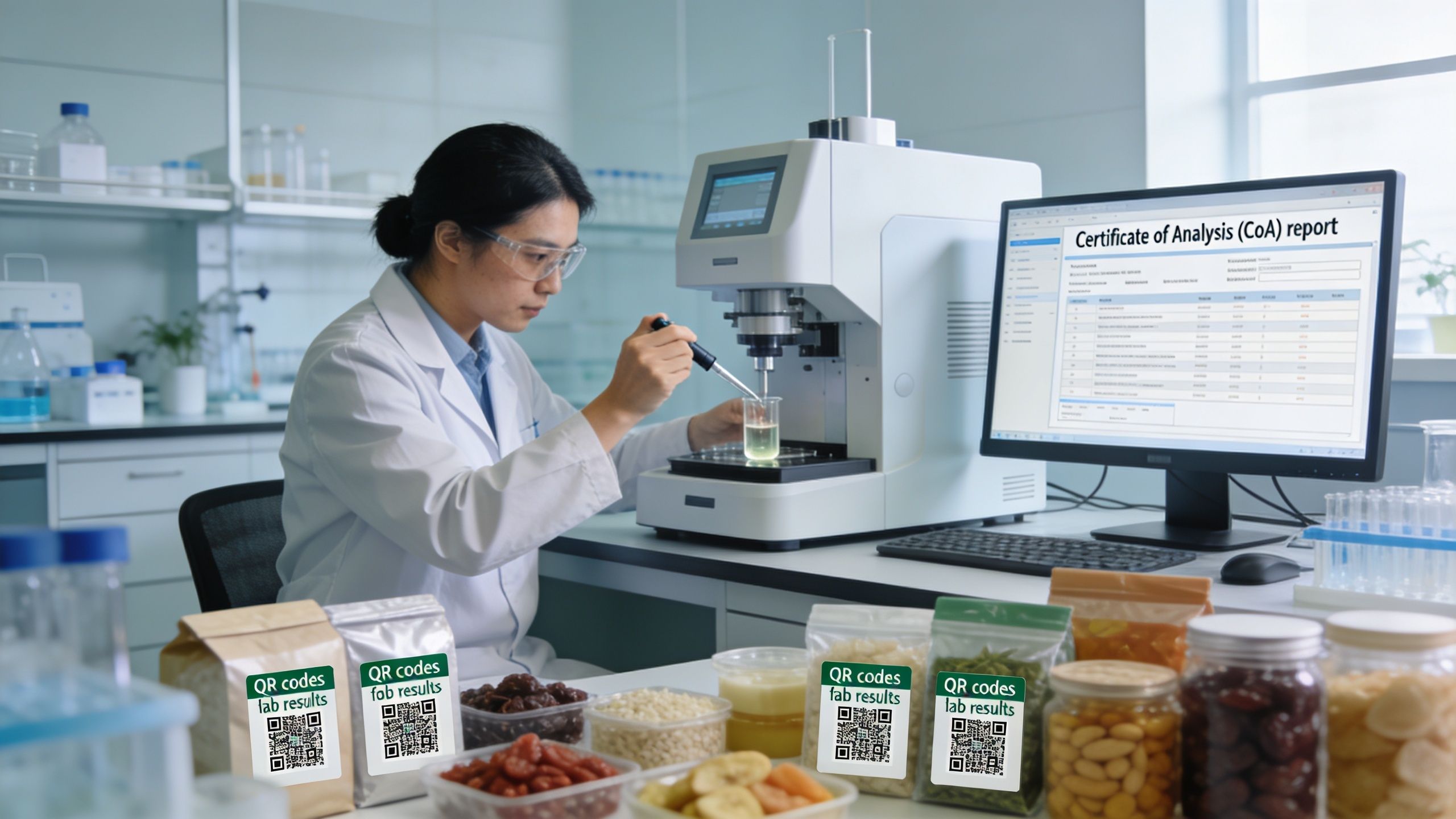
The most important safety tool for either product is the Certificate of Analysis, often called a COA. Marketing language can be polished. A COA is where the product has to show its work.
Why this matters more for therapeutic users
According to Canvas Supply Co.’s review of whether rosin gummies are stronger than regular gummies, distillate-based edibles can be problematic for patients on low-and-slow titration schedules, while rosin edibles may feel more variable. The same source points out that few guides explain how rosin’s terpene profile might interact with medications or how to interpret COAs and batch numbers for chronic disease management.
That gap matters. If you’re using cannabinoids as part of a serious health discussion, batch-level quality control isn’t optional.
Readers who want more background on concentrated cannabis products may find this guide to THC extraction oil helpful before comparing labels.
What to look for on a COA
A COA should tell you more than total THC. At minimum, patients should look for:
- Cannabinoid profile: This shows whether the product is mostly THC or contains meaningful minor cannabinoids.
- Terpene profile: More relevant for rosin or other fuller-spectrum products, especially if you know certain terpene-heavy products don’t agree with you.
- Contaminant screening: Look for testing related to pesticides, heavy metals, microbial contamination, and residual solvents where applicable.
- Batch match: The lot or batch on the package should match the report.
- Date of testing: Older reports aren’t ideal, particularly for terpene-rich products that may change over time.
A product without an accessible COA may still be legal in some settings. That doesn’t make it a wise choice for medically cautious use.
If the company makes purity claims but won’t show the lab report, move on.
Label clues that deserve a second look
Patients often focus on the milligram number and miss the rest of the label. Slow down and check these points:
- Dose per piece, not just per package. This prevents accidental overconsumption.
- Ingredient list. Sweeteners, fats, and formulation agents can change tolerance and digestion.
- Rosin or distillate disclosure. If the package uses broad terms like “cannabis extract,” ask what that specific label means.
- Batch number. If there’s no batch number, quality tracking becomes much harder.
Later in your screening process, it can help to watch a basic explainer on cannabis testing and product quality:
Medication awareness and symptom sensitivity
Rosin products may carry stronger terpene profiles, and that can matter for sensitive patients. Some people notice more throat sensation, reflux irritation, or anxiety-like activation with terpene-heavy products. Others tolerate them well and prefer them.
This is one reason a medical review matters if the patient is taking multiple medications. The issue isn’t that rosin is bad. The issue is that fuller-spectrum products can add more variables.
A careful buyer usually chooses the product that is easiest to verify, not the one with the boldest branding.
Evaluating Cost Availability and Making Your Decision
At some point, the decision becomes practical. You may prefer one product in theory and choose another in real life because of budget, local availability, or how often you need it.
Why rosin usually costs more
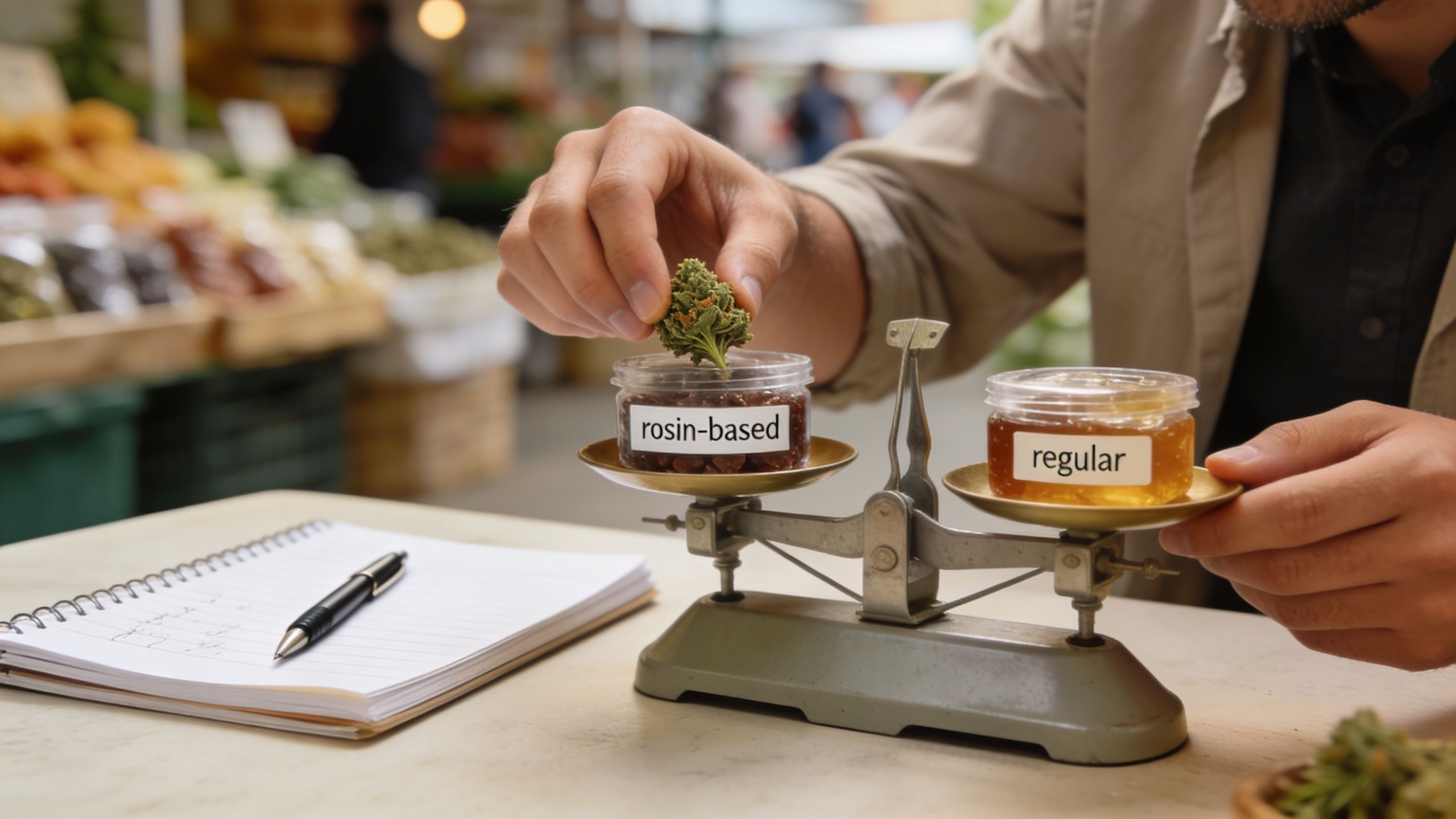
According to CannaBuddha’s analysis of live resin gummies vs regular gummies, cannabis gummies account for roughly 67% of all edible sales, and the majority rely on highly refined THC distillate. The same source notes that rosin edibles remain a niche segment and are often priced at a 30 to 50 percent premium over regular distillate-based gummies, largely because rosin yields less extract per pound of biomass.
That gives patients a realistic framework. Distillate dominates because it scales well. Rosin costs more because production is less efficient and the final product is positioned as premium.
A better way to judge value
Sticker price alone can mislead. Ask instead:
- Can I divide the product easily?
- Does the effect match the goal?
- Will I use less of it because the experience feels more suitable?
- Can I buy the same batch style again with confidence?
A more expensive edible may be worth it if it helps a patient maintain a stable routine. A cheaper edible may be the smarter choice if consistency and affordability are the main constraints.
A balanced decision framework
Choose rosin edibles if you prioritize fuller-spectrum character, solventless extraction, and a more plant-specific experience.
Choose regular edibles if you need wider availability, lower cost, and a product that often behaves more predictably from one purchase to the next.
Neither option is universally superior. The right answer depends on what the patient values most: chemical simplicity, fuller-spectrum complexity, easier repetition, or integration into a larger cannabinoid plan.
Frequently Asked Questions
Are rosin edibles stronger than regular edibles
Not necessarily by THC number. They may feel stronger or more layered because rosin preserves a broader cannabinoid and terpene profile, while many regular edibles focus more narrowly on THC. The label dose and the lived experience aren’t always the same thing.
Are rosin edibles the same as RSO
No. Rosin and RSO are different extracts with different production methods and typical use patterns. Rosin edibles are consumer edible products made with a solventless concentrate. RSO is a whole-plant oil category often discussed in more structured therapeutic or adjunctive contexts. They shouldn’t be treated as direct substitutes.
Which option is easier for beginners
Many beginners do better with the product that offers the clearest labeling and easiest portion control. For some people, that will be a regular distillate edible. Others may prefer rosin if they already know they tolerate fuller-spectrum cannabis well. The safer approach is to start low, wait fully, and keep conditions consistent.
Do rosin edibles work faster
They can feel somewhat different in onset, but both formats generally fall into a similar oral window. Some rosin products may allow a small amount of absorption in the mouth before swallowing, which can affect the experience for some users. That doesn’t mean every rosin edible will act faster.
Are regular edibles less pure
Not always. A well-made regular edible with transparent lab testing can still be a responsible choice. The key issue is whether the company provides a current COA, clear batch information, and contaminant screening. Purity should be verified, not assumed.
When might an edible be complementary to RSO
An edible may be complementary when someone wants a more convenient oral format, a separate daytime or evening option, or a simpler way to test tolerance to a specific formulation. In that setting, the edible is part of a broader plan, not automatically the main tool.
Professional Conclusion and Disclaimer
The core issue in rosin edibles vs regular isn’t hype. It’s fit. Rosin may appeal to patients who value a fuller-spectrum profile and solventless processing. Regular edibles may be more suitable for people who prioritize affordability, consistency, and easier repeat dosing.
For therapeutic or adjunctive use, route, timing, formulation, and lab verification matter as much as the THC number on the label. Further research is needed. Individual results may vary. Consult a licensed medical professional before starting or changing any cannabinoid regimen, especially if you’re also using prescription medications or conventional oncology care.
This article is for educational purposes only. It doesn’t diagnose, treat, or replace medical care.
If you’re comparing edibles with whole-plant oil options and want a calmer, more structured place to learn, RickSimpsonOil.info offers educational guides on RSO, dosing considerations, product selection, and safe sourcing for patients and caregivers.