
As we age, getting a truly restful night's sleep can feel like a thing of the past. For many older adults, this nightly struggle has them looking for natural support, and CBD has become a very common topic of conversation. This guide is designed to give seniors and their caregivers a straightforward, evidence-based look at using CBD for sleep, weighing the potential upsides against the critical safety factors.
Exploring CBD for Better Sleep in Senior Years

The search for better sleep is a major issue for a huge number of seniors. Natural changes in our sleep architecture as we get older, often combined with chronic health conditions, can make bedtime a source of frustration rather than rest. It's this reality that has many exploring alternatives to conventional sleep medications, which can often bring a long list of unwanted side effects.
This isn't just a handful of people trying something new. National surveys confirm a significant uptick in CBD use among older adults, with sleep being one of the top reasons. A recent representative U.S. study revealed that 14.3% of adults aged 65 and over had used CBD in the past year. Researchers noted this group often uses CBD to help with sleep issues, anxiety, and pain—three problems that are notoriously intertwined. You can explore these findings on CBD use in older adults.
Why Seniors Are Turning to CBD
Much of CBD's appeal is its potential to get at the root causes of poor sleep, instead of just making you drowsy. Many older adults deal with very specific issues that disrupt their rest, and these are the areas where CBD might offer some help.
- Anxiety and a "Busy" Mind: A racing mind is one of the biggest culprits behind sleeplessness. Many people explore CBD for its potential calming effects on the nervous system.
- Chronic Pain and Discomfort: It’s nearly impossible to get comfortable and fall asleep when dealing with chronic aches from conditions like arthritis. CBD is being studied for its potential to help manage this kind of discomfort.
- Disrupted Sleep Cycles: Our internal body clock, or circadian rhythm, can get a bit off-kilter as we age, leading to waking up frequently. There's some thought that CBD may help support the body's natural sleep-wake patterns.
Our goal here is to give you a clear, balanced perspective. This guide is built to take you from just being curious about CBD for sleep in elderly adults to feeling confident and informed, so you can make decisions with health as the top priority.
We'll walk through the science of how CBD interacts with the body, what the research actually says, and—most importantly—the safety considerations that are unique to older adults. By breaking it all down into simple, easy-to-digest pieces, we want to arm you and your family with the knowledge to approach this option safely and thoughtfully.
How CBD Interacts With Your Body's Sleep System
To get a handle on how CBD might help older adults with sleep, we first need to look at a crucial, but often overlooked, part of our biology: the Endocannabinoid System (ECS). This isn't a simple "off switch" for your brain like a sleeping pill. It's much more nuanced—think of it as a master regulator working tirelessly behind the scenes to keep your body in balance.
The ECS is like your body's internal thermostat. Its main job is to maintain a state of equilibrium, a concept known as homeostasis. When things get out of sync—stress levels spike, pain signals flare up, or inflammation gets out of control—the ECS kicks in to gently guide everything back to a stable, neutral state. This system has a hand in nearly everything, including mood, pain perception, immune function, and, critically, our sleep-wake cycles.
The whole network relies on three key players working in concert:
- Endocannabinoids: These are compounds your own body produces as needed.
- Receptors: Think of these as tiny docking stations on your cells that endocannabinoids connect with.
- Enzymes: These are responsible for breaking down the endocannabinoids after they've delivered their message.
This system is always active, making tiny adjustments to keep your internal environment running smoothly, no matter what external stressors you face.
CBD's Role as a System Supporter
This is where things get really interesting. Unlike its well-known cousin THC, which directly plugs into ECS receptors and creates a "high," CBD works much more subtly. It doesn't take over the system; it encourages it to work better.
Instead of binding directly to the main receptors, CBD is thought to help your body make better use of its own natural endocannabinoids. Imagine your endocannabinoids are messengers sent to calm down an overactive system. CBD acts like a supportive friend, preventing those calming messages from being cleared away too quickly. It does this by inhibiting the enzymes that normally break them down, allowing them to stick around longer and exert their balancing effects more powerfully.
This indirect approach is the whole story when it comes to sleep. CBD isn't knocking you out. It’s helping your body’s own regulatory system get a better handle on the very things keeping you awake.
Think of CBD less like a sledgehammer and more like a conductor for an orchestra. It helps quiet the noisy, disruptive instruments—like anxiety or pain—so the entire system can finally play the peaceful symphony of sleep.
Tackling the Root Causes of Poor Sleep
For many older adults, sleepless nights aren't just about an inability to drift off. The real culprits are often underlying issues that become more common with age, and this is where CBD’s support for the ECS really shines. By helping this master system find its equilibrium, CBD may address the core problems that sabotage sleep.
Here’s how that might play out in the real world:
- Soothing an Anxious Mind: The ECS is deeply involved in managing our stress and anxiety responses. By nudging the ECS and interacting with serotonin receptors, CBD may help quiet the racing thoughts and worries that so often surface when an older person's head hits the pillow.
- Easing Chronic Discomfort: Let's face it, chronic pain from conditions like arthritis is one of the biggest sleep thieves. The ECS is a key player in how we perceive pain. By influencing this system, CBD may help dial down the intensity of persistent aches, making it physically easier to find a comfortable position and stay asleep.
- Regulating the Sleep-Wake Cycle: Our internal body clock, or circadian rhythm, can get a bit wobbly as we age. The ECS helps keep this clock on time. By promoting overall balance in the body, CBD may help reinforce a more regular and reliable pattern of sleeping and waking.
Ultimately, CBD is about working with your body, not against it. The goal is to create an internal environment that's more conducive to rest by turning down the volume on the "noise"—the pain, anxiety, and general imbalance—that so frequently gets in the way of a good night's sleep for seniors.
What the Research Says About CBD and Senior Sleep
When we look into the science of CBD for sleep in older adults, it’s important to see the full picture. We don't have a huge number of large-scale clinical trials focused only on seniors just yet. Still, the research we do have gives us some really valuable clues about how it might help lead to more restful nights.
The key takeaway is this: CBD doesn't seem to work like a traditional sleeping pill. Instead of being a direct sedative, its real potential lies in addressing the common culprits that keep so many seniors awake at night.
The Indirect Pathways to Better Rest
Think of CBD less as a sleep switch and more as a great balancer. The most common barriers to good sleep in later life are often things like chronic pain, persistent anxiety, or general stress. This is where CBD comes into the picture.
Research suggests that CBD works by interacting with the body's own systems that regulate these feelings. So, it doesn’t force you to sleep; it helps create the right conditions for sleep to happen naturally. It's a fundamental difference from conventional sleep aids that often just induce drowsiness.
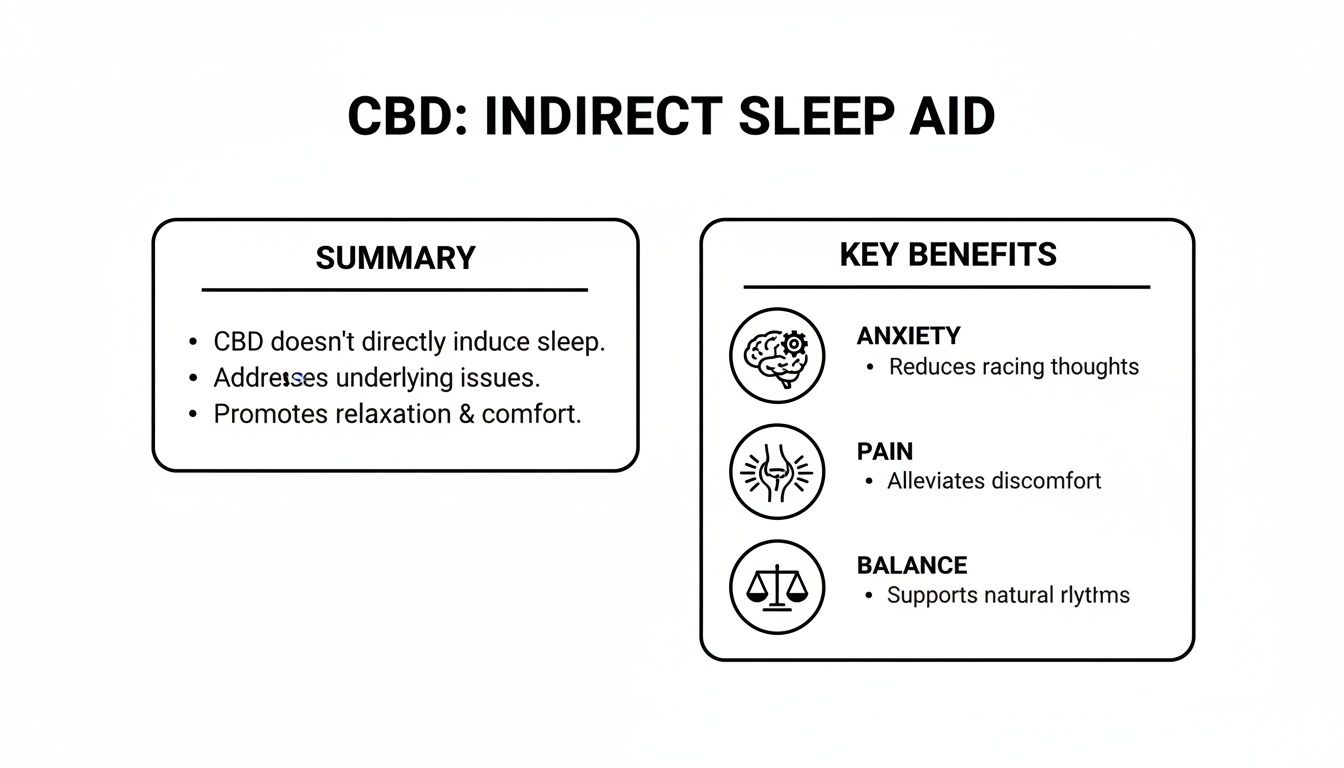
As you can see, quality sleep is often the positive side effect of bringing the body back into a more balanced, comfortable state.
Dose, Anxiety, and Sleep Quality
One of the most promising areas of study connects CBD with reduced anxiety and, as a result, better sleep. For many older adults, a racing mind or constant worry is the main reason they're staring at the ceiling at 2 a.m.
Several studies have found that participants taking CBD reported lower anxiety levels, and this directly correlated with higher sleep quality scores. This is a big deal. It suggests that for seniors whose sleep issues stem from anxiety, CBD could be a particularly useful tool.
But here’s the catch: the dose really matters. Very low doses might not do much, while the more significant results in studies often come from moderate to higher doses. This just reinforces how crucial it is to start low and go slow to find what works for you.
It's important to remember that responses to CBD are highly individual. What works wonders for one person may have little effect on another, which is a common finding across many studies and reflects the complexity of the human body.
A Look at the Clinical Evidence
While we wait for more studies focused exclusively on seniors, the broader research gives us plenty to work with. A 2023 review that looked at 34 different studies on CBD for insomnia found that every single study showed at least some participants had improved symptoms.
We're also seeing that dose can be a game-changer. One crossover study, for example, found that a 160 mg dose of CBD increased total sleep time significantly compared to lower doses. You can explore a great summary of CBD and sleep research to see more of these findings.
This tells us two critical things. First, seeing a real benefit for sleep might require a higher dose than you'd expect. Second, the results can be inconsistent. This variability is exactly why the "start low, go slow" approach is the gold standard. It allows each person to find their own "sweet spot" safely.
Exploring informational resources like RSOhelp.com can offer further guidance on product types and dosing strategies to support overall wellness. The mixed results in the scientific literature aren't a sign of failure; they're a reminder that CBD is not a one-size-fits-all fix, especially for a group as diverse as older adults.
Navigating Safety and Medication Interactions

When we talk about CBD for sleep in elderly individuals, safety isn't just a priority—it's everything. For older adults, who are often managing multiple health conditions with various prescriptions, adding anything new to the mix requires a very careful, measured approach. While CBD is generally considered safe, we absolutely must understand how it interacts with the body and other medications.
Before we get into the more complex issue of drug interactions, let's touch on the common, usually mild, side effects that can pop up. Not everyone experiences them, but it’s crucial to know what to watch for.
Common side effects can include:
- Drowsiness or fatigue: This is often the goal when using CBD for sleep, but you don't want it lingering into the next day and causing grogginess.
- Dry mouth: A pretty common and minor annoyance. Staying hydrated usually does the trick.
- Changes in appetite: Some people find their appetite increases, while others notice it decreases.
- Diarrhea: This can happen, especially if starting with a high dose or using certain carrier oils.
The good news is that these effects are often tied directly to the dose. By following the "start low and go slow" mantra, most people can minimize or avoid them altogether.
The Liver’s Role and Potential Traffic Jams
Now for the most critical safety concern for seniors: the liver. Think of your liver as a sophisticated processing plant with a specialized set of enzymes, the cytochrome P450 (CYP450) system, that breaks down medications and other substances.
Here's the rub: a huge number of common prescriptions for older adults are processed by this very same system. When you introduce CBD, it competes for the attention of these enzymes. It can essentially cause a 'traffic jam,' slowing down the breakdown of other drugs that rely on the same metabolic pathway.
This isn't a small detail. If a medication gets processed too slowly, its levels in the bloodstream can climb, sometimes to dangerous heights. On the flip side, CBD can sometimes speed up the processing of another drug, clearing it from the body too fast and rendering it less effective.
The real safety issue with CBD for seniors isn't the compound itself. It’s how CBD can unintentionally magnify or weaken the effects of essential prescription medications. This is why having a conversation with a doctor isn't just a good idea—it's non-negotiable.
Common Medications with Potential Interactions
Many of the most prescribed medications for older adults are metabolized by that CYP450 system, which means they're on the "watch list" for potential interactions with CBD. The goal is to make sure all treatments are working together safely, not against each other.
This list isn't exhaustive, but it covers some of the most important categories to be aware of:
- Blood Thinners: Drugs like warfarin need to be kept in a very precise therapeutic window. An interaction that alters its levels could seriously increase the risk of bleeding.
- Blood Pressure Medications: If these are metabolized differently, it could lead to dangerously low blood pressure (hypotension) or leave hypertension uncontrolled.
- Statins: The concentration of these cholesterol drugs could be affected, which might heighten the risk of side effects like muscle pain.
- Certain Antidepressants and Anti-Anxiety Medications: The effectiveness and side effect profiles of these sensitive medications could be altered.
- Seizure Medications: Many anti-epileptic drugs have a narrow therapeutic range and are very susceptible to metabolic changes.
This is exactly why medical supervision is essential. A doctor or a knowledgeable pharmacist can look at a person's entire medication list and flag any potential conflicts. They are the only ones who can give the green light and provide guidance on how to proceed safely.
For those navigating complex health journeys, staying informed about different therapeutic options is also part of the process. If you want to learn more about how other full-spectrum plant extracts are used for wellness, you can find more information in our other guides. Just remember to always put professional medical advice first.
Choosing a Quality CBD Product
The CBD market can feel like the Wild West, and when you're looking for something to help with sleep, the last thing you need is more confusion. So, how do you find a safe, effective product you can trust? The key is learning how to read the labels and, more importantly, what’s not on the label.
Think of it like shopping for orange juice. You have different options, and the same goes for CBD. Each type of extract offers a slightly different experience based on what's left in from the original hemp plant.
- Full-Spectrum CBD: This is the whole-plant option, akin to fresh-squeezed juice with all the pulp. It contains CBD plus all the other goodies from the hemp plant—other cannabinoids, terpenes, and a tiny, legal trace of THC (always under 0.3%). Many experts believe these compounds work better together, a synergy known as the entourage effect.
- Broad-Spectrum CBD: This is like "pulp-free" juice. It keeps the rich blend of cannabinoids and terpenes but has the THC completely removed. It's a great middle-ground for people who want the entourage effect without any THC in their system.
- CBD Isolate: This is the purest form, like a juice concentrate. It’s 99% pure CBD, with everything else stripped away. This is the go-to for anyone who needs to avoid other cannabinoids entirely or is sensitive to them.
How to Verify Product Safety and Potency
Here's the most important thing to know: the CBD industry isn't tightly regulated. That means the single most critical piece of information you can have is a product's Certificate of Analysis (COA).
A COA is an independent, third-party lab report that acts like a background check on the product. Any trustworthy company will have these readily available on their website for every batch they sell.
When you pull up a COA, you’re looking for two main things:
- Potency: Does the amount of CBD in the report match what's on the bottle's label? This is your proof that you’re actually getting what you paid for.
- Purity: The lab should also test for nasty stuff you don't want, like heavy metals, pesticides, or leftover solvents from the extraction process. A clean report here is non-negotiable.
Because the CBD market lacks strong oversight, this third-party verification isn't just a nice-to-have—it's essential. The COA is your proof that a brand is committed to safety and transparency, protecting you from a product that's ineffective or, worse, contaminated.
This lack of strong oversight has unfortunately led to a lot of questionable products on the shelves. Consumer watchdogs often find that products are mislabeled or contain impurities, a serious concern that makes vetting products with a COA even more vital for older adults. You can discover more insights about CBD product safety concerns here.
Understanding Whole-Plant Extracts
Beyond the typical CBD oils, you might come across terms like Rick Simpson Oil (RSO) or Full Extract Cannabis Oil (FECO). These are a different breed of product altogether. They are highly concentrated, unrefined extracts designed to preserve the entire profile of the original plant.
While CBD for sleep in elderly users is a fantastic starting point, some people turn to these more potent whole-plant extracts for more comprehensive support. It's crucial to understand that these are not the same as the CBD oils we've been discussing.
For those curious to dig deeper, resources like RSOhelp.com provide excellent information on these specific types of extracts. It's also helpful to understand how these oils differ from other ways of consuming cannabis; our guide on RSO vs. edibles breaks it down clearly.
A Practical Guide for Seniors and Caregivers

When it comes to using CBD for sleep in elderly loved ones, a thoughtful and methodical approach is everything. This isn't about guesswork; it's about a personalized strategy that puts safety and careful observation at the forefront. Here, we'll walk through the practical steps for both seniors and their caregivers to follow.
The golden rule, echoed by every experienced practitioner, is to “start low and go slow.” This isn't just a catchy phrase—it's the cornerstone of using CBD safely and effectively. The goal is simple: find the smallest possible dose that delivers the sleep benefits you’re looking for, without introducing any unwanted side effects.
The Starting Low and Going Slow Method
So, what does this look like in practice? You'll want to begin with a very small dose, somewhere in the ballpark of 2.5 mg to 5 mg of CBD, taken about an hour before heading to bed.
The key is to stick with this initial dose for at least three or four consecutive nights. This patience is crucial. It gives the body time to acclimate and provides a clear window for you to observe the actual effects, good or bad.
If you don't see the desired improvement in sleep after that initial period—and more importantly, there are no side effects—then it's okay to make a small adjustment. Increase the dose by another 2.5 mg to 5 mg. Then, you repeat the process: wait several nights, observe, and adjust if needed. You continue this slow, incremental climb until you find that "sweet spot" where sleep has noticeably improved. For a deeper dive into this kind of careful dose-finding, our complete guide on how to use RSO dosage timing tips details strategies that can be adapted for any full-spectrum oil.
One of the most powerful tools in your arsenal is a simple sleep journal. Think of it less as a diary and more as a personal map charting the journey to better rest.
By tracking just a few details each day, you create an invaluable record. It helps you connect the dots between the CBD dose, when it was taken, and the results, taking all the guesswork out of the equation.
Creating a Simple Sleep Journal
Your journal doesn't need to be fancy—a basic notebook or even a note on your phone works perfectly. Each day, simply log the following information:
- Dose Taken: Note the exact amount of CBD in milligrams (mg).
- Time Taken: What time was the dose administered?
- Sleep Quality: Use a simple 1-10 scale to rate how restful the night was.
- Notes: Jot down any side effects (like morning grogginess) or positive changes (like falling asleep more quickly or waking up less).
For caregivers, this journal becomes an essential communication tool. It provides concrete, objective data to share with doctors or pharmacists, turning conversations about care from subjective feelings into a collaborative, evidence-based discussion. This methodical approach transforms what could be an overwhelming process into a manageable and personalized wellness journey.
Common Questions Answered
When you're exploring something new like using CBD to help an older loved one sleep better, a lot of practical questions pop up. Let's walk through some of the most common ones to give you clear, straightforward answers.
Should a Senior Take CBD Every Night for Sleep?
That really depends on the individual. Some people find that consistent, nightly use helps their body's internal clock, the endocannabinoid system, find a better rhythm. Think of it like a gentle, daily tune-up.
But it's not a hard-and-fast rule. The best strategy is always "start low and go slow" to find out what works. The goal isn't to create a nightly dependency, but to use CBD as a tool to support the body’s natural ability to rest. A simple sleep diary is your best friend here—it will show you whether nightly use is necessary or if taking it only on restless nights is enough.
What Is the Best Time to Take CBD for Sleep?
A good rule of thumb is to take it about 30 to 60 minutes before they plan to go to bed. This gives the CBD enough time to be absorbed and start working with their body, helping to ease them into a state of calm before their head hits the pillow.
Remember, this is just a starting point. The product you use matters—an oil under the tongue works faster than a capsule that has to be digested. An individual's metabolism also plays a big role. It might take a little experimenting to find that perfect timing.
Can Seniors Become Dependent on CBD for Sleep?
This is a really important question, and it’s one we hear often. Thankfully, the research we have so far is reassuring. The World Health Organization has stated that in its pure form, CBD doesn't show the potential for abuse or dependence. It’s not intoxicating like THC and doesn't create the kind of physical addiction associated with other sleep aids.
That said, it is possible for someone to become psychologically reliant on any part of their bedtime routine. That's why it's so important to see CBD as just one piece of the puzzle. It should be used alongside other healthy sleep habits—like a consistent bedtime, a calm environment, and stress-reducing activities—not as the only solution. Always chat with a doctor to make sure it's a supportive part of a bigger health plan.
Here at RickSimpsonOil.info, our mission is to give you clear, evidence-based information so you can make health decisions with confidence. We're here to help you navigate this journey safely.