
Rick Simpson Oil, or RSO, is a potent, full-spectrum cannabis extract that has earned a serious reputation in wellness circles. It’s known for its incredibly thick, almost tar-like consistency and is made to capture the entire profile of the cannabis plant—not just a few isolated parts.
Decoding RSO: A Simple Explanation

So, what is RSO, really? At its heart, it’s a powerful, unrefined oil created to deliver all the plant's compounds working in concert for your well-being.
Think of it like this: if a typical CBD or THC product is like taking a vitamin C supplement, RSO is like drinking a highly concentrated smoothie made from the whole orange—peel, pulp, and all. It’s packed with the full spectrum of the plant’s active ingredients: cannabinoids, terpenes, and flavonoids, all together in one dose.
This "whole-plant" philosophy is what truly sets RSO apart. Instead of singling out specific molecules like THC or CBD, the process is designed to preserve the plant's natural, complex profile. The idea is to harness the synergy of all these elements working together, a concept known as the entourage effect, to support your health.
RSO at a Glance
For anyone just starting to explore their wellness options, grasping these core ideas is the first step. This oil isn't just another concentrate. Its unique composition and intended purpose give it a distinct place in conversations about health. Getting to know RSO requires clear, trustworthy information, which is a central goal here at RSOhelp.com.
Rick Simpson Oil is different because it’s all about preserving the plant’s natural chemical blueprint. The entire process is built to capture everything the plant has to offer, resulting in a dense, powerful oil made for serious wellness goals.
To give you a quick snapshot, the table below breaks down the defining characteristics of RSO.
RSO at a Glance: Key Characteristics
| Characteristic | Description |
|---|---|
| Type of Extract | Full-Spectrum Cannabis Oil (FECO) |
| Consistency | Thick, viscous, dark, and tar-like |
| Cannabinoid Profile | High in THC, contains a full range of other cannabinoids |
| Extraction Goal | To preserve the entire profile of the cannabis plant |
| Primary Use Focus | Wellness and therapeutic support applications |
This table serves as a quick reference as we dive deeper into the story behind RSO, how it's used, and what you need to know to approach it safely and effectively.
The Story Behind RSO: One Man's Search for Relief
To really get what RSO is all about, you have to go beyond the science and look at the story. This isn't a product that was created in a corporate lab to chase market trends. Rick Simpson Oil was born out of one man's personal health crisis, an effort to find a better path when other options fell short.
The story starts with Rick Simpson, an engineer in Canada. His dive into the world of cannabis extracts wasn't a hobby; it was a necessity. In the late 1990s, an accident left him with a cluster of debilitating symptoms that conventional approaches couldn't seem to touch. That frustration and pain motivated him to start experimenting with cannabis to improve his well-being.
A Mission Forged in Personal Struggle
Rick Simpson was a regular person trying to get his life back, and that’s what drove him. His goal was simple and powerful: create a cannabis oil so potent and so accessible that it could provide real support for people facing serious health challenges.
This patient-first focus is the heart and soul of RSO. The whole point was to capture everything the cannabis plant had to offer, preserving its complete chemical profile to maximize its potential for health. This led to the thick, dark, full-spectrum oil we know today—an oil created with the sole purpose of helping people who felt they had nowhere else to turn.
The story of RSO is a powerful reminder of how personal experience can drive innovation. It was created by someone seeking to reclaim his own health, which is why it continues to resonate so deeply within the wellness community.
How a Personal Journey Sparked a Movement
What started as a personal quest quickly turned into a mission to help others. After his own profound experiences, Simpson started making his oil—which he originally called "Phoenix Tears"—and sharing it with anyone who needed it, starting around 2003.
He then published his straightforward extraction method so that anyone, anywhere, could make it themselves. The oil was designed from the ground up to be incredibly strong, with THC levels often hitting 90%—far more concentrated than the raw flower. This wasn't for casual use; it was a potent formulation intended for serious therapeutic applications. You can read the full research about RSO's origins and its unique formulation to get a deeper understanding.
This history is exactly why RSO occupies such a special place in the cannabis world. It’s more than just an oil; it’s the symbol of a grassroots movement built on empowerment and shared knowledge. Here at RSOhelp.com, we carry on that legacy by providing the clear, trustworthy information you need to walk your own wellness path with confidence.
Understanding Full Spectrum Extracts Versus Isolates
To really get what RSO is all about, you have to look past the oil itself and into the philosophy behind it. RSO is a full-spectrum extract, a term that really gets to the heart of why it was created. This means it’s made to capture the entire, unadulterated chemical fingerprint of the cannabis plant.
Think of it like an orchestra. A full-spectrum extract like RSO brings every instrument to the stage—the booming brass of cannabinoids like THC and CBD, the subtle woodwinds of terpenes, and the delicate strings of flavonoids. They all play together in harmony, creating a powerful, layered experience that many refer to as the entourage effect. This synergy is the core reason so many people turn to this specific oil to support their health.
The Power of the Whole Plant
Other cannabis products, like isolates, are a whole different ballgame. An isolate is more like a solo violinist hitting one perfect, powerful note. It singles out a specific compound, like THC or CBD, and strips away everything else. While that single note can certainly be potent and effective for some things, it just doesn't have the same depth or complexity as the entire orchestra playing together.
This is why you'll often hear RSO and FECO (Full Extract Cannabis Oil) mentioned in the same breath. For all intents and purposes, the terms are interchangeable. Both refer to a thick, potent oil that puts the plant's complete profile first. We dive deeper into this in our guide on what makes a product a true full extract cannabis oil. This unwavering commitment to the "whole plant" is what truly sets RSO apart.
This concept map really simplifies the philosophy behind RSO, showing how a direct need for relief shaped its creation.
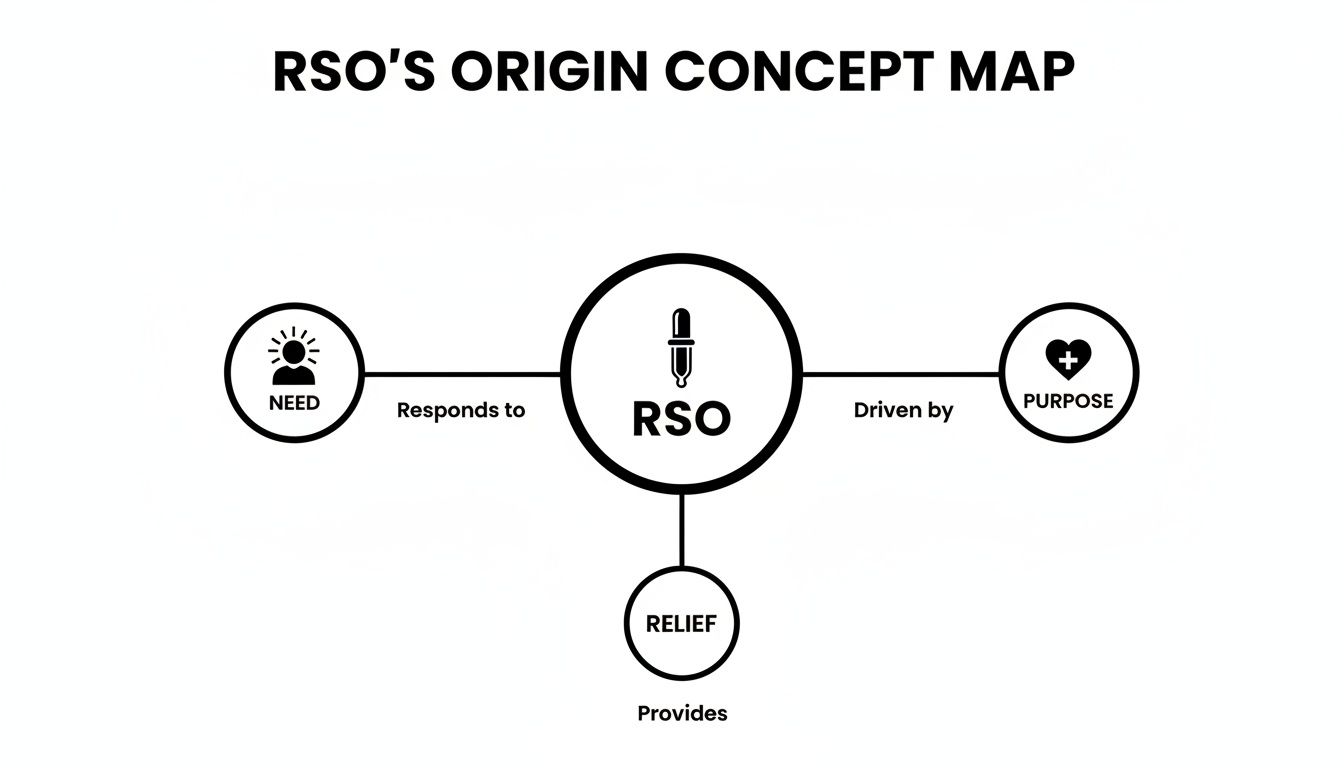
As you can see, RSO wasn't just a random discovery; it was born from a specific need and designed with a clear purpose in mind. Understanding these fundamental differences between cannabis extracts is the first step in making an informed decision that aligns with your health goals.
Comparing Common Cannabis Extracts
With so many products available, it can be confusing trying to figure out what's what. Let's break it down. Each type of extract offers a unique profile designed for different wellness goals.
The table below lays out the key differences between RSO and two other popular products.
Comparison of Cannabis Extracts RSO vs CBD Oil vs Distillate
| Extract Type | Primary Cannabinoid | Spectrum | Common Use Focus |
|---|---|---|---|
| RSO / FECO | High THC | Full Spectrum | Potent, whole-plant therapeutic support |
| CBD Oil | High CBD, Low THC | Full, Broad, Isolate | General wellness, non-intoxicating relief |
| THC Distillate | Very High THC | Isolate (or with added terpenes) | Potent psychoactive effects, often for edibles |
Ultimately, this comparison drives home one key point: your wellness goals should always steer your choice. If you're looking to tap into the combined power of every compound the plant has to offer, a full-spectrum extract like RSO is built for exactly that. Here at RSOhelp.com, our mission is to cut through the noise and give you this kind of clarity, so you can feel confident in the choices you make for your health.
How People Use RSO for Health and Wellness
Once you grasp what makes RSO a unique, full-spectrum extract, you naturally start to wonder how it's actually used. People often find their way to Rick Simpson Oil for a whole host of reasons, usually after feeling like they've hit a wall with other options. Its entire reputation has been built from the ground up on personal stories and firsthand accounts of improved well-being.
The main draw is its incredible potency. Because RSO is so concentrated, it delivers a powerful dose of THC alongside all the other cannabinoids and terpenes from the plant. This rich mixture goes to work on the body's endocannabinoid system (ECS)—a vast network of receptors that helps keep critical functions like pain, mood, sleep, and immune response in balance.
Common Reasons People Turn to RSO
The way RSO interacts with the ECS is precisely why it’s gotten so much attention for helping with tough, persistent symptoms. While it’s not an officially recognized medical treatment, you don’t have to look far to find people reporting positive results.
Here are three of the most common applications you’ll hear about:
- Managing Chronic Discomfort: The cannabinoids in RSO are thought to help dial down discomfort signals in the body. This has made it a go-to for many people trying to find relief from the relentless issues associated with severe arthritis or chronic back pain.
- Getting Better Sleep: A lot of users find that RSO brings on a deep sense of relaxation, bordering on sedation. That makes it a popular choice for anyone wrestling with insomnia or other sleep issues, helping them finally get a solid, restorative night's rest.
- Support During Health Challenges: For those navigating very serious health battles, RSO is often used to make the journey more bearable. It can help ease nausea, kickstart a suppressed appetite, and generally improve quality of life during difficult times.
At its core, the idea behind using RSO is to harness the full, synergistic power of the cannabis plant. By delivering a highly concentrated dose, the goal is to create a more profound effect on the body's own systems, encouraging a return to balance and well-being.
A Focus on Symptom Relief
It’s crucial to talk about this responsibly. While the personal stories can be incredibly compelling, RSO is almost always discussed as a tool for managing symptoms to improve one's quality of life. What draws people to it is its potential to calm inflammation, ease discomfort, and foster a sense of peace.
Its role in supportive care, for example, is a huge part of its story. Many find it helps them cope with the harsh side effects of conventional treatments, making a difficult path just a little bit smoother. If you’re interested in this specific use, you can read more about the anecdotal accounts of using RSO oil for cancer symptom support.
Here at RSOhelp.com, our commitment is to give you clear, grounded information. We want you to understand why RSO has become such a significant part of the wellness conversation, so you can make educated choices with the guidance of a healthcare provider you trust.
A Guide to Safe Dosing and Administration

Stepping into the world of Rick Simpson Oil for the first time can feel a little daunting, especially when you get to dosing. Because RSO is so concentrated, the way you approach it is completely different from most other wellness products. The mantra everyone in the know repeats is to start low and go slow. This isn't just a catchy phrase; it's a fundamental principle that puts safety first and lets you find the right amount for you without overwhelming your system.
Think of it like easing into a hot bath. You don't just jump in. You test the water, then slowly acclimate until you're comfortable. The goal with RSO is the same—to gently introduce it to your system and find your body’s unique comfort zone, not to shock it with too much, too soon.
The Standard Starting Dose
For someone brand new to RSO, the most common starting point is a dose about the size of half a grain of rice.
This tiny amount might look insignificant, but it’s the perfect first step for introducing this potent, full-spectrum extract to your body. Most people take this initial dose once a day for the first few days just to see how their body responds.
From that point on, it’s all about gradual titration. If you feel fine after a few days, you can slowly begin to increase the amount. The key is to listen carefully to what your body is telling you and make small, incremental adjustments over several weeks. This methodical process helps keep potential side effects at bay and makes the whole experience feel much more controlled. For a deeper dive, check out our comprehensive guide covering how to use RSO with specific dosage and timing tips.
Common Ways to Take RSO
How you actually take RSO plays a big role in how it works and how quickly you'll feel the effects. There are two main ways people typically use it, and each has its own pros and cons.
- Oral Administration: This is by far the most popular method. You can place your measured dose under the tongue (sublingually) or just swallow it. When it’s absorbed under the tongue, the effects tend to kick in a bit faster. If you swallow it, the oil has to go through your digestive system, which means a delayed onset but often a longer-lasting effect.
- Topical Application: You can also apply RSO directly to your skin. People often choose this route for localized issues, as the cannabinoids can interact with receptors in a specific area without producing the strong, systemic effects that come with ingestion.
The "start low and go slow" method is more than just advice—it is the cornerstone of a safe and effective RSO journey. It respects the oil's potency and empowers you to find a personalized regimen that aligns with your body's needs and tolerance.
This careful, measured approach is essential because RSO is a world away from something like CBD oil. While CBD is non-intoxicating and widely used, RSO’s high-THC, full-extract nature demands microdosing for safety, positioning it as a tool for more serious, intentional users.
Ultimately, understanding how to use RSO safely is just as important as knowing what it is. Our goal is to give you the clear, safety-first information you need to move forward with confidence.
How to Find High-Quality, Verified RSO
Trying to find legitimate Rick Simpson Oil can feel like navigating a minefield. With your health on the line, though, knowing how to spot safe, high-quality products isn't just a good idea—it's everything.
So, what's the one non-negotiable factor? Third-party lab testing.
Think of it as an independent inspection. Reputable producers will always have a Certificate of Analysis (COA) ready to share for every single batch they make. This isn't marketing fluff; it's a detailed report from an accredited lab that spells out exactly what's in the oil you're considering. It’s your only real look behind the curtain.
Decoding a Certificate of Analysis
At first glance, a COA can look like a page from a chemistry textbook. Don't worry. You only need to check a few key sections to vet the product like a pro. This simple skill shifts the power back into your hands, making you an advocate for your own health.
When you get a COA, here’s what to look for:
- Cannabinoid Profile: This is where you confirm the potency. It will show the exact percentages of THC, CBD, and other cannabinoids, proving you’re getting the concentrated, full-spectrum oil you need.
- Pesticide Screening: Cannabis is a bioaccumulator, meaning it can absorb chemicals from its environment. You need to see a "pass" or "not detected" result here to ensure you aren't ingesting harmful pesticides.
- Residual Solvents: The report must confirm that any solvents used for extraction have been completely removed from the final oil. The last thing you want are trace amounts of ethanol or other chemicals.
A transparent and easy-to-read Certificate of Analysis is the number one sign of a trustworthy RSO source. If a company can't—or won't—provide one, that's a serious red flag.
Finding a reliable source shouldn’t add more stress to your journey. At RSOhelp.com, we are committed to connecting people with verified U.S. sources that offer organic, meticulously lab-tested oils. Every partner we recommend provides full, up-to-date COAs, giving you the confidence that you're getting pure, potent, and verified RSO.
Common Questions We Hear About RSO
Even after diving into the details, it's completely normal to have a few questions pop up, especially when you're just starting out. Let's tackle some of the most common ones we hear from people new to RSO.
Will RSO Get Me High?
Yes, absolutely. RSO contains a very high concentration of THC, the primary psychoactive compound in cannabis, so it will produce a strong "high."
This is exactly why the "start low and go slow" mantra is non-negotiable. By beginning with a dose no bigger than half a grain of rice, you give your body a chance to adjust and find a therapeutic sweet spot without the experience feeling too intense.
Isn't This Just CBD Oil?
Not at all—they are two fundamentally different products. Think of RSO as a potent, full-plant extract created for serious therapeutic use, packing a high-THC punch.
CBD oil, on the other hand, is typically made from hemp and contains little to no THC. It’s non-intoxicating and is generally used for everyday wellness rather than the intensive support RSO is known for.
The real difference is in the chemistry and the goal. RSO uses the entire plant for a powerful, combined effect, while CBD oil focuses on a single non-psychoactive compound for milder benefits.
What's the Best Way to Store RSO?
Proper storage is crucial for keeping your RSO potent and effective. The best place for it is in a cool, dark environment, like your refrigerator.
The airtight syringe RSO usually comes in is perfect for the job. It not only protects the oil from light and air degradation but also makes measuring out those tiny, precise doses much easier.
At RSOhelp.com, our mission is to give you the clear, trustworthy information you need to make confident decisions about your health. If you're looking for personalized guidance or need help sourcing verified, lab-tested RSO, book a free consultation with our experts today.