
When you start cooking with RSO, it's important to know you're working with something unique. This isn't like using flower or other cannabis products. RSO is a thick, incredibly sticky, full-spectrum extract, and that changes the game entirely. You can't just drop it into your brownie batter; it needs to be properly infused into a carrier fat, like coconut oil or butter, first. This isn't just a suggestion—it's critical for ensuring even distribution and predictable dosing in whatever you make.
Getting Started: The Essentials of Cooking With RSO
If you're looking to use Rick Simpson Oil in your kitchen, you've come to the right place. This guide is built for individuals and caregivers who need to create consistent, effective infusions for their wellness routines. We're here to cut through the confusion and show you how to handle this potent ingredient safely and effectively.
At its heart, RSO is a powerful, full-spectrum cannabis extract. That "full-spectrum" part is key. It means you're getting a wide array of cannabinoids and terpenes that all work together—a synergy often called the "entourage effect." This is what sets RSO apart from isolates or distillates; it captures more of the plant's natural chemical profile, which is a major reason it's so valued in wellness communities.
Why RSO Requires Special Handling
RSO’s story really starts with a personal health journey. Back in 2003, a Canadian engineer named Rick Simpson created this oil after a serious work injury, finding that his homemade cannabis extracts offered profound relief. He developed a specific method to produce a thick, dark oil that kept the plant's compounds intact, and it quickly earned a dedicated following. Its history as a potent, concentrated wellness tool is baked right in. If you're curious, you can discover more insights about the history of RSO and its journey.
Because RSO is so potent and has that thick, tar-like consistency, you can't just stir it into a recipe and hope for the best. If you do, you'll end up with uneven distribution—pockets with extremely high concentrations—and other parts with no active compounds at all.
To get it right every time, a few core principles are non-negotiable:
- Always Infuse First. This is the golden rule. Gently dissolving the RSO into a carrier fat like butter or oil over low heat is the only way to get a smooth, even blend.
- Keep Temperatures Low. High heat is the enemy. It can destroy the very cannabinoids and terpenes you're trying to preserve. We'll get into the best gentle infusion methods a bit later.
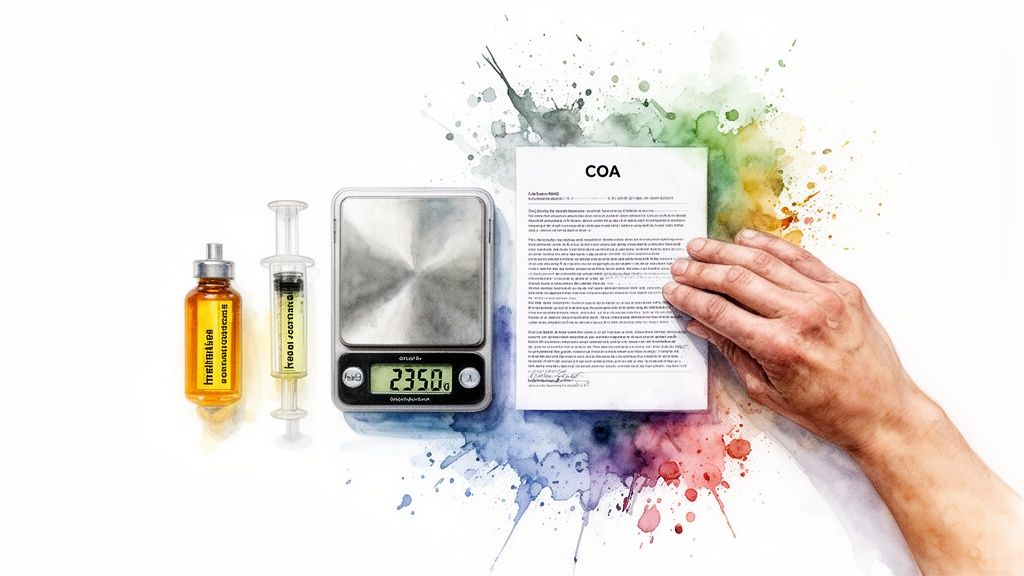
- Know Your Numbers. You absolutely must know the potency of your RSO before you start. Any quality product will come with a lab report, or Certificate of Analysis (COA), breaking down the exact cannabinoid content.
At RSOhelp.com, safety is our priority. The entire process starts with a quality, lab-verified product. This is the foundation for creating reliable, precisely-dosed edibles you can count on for your health routine.
The Importance of a Quality Starting Product
Without knowing your RSO's potency, accurate dosing is just a guessing game. A lab test provides the most critical piece of information: the exact milligrams of cannabinoids per gram of oil. This number is the key to all your dosing math.
For instance, if a one-gram syringe is labeled as 75% THC, you know it contains 750mg of THC. This simple fact allows you to calculate the total potency in your entire batch of infused oil and, from there, the exact dose in each individual serving. Starting with this knowledge removes the guesswork and sets you up for a safe, predictable, and effective experience every time you cook with RSO.
How to Master RSO Dosing for Edibles
Getting your RSO dosage right is probably the most critical part of cooking with it. This isn't like adding a dash of salt or sugar—a small miscalculation can turn a supportive, wellness-focused experience into an overwhelming one. When you learn the simple math behind RSO, you gain complete control, ensuring every edible you make is safe, predictable, and perfectly aligned with your health goals.
Your journey starts with a single, non-negotiable document: the product’s Certificate of Analysis (COA), or lab report. Think of this as your roadmap. It takes all the guesswork out of the equation by detailing the exact cannabinoid profile of your RSO.
Reading the Certificate of Analysis
When you get your COA, scan it for the cannabinoid potency section. You’re looking for the total THC or total cannabinoid content, which is almost always shown as a percentage. This percentage tells you exactly how many milligrams (mg) of active compounds are in each gram (g) of your oil.
It’s a simple conversion:
- A 1-gram syringe of RSO labeled 75% THC contains 750mg of THC.
- If it’s labeled 68% total cannabinoids, it has 680mg of active compounds.
Nailing this first step is everything. Once you know the total milligram content in your syringe, you can move on to infusing and calculating the strength of your final servings with confidence.
Calculating Your Dose Per Serving
Once you have that total potency number, the rest is just simple division. You’ll divide the total milligrams of cannabinoids by the number of servings your recipe yields. This gives you the precise dose in each individual portion.
Let’s use a common scenario. Say you have a 1-gram syringe of RSO that contains 750mg of total cannabinoids, and you want to make a batch of 30 gummies.
The math looks like this:
750mg (Total Cannabinoids) / 30 (Servings) = 25mg per Gummy
This is where you gain the power to customize. If 25mg feels too high, you could easily double the recipe to make 60 gummies instead. That simple change brings the dose down to a more manageable 12.5mg per serving. This is how you truly tailor your edibles for specific needs.
The goal is consistency. Whether you are making brownies, chocolates, or infused honey, the same mathematical principle applies. Always calculate the dose per serving before you begin cooking.
It's no secret that interest in RSO is growing. The global cannabis market's surge has put a spotlight on full-spectrum extracts, with U.S. sales projected to hit $30 billion in 2025. This isn't just a trend; it's driven by individual preference. Surveys show 68% of medical cannabis users choose high-potency, full-spectrum extracts like RSO over isolates, reflecting its reputation for supporting wellness. You can read more about the cannabis industry's expansion and RSO's role to see where things are headed.
To help visualize how this calculation works with different numbers, here’s a quick breakdown.
Sample RSO Dosing Calculation Per Serving
This table shows how the total cannabinoid content of your RSO and the number of servings you make directly impact the final dose in each edible.
| Total Cannabinoids in 1g RSO | Number of Servings | Formula (Total Cannabinoids / Servings) | Resulting Dose Per Serving |
|---|---|---|---|
| 700mg | 20 | 700 / 20 | 35mg |
| 700mg | 35 | 700 / 35 | 20mg |
| 850mg | 40 | 850 / 40 | 21.25mg |
| 850mg | 85 | 850 / 85 | 10mg |
As you can see, simply adjusting your batch size gives you incredible flexibility over the final potency of your edibles.
Microdosing Techniques for Edibles
Not everyone needs or wants a high-potency dose. Microdosing—taking very small, sub-perceptual doses—is a fantastic strategy for beginners, those with high sensitivity, or anyone looking for subtle support. The precision of RSO makes it perfect for this.
To create low-dose edibles, you can play with two variables:
- Use Less RSO: Instead of a full gram, you might only use a quarter gram (0.25g) in your infusion.
- Increase the Recipe Yield: Infuse your RSO into a larger volume of carrier oil or simply make a much bigger batch of food.
For example, let's say your RSO has 800mg of cannabinoids per gram. You could infuse just a tiny bit—say, 100mg worth (0.125g of the oil)—into a batch of 20 cookies. This would give you a final dose of just 5mg per cookie, which is a great starting point for many people.
To find the perfect numbers for your needs, you can play around with different scenarios using our helpful edible dosage calculator.
Choosing Your RSO Infusion Method
Getting your RSO properly infused into a carrier fat is the most critical part of cooking with it. This isn't just about mixing; it’s about creating a safe, consistent, and effective edible. When you gently melt the thick, tar-like RSO into a fat like coconut oil or butter, you’re doing two things: ensuring the cannabinoids are spread evenly throughout and making them more bioavailable for your body to absorb.
The trick is to use low, gentle heat. High temperatures are the enemy here—they can destroy the very cannabinoids and terpenes you're trying to preserve. Let's walk through two of the most reliable methods that work well for home cooks.
The Double Boiler Method for Precision Control
A double boiler is a go-to recommendation for anyone who wants tight control over the process. It uses gentle, indirect heat, which makes it almost impossible to scorch your precious oil. If you don't have one, no problem—just place a heat-proof bowl over a saucepan with an inch or two of simmering water. The steam does all the work.
Here’s the breakdown:
- Combine your ingredients. Put your measured carrier fat (say, one cup of coconut oil) and the entire contents of your RSO syringe into the top of the double boiler.
- Heat gently. Bring the water in the bottom pot to a low simmer. You’re looking for gentle steam, not a rolling boil.
- Stir until fully dissolved. As the fat melts, keep stirring. You’ll know it’s ready when the RSO has completely disappeared and no dark streaks are left. This usually takes about 10-15 minutes.
- Keep an eye on the temperature. The sweet spot for your infusion is between 160-180°F (71-82°C).
This method gives you fantastic control and is perfect when you’re making smaller batches of infused oil or butter.
People often ask if they need to decarboxylate RSO before infusing. The good news is, most RSO is already activated. The production process takes care of it. But always check the lab report or packaging just to be sure.
The Slow Cooker Method for Larger Batches
If you're making a larger supply of infused oil, a slow cooker is your best friend. It’s a classic "set it and forget it" technique that provides low, steady heat over several hours. This ensures a deep, even infusion with very little hands-on time.
It’s incredibly straightforward:
- Add your carrier fat and RSO to the slow cooker.
- Set it to the lowest possible setting, which is often labeled "Keep Warm."
- Let the mixture infuse for 2-4 hours, giving it a good stir every so often to make sure it's all incorporated.
- Once it's done, turn off the heat and let the oil cool down a bit before you try to handle it.
This is the perfect approach for caregivers or anyone who needs to prepare a bigger batch of infused oil at once. If you want to dive deeper into the preparation process, this guide on how to make your own cannabinoid oil has some great additional tips.
After your oil is infused, the next steps are all about careful dosing and administration. This visual guide sums up the responsible workflow perfectly.
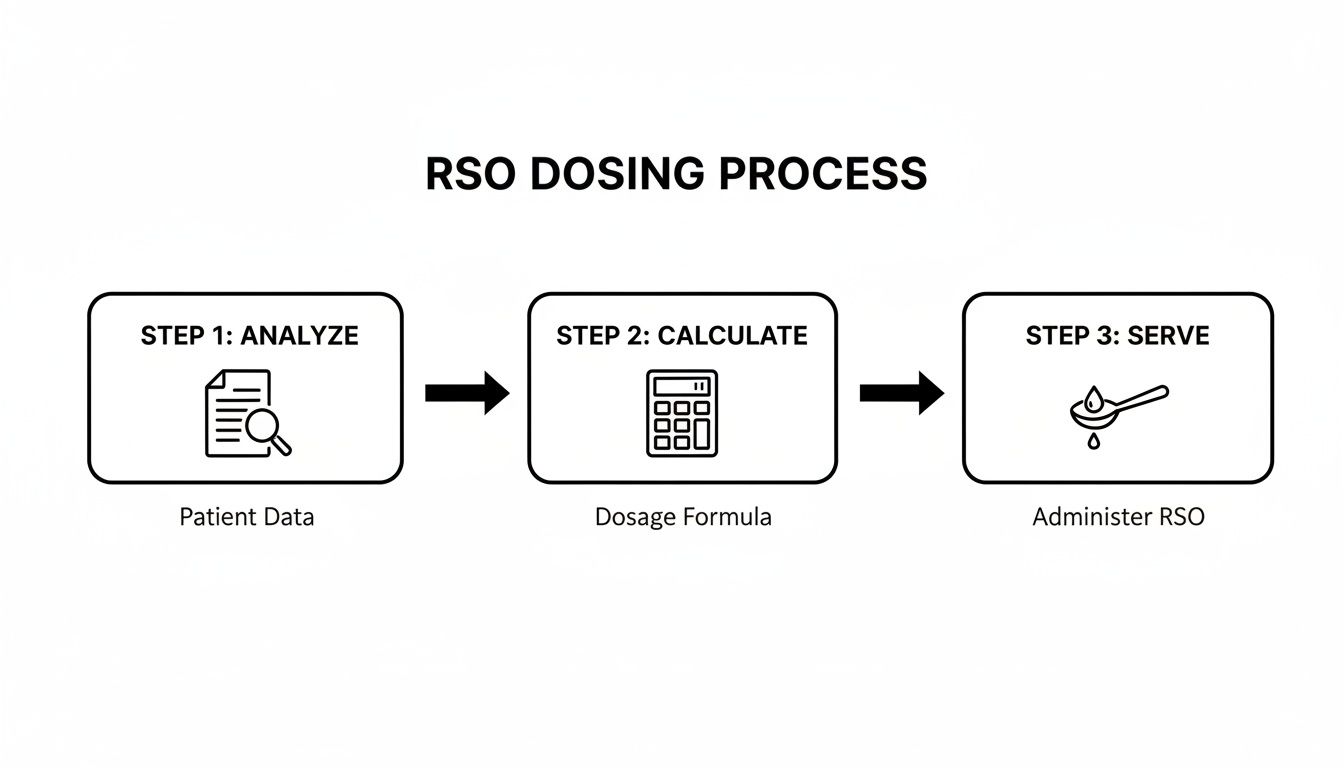
It all boils down to a systematic process: start with the lab data, calculate your dose precisely, and then administer it safely.
RSO Infusion Method Comparison
To help you decide which approach is right for your kitchen and your needs, here's a quick comparison of the two methods we've covered.
| Infusion Method | Pros | Cons | Best For |
|---|---|---|---|
| Double Boiler | Excellent temperature control; quick infusion time (10-15 mins); ideal for small batches. | Requires constant attention; can be tricky to maintain a consistent temperature on some stovetops. | Small, precise batches of infused butter or oil for immediate use. |
| Slow Cooker | "Set it and forget it" convenience; handles large volumes easily; very consistent, low heat. | Longer infusion time (2-4 hours); less precise temperature control than a double boiler. | Preparing a large supply of infused oil for weekly or monthly needs. |
Both methods are fantastic and will get the job done right. Your choice really depends on how much oil you're making and how much time you want to spend watching it.
Safety and Best Practices During Infusion
No matter which method you pick, kitchen safety has to be your top priority. Cooking with RSO can be a game-changer for so many people, mainly due to its high potency—we’re talking 700-900mg of cannabinoids per gram. This concentration is what allows for such precise dosing. In fact, a 2024 survey of 2,500 users found that 65% cook with RSO specifically to bind it to fats, which can boost absorption by as much as 50%.
Here are a few non-negotiable safety tips to follow:
- Ventilate Your Space. While you won’t get the strong smell of decarbing flower, it’s still smart to have good airflow. Turn on an exhaust fan or crack a window.
- Never Leave Heat Unattended. This is especially true for the double boiler method. Stay in the kitchen and keep an eye on things.
- Use Quality Equipment. Stick with stainless steel, glass, or silicone tools. You want to avoid any plastics that could potentially leach chemicals into your infusion.
By sticking to these guidelines and choosing the right method for your situation, you can create a high-quality, perfectly mixed base for all your RSO recipes. This careful prep work is the secret to unlocking the full potential of your edibles.
Simple and Reliable RSO Recipes for Wellness
Now that we’ve covered the fundamentals of infusion and dosing, it's time to get into the kitchen. The key to successfully cooking with RSO isn't about fancy techniques; it's about reliability. We're going to focus on simple, versatile recipes where you can easily add your infused oil or butter and mix it evenly. This ensures every single serving is consistent with the math we did earlier.
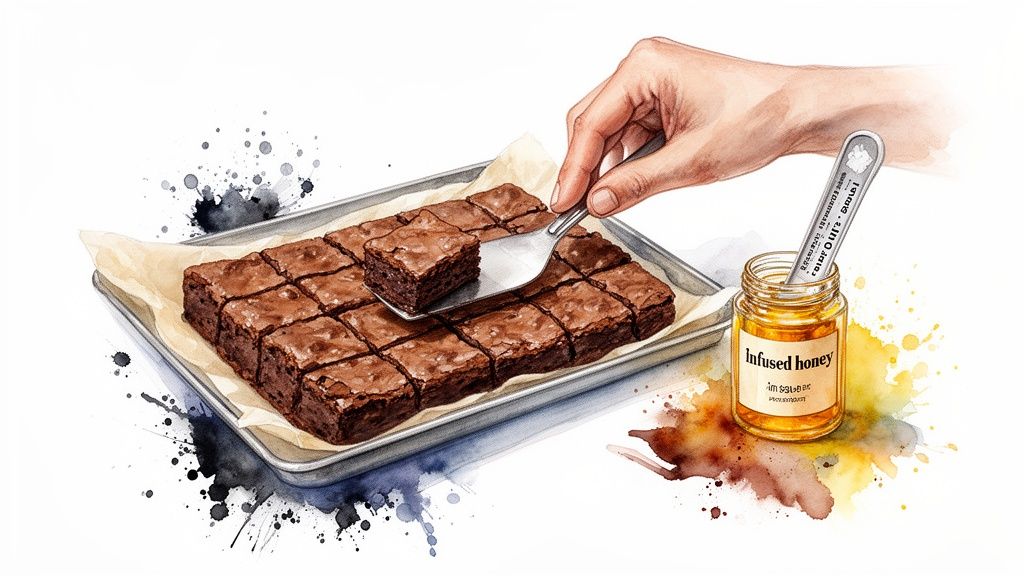
The goal here isn't to create complex gourmet dishes. Instead, we want straightforward, effective ways to deliver a palatable and precisely measured dose. Let's walk through a few dependable options.
Classic RSO Infused Brownies
There’s a reason brownies are the timeless edible. Their high fat content and the rich flavor of chocolate make them a perfect vehicle for RSO's potent, earthy taste. The most critical part of this recipe is adding your infused butter when you combine all the wet ingredients—this is your best chance for a thorough, even mix.
Ingredients:
- 1/2 cup RSO-infused unsalted butter, melted
- 1 cup granulated sugar
- 2 large eggs
- 1 teaspoon vanilla extract
- 1/2 cup all-purpose flour
- 1/3 cup unsweetened cocoa powder
- 1/4 teaspoon baking powder
- 1/4 teaspoon salt
Instructions:
- First, preheat your oven to 350°F (175°C) and get an 8×8 inch baking pan greased up and ready to go.
- In a large bowl, mix the melted RSO-infused butter with the sugar until they're fully combined.
- Beat in the eggs, one at a time, and then stir in the vanilla. This stage is crucial—make sure that infused butter is completely incorporated before moving on.
- Grab a separate bowl and whisk together the flour, cocoa powder, baking powder, and salt.
- Slowly add the dry ingredients to your wet mixture, mixing only until everything is just combined. Be careful not to overmix the batter.
- Pour the batter into your prepared pan, spreading it out evenly.
- Bake for about 20-25 minutes. You'll know it's done when a toothpick inserted into the center comes out with moist crumbs attached.
- Let the brownies cool completely in the pan before you even think about cutting them into your pre-calculated number of servings.
This is where your dosing math comes into play. For example, if your entire batch of infused butter contains 400mg of cannabinoids and you cut the pan into 16 brownies, each piece will have a 25mg dose.
No-Bake RSO Chocolate Bars
If you'd rather skip turning on the oven, these no-bake chocolate bars are a fantastic starting point. This method is incredibly simple and keeps your infused oil away from high heat. The trick is to melt everything together very gently.
You Will Need:
- 1 cup of high-quality chocolate chips (dark, milk, or semi-sweet all work well)
- 2 tablespoons of your RSO-infused coconut oil
- Optional mix-ins like chopped nuts, dried fruit, or puffed rice
Steps:
- Using a double boiler (or a microwave on a low power setting in short bursts), gently melt the chocolate chips.
- Once the chocolate is perfectly smooth, take it off the heat and let it cool for a minute or two.
- Now, stir in your pre-measured RSO-infused coconut oil. Keep stirring until it is completely blended into the chocolate with no streaks.
- If you're using them, fold in your optional additions.
- Pour the mixture into a silicone mold or a small baking dish lined with parchment paper.
- Pop it in the refrigerator for at least 1-2 hours, or until the chocolate is completely firm.
- Once it's set, you can cut the bar into the number of equal servings you planned for.
Simplicity is your ally when cooking with RSO. Recipes with fewer ingredients and simpler mixing steps reduce the chances of uneven distribution, giving you a more dependable final product every time.
Easy RSO Infused Honey
Infused honey is one of the most versatile edibles you can make. You can stir it into a cup of tea, drizzle it over yogurt, or just take it by the spoonful. But there's a catch: since RSO is oil-soluble, it won't just mix into honey on its own. The secret is to use a little lecithin, which acts as an emulsifier to bind the oil and honey together.
To Create Infused Honey:
- Gently warm 1 cup of honey in a double boiler over very low heat. You just want it warm and runny, not boiling.
- In a separate small bowl, thoroughly mix your dose of infused coconut oil with 1 teaspoon of sunflower or soy lecithin powder.
- Slowly pour this oil-lecithin mixture into the warm honey while whisking continuously and vigorously. Keep this up for a good 5-7 minutes to ensure it's fully emulsified.
- Pour your finished infused honey into a clean glass jar and let it cool to room temperature.
For more personalized support on your wellness journey, the experts at RSOhelp.com can help you create safe and effective plans. These foundational recipes should give you the confidence to start cooking with RSO at home.
Safety Guidelines and Best Practices
When you're cooking with something as potent as RSO, safety isn't just a suggestion—it's the most important ingredient. Think of it this way: your infusion process and dosing calculations are only half the battle. How you handle and store your finished creations is what ensures a safe, predictable, and genuinely helpful experience.
Here at RSOhelp.com, we believe in a health-first approach. That means treating your homemade edibles with the same seriousness you'd give any other part of a wellness regimen. Proper storage, crystal-clear labeling, and responsible use are the pillars of using RSO effectively and safely.
Proper Storage for RSO and Edibles
The powerful compounds in RSO are surprisingly delicate. They don't do well with light, heat, or air. If you store your RSO or edibles improperly, you’ll slowly degrade the cannabinoids and terpenes, which ultimately weakens their potency. You put a lot of effort into making them; let’s make sure they stay effective.
Here’s what you should know:
- Find a Cool, Dark Home: Your RSO syringe and any infused goodies need to be stored in a cool, dark place. The refrigerator is perfect for the long haul. For shorter-term storage, a pantry or cabinet far away from the oven or other heat sources works just fine.
- Airtight is Non-Negotiable: Oxygen is another key enemy of cannabinoid stability. Always keep your infused oils, butters, and edibles in airtight containers. Glass or silicone are excellent choices for minimizing air exposure.
- Label Everything. No Exceptions. Seriously, this is the one step you can't skip. Every single container needs a clear label stating what's inside, the date it was made, and the dose per serving (e.g., "RSO Brownies – 15mg each"). This simple habit prevents mix-ups and accidental over-consumption.
The most critical rule of all: Always keep RSO products securely out of reach of children and pets. Treat them exactly like you would any important wellness product—in a secure container or a high, inaccessible cabinet.
If you want to dive deeper into shelf life, we have a whole article dedicated to the topic of whether cannabis oil can go bad.
The Golden Rule: Start Low and Go Slow
If you remember only one thing from this guide, make it this: "start low and go slow." This isn't just a catchy phrase; it's the single most important piece of advice for anyone trying RSO edibles for the first time. The effects are profoundly different from other methods, and that difference can catch people off guard.
Unlike other methods, edibles take a long journey through your digestive system and liver before they hit your bloodstream. This metabolic detour has two major consequences you absolutely need to be ready for.
Delayed Onset
You could be waiting anywhere from 30 minutes to over two hours to feel anything. This delay is the number one reason people take too much. They get impatient, think it isn't working, and decide to take another dose. Please, don't do that. Always wait at least two full hours before even thinking about taking more.
Long Duration
Once the effects kick in, they're here to stay for a while—often for six to eight hours, sometimes even longer. For people seeking all-day support, this is a huge benefit. But if you've taken too high a dose, it can feel overwhelming. Plan ahead. Make sure you’re in a safe, comfortable place for the duration.
Guidance for Caregivers and Individuals
When a caregiver is helping an individual use RSO, open communication is everything. The caregiver's role is to be a supportive and responsible partner, ensuring the person feels safe and comfortable every step of the way.
Create a Plan Together
Before that first dose, sit down and have a conversation. Agree on a starting dose, decide on the timing, and make a plan for what to do if the effects feel too strong. Keeping a simple journal to log the dose, time, and the person's experience can be incredibly valuable for fine-tuning the approach later on.
Responsible Administration
The caregiver should take on the responsibility of measuring and administering the dose accurately. They should also be in charge of safe storage, making sure everything is labeled correctly and secured away. This teamwork builds trust and creates a much safer and more effective path forward.
Got Questions About Cooking With RSO? We've Got Answers.
When you're working with something as potent as RSO, it's completely normal to have questions pop up along the way. We've put together some quick, straightforward answers to the most common ones.
Can I Just Squeeze RSO Straight Onto My Food?
It's really not recommended. While you technically can, you're setting yourself up for an unpredictable experience. RSO is incredibly thick and sticky, almost like a tar, which makes it a nightmare to mix evenly into anything.
You’ll inevitably end up with uneven distribution—one bite with a massive, unintended dose and another with nothing at all. Taking the time to infuse the RSO into a fat like butter or coconut oil first is the only way to guarantee the cannabinoids are distributed evenly. This also makes it easier for your body to absorb, giving you much more predictable and reliable effects.
Is My Whole House Going to Smell Like I'm Cooking Cannabis?
Probably not. That powerful, tell-tale smell people associate with making edibles usually comes from decarboxylating raw cannabis flower. The good news is that almost all RSO you find has already gone through that process.
When you're just gently infusing the RSO into your oil or butter on low heat, the smell is minimal—just a faint, earthy aroma. If you're still concerned, just crack a window or turn on your stove's exhaust fan. Using a slow cooker with the lid on also keeps any scent contained.
Help! My Edibles Are Way Too Strong. What Do I Do?
Unfortunately, there's no way to dial back the potency once your edibles are made. This is exactly why we stress the importance of getting your dosing calculations right from the very beginning.
If you've ended up with a batch that's stronger than you intended, the only safe approach is to be extremely cautious with your portions.
- Cut a standard serving into much smaller pieces. For example, slice a single brownie into four quarters.
- Eat just one tiny piece.
- Wait at least two full hours to see how it affects you before even thinking about having another.
For your next batch, just adjust your recipe. You can either start with less RSO in your infusion or simply increase the total volume of your recipe (e.g., make 36 cookies instead of 24) to dilute the dose per serving.
How Long Will My RSO Edibles Last?
The shelf life of your edibles really depends on the food itself, not the RSO. The infused butter or oil is the base, and it will stay fresh for several weeks in an airtight container in the fridge or for a few months in the freezer. Baked goods like cookies or brownies will last about as long as their non-infused counterparts—usually up to a week.
Pro Tip: To protect the potency, always store your RSO and any infused products in a cool, dark place. Light and heat are the biggest enemies of cannabinoids; they will degrade them over time and make your edibles less effective.
And most importantly, label everything. Clearly mark what it is, when you made it, and the dose per serving. Always keep these products securely stored, far out of reach of children and pets.
For more personalized guidance on creating a safe and effective RSO plan, RSOhelp.com is a fantastic resource with expert-led consultations. You can learn more by visiting them at https://ricksimpsonoil.info.