If you're researching hemp oil rick simpson, the single most important thing to understand is that they are two entirely different products. It's a common and potentially risky point of confusion. While they both come from cannabis, one is a non-intoxicating CBD-rich extract, and the other is a potent, high-THC concentrate developed for intensive health protocols.
Getting this distinction right from the start is absolutely crucial for your safety and for achieving the results you're looking for.
Hemp Oil and RSO: Clearing Up the Confusion
Let’s cut through the noise. People often mix up "hemp oil" and "Rick Simpson Oil," but this isn't just a simple mix-up in terms—it can lead people to buy a product that’s completely wrong for their needs. This can be, at best, a waste of money and, at worst, lead to unexpected and powerful effects.
Hemp-derived oils are made from industrial hemp plants. These plants are grown to have very low levels of THC, the compound that causes a "high." The star player here is cannabidiol (CBD), which is non-psychoactive. People typically turn to these oils for general wellness support, like managing daily stress or easing minor aches and pains.
RSO, on the other hand, is in a completely different league. It’s a thick, dark, and incredibly potent oil made from high-THC cannabis strains. As a full-spectrum extract, it’s packed with a huge range of cannabinoids, terpenes, and other natural plant compounds that create what’s known as the entourage effect. This biochemical teamwork is the whole point of RSO.
This chart gives a quick visual rundown of where these two oils diverge.
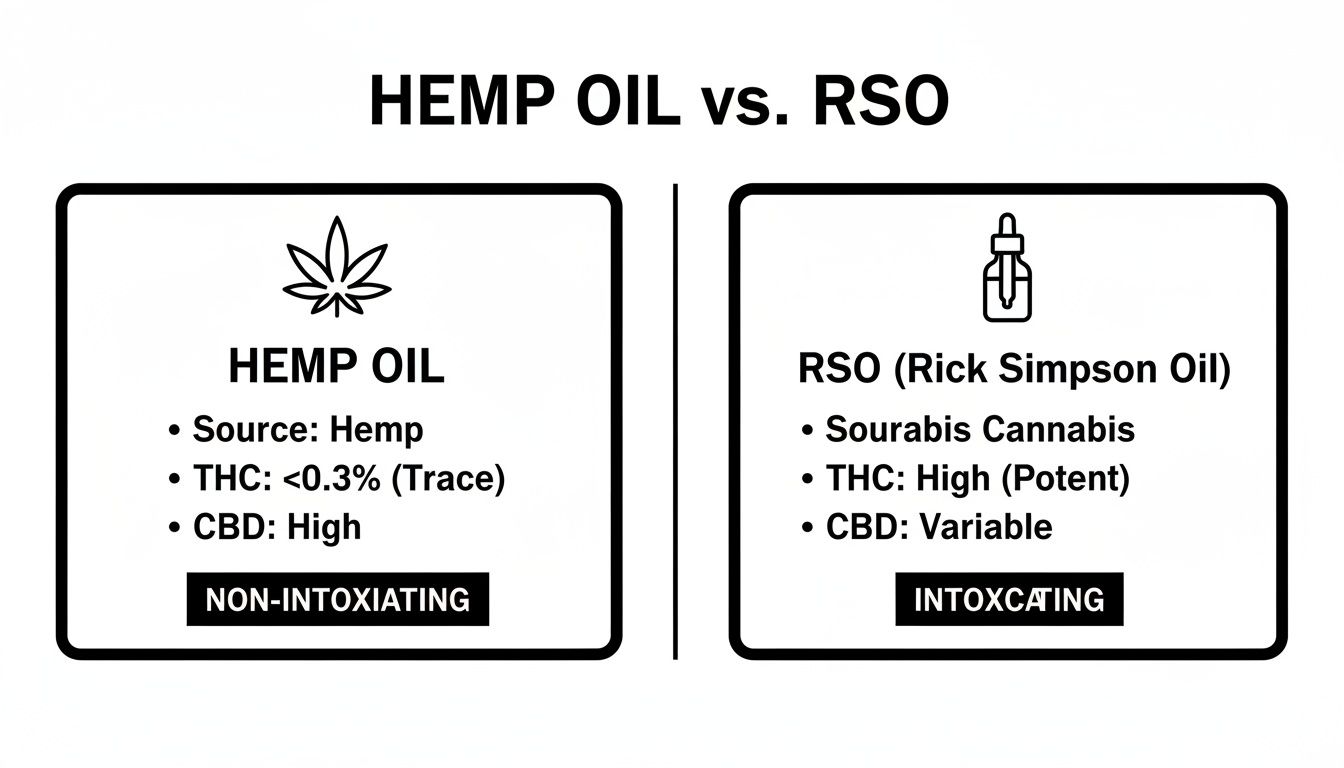
As you can see, the THC content isn't just a minor detail; it’s the main event. It dictates everything from the oil's effects and intended use to how it's approached.
Hemp Oil vs RSO At a Glance
To make this even clearer, let's put their key features side-by-side in a simple table. This at-a-glance comparison really helps highlight their fundamental differences.
| Characteristic | Hemp Oil | Rick Simpson Oil (RSO) |
|---|---|---|
| Source Plant | Industrial Hemp | High-THC Cannabis Strains |
| Primary Cannabinoid | Cannabidiol (CBD) | Tetrahydrocannabinol (THC) |
| THC Content | Typically < 0.3% | Very High (60%–90% or more) |
| Psychoactive Effect | None | Potentially Very Strong |
| Availability | Widely available | Sourced with care |
| Primary Use Case | General wellness & daily support | Intensive health protocols |
After reviewing the table, the takeaway becomes obvious: these are two distinct tools for very different jobs. For those looking to explore full-spectrum extracts further, our guide comparing FSO vs RSO offers a deeper dive into the nuances.
Key Insight: Don't ever substitute one for the other. RSO’s high-THC, whole-plant profile is designed for a completely different purpose than low-THC hemp oil. They are not interchangeable, and their dosing, effects, and sourcing are worlds apart.
Comparing Cannabinoid And Terpene Profiles
When you're trying to understand the real difference between RSO and hemp oil, you have to look past the labels and get into the chemistry—the specific blend of cannabinoids and terpenes in each. It’s not just a simple CBD vs. THC debate. The entire philosophy behind each oil is built on how these plant compounds work together, a concept known as the "entourage effect."
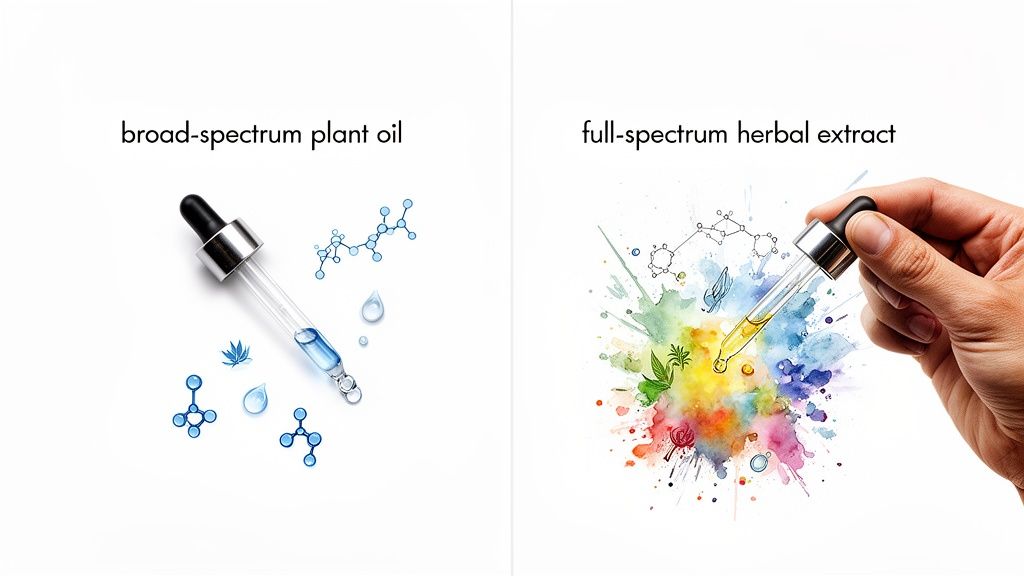
Rick Simpson Oil (RSO) is the textbook definition of a whole-plant extract. Its entire purpose is to capture every last compound from the original cannabis plant. This means you get a heavy concentration of THC, but also a significant mix of other cannabinoids like CBD, CBG, and CBN. Just as important are the terpenes, which give the oil its unique aroma and are believed to contribute their own health benefits.
This biochemical synergy is the whole point of RSO. The idea is that all these compounds working together create a far more powerful and comprehensive effect than any single one could on its own.
The Spectrum of Hemp Oils
Hemp-derived oils are a different beast entirely, mainly because they are limited to 0.3% THC. This single constraint means they serve completely different needs. Instead of one uniform product, hemp oils fall into a few key categories.
- CBD Isolate: Just what it sounds like—pure, isolated CBD. All other plant compounds have been stripped away, so you're getting only the effects of CBD.
- Broad-Spectrum CBD Oil: This is a step up. It contains CBD plus a range of other cannabinoids and terpenes, but the THC has been specifically removed. You get some of the entourage effect without any psychoactive risk.
- Full-Spectrum CBD Oil: The closest you can get to RSO in the hemp world. It contains CBD and all the other naturally occurring compounds, including that tiny, compliant trace of THC (under 0.3%).
While full-spectrum hemp oil aims for a similar whole-plant philosophy, the near-total absence of THC creates a fundamentally different product. Ultimately, this is why hemp oil is great for general wellness, while RSO is reserved for much more intensive uses.
Crucial Takeaway: RSO is defined by its high-THC, full-plant profile designed for maximum synergy. Hemp oils, even the full-spectrum kind, are very low in THC and are built for different purposes, focusing on CBD and other non-intoxicating compounds.
Potency and Purity in Practice
These chemical differences have huge implications for potency and how you use these oils. It’s common to see lab-tested RSO clocking in at 70-90% THC. Some studies even suggest that full-spectrum products can boost bioavailability by up to 30% compared to isolates. This is serious potency, which is why proper RSO dosing starts small—think the size of a grain of rice (0.1g)—and is slowly increased over a 90-day period to reach a target of 1g per day. A Certificate of Analysis (COA) is non-negotiable, verifying purity is above 95%.
That intense concentration is exactly why RSO is used for such specific, targeted protocols. The goal is to flood the body with a powerful, synergistic dose. Hemp oil, on the other hand, is designed for a much milder, non-intoxicating experience to support the body's overall balance.
Potency, Dosing, and Administration: A Tale of Two Oils
When it comes to hemp oil vs. Rick Simpson oil, the conversation around potency and dosing isn't just a minor detail—it's everything. These two oils occupy opposite ends of the cannabis spectrum, and their administration methods are worlds apart. Mistaking one for the other isn’t just a simple mix-up; it can lead to a profoundly overwhelming experience or, conversely, be completely ineffective.
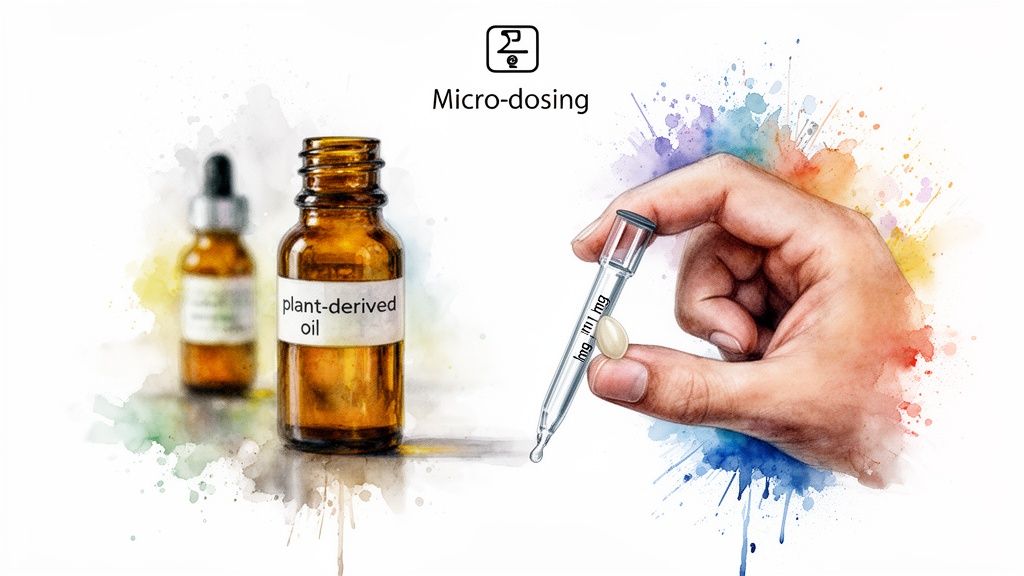
RSO is an incredibly potent, full-spectrum extract. With THC levels routinely hitting between 60% to 90%, even a tiny amount packs a serious punch, especially for anyone unaccustomed to high-THC concentrates. This is why a very specific and cautious dosing protocol is the standard.
The widely accepted starting point is a dose no bigger than a single grain of rice, taken two or three times a day. This tiny amount is the key to letting your body acclimate to the powerful effects of THC without feeling overwhelmed. The entire strategy is built around gradually building tolerance.
The RSO Titration Method
This gradual increase in dosage, a process called titration, is the cornerstone of using RSO safely and effectively. It’s designed to be a slow and steady journey, giving your body several weeks to adapt.
This systematic approach is essential for managing the powerful psychoactive effects and minimizing potential side effects like dizziness or intense drowsiness. The process usually looks something like this:
- Week 1: Begin with a dose the size of a grain of rice, taken three times per day.
- Weeks 2-5: Double your dose every four days until you reach your desired amount.
- Weeks 5-12: Continue with the maximum dose you can comfortably tolerate.
For a more detailed walkthrough, our comprehensive guide on RSO oil dosing breaks down the entire titration process step-by-step. This careful method ensures you remain comfortable and in control throughout the regimen.
The Golden Rule: The "start low and go slow" mantra isn't just friendly advice—it's a mandatory safety measure with RSO. Rushing this process can lead to deeply uncomfortable experiences and completely defeats the purpose of the protocol.
Hemp Oil Dosing: A Different World Entirely
On the other hand, dosing hemp-derived oils is a completely different conversation. Because these products contain less than 0.3% THC, there are no psychoactive effects to manage. Here, dosing is measured in milligrams (mg) of specific cannabinoids like CBD, not by the physical size of a droplet.
A typical starting dose for a standard hemp CBD oil might be 5-10 mg of CBD, once or twice daily. From there, you can adjust the amount based on your wellness goals without needing a slow, multi-week titration period. The main goal is to find the right amount for your personal balance, not to manage intense psychoactivity.
The bottom line is that these two approaches are fundamentally incompatible. Applying hemp oil dosing logic—like measuring by the dropperful—to RSO would be irresponsible and likely result in a very unpleasant experience. Conversely, taking a rice-grain-sized dose of hemp oil would do next to nothing for most wellness goals. Understanding this distinction is the first and most critical step toward using either oil responsibly and safely.
Sourcing and How to Verify Your Product
Stepping into the world of cannabis oils means you need a solid grasp of how to find safe, reliable products. The landscape for hemp-derived oils and RSO are worlds apart, which directly affects how and where you can get them. This isn't just about following rules—it's about protecting your health and making sure you're getting a quality product.
Hemp-derived oils are widely available. You can find these oils just about everywhere, from dedicated online stores to local health food shops.
RSO is a completely different story. With THC levels often hitting 60% or more, it requires careful sourcing. Finding a clean, potent, and reliable product is paramount for anyone considering its use for serious health goals.
The Certificate of Analysis: Your Most Important Tool
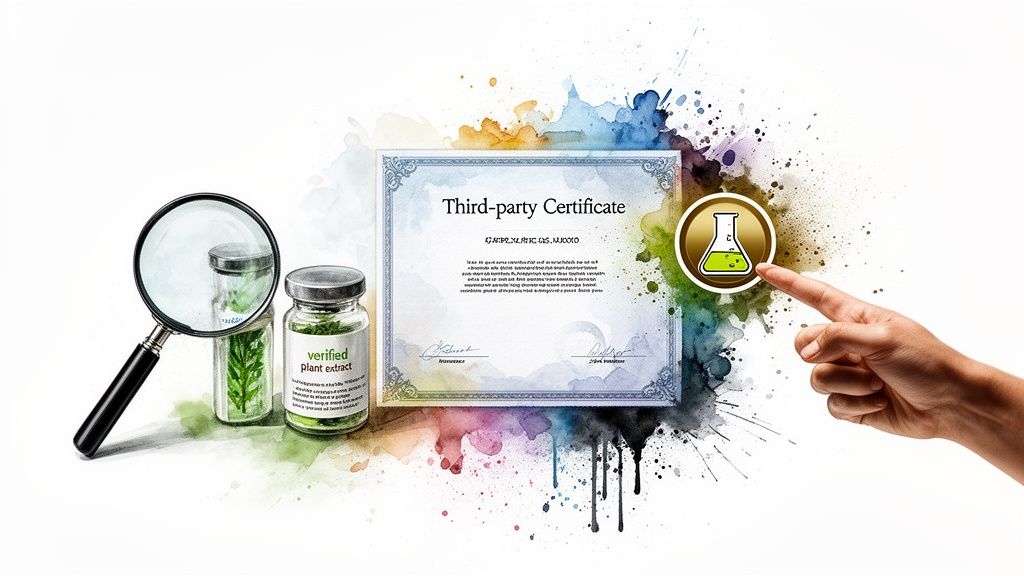
No matter which oil you’re considering, your first line of defense is the Certificate of Analysis (COA). Think of this as the product’s report card, issued by an independent, third-party lab. It confirms everything you need to know about what's inside that bottle.
A proper COA gives you a complete picture of the product's safety and quality:
- Cannabinoid Potency: It verifies the exact amounts of THC, CBD, and other cannabinoids, so you know the label is accurate.
- Purity Check: This is crucial. It scans for nasty stuff you don't want, like heavy metals, pesticides, or leftover solvents from extraction.
- Terpene Profile: A good COA will also break down the terpene content, giving you clues about the oil's potential effects and aroma.
Expert Takeaway: If a source can't—or won't—show you a current, detailed COA from a reputable lab, walk away. Full transparency isn't a bonus; it's the absolute minimum standard for safety in this industry.
How to Source Safely and Verify Your Purchase
With this in mind, finding the right product becomes much more straightforward. For hemp-derived oils, you have a lot of options, but you still need to be discerning. Stick with brands that are open about where their hemp comes from, how they extract their oil, and who make their COAs easy to find for every single batch.
Finding legitimate RSO demands even more caution. The unregulated market is a minefield of fake, mislabeled, or contaminated products. This is where leaning on trusted educational resources can make all the difference.
For anyone trying to navigate this space, RSOhelp.com is a phenomenal resource. It’s a site dedicated to providing information and helping people connect with verified, U.S.-based sources. Using platforms like this helps you sidestep the dangers of untested products.
The demand for verified products is clearly there. You can explore more about cannabis industry trends to see how transparent, high-quality products like RSO are shaping the global market.
Matching The Right Oil To Your Wellness Goals
Deciding between a hemp-derived oil and Rick Simpson Oil isn’t a matter of which one is objectively "better." It's about picking the right tool for the job. Each of these oils serves a very different purpose, so matching your choice to your specific health goals is the most important step you'll take. A mismatch here can lead to anything from simple disappointment to a surprisingly intense experience you weren't prepared for.
Hemp-derived CBD oil is almost universally used for daily wellness and maintaining a sense of balance. Its role is typically non-intoxicating, offering gentle support for the body's natural systems. You can think of it as a daily supplement, something to help manage the low-grade stress of modern life or soothe minor aches and pains from staying active.
Rick Simpson Oil, on the other hand, plays in a completely different league. Both historically and anecdotally, RSO is sought out by people facing significant health battles who need a potent, full-spectrum botanical. With its high concentration of THC and other powerful plant compounds, it’s intended for intensive, targeted protocols—not casual, everyday use.
Practical Scenarios For Decision Making
Let's walk through a few real-world scenarios to see how this plays out. These examples should help you think more clearly about where you fit and what you truly need.
-
Scenario 1: The Daily Wellness Seeker
Someone is looking for a natural way to take the edge off a stressful job and get more restful sleep. Psychoactive effects are a non-starter; they need to stay sharp and focused during the day. For this person, a high-quality, full-spectrum hemp CBD oil is the clear choice. Its cannabinoid profile is geared toward supporting equilibrium without intoxication. -
Scenario 2: The Athlete with Minor Aches
A marathon runner is dealing with the usual muscle soreness and joint stiffness that comes with intense training. They need something to help their body recover but must avoid anything that could cloud their focus or impair performance. A hemp-derived topical cream or oil is a perfect fit, delivering localized support right where it's needed without any systemic psychoactive effects.
Key Consideration: The most important question you can ask is: "Am I looking for gentle, daily support for my general well-being, or am I researching a potent, full-spectrum option for a serious health situation?" Your answer will almost always point you in the right direction.
Aligning Your Choice With Your Research
- Scenario 3: The Serious Health Researcher
An individual is exploring every possible option to support their body through a major health crisis. After digging into the research, they're specifically seeking a potent, whole-plant extract with a high concentration of THC, just like the one Rick Simpson originally outlined. Their research would naturally lead them to Rick Simpson Oil (RSO), as its profile was created for precisely this kind of intensive use.
Getting this distinction right is just part of being a responsible, educated consumer. It’s absolutely vital to approach this with a clear understanding of what each product is designed to do. This guide isn't here to tell you what to do, but to arm you with the information needed to make choices that feel right for your own health journey.
For anyone whose research leads them toward RSO, safety and efficacy depend entirely on finding trustworthy information and verified products. Educational resources like RSOhelp.com are committed to providing guidance on how to find lab-tested oils from reputable U.S. sources, so you can move forward with confidence.
Common Questions About Hemp Oil and RSO
When you're trying to understand the difference between hemp oil and Rick Simpson Oil, a lot of questions can pop up. Getting clear, practical answers is key to making choices that are right for you. Let's break down some of the most common things people ask.
Can I Use Hemp CBD Oil and Rick Simpson Oil the Same Way?
Absolutely not. These two oils are completely different and should never be used interchangeably. This is probably the most important thing to remember. RSO is a potent, high-THC cannabis concentrate designed for very specific, intensive applications. Its chemical profile, strength, and effects are in a totally different league from hemp oil.
Hemp CBD oil, on the other hand, contains almost no THC (under 0.3%) and is typically used for everyday wellness. If you tried to use hemp oil expecting the same results as RSO, you’d find it completely ineffective because it simply doesn't have the high concentration of THC that defines RSO.
Is It Safe to Make My Own Rick Simpson Oil?
Making RSO at home, particularly with common methods that use flammable solvents like alcohol or naphtha, is extremely dangerous. The risk of fire or an explosion is very real without professional, controlled lab conditions. It's also incredibly difficult to fully remove all the leftover solvent from the final oil without proper equipment.
If the oil isn't purged correctly, you could be consuming harmful chemicals. Between the risk of contamination and the fire hazard, it's just not worth it. For your own safety and to ensure you're getting a pure, potent product, always source RSO from a reputable provider that can show you a full Certificate of Analysis (COA).
Safety First: Don't underestimate the dangers. The potential for chemical contamination and serious accidents makes DIY RSO a bad idea. Stick with professionally made, lab-tested products for peace of mind.
How Do I Find a Reputable RSO Source?
A trustworthy source will always be transparent about their product. No matter where you get it, there's one thing you must do: demand a current, third-party Certificate of Analysis (COA).
This lab report is your proof of what’s in the oil. It confirms the exact cannabinoid percentages and shows that the product is clean and free of nasty stuff like pesticides, heavy metals, or residual solvents. You can also turn to educational resources for help. Platforms like RSOhelp.com are dedicated to helping people in the U.S. learn how to spot verified, lab-tested products and make safer decisions.
What Side Effects Should I Expect From RSO?
The main side effects of RSO come from its high THC content. If you’re new to it or take a large dose, you might experience:
- Intense drowsiness and fatigue
- Dizziness or feeling lightheaded
- Trouble with coordination and motor skills
- Strong psychoactive effects, or a powerful "high"
This is exactly why the golden rule is to "start low and go slow." Beginning with a dose the size of a single grain of rice helps your body gradually get used to the psychoactive effects. Never drive or operate machinery after taking RSO, as it can seriously impair your judgment and reaction time. It's best to use it in a safe, comfortable place, especially when you're just starting out.
At RSOhelp.com, our goal is to give you clear, trustworthy information to help you make informed health decisions. If you need personalized support or help finding verified, lab-tested RSO in the U.S., check out our free consultations and educational guides.