

Rick Simpson Oil, better known as RSO, is a highly concentrated, unrefined cannabis oil that harnesses the full power of the plant. Unlike other extracts that isolate specific compounds, RSO is intentionally crafted to capture everything—cannabinoids, terpenes, and other natural plant materials—to work together in synergy. Its appearance is a dead giveaway: it's typically a very thick, dark, and tar-like substance.
Understanding RSO: A Whole-Plant Philosophy
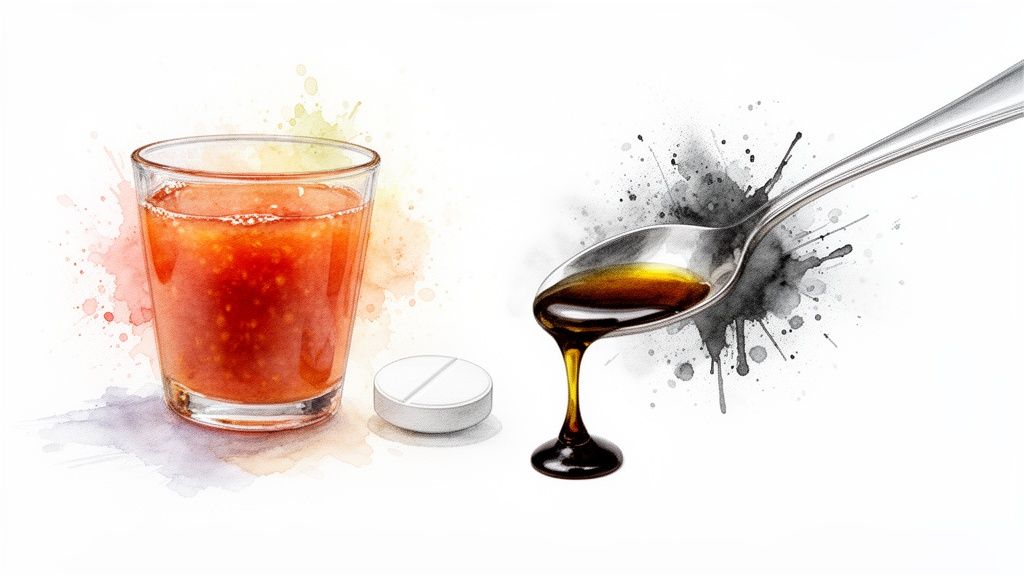
When someone asks, "what is RSO?" a simple analogy can help. Think about the difference between a vitamin C tablet and a glass of freshly squeezed orange juice. The tablet gives you one isolated compound, ascorbic acid. The juice, on the other hand, gives you vitamin C plus fiber, flavonoids, and countless other micronutrients that all work in concert.
RSO is the "orange juice" of the cannabis world. It’s a full-spectrum extract, which means the production process is all about preserving the complete chemical profile of the original cannabis plant. This includes not just the well-known cannabinoids but also the minor ones, the terpenes that create the plant's aroma, and even things like chlorophyll, waxes, and lipids.
This all-in approach is the entire point. The goal isn't to create a pretty, golden-hued oil. It's to maintain the plant's natural chemical teamwork. That’s precisely why RSO looks the way it does—its dark, thick consistency is a direct sign that all those original components are still present.
What Makes RSO Different?
The raw, unrefined nature of RSO is what truly sets it apart from most other cannabis products on the shelf. While many modern oils are processed for clarity, specific cannabinoid ratios, or a milder taste, RSO is all about completeness. This difference is critical for understanding its purpose and why people seek it out for specific health goals.
Here’s what defines it:
- High Potency: As a concentrate, RSO is incredibly strong. This means dosing must be approached with precision and care.
- Full-Spectrum Profile: It contains hundreds of cannabis compounds, all working together in what’s known as the entourage effect.
- Versatile Use: RSO can be taken in several ways, from simple oral ingestion to direct topical application.
- Patient-Focused Origins: The oil was originally developed for serious wellness use, a legacy that continues to drive its popularity today.
Given its strength and unique composition, finding reliable information is essential. Educational platforms like RSOhelp.com are dedicated to offering clear, patient-first guidance to help people navigate their wellness journey safely.
RSO is defined by its method. The entire process is designed to capture the plant's complete chemical fingerprint, creating a concentrate that’s as close to its natural source as possible. This is the guiding principle behind its creation and use.
To give you a clearer picture of where RSO fits in, the table below provides a quick comparison against other common cannabis products.
RSO Quick Facts vs Other Cannabis Products
| Characteristic | Rick Simpson Oil (RSO) | CBD Oil | THC Edibles |
|---|---|---|---|
| Primary Cannabinoid | High THC, plus other cannabinoids | Primarily CBD | Primarily THC |
| Spectrum | Full-Spectrum (whole plant) | Varies (Isolate, Broad, Full) | Typically THC Isolate or Distillate |
| Appearance | Thick, dark, tar-like syrup | Clear to light golden liquid | Food product (gummy, cookie, etc.) |
| Refinement Level | Unrefined, minimally processed | Highly refined and filtered | Varies by product |
| Intended Use | Specific wellness protocols | General wellness and support | Recreational or specific symptom relief |
As you can see, RSO stands in its own category, distinguished by its whole-plant, unrefined nature and its focus on wellness potential.
The Story Behind RSO
To really get what RSO is all about, you have to know the personal story behind it. This isn't some product cooked up in a corporate lab; it was born from one man's urgent health crisis and his sheer determination to find a better way. The name itself—Rick Simpson Oil—tells you everything.
Rick Simpson was a Canadian engineer. After a bad head injury left him with persistent health issues, he started looking into what cannabis could do. His journey took a dramatic turn in the early 2000s when he was diagnosed with a serious health condition, which was the final push he needed to develop a completely different kind of cannabis extract.
His goal was straightforward but powerful: create an oil that captured the entire plant. He wasn’t trying to pull out just one or two compounds. He firmly believed the plant's real potential was unlocked when all its parts worked together, just as nature intended.
A Mission Rooted in Personal Experience
Rick’s work was heavily influenced by his deep dive into early cannabis research. He developed what we now call Rick Simpson Oil (RSO) in the early 2000s. His personal mission began when he stumbled upon a 1975 study suggesting that cannabis compounds could have notable effects.
This is where RSO breaks from the pack. Unlike many modern cannabis concentrates that use complex solvents to isolate specific cannabinoids like THC or CBD, RSO is made by simply soaking the whole cannabis plant—flowers, leaves, everything—in high-proof alcohol. For a deeper look at the process, check out this ultimate guide to RSO oil.
This patient-first mindset is the heart and soul of the RSO story. It was never about making a commercial product; it was about creating something that could genuinely help people by using the whole plant.
Rick Simpson's personal mission was to harness the full, synergistic power of the cannabis plant. His motivation was not profit but the pursuit of a holistic option for himself and others facing serious health challenges.
From Personal Project to Global Movement
What began as one man’s personal quest quickly snowballed into something much bigger. As Simpson shared his story and the simple method for making his oil, a grassroots movement started to form. All over the world, people who felt overlooked by conventional approaches were drawn to this patient-driven approach.
This movement was built on empowerment. It gave people a sense of control over their own health, encouraging them to get educated and make their own informed choices. It's a legacy that platforms like RSOhelp.com carry on today by providing clear, supportive information for those navigating their wellness journey.
The story of RSO is a potent reminder that some of the most meaningful breakthroughs come from real, human need. It explains why the oil is so tied to wellness use and why its "full-spectrum" nature is more than a technical term—it's the very core of its philosophy. When you understand the why behind RSO, you can really start to appreciate its intended purpose.
How RSO Is Made and Why the Method Matters
Creating Rick Simpson Oil is a very deliberate process, and it’s completely different from how most other cannabis extracts are made. While many methods aim for purity and clarity—think golden, translucent oils—the RSO technique is all about capturing the entire plant. It’s like casting a wide net to pull in every last beneficial compound, and this is what gives the oil its unique character.
It starts with high-quality cannabis, which is washed with a solvent like high-proof ethanol. The solvent acts as a magnet, pulling the cannabinoids, terpenes, and other valuable compounds right off the plant. Once the plant material is strained out, the solvent is gently heated and evaporated, leaving behind a thick, dark, and incredibly potent oil.
The Whole-Plant Approach
The philosophy behind the RSO method is what really sets it apart: it’s a true full-spectrum approach. The goal isn’t to filter or refine; it’s to retain absolutely everything.
This means the final product includes:
- Cannabinoids: Not just the main players like THC, but all the minor cannabinoids, too.
- Terpenes: These are the aromatic compounds that give cannabis its distinct smell and contribute to its effects.
- Chlorophyll: This natural plant pigment is what gives RSO its classic dark green or nearly black color.
- Plant Waxes and Fats: Other methods filter these out, but RSO keeps them, which contributes to its thick, syrupy, or tar-like consistency.
Keeping all these components means the oil is a complete chemical snapshot of the original plant. Its unrefined nature isn't a bug; it's the main feature. If you're curious about the hands-on details, this guide on how to make cannabinoid oil breaks down the nuances of the process.
Concentration and Potency
Another key point to understand is the sheer volume of plant material needed to make RSO. This isn't what you'd call an "efficient" process by commercial standards, but the goal here is concentration, not efficiency.
To put it in perspective, producing just one batch of RSO might require a significant amount of dried cannabis flower. That's a huge amount compared to other extraction methods. This massive starting volume is necessary to create an oil potent enough to be used for serious wellness protocols. More information on this can be found in the findings on RSO production requirements.
This incredible concentration is exactly why the oil is so powerful, and it’s also why starting with a tiny, carefully measured dose is absolutely critical.
The RSO method is less about refinement and more about retention. It deliberately preserves the plant's complete chemical symphony, believing that the value lies in the synergy of all its parts working together.
Once you understand how it's made, it’s easy to see why RSO looks, feels, and acts so differently from other extracts. That dark, thick appearance is a direct reflection of its whole-plant origins. It’s a patient-first method, designed from the ground up with a clear wellness goal in mind. When you see RSO, you’re looking at the cannabis plant in one of its most complete and powerful forms.
A Guide to Safe Dosing and Administration
When you're new to Rick Simpson Oil, the right approach is everything. This is an incredibly concentrated, full-spectrum extract, so its potency can’t be underestimated. The guiding principle for anyone starting out is simple but absolutely critical: start low and go slow. This careful, patient strategy is the key to finding what works for your body without feeling overwhelmed.
Think of it as a journey of small, incremental steps, not a race. The goal is to let your body acclimate to the oil’s powerful compounds. By respecting RSO's strength from the very beginning, you set yourself up for a safe and constructive experience.
The Foundational "Grain of Rice" Method
The standard recommendation for a beginner's dose is an amount of RSO roughly the size of a half-grain of uncooked rice. It sounds tiny, and it is, but this small amount is a crucial starting point. This initial dose is usually taken two or three times a day for the first few days, just to establish a baseline.
From there, the idea is to increase the dose very, very slowly:
- Initial Phase (Week 1): Begin with that half-grain-of-rice dose, taken about every eight hours—think morning, noon, and night.
- Gradual Increase (Weeks 2-5): If you're comfortable and not experiencing unwanted side effects, you can double the dose every four days. You'd go from a half-grain to a full grain, then to two grains, and so on.
- Listen to Your Body: This is the most important rule. The goal is to gradually increase the amount without feeling uncomfortably intoxicated. If the effects feel too strong, simply drop back to the last dose you felt good with and stay there for a few extra days before trying to increase it again.
This slow titration process is essential. It lets your body build a tolerance to the psychoactive effects while still getting the full benefit of the plant’s wide array of compounds. For a more structured approach, a dedicated tool can be a huge help. You can learn more about building your own regimen with this specialized RSO oil dosage calculator that's designed for beginners.
Exploring Different Ways to Use RSO
While swallowing RSO is the most common method, it’s not the only one. Each route of administration has its own unique characteristics, and knowing your options lets you choose the path that best fits your comfort level and wellness goals.
The way RSO is made is what makes it so potent. The process takes the raw plant material and, through several steps, turns it into a powerful, unrefined concentrate.
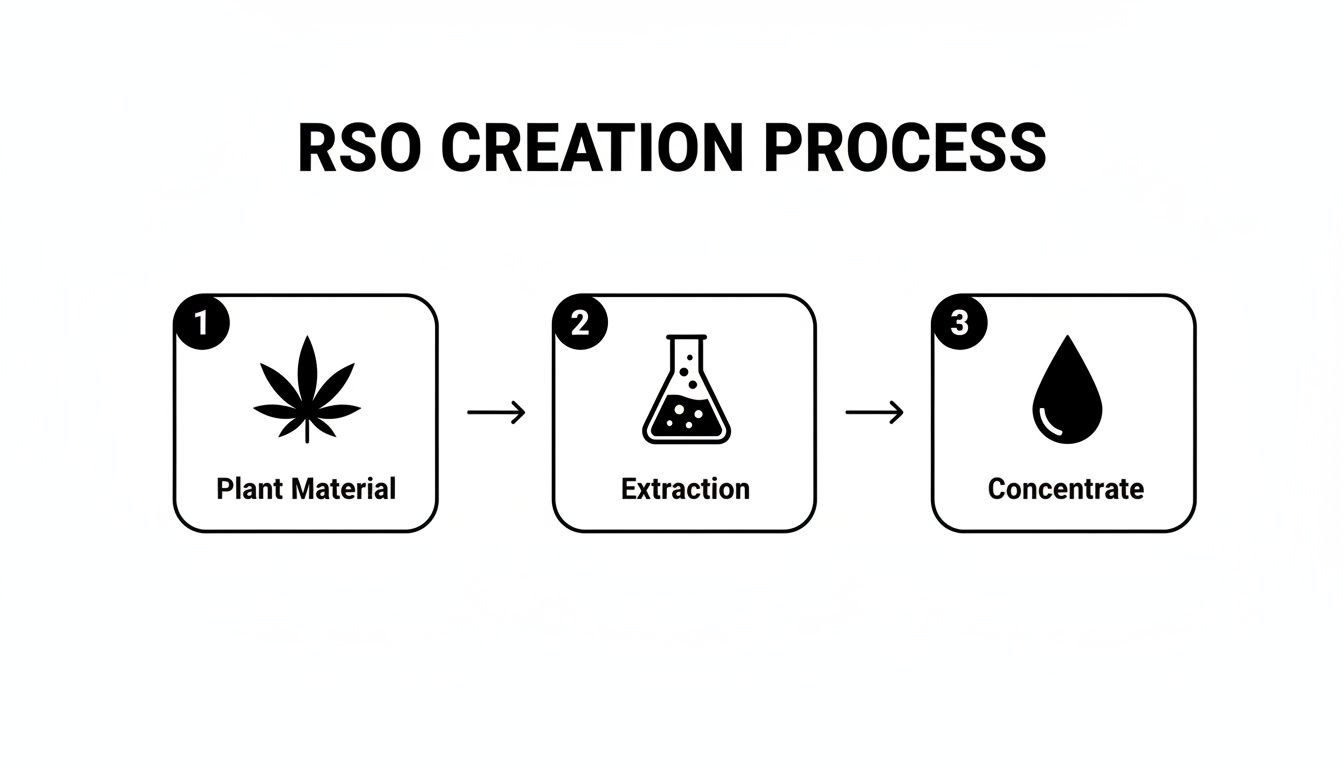
This diagram gives you a clear look at that journey from the whole cannabis plant to the final oil, and it really shows why the extraction method is so central to its final composition.
Here are the primary ways people use RSO:
- Oral Ingestion: This is the most direct method. You can place your dose right under your tongue for quicker absorption into the bloodstream, or you can simply swallow it. A great tip is to mix it with a little fatty food, like a spoonful of coconut oil or peanut butter, which can really help your body absorb it.
- Topical Application: RSO can also be applied directly to the skin. This allows you to target a specific area without causing the strong, body-wide effects that come with ingestion. It’s an excellent option for localized issues.
Finding the right RSO dose is a deeply personal process. There's no magic number that works for everyone. That 'start low and go slow' mantra truly is your most reliable guide for a safe and effective experience.
The Importance of Personalized Support
Because every person’s body chemistry is different, figuring out the right RSO protocol isn't always straightforward. It’s a nuanced process, and this is where getting some expert guidance can be invaluable. Connecting with a knowledgeable resource can make a world of difference, giving you clarity and confidence as you move forward.
A methodical and supported approach is always the best path forward, ensuring you feel secure in your decisions every step of the way.
Finding High-Quality and Verified RSO
When you're searching for Rick Simpson Oil, the market can feel like a minefield. You're not just looking for any product; you're looking for something safe, potent, and effective, which makes quality non-negotiable. Because RSO is such a concentrated, whole-plant extract, knowing exactly what’s in that syringe is critical. Let's walk through how you can cut through the noise and find a product you can truly trust.

The absolute bedrock of verifying any RSO product is third-party lab testing. Think of it as an independent audit. Without it, you’re just taking a company’s word for what’s in the oil, and that's a risk you shouldn't have to take. An unbiased lab report is the only way to get a scientific breakdown of the oil's purity and strength.
Decoding the Certificate of Analysis
Every legitimate RSO product will be backed by a document called a Certificate of Analysis, or COA. This is essentially the product's report card. It might look a little dense at first, packed with scientific terms, but learning how to read one is the single best skill you can have to protect your health and your wallet.
A proper COA should cover a few key areas:
- Cannabinoid Profile: This is where you see the potency. It lists the percentages of major cannabinoids like THC and CBD, confirming you’re getting the high-THC concentration that defines true RSO.
- Terpene Profile: Terpenes are the aromatic compounds that do more than just give the oil its smell—they contribute to its effects. A rich, diverse terpene profile often points to a high-quality, full-spectrum extract.
- Purity Testing: For safety, this is the most important part of the report. It’s a screening panel for nasty stuff you don't want anywhere near your body.
When you look at the purity section, you need to see clear results for pesticides, residual solvents (leftover chemicals from extraction), heavy metals, and mycotoxins (mold). Look for a definitive "Pass" or "ND" (None Detected). This is your proof that the oil is clean.
A Certificate of Analysis is your window into the product's true nature. It moves beyond marketing claims and provides objective, scientific proof of safety, potency, and purity. Always demand a COA before making a purchase.
Vetting Sources and Prioritizing Transparency
Once you know what to look for in a COA, the next step is finding brands that provide them without hesitation. Transparency is everything. If a seller is cagey about sharing lab results or gives you the runaround, that’s a massive red flag. Good companies are proud of their work and are happy to show you the proof.
Let's be honest, finding these trusted sources can be a real challenge. That’s where dedicated educational platforms can be a huge help. Resources like RSOhelp.com focus on connecting people with verified U.S. sources that put safety and transparency first, providing full COAs so you know exactly what you’re getting.
If you want to dive deeper, this guide to the best RSO oils of 2025 offers a curated look at what separates top-tier products from the rest. Taking the time to vet your RSO isn't just a recommendation—it's the most important step in using it safely and responsibly.
RSO's Place in Today's Wellness World
More and more, people are taking an active role in their own health, looking for natural, plant-based options to support their well-being. This shift is exactly where something like Rick Simpson Oil fits in. We're seeing a move away from products with isolated ingredients and a growing appreciation for full-spectrum extracts that keep the plant's original profile intact.
It's a conversation often led by patients themselves. They're digging deeper, learning about the "entourage effect"—the idea that all of a plant's compounds work better together. This is precisely what RSO delivers: a potent, whole-plant oil that hasn't been stripped down or refined into something less than what nature created.
The Surge in Demand for Full-Spectrum Oils
The buzz around RSO isn't just talk; it's backed by some serious market trends. The global cannabis oil market is expanding at an incredible rate, driven by people looking for powerful, plant-derived support.
The numbers really tell the story. The market was recently valued at over one billion dollars and is projected to grow significantly in the coming years. This massive growth sends a clear signal: people are actively seeking out full-spectrum cannabis oils as a serious part of their wellness toolkit. If you're curious about the data, you can explore more on the cannabis oil market growth on intelmarketresearch.com.
This isn't just a niche trend. The massive growth sends a clear signal: people are actively seeking out full-spectrum cannabis oils as a serious part of their wellness toolkit.
Finding Your Way in the Modern Wellness Space
With all this growing interest in RSO, the need for solid, trustworthy information has never been greater. Let's be honest, the wellness world can be a confusing place, filled with conflicting claims and subpar products. If you're exploring what RSO is, having a reliable guide is crucial to making safe, smart choices.
This is where educational platforms make all the difference. Resources like RSOhelp.com are stepping in to cut through the noise, offering clear guidance and support. They help you understand everything from how to dose properly to making sure the product you're buying is actually high-quality.
Ultimately, your wellness journey is personal. Having access to clear, straightforward education empowers you to explore options like RSO with confidence, not just curiosity. It’s about bridging that gap between simply being interested and knowing how to apply that interest practically and safely.
Your RSO Questions Answered
As you explore Rick Simpson Oil, a few questions almost always pop up. Let's tackle some of the most common ones to clear up any confusion and give you the confidence you need on your journey.
What’s the Real Difference Between RSO and CBD Oil?
The biggest distinction comes down to their chemical makeup and what they're meant to do. RSO is a high-THC, full-spectrum extract, meaning it’s packed with everything the cannabis plant has to offer. It's incredibly potent and designed for powerful, comprehensive effects.
CBD oil, on the other hand, is all about the non-psychoactive compound, cannabidiol. While some CBD oils are full-spectrum, they are typically sourced from hemp and contain very little THC. RSO and CBD oil have different purposes and produce entirely different results.
Why Does RSO Look Like a Dark, Thick Tar?
That dark, sticky, almost tar-like appearance is actually a good sign—it tells you the oil is a true whole-plant extract. Unlike lighter, more refined oils that are filtered for aesthetics, the RSO process intentionally keeps all the plant's natural compounds right where they belong.
This includes things like:
- Chlorophyll: This is the green pigment in plants. When it's highly concentrated, it turns a very dark, almost black color.
- Waxes and Lipids: These are the natural fats from the plant, which give RSO its signature thick, goopy texture.
This unrefined state is the whole point. The philosophy behind RSO is that all these compounds work together synergistically, and removing them would diminish the oil's holistic effect.
Is It Actually Safe to Make RSO at Home?
While Rick Simpson's original method was intended for people to make at home, it's a genuinely risky process. It requires using highly flammable solvents like ethanol, and without professional equipment, proper ventilation, and strict safety measures, there's a serious risk of fire or explosion.
For your own safety and to ensure you get a pure, consistent product, it's much better to get your RSO from a trusted, verified source. Professionals use closed-loop systems that are much safer and can provide third-party lab tests to prove the oil is potent and free from harmful contaminants.
Should I Talk to Someone Before I Start Using RSO?
Absolutely, yes. We can't recommend this enough. RSO is an incredibly potent cannabis concentrate, and figuring out the right dose is a careful, highly personal process that shouldn't be rushed.
Getting guidance from a knowledgeable professional or a dedicated support service is invaluable. They can offer personalized advice on dosing, how to take it, and what to expect, which is crucial for having a safe and positive experience—especially if you're new to this.
Navigating your wellness journey with confidence requires the right information and support. For personalized guidance, useful tools like dosage calculators, and help finding verified U.S. sources, we invite you to visit RSOhelp.com at https://ricksimpsonoil.info.