
Rick Simpson Cannabis Oil, often simply called RSO, is a powerful, full-spectrum cannabis extract. It's famous for its dark, thick, almost tar-like consistency and its incredibly high concentration of cannabinoids, especially THC. Think of it not as a refined, isolated product, but as the whole cannabis plant captured in a highly potent, oily form.
This "whole-plant" approach is what truly makes RSO different. It includes not just THC but a full suite of other cannabinoids, terpenes, and flavonoids that all work together.
The Origins and Purpose of Rick Simpson Oil

The story behind RSO isn't a tale of corporate research and development. It's a deeply personal one, born from one man's urgent health crisis and his determination to find a solution. This history is crucial because it frames why RSO is seen so differently from other extracts—it was never intended for recreational use but was created with a singular, therapeutic goal in mind.
To really get what RSO is all about, you have to understand where it came from. Its roots are in personal advocacy and a belief in the power of the whole plant.
To give you a quick snapshot, here are the core characteristics of RSO.
Rick Simpson Cannabis Oil At a Glance
| Characteristic | Description |
|---|---|
| Type | Full-spectrum cannabis oil extract. |
| Appearance | Thick, dark, tar-like liquid. |
| Potency | Very high concentration of THC and other cannabinoids. |
| Origin | Created by Rick Simpson in 2003 for personal health reasons. |
| Philosophy | Utilizes the entire cannabis plant to maintain its natural chemical profile. |
| Primary Use | Primarily used for therapeutic and wellness purposes, not recreation. |
This table provides a high-level view, but the story behind these facts is what gives RSO its enduring legacy.
The Journey of a Pioneer
The man behind the oil is Rick Simpson, a Canadian engineer. In 2003, he was diagnosed with a form of skin cancer and felt that the conventional treatments weren't enough. He remembered reading a study from 1975 that showed cannabinoids had potential, which inspired him to try creating his own highly concentrated cannabis oil at home.
According to his story, he applied this homemade oil to the affected spots on his skin and, within a few days, they were gone. That personal experience ignited a mission. He began producing the oil and sharing his simple production method with anyone who wanted to learn. You can dive deeper into this fascinating history and see how it stacks up against modern extracts on Beard Bros Pharms.
This grassroots beginning is the very soul of the RSO movement—a belief in self-empowerment and the synergistic power of the whole plant.
Foundational Principles of RSO
From the very start, RSO was built on a few key ideas that continue to define it today. If you're just starting to learn about this potent extract, these principles are the foundation.
-
Whole-Plant Philosophy: This is the big one. Unlike products that isolate just CBD or THC, RSO is made using the entire cannabis plant. The goal is to preserve the full spectrum of compounds, which are believed to work together in what's known as the "entourage effect."
-
Focus on Potency: RSO is intentionally made to be incredibly concentrated. Its high potency is a defining feature and is the reason why dosing must be approached with such care and precision, starting incredibly small.
-
Accessibility and Empowerment: Rick Simpson’s core mission was to put the power back into people's hands. He made his method public so that anyone, anywhere, could take a more active role in their own wellness journey.
This guide is here to give you a clear, supportive path to understanding Rick Simpson Cannabis Oil. Here at RSOhelp.com, our commitment is to provide trustworthy, health-first resources so you can make confident and well-informed decisions.
What Makes RSO a Unique Cannabis Extract
To really get what sets Rick Simpson Oil apart, you have to look past its famously dark and thick appearance. The difference isn't just cosmetic; it's a fundamental philosophy. RSO was designed from the ground up to be a full-spectrum product, meaning it aims to capture the complete, unadulterated chemical profile of the cannabis plant.
Think of it like this: the cannabis plant is an orchestra. An extract that isolates only THC is like hearing a single, talented violinist. It’s powerful, sure, but you're missing the richness and complexity of the entire ensemble. RSO, on the other hand, is the full symphony—every cannabinoid, terpene, and flavonoid playing together in perfect harmony.
This synergy is what we call the entourage effect, and it’s the very heart of what makes RSO so unique.
The Power of the Entourage Effect
The entourage effect is a simple but profound idea: cannabis compounds work better together. While THC gets most of the attention for its psychoactive properties, in a full-spectrum oil, it's never working alone.
It’s actually part of a team of hundreds of compounds, each with a role to play.
- Cannabinoids: Beyond THC, you have CBD, CBN, CBG, and dozens of others that can balance or amplify the overall effects.
- Terpenes: These are the aromatic oils that give cannabis its signature scent, from pine and citrus to earthy funk. They also influence the experience, potentially steering it toward relaxation or focus.
- Flavonoids: These compounds contribute to the plant’s color and are believed to offer their own wellness benefits.
When all these components are kept intact, as they are in RSO, they create an effect that’s far more nuanced and potent than any single compound could ever achieve on its own. This whole-plant approach is the bedrock of the RSO philosophy.
RSO vs. Other Cannabis Extracts
Walk into any dispensary today, and you'll see a dizzying array of extracts—shatter, wax, live resin, distillates. While many of these are incredibly potent, their purpose is often very different from that of traditional Rick Simpson Oil.
Many modern extraction techniques are focused on maximizing THC purity or isolating specific cannabinoids. They often strip away other plant compounds to achieve that goal. A THC distillate, for example, might boast over 95% pure THC, but it's a lone wolf, lacking the rich spectrum of terpenes and minor cannabinoids that define RSO.
The goal of RSO isn't purity in the sense of isolating one molecule. It's about integrity—preserving the plant's natural, complex chemical fingerprint. It's designed to deliver the whole plant, not just its most famous part.
This commitment to the whole plant is what gives RSO its distinct character. It's also a major reason why demand for full-spectrum products is surging. The global cannabis oil market, driven by interest in products like Rick Simpson Oil, is booming. In fact, industry reports project it will climb past $7 billion by 2028, largely thanks to consumers seeking out the benefits of the entourage effect. You can read more analysis on this growing market and what’s driving the trend.
Why the Whole Plant Matters
The classic RSO production method intentionally uses techniques that hold onto as many of the plant's compounds as possible. This even includes things like chlorophyll, which is what gives the oil its characteristic dark green or black color. That’s not a flaw; it's a feature.
The point isn't to create a pretty, golden oil. The goal is to produce something that is as true to the original plant as it can possibly be.
This entire approach is built on the belief that the plant is most effective in its natural state. By keeping the full spectrum of compounds together, RSO aims to deliver the complete and intended benefits of the source material. For anyone looking for guidance on finding authentic, lab-tested products that stay true to this whole-plant philosophy, RSOhelp.com offers some excellent educational resources and community support.
Navigating RSO Dosing and Administration
When you’re starting with Rick Simpson Oil, the single most important rule is to "start low and go slow." RSO isn't like other cannabis products; it’s a powerful, full-spectrum extract, and the goal is to work with your body, not overwhelm it. Think of it as easing into a new fitness routine—you build up strength over time.
This gradual increase, a process called titration, is the cornerstone of using RSO effectively and safely. It allows your body to build a tolerance to the high concentration of THC, which helps sidestep uncomfortable side effects like intense drowsiness or psychoactivity. It’s all about finding the right rhythm for your unique system.
The 90-Day Protocol Explained
Rick Simpson himself popularized a 90-day protocol that has become the standard starting point for many. It’s not a rigid mandate but a well-tested framework for introducing this potent oil to your system over three months.
The journey begins with an almost surprisingly small amount.
- Starting Dose: Begin with a single drop of RSO, about the size of half a grain of rice.
- Frequency: Take this tiny dose three times a day, roughly every eight hours.
- Initial Goal: For the first week, the only objective is to let your body get used to the oil.
This isn't about feeling a dramatic effect right away. It's a deliberate, patient first step that lays the foundation for the entire process.
Gradually Increasing Your Dosage
After the first few days, the protocol suggests a gradual increase. The general guideline is to double your dose every four days until you reach the target of consuming one full gram of RSO daily. This is where patience really pays off, as each small step up allows your body to adapt comfortably.
Remember, the titration schedule is just a map. Your body is the true guide. The right pace is whatever feels manageable and promotes well-being without causing discomfort.
To help visualize this progression, here is a sample schedule for the first few weeks.
Example RSO Titration Schedule
| Week | Daily Dosage Goal | Administration Tip |
|---|---|---|
| Week 1 | 3 drops (half-rice grain size) | Split into morning, noon, and night doses. Keep it consistent. |
| Week 2 | 6 drops | After day 4, double to 1 full-rice-grain-sized drop 3x a day. |
| Week 3 | 12 drops | Double again to 2 full-rice-grain-sized drops 3x a day. |
| Week 4 | 24 drops | Continue doubling every four days, listening to your body's response. |
This table illustrates how the dosage builds systematically. Managing this on your own can feel a bit daunting, which is why a structured tool can be a game-changer. You can map out your entire regimen using our simple RSO dosage calculator, which is designed to help new users plan their intake safely and confidently.
The power of RSO comes from its full-spectrum nature, where all the plant’s compounds work together.
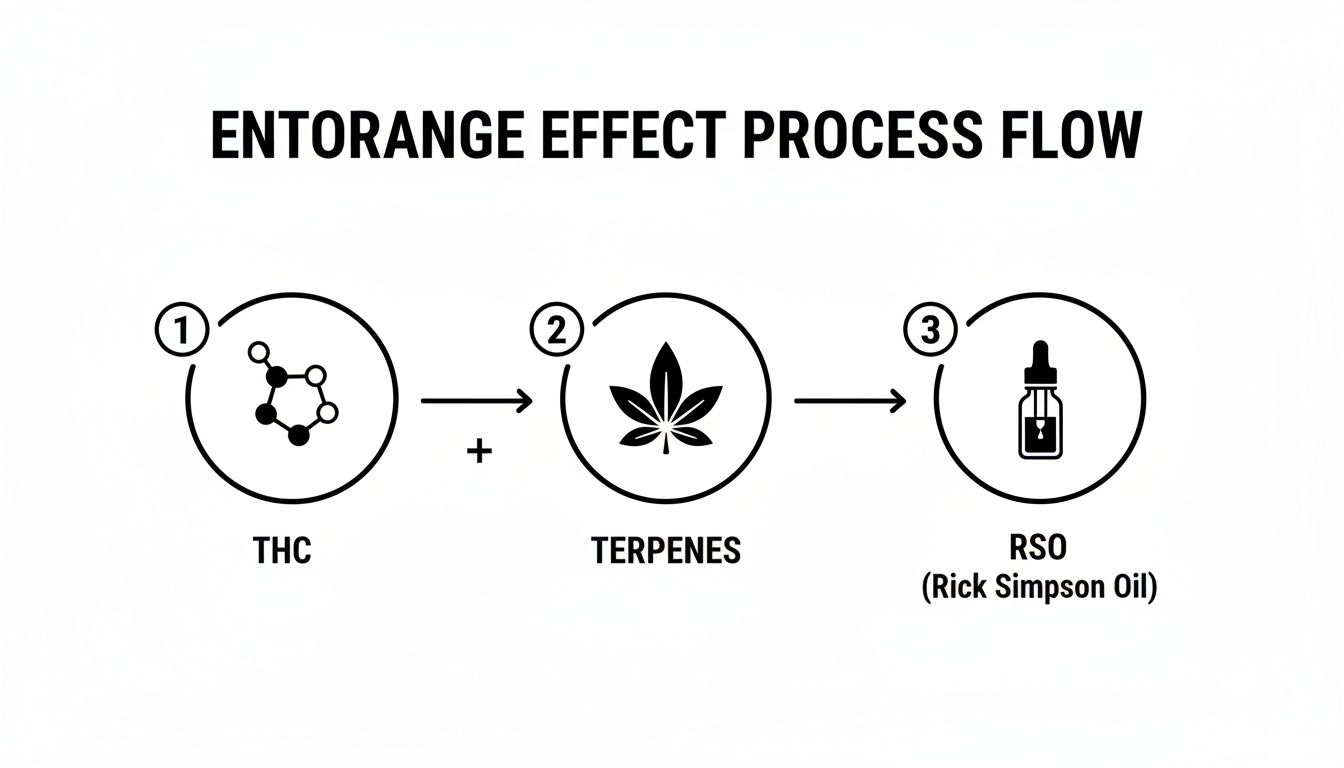
This synergy, known as the entourage effect, is what makes RSO's profile so unique, preserving the combined benefits of cannabinoids like THC alongside the plant's natural terpenes.
Practical Administration Methods
RSO is a thick, sticky, tar-like substance, so it needs a little finesse to handle. It usually comes in a plastic syringe, which makes measuring out small doses much easier.
Here are the most common ways people take it:
- Oral Ingestion: The most straightforward method. You can place the dose directly under your tongue (sublingual) or simply swallow it. To make it go down easier, try putting the dose on a small bite of a cracker, fruit, or bread.
- Capsules: If the strong, earthy taste is not for you, just put your measured dose inside an empty gel capsule. This is a great option for taste-free, discreet, and precise dosing.
- Topical Application: This is how Rick Simpson first used the oil. A small amount can be applied directly to a spot on the skin and covered with a bandage, which should be changed out daily.
- Mixing with Food: Stirring your dose into a spoonful of yogurt, honey, or even a smoothie works well. For better absorption, mix it with a fatty food like coconut oil or a bit of peanut butter, as cannabinoids are fat-soluble.
Whichever method you choose, consistency is everything. Taking your doses at regular intervals—morning, noon, and night—helps maintain a steady level of cannabinoids in your system. This structured approach, paired with patient titration, puts you in control of your wellness journey.
Ensuring Potency, Safety, and Quality
When you're dealing with a concentrate as powerful as Rick Simpson Oil, you can't afford to guess about what's inside. The conversation must always come back to three things: potency, safety, and quality. Getting this right is absolutely fundamental to your wellness journey, as the difference between a clean, verified oil and a mystery product is night and day.
In the early days, RSO was a strictly homemade affair. People did their best, but there was no way to know the exact strength or purity of a batch. That inconsistency was a huge problem. Thankfully, we've come a long way since then, and the rise of regulated, lab-tested products has been a massive step forward for everyone's safety and peace of mind.

This shift is a big deal. Since RSO first appeared around 2003, it's gone from a grassroots phenomenon to a product you can find in professional, regulated markets. Where production was once completely unstandardized, we now have verifiable testing that provides the kind of assurance that just wasn't possible before. This evolution in cannabis care has been crucial for building trust and ensuring user safety.
Decoding the Certificate of Analysis
So, how do you verify quality for yourself? The answer lies in a document called the Certificate of Analysis, or COA. Think of it as a report card for that specific batch of RSO, issued by an impartial, third-party lab. It gives you a complete, unbiased breakdown of the oil’s chemical makeup, confirming it’s both potent and pure.
A COA is more than just a piece of paper; it’s your proof that the producer has done their due diligence. It shows they've invested in making sure their oil meets strict safety standards. For anyone serious about using RSO for their health, learning to read a COA is non-negotiable.
What to Look for on a COA
At first glance, a COA can look a little intimidating with all its scientific terms. Don't worry. You only need to focus on a few key sections to get the whole story.
Here’s what you should zero in on:
- Cannabinoid Potency: This is where you'll see the concentration of major cannabinoids, especially THC and CBD. For a true RSO, you want to see high THC levels, typically falling somewhere between 60% and 90%. This confirms the product has the strength it's supposed to.
- Terpene Profile: A good COA also breaks down the oil's dominant terpenes—the aromatic compounds that influence its effects and contribute to the "entourage effect." This profile helps confirm you're getting a genuine full-spectrum extract.
- Purity Confirmation: This section is arguably the most critical for your health. It’s where the lab tests for a range of harmful contaminants to make sure the oil is clean.
This final check for purity is what gives you true confidence in the product you’re using.
Confirming Purity and Safety
A comprehensive COA will include specific tests to ensure the oil is free from anything you don’t want in your body. These tests are vital because the extraction process can concentrate not only the good stuff from the plant but also any residual solvents or contaminants.
Look for these specific purity panels on the report:
- Residual Solvents: This test makes sure that any solvents used in the extraction, like ethanol, have been fully and safely removed from the final oil.
- Pesticides: This panel confirms the cannabis was grown without harmful chemicals, which can become highly concentrated in the final product.
- Heavy Metals: This screen verifies the oil is free from toxic metals like lead and mercury, which the cannabis plant can absorb from the soil or water it was grown in.
By demanding a COA that shows a "pass" on these tests, you are taking a crucial, proactive step in protecting your health. A clean and complete COA is the clearest sign of a transparent, trustworthy producer.
We know that navigating lab reports and finding reliable sources can be overwhelming. At RSOhelp.com, we offer educational resources and confidential consultations to help you make sense of it all and find sources for authentic, fully-tested oils. If you're currently researching your options, our guide to the best RSO oils in 2025 offers an in-depth look at what separates top-tier products from the rest. This knowledge empowers you to choose a product that truly aligns with your wellness goals.
How to Manage Potential Side Effects
Any time you're working with a potent cannabis concentrate like RSO, you have to be smart about it. The high THC levels mean the effects can be strong, especially if you're new to this kind of product. Knowing what to expect is the best way to make sure your experience is a positive and comfortable one.
The most common side effects are almost always tied to your dosage. You might feel very drowsy, a bit dizzy, or experience a much stronger "high" than you're used to. It's important to remember these feelings are temporary and, more importantly, manageable. As your body gets accustomed to the oil, these effects tend to fade.
Why the Slow Titration Protocol Is Crucial
This brings us to the golden rule of RSO: "start low and go slow." There's a reason everyone who knows this oil preaches this method. When you start with a tiny dose—literally the size of a grain of rice—and increase it bit by bit over several weeks, you’re giving your body a chance to adapt.
Think of it like easing into a hot bath instead of jumping right in. This slow, steady approach is hands-down the most effective way to avoid feeling overwhelmed. It lets you find that sweet spot—your ideal dose—with minimal discomfort.
Practical Tips for a Comfortable Experience
Even when you're being careful, you might still feel some mild effects. Don't worry, that's normal. Here are a few simple things you can do to keep things smooth.
- Take It with Food: A spoonful of peanut butter, a handful of almonds, or a slice of avocado can make a big difference. Taking your RSO with a small amount of healthy fat helps your body process it more evenly, leading to a smoother experience.
- Stay Well-Hydrated: Feeling dizzy or groggy can be made worse by dehydration. Sipping water throughout the day is a simple but powerful way to keep yourself feeling grounded and balanced.
- Create a Calm Environment: Your surroundings matter. When you're just starting out, take your dose somewhere you feel safe, comfortable, and relaxed. Being in a good headspace can dramatically reduce any feelings of anxiety.
The goal isn't to feel nothing at all; it's to manage the sensations so they don't become distressing. Try to see the effects as a sign that the oil is working, not as something to be afraid of. That mental shift can change everything.
If at any point the effects feel too intense, just hit the pause button. Don't increase your dose for a few days, or even dial it back a notch. The most important thing is to listen to your body. The titration schedule is a map, not a rulebook you have to follow perfectly.
This is your journey, and having the right support can be incredibly helpful. For one-on-one advice on managing side effects and building a plan that works for you, the team at RSOhelp.com provides confidential consultations to guide you with confidence.
Your Path Forward With RSO
Navigating the world of Rick Simpson Oil is a personal journey, one that takes patience and careful learning. By now, you've got a solid grasp of the fundamentals—the whole-plant philosophy behind it, why a slow and steady dosing approach is crucial, and the absolute necessity of third-party lab tests to verify quality.
Think of this knowledge as your foundation. It’s the most important tool you have for moving forward with confidence and clarity.
Embracing RSO as part of your wellness plan means being an active participant in your own health. The core principles—start low, listen to your body, and only use clean, verified products—aren't just casual suggestions. They are the bedrock of a safe and potentially effective experience. Remember, everyone's path looks a little different, and progress is often measured in consistency, not speed.
Charting Your Personal Wellness Journey
So, what’s next? It's time to take what you've learned and build a plan that fits you. This involves thinking about your personal goals, your health status, and your comfort level. This isn't about following a one-size-fits-all script; it's about making smart, informed adjustments based on how your body responds.
The most successful wellness strategies are built on a partnership between personal dedication and trusted support. Having a resource to turn to for questions and guidance can make all the difference in navigating your path with clarity and peace of mind.
This is where having a reliable ally can be invaluable. For anyone looking for structured support, RSOhelp.com offers confidential, one-on-one consultations to help you map out a responsible plan. Their team can help you decipher lab reports, fine-tune your dosing schedule, and feel secure in the choices you're making. You can also explore our detailed guide to learn how others have approached using RSO oil for cancer.
Ultimately, this journey is about empowerment. Armed with a solid understanding and the right professional support, you are well-equipped to take an active role in your health. You now have the knowledge and resources to proceed safely, thoughtfully, and with the confidence you deserve.
Common Questions About RSO
Even after diving deep into the world of Rick Simpson Oil, a few questions always seem to pop up. That’s perfectly normal. Let's tackle some of the most common ones to clear up any lingering confusion and help you move forward with confidence.
What's the Real Difference Between RSO and CBD Oil?
The core difference comes down to one thing: THC. Think of RSO as a whole-plant extract that’s intentionally packed with high levels of THC alongside every other compound the plant has to offer. Its goal is to create a powerful, synergistic "entourage effect."
CBD oil, on the other hand, is usually made from hemp and zeroes in on the non-intoxicating cannabinoid, CBD. It will have little to no THC, so it won’t produce the psychoactive effects that RSO is known for. They are two very different tools for two very different jobs.
Can You Take Too Much RSO?
Absolutely. While a high dose isn't considered life-threatening, it can definitely lead to a very uncomfortable experience. Taking too much for your tolerance can cause intense drowsiness, dizziness, anxiety, or a general feeling of being overwhelmed.
This is exactly why the "start low and go slow" approach is so critical. It’s not just a friendly suggestion—it’s the golden rule for safely using RSO. Giving your body time to adjust is the key to avoiding discomfort.
By slowly and carefully increasing your dose, you stay in the driver's seat. It's the best way to find your effective dose without pushing yourself into an unpleasant state.
How Do I Store RSO to Keep It Potent?
Proper storage is non-negotiable if you want to protect your investment and maintain the oil's quality. The enemies of RSO are heat, light, and air, all of which can degrade the cannabinoids and terpenes over time. Your goal is to keep it in a cool, dark, and dry place.
- Airtight is Right: The syringes RSO comes in are perfect for storage since they keep air out.
- Location, Location, Location: A drawer, a medicine cabinet, or even the fridge are all excellent spots.
- Consistency is Key: Storing it correctly means the last drop will be just as potent as the first.
A little care goes a long way in preserving the full-spectrum power of the oil.
For personalized guidance on your wellness journey, RSOhelp.com offers confidential consultations to help you navigate dosing, safety, and product selection with confidence. Learn more at https://ricksimpsonoil.info.