

So, what exactly is Rick Simpson Oil (RSO)? In simple terms, it's a powerful, unrefined cannabis extract that captures the entire profile of the plant. It's famous for its thick, dark, almost tar-like consistency, packed with not just THC but all the cannabinoids, terpenes, and other natural compounds the plant has to offer.
Unpacking the Basics of RSO
When people ask "what is RSO," they're usually trying to figure out what makes it different from all the other cannabis oils on the shelf. The answer really comes down to its whole-plant philosophy. While many extracts are made to isolate specific molecules like THC or CBD, RSO is intentionally created to preserve the plant's complete chemical blueprint.
Because of this comprehensive approach, you'll often hear RSO referred to as a Full Extract Cannabis Oil (FECO). The two terms are essentially interchangeable, both signaling a raw, unfiltered product that keeps as many of the original plant compounds intact as possible.
The Entourage Effect Explained
Why go to all the trouble of preserving the whole plant? It all comes back to a concept known as the "entourage effect." This is the idea that all the compounds in cannabis work together synergistically, creating a more profound and balanced effect than any single compound could on its own.
Think of it like a symphony orchestra. A solo violin is beautiful, but the sound of the entire orchestra—with its strings, brass, woodwinds, and percussion—is far more complex and powerful.
- Cannabinoids (like THC and CBD): These are the main instruments, driving the primary melody and effects.
- Terpenes: These are like the supporting string and woodwind sections. They provide the aroma and flavor but also modulate the experience, making it uplifting or calming.
- Flavonoids and other compounds: These act as the percussion section, adding to the overall rhythm and contributing their own unique benefits.
When all these elements work in harmony, their collective impact is believed to be greater than the sum of their individual parts. This synergy is the core principle behind why RSO was created and why it has such a dedicated following.
To give you a quick snapshot, here are the defining features of RSO.
RSO at a Glance: Key Characteristics
| Characteristic | Description |
|---|---|
| Extraction Method | Typically made using a solvent (like food-grade alcohol) to strip cannabinoids and terpenes from the plant material. |
| Appearance | A thick, dark, sticky oil, often black or deep amber in color. Its consistency is similar to tar or molasses. |
| Potency | Highly concentrated, with THC levels often ranging from 60% to 90% or even higher, depending on the starting material. |
| Spectrum | Full-spectrum, meaning it contains the complete range of cannabinoids, terpenes, and other compounds from the original plant. |
| Consumption | Usually ingested orally, applied topically, or used to make suppositories. It is not designed for smoking or vaping. |
This table highlights what truly sets RSO apart. It's not just about high THC content; it's about delivering a complete, plant-based experience.
RSO is far more than just a potent THC oil. It’s a concentrated, whole-plant extract designed to deliver a powerful and comprehensive wellness experience. Grasping this is the first step to understanding its unique role in the world of natural health.
The story behind RSO starts with its creator, Rick Simpson, whose own health challenges inspired him to pioneer this specific type of oil. It was born out of a personal need for a potent, unfiltered, and accessible option. For those seeking to learn more from a community perspective, resources like RSOhelp.com can offer valuable guidance. Now, let’s dive into the compelling story of how it all began.
The Story of the Man Behind the Oil
To really get what RSO is all about, you have to know the story behind the name. Rick Simpson Oil wasn't dreamed up in a corporate lab or designed by a marketing team. It's the result of one man's personal, desperate search for relief when he felt modern medicine had let him down. This origin story is the very soul of the oil.
It all started back in the late 1990s. Rick Simpson, a Canadian engineer, suffered a bad head injury on the job. The accident left him with post-concussion syndrome, a condition that tormented him with constant dizziness and a relentless ringing in his ears. When prescription drugs failed to give him any real relief, he decided to try cannabis and found it actually helped him manage his debilitating symptoms.
A Turning Point
Things got much more serious in 2003. Simpson was diagnosed with a type of skin cancer on his arm. He remembered hearing about a study from years before that showed THC had an effect on cancer cells in mice, and that memory sparked an idea. He decided to take matters into his own hands, shifting his focus from just using cannabis to creating a super-concentrated extract.
Fueled by his own health crisis, Simpson got to work. His goal was to make an oil that was not only incredibly potent but also contained the full chemical fingerprint of the cannabis plant. He was a firm believer that a "whole-plant" extract was the only way to get the powerful results he was after.
Rick Simpson wasn't trying to start a business or create a brand. He was a man driven by necessity, trying to solve his own urgent health problems. His self-reliance led him to create a simple, effective method he would eventually share with the world.
Working out of his home, he perfected his extraction process. He needed to produce a thick, powerful oil he could apply directly to the concerning spots on his skin. The method he developed, now famous as the "Rick Simpson method," was designed to be straightforward and use common materials, ensuring anyone could replicate it.
Igniting a Grassroots Movement
After applying his homemade oil, Simpson claimed the spots vanished. This personal success cemented his belief in what he had created. From that moment on, he dedicated his life to sharing his recipe and the oil itself—completely free of charge—with anyone who came to him for help.
His story didn't spread through slick ad campaigns; it traveled through word-of-mouth. RSO became a grassroots phenomenon, a story and a method passed from one person to another, grounded in the powerful idea of taking your health into your own hands.
This history is what gives RSO its unique identity.
- It was born from a need for wellness, not profit. This creates a community built around shared stories and support, not sales pitches.
- It champions a "whole-plant" approach. The method is designed to capture the full spectrum of cannabinoids and terpenes, not just THC.
- It encourages self-empowerment. Simpson's journey inspires people to become active participants in their own wellness and to seek out information from community sources they trust.
The raw, personal narrative of Rick Simpson's fight and his relentless advocacy is what sets RSO apart. It’s a story of grit and determination that resonates with countless people looking for their own answers, often leading them to community-driven resources like RSOhelp.com for reliable guidance. It's this human element—one man's quest for healing—that gives RSO its powerful and enduring legacy.
How RSO Is Made: A Conceptual Overview
To really get what RSO is all about, you need to understand the philosophy behind it. This isn't a step-by-step recipe, but more of a high-level look at the process. Knowing how this incredibly potent, full-spectrum oil comes to be is the first step in appreciating why purity and quality are so critical for your health.
The whole concept started with a simple, powerful idea: capture everything the cannabis plant has to offer. Unlike a lot of modern extracts that isolate specific compounds, the goal here is to create a true whole-plant product.
The Two Core Principles of Production
Making RSO really boils down to two main stages: a solvent wash and a careful purge. You can think of it like brewing an intensely concentrated herbal tincture. First, you use a solvent to pull out all the good stuff. Then, you gently remove that solvent, leaving behind only the pure, concentrated plant essence.
-
Washing the Plant Material: It starts by washing high-quality cannabis flower with a solvent—typically a high-proof, food-grade alcohol like ethanol. The solvent acts like a magnet, pulling cannabinoids, terpenes, flavonoids, and even plant fats right off the plant matter. This "wash" is designed to strip the plant of its most valuable compounds.
-
Purging the Solvent: Once the wash is done, the liquid, now rich with plant compounds, is separated from the solid plant material. The next phase is the most delicate: gently heating the mixture to evaporate all the alcohol. This has to be done with incredible care to make sure every last bit of solvent is gone without destroying the heat-sensitive cannabinoids and terpenes. What's left is a thick, dark, and highly concentrated oil.
This conceptual infographic shows the journey from a health challenge to the creation of a solution.
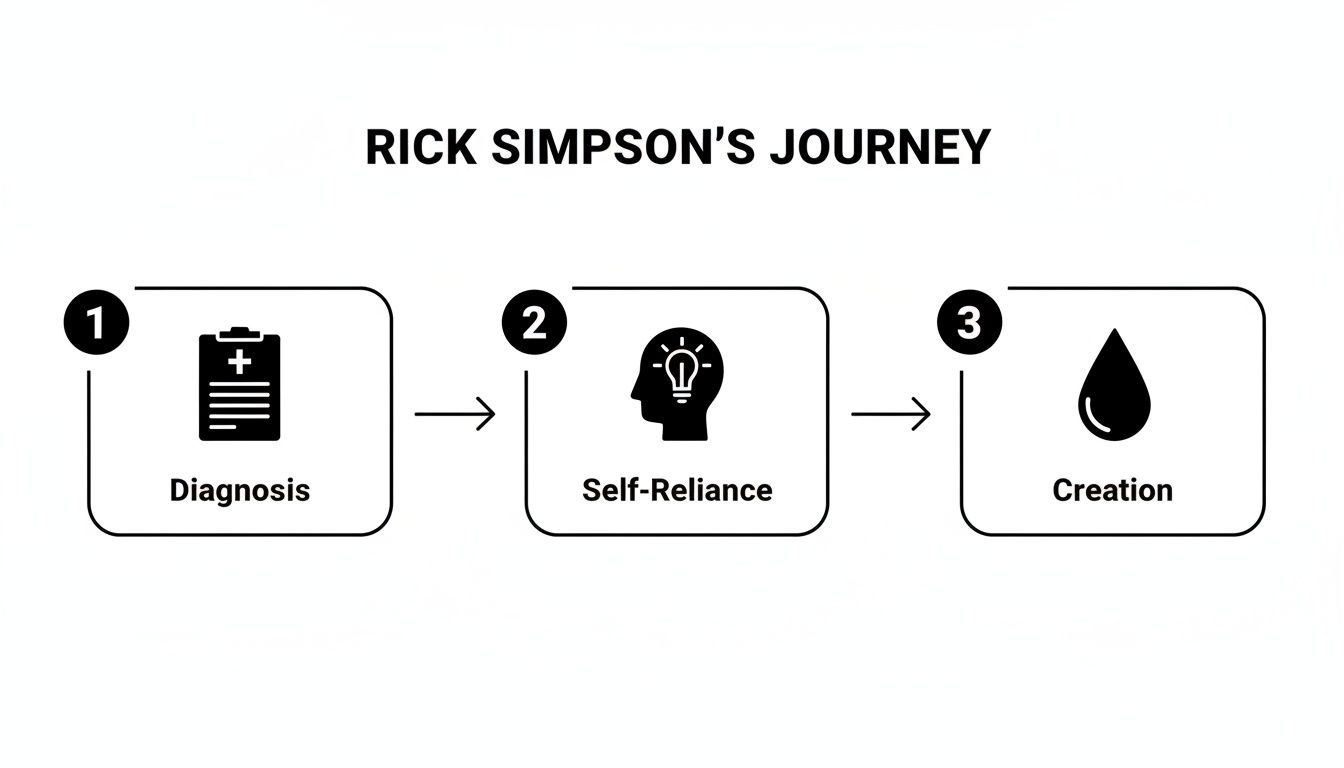
This visual really captures how a personal health diagnosis led to determined research and, eventually, the creation of the oil itself.
Why Quality Matters at Every Stage
The process might sound simple, but that’s deceptive. The quality of the final product hinges entirely on the integrity of each step. When it comes to making a clean and effective oil, there are no shortcuts.
First off, the starting material is everything. If you start with subpar, pesticide-sprayed, or moldy cannabis, you’re just going to concentrate those contaminants in the final oil. Only organically grown, clean cannabis should ever be used.
Second, the solvent purge has to be perfect. Any residual solvent left behind can make the oil unsafe to use. Professional producers use specialized lab equipment to test for and guarantee the complete removal of these solvents—a crucial safety check that's nearly impossible to confirm in a homemade batch.
The commitment to a full-spectrum extract is what truly defines RSO. The process is designed not just to concentrate THC, but to preserve the entire symphony of plant compounds, which many believe work together to produce a more profound effect.
Ultimately, understanding this process helps you become a smarter user. It makes it crystal clear why seeking out lab-tested products—verified for both potency and purity—is non-negotiable. For anyone trying to navigate these choices, resources like RSOhelp.com can offer valuable guidance and support, connecting people with information that puts health and safety first. The goal is always to find a product that honors that original whole-plant philosophy, delivering a clean, potent, and complete extract.
How RSO Differs From Other Cannabis Oils
Stepping into the world of cannabis extracts can feel like navigating a maze. You've got oils, concentrates, tinctures—all with different names and promises. The best way to really wrap your head around RSO is to see how it stacks up against the other products out there. The biggest divides usually come down to how they're made, what’s inside them, and what people use them for.
What makes RSO a standout is that it’s a Full Extract Cannabis Oil (FECO). That term is everything. It signals a whole-plant philosophy, meaning the goal isn't to cherry-pick a single compound. Instead, the process captures the complete profile of cannabinoids, terpenes, and flavonoids, just as they exist in the plant itself.
This unrefined, all-in approach is the very heart of RSO. You’ll notice it’s thick and dark, which is a direct reflection of its comprehensive extraction. Unlike heavily filtered oils designed for clarity or a specific taste, RSO contains everything—chlorophyll, plant lipids, and all.
RSO vs. CBD Oil: A Tale of Two Cannabinoids
One of the most frequent mix-ups is between RSO and CBD oil. They both come from the cannabis plant, but that's where the similarities end. They are fundamentally different products with very different effects.
-
What’s Inside: The cannabinoid profile is the main event. RSO is made from high-THC cannabis strains, making it potently psychoactive. CBD oil, on the other hand, comes from hemp (or high-CBD cannabis) and contains virtually no THC, so it's non-intoxicating.
-
Why People Use Them: The high THC content in RSO is what draws people seeking its powerful, full-body effects. CBD oil is more commonly used for general wellness—think managing day-to-day stress or minor discomforts without any "high."
-
Where They Come From: RSO is almost exclusively produced from potent marijuana strains, often indica-dominant ones. CBD oil must be sourced from hemp containing less than 0.3% THC.
This isn't just a technicality; it completely changes the experience. Your choice between RSO and CBD oil really hinges on your personal wellness goals and how you feel about THC.
RSO vs. Concentrates Like Rosin or CO2 Oil
RSO also stands apart from other high-THC concentrates like rosin or oils extracted using CO2. Here, the key difference is the extraction method and the final product's composition.
Rosin, for instance, is a solventless extract. It’s made using only heat and pressure, which produces a very clean, full-spectrum concentrate often used for dabbing. To see how they really compare, check out our in-depth guide on the differences between RSO and rosin.
CO2 oil is another common type of extract, created with pressurized carbon dioxide. This technique gives producers incredible control, allowing them to isolate specific compounds while stripping others away. It’s the polar opposite of the RSO method, which is all about keeping everything from the plant intact.
The guiding principle behind RSO is capturing the entire plant. It's an unfiltered snapshot, intended to deliver the entourage effect in its most complete and unadulterated form. Most other extracts are refined for purity, flavor, or a specific cannabinoid.
To give you a clearer picture, let's break down the key distinctions in a simple table.
Comparison RSO vs Other Cannabis Products
This table lays out the core differences between RSO, CBD Oil, and Rosin at a glance, helping you understand where each product fits.
| Feature | RSO (Rick Simpson Oil) | CBD Oil | Rosin |
|---|---|---|---|
| Primary Cannabinoid | High THC | High CBD | High THC |
| Psychoactivity | Highly psychoactive | Non-psychoactive | Psychoactive |
| Extraction Method | Solvent-based (e.g., alcohol) | Solvent or CO2 | Solventless (heat & pressure) |
| Appearance | Thick, dark, tar-like | Clear to light gold oil | Waxy, shatter, or budder-like |
| Spectrum | Full Extract (FECO) | Full, Broad, or Isolate | Full Spectrum |
| Common Use | Wellness protocols | General wellness | Recreational, inhalation |
| Consumption | Oral, topical | Oral, topical | Inhalation (dabbing, vaping) |
As you can see, RSO occupies a unique space. It isn't made for recreational dabbing like rosin, nor is it intended for non-psychoactive wellness like CBD oil. Its identity is tied to its raw, whole-plant nature, setting it apart from nearly every other cannabis product.
RSO and Your Wellness Journey
When you start digging into what RSO is, you quickly realize it's more than just a cannabis extract; its story is deeply rooted in personal health and wellness. People aren't just drawn to its potent THC levels. They're seeking the holistic, full-body interaction that this full-spectrum oil provides, an interaction that hinges on our body's own endocannabinoid system (ECS).
Think of the ECS as your body's internal balancing act. It’s a vast network of receptors that helps regulate just about everything—mood, sleep, appetite, even how we perceive discomfort. The cannabinoids in RSO, like THC and CBD, plug right into this system, influencing its ability to keep things running smoothly.
The Power of the Entourage Effect
To really grasp why people choose RSO, you have to understand the entourage effect. It’s the idea that all the compounds in the cannabis plant—hundreds of them, including cannabinoids, terpenes, and flavonoids—are meant to work together. They create a synergistic effect that's far more powerful and balanced than any single compound could deliver on its own.
It's like an orchestra. THC might be the lead violin, but its melody is enriched and supported by the terpenes (the woodwinds) and other cannabinoids (the brass section). Terpenes, for instance, do more than just give the plant its aroma; they can shape the experience, making it more calming or more energizing. This is why people value a true full-spectrum product like RSO.
The entourage effect is really the core philosophy behind RSO. It's built on the belief that the plant's true potential is only unlocked when all its natural compounds are present and working in harmony.
This synergy is what so many users credit for the profound, full-bodied experience they feel. They're looking for the complete expression of the plant, not just one isolated piece of it.
Personal Stories and Anecdotal Evidence
Much of what we know about RSO comes from the ground up—from a massive collection of personal stories shared within wellness communities. For years, people have been sharing their experiences using the oil to tackle a huge range of health goals, from managing chronic discomfort and getting a good night's sleep to sparking a lost appetite.
These stories often carry a theme of empowerment. When faced with serious health issues, many people found RSO and felt they could take a more active role in their own well-being. This grassroots movement has built a powerful community dedicated to sharing knowledge and firsthand experiences.
- Promoting Rest and Relaxation: Many people report using RSO to find deep physical relaxation, which can be a game-changer for anyone struggling with sleep. Indica-dominant strains are often the go-to for these deeply sedative qualities.
- Managing Serious Discomfort: You’ll frequently hear stories of RSO being used to manage persistent, significant discomfort, often after other methods have failed to provide relief.
- Stimulating Appetite: Another common thread is the oil's ability to combat nausea and stimulate appetite, especially for individuals undergoing harsh health regimens.
How to Approach Your Own Journey
If you're thinking about trying RSO, the absolute best thing you can do is educate yourself first. It's crucial to understand its potency, how it works in the body, and why responsible use is so important. Arming yourself with good information is the key to making choices that truly align with your health goals.
This is where dedicated resources come in, helping people understand the "why" behind RSO's loyal following without making unverified health claims. When you feel ready to explore the practical side of things, our RSO delivery guide can provide more insight into finding quality products safely. The ultimate goal is to move forward with confidence, supported by solid knowledge and a deep respect for safety.
A Practical Guide to Safe and Responsible Use
RSO is an incredibly concentrated, full-spectrum cannabis extract, and you have to approach it with a healthy dose of respect. Using it responsibly isn't just a good idea; it's essential for a safe and effective experience. The absolute most important piece of advice, echoed by seasoned users and wellness experts, is to start low and go slow.
This isn't just some catchy slogan—it's the single best safety protocol you can follow. The idea is to gently introduce this powerful oil to your system, giving your body plenty of time to get used to it. Jumping in with a large amount is an easy way to feel overwhelmed and will likely work against your goals.
The Standard Starting Point
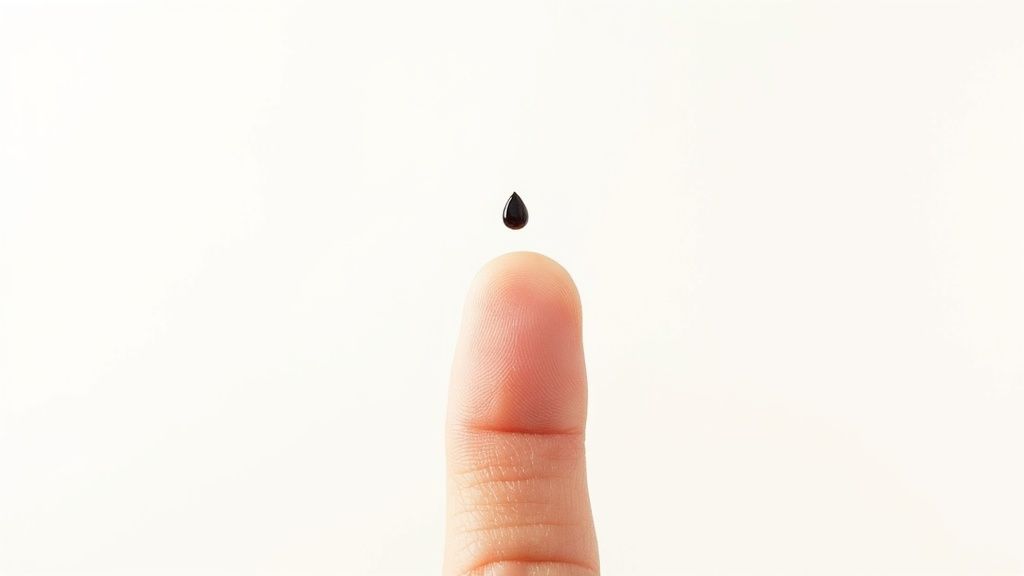
If you're brand new to RSO, the widely accepted starting point is a tiny drop, roughly the size of half a grain of rice. That might sound impossibly small, but it’s a smart, conservative way to see how your body reacts. Everyone's chemistry is different, and this tiny dose lets you find your personal baseline without going overboard.
After that first dose, a common strategy is to slowly increase the amount over several weeks. This gradual process, known as titration, allows your body to build a tolerance and acclimate to the powerful effects of the cannabinoids. There’s absolutely no benefit to rushing it.
The “start low and go slow” method is your best friend on this journey. It puts your body’s comfort first and helps you find the right amount for your unique needs, dramatically reducing the risk of uncomfortable side effects.
This careful, step-by-step approach is the foundation of responsible RSO use. If you want a more structured plan, a tool like this RSO dosage calculator can help you map out a gradual schedule.
Common Administration Methods
How you take RSO also plays a big role in how it affects you. There are a few different ways to use it, but some are much more practical and common than others.
-
Oral Ingestion: This is by far the most popular method. Most people just place their measured dose on a small bite of food (like a cracker or piece of fruit) and swallow it. When you eat RSO, it is processed by the body, which means the effects take a while to kick in but are very long-lasting and body-wide.
-
Sublingual Administration: You can also place the oil directly under your tongue. This allows it to absorb into the bloodstream much faster than swallowing, so you’ll feel the effects sooner. The trade-off is the taste—RSO has a very strong, earthy flavor that some people find unpleasant.
-
Topical Application: For targeted relief, RSO can be applied right onto the skin. It helps to mix it with a carrier oil like coconut or jojoba oil to make it easier to spread over a specific area. Using it this way lets you address a localized spot without feeling the systemic psychoactive effects.
Ultimately, your RSO journey is about making informed choices. By starting slow, listening to your body, and understanding the different ways to use the oil, you can explore its potential thoughtfully and safely. Education is always the best first step.
Answering Your Top RSO Questions
Once you have a handle on the basics of RSO, a few specific questions almost always pop up. Let's tackle some of the most common ones to clear up any confusion and help you feel more confident in your understanding.
Is RSO the Same Thing as FECO?
For the most part, yes. You can think of Full Extract Cannabis Oil (FECO) as the broader category, and RSO as the specific, original recipe that made this type of oil famous.
Both RSO and FECO refer to a thick, unrefined oil made to capture the entire chemical profile of the cannabis plant—cannabinoids, terpenes, and all. The main difference is that the term "RSO" is tied directly to Rick Simpson's story and the exact methods he shared with the world, giving it a special place in cannabis history.
Why Are Indica Strains the Traditional Go-To for RSO?
Rick Simpson’s original protocol was very specific: use heavy, potent indica strains. He was a firm believer that their deeply sedating and calming effects were essential for the wellness process he advocated for. The idea was that profound rest helps the body focus on recovery.
While you can technically make RSO from any type of cannabis, the classic formula sticks with indicas. This is why you'll often hear experienced users say they prefer indica-based RSO, especially for nighttime use or when they need deep, physical relaxation.
Of course, the market has evolved. Today, you can easily find RSO made from sativa and hybrid strains, offering a much wider spectrum of effects to suit different preferences and times of day.
What’s the Best Way to Store RSO?
To keep your RSO potent and easy to use, proper storage is key. The golden rule is to keep it in a cool, dark, and dry place. This simple step protects the delicate cannabinoids and terpenes from breaking down when exposed to light, heat, or air.
The airtight oral syringe it usually comes in is perfect for storage. Just follow these quick tips to keep it in top shape:
- Dodge the Sun: A drawer, cupboard, or even an opaque bag works perfectly.
- Keep It Cool: Standard room temperature is fine. Just don't leave it in a hot car or next to an oven.
- Refrigerate for the Long Haul: If you're storing it for a while, the fridge is your best bet for extending its shelf life. Just know that the cold will make the oil incredibly thick and tough to dispense. You’ll need to let it warm up at room temperature for about 10-15 minutes before you can use it easily.
Storing it right means your RSO will stay effective and ready to dose whenever you need it.
When you're exploring options for your health, having a source you can count on is everything. Here at RSOhelp.com, we’re dedicated to giving you clear, responsible information to help you navigate your wellness journey. Explore our resources to learn more about Rick Simpson Oil from a team you can trust.