
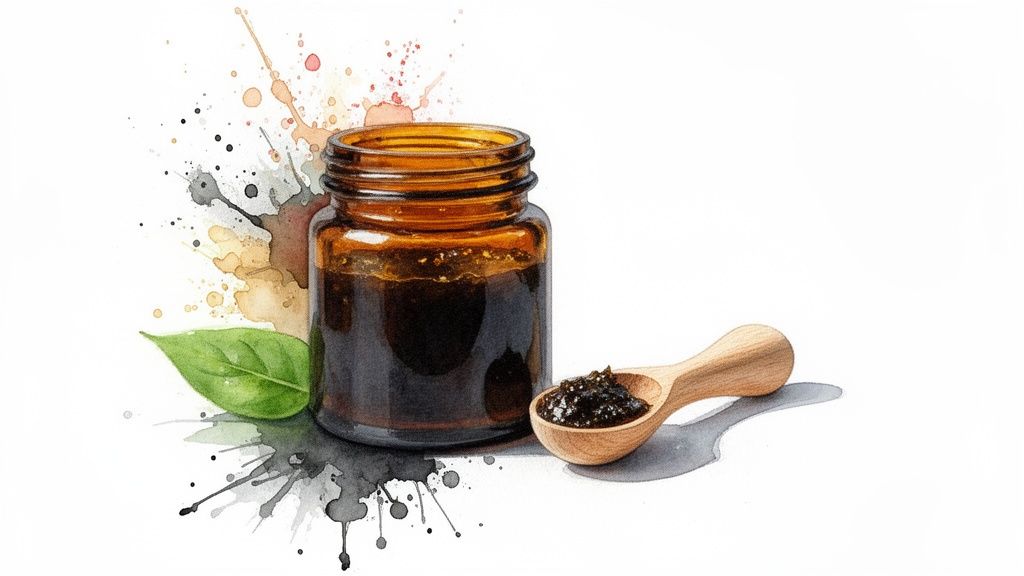
Rick Simpson Oil, or RSO as it's more commonly known, is a potent, unrefined cannabis extract. It's famous for its incredibly thick, dark, and sticky consistency—almost like tar. But its appearance is a direct result of its purpose: RSO is a full-spectrum extract, which means it captures the entire profile of compounds from the cannabis plant, not just one or two isolated elements.
This "whole-plant" philosophy is the core of what makes RSO what it is and sets it apart from most other cannabis products you'll find.
The Origins and Purpose of RSO
The story behind RSO isn't one of corporate research and development; it's a deeply personal one. The oil was born out of one man's search for a health solution, and that grassroots origin continues to define its reputation as a substance used for wellness.
Back in 2003, a Canadian engineer named Rick Simpson was navigating a personal health challenge. After conventional approaches fell short, he recalled a 1975 study showing that THC, cannabis's main psychoactive compound, had certain effects on cells in mice. Driven by this knowledge, he developed his own homemade cannabis oil and applied it to his skin. Simpson claimed the spots disappeared within days, a personal experiment that launched a global phenomenon. You can dive deeper into this fascinating history by reading this ultimate guide to RSO.
For a quick overview of what RSO is all about, this table breaks down the essentials.
RSO Quick Facts At a Glance
| Characteristic | Description |
|---|---|
| Type of Extract | Full-Spectrum Cannabis Oil (FECO) |
| Consistency | Thick, dark, sticky, tar-like |
| Key Feature | Contains the entire profile of cannabinoids, terpenes, and flavonoids |
| Primary Cannabinoid | Typically very high in THC, often 60-90% |
| Originator | Rick Simpson (2003) |
| Core Philosophy | Based on the "entourage effect" from whole-plant synergy |
This table provides a snapshot, but understanding what truly sets RSO apart requires a closer look at its composition.
What Makes RSO Different
Unlike highly refined cannabis oils that isolate specific compounds like THC or CBD, RSO is intentionally made to be a whole-plant extract. A great way to think about it is comparing a Vitamin C supplement to a whole orange. The supplement gives you just one isolated nutrient. The orange, on the other hand, gives you Vitamin C plus fiber, flavonoids, and a host of other compounds that all work together.
That synergy is the entire point of RSO. The oil is packed with a wide array of compounds straight from the plant, including:
- Cannabinoids: Molecules like THC and CBD that interact with our body's endocannabinoid system.
- Terpenes: The aromatic compounds responsible for the plant's distinct smells, which also have their own potential therapeutic effects.
- Flavonoids: Plant nutrients that contribute to color and have antioxidant properties.
This idea—that all these compounds work better together than they do alone—is known as the "entourage effect." The theory is that the therapeutic benefit of the whole plant is far greater than the sum of its individual parts.
This is exactly why RSO is so potent and unrefined. Its dark, thick appearance isn't a flaw; it's proof that it has retained all those valuable plant materials, including the chlorophyll. As you look into your own wellness journey, grasping this whole-plant approach is the first step to understanding what RSO truly is. For those seeking community and resources, platforms like RSOhelp.com offer dedicated support.
What's Actually in RSO? A Look at its Unique Makeup

So, what makes RSO stand out in a sea of cannabis products? The secret is in its chemical profile—it’s intentionally unrefined. The entire philosophy behind RSO is built on whole-plant synergy, not just isolated molecules.
Think of it like this: you can take a vitamin C tablet, or you can eat a whole orange. The tablet gives you one isolated nutrient. But the orange? It delivers vitamin C plus fiber, flavonoids, antioxidants, and a whole host of other micronutrients that all work in harmony.
That analogy is the perfect way to understand RSO. It’s not about isolating one component; it’s about capturing the full symphony of compounds that the cannabis plant creates.
A True Full-Spectrum Powerhouse
The key term you'll hear when people talk about RSO is "full-spectrum extract." This isn't just marketing speak; it's a literal description of what’s inside. Unlike THC distillates or broad-spectrum oils that intentionally remove certain compounds, RSO is designed to keep everything.
This rich profile includes a whole team of compounds, with each one playing a part:
- Cannabinoids: These are the stars of the show, and traditional RSO is known for its high THC content. But it's not just THC. You'll also find CBD, CBG, CBN, and others, each with its own set of properties.
- Terpenes: Ever wonder what gives a cannabis strain its unique pine, citrus, or earthy smell? That's the terpenes. These aromatic oils do more than just provide flavor and scent; they also contribute their own effects to the overall experience.
- Flavonoids: These are the compounds responsible for the plant's pigmentation and antioxidant qualities. They're another essential piece of the whole-plant puzzle.
By keeping all these compounds together, RSO delivers a chemical profile that is remarkably close to the original plant. It’s a holistic approach, and it’s central to why RSO was created in the first place.
The Entourage Effect: Why It All Matters
When you preserve all these different compounds, you get to see a powerful phenomenon in action: the entourage effect. The idea is simple but profound—the components in cannabis work better together than they do alone.
The entourage effect is the guiding principle behind RSO. It suggests that the benefits of the whole plant are greater than the sum of its parts, as each compound can amplify or balance the effects of the others.
For instance, certain terpenes might help your body absorb cannabinoids more effectively, while another cannabinoid might help soften the intense psychoactive edge of THC. It’s this synergistic teamwork that truly defines the RSO experience. The goal isn't just to max out the THC percentage, but to create a complete, balanced profile that honors the original plant.
This deep respect for the whole plant is why RSO has maintained such a loyal following. For anyone looking for deeper insights into full-spectrum extracts, resources like RSOhelp.com offer valuable support, helping people understand how this unique composition might fit into their own wellness journey.
Exploring RSO's Role in Wellness
The groundswell of interest in RSO isn’t coming from big marketing campaigns; it's fueled by word-of-mouth and powerful personal stories. People are drawn to this extract because they're looking for more control over their own health, often seeking a potent, plant-based alternative when conventional options haven't delivered the results they need.
At the heart of RSO's potential is its whole-plant nature. This isn't just isolated THC. It’s a rich, complex mixture of cannabinoids, terpenes, and flavonoids that work together. The theory is that this full-spectrum blend interacts with our body's own endocannabinoid system—the vast internal network that helps keep things like pain, mood, and immune function in balance. This interaction is the scientific underpinning for many of the benefits people report.
The Story That Started a Movement
The entire RSO phenomenon traces back to one man's belief in the power of the cannabis plant. Rick Simpson was inspired by early research hinting that cannabinoids could have profound effects on cellular health. That initial curiosity drove him to create the oil and use it on himself, sparking a grassroots movement that has only gained momentum over the years.
This movement is built on a mountain of anecdotal reports from people who’ve made RSO a part of their lives. Their stories often touch on finding relief from chronic pain, calming inflammation, and finding comfort while facing serious health battles.
By looking at these real-world experiences alongside the science that might explain them, we can get a clearer picture of RSO's potential. The goal is to empower you with knowledge so you can make decisions that feel right for you.
For anyone trying to navigate this landscape, having a reliable guide is essential. Resources like RSOhelp.com can offer personalized support, helping you understand the intricacies of RSO and how it might fit into your own wellness journey.
What People Are Saying: The Anecdotal Evidence
While we're still waiting for large-scale clinical trials specifically on RSO, the sheer volume of personal stories is impossible to ignore. People from every walk of life have shared their experiences, building a compelling collection of anecdotal evidence that continues to drive curiosity.
Here are a few of the most common reasons people turn to RSO:
- Managing Chronic Pain: We hear countless stories from individuals who say RSO helps them manage stubborn pain from conditions like arthritis or old injuries, giving them a better quality of life.
- Addressing Inflammation: Because certain cannabinoids are known for their anti-inflammatory properties, some people use RSO to help soothe conditions linked to chronic inflammation.
- Support During Serious Health Challenges: This is where some of the most powerful stories emerge. The therapeutic promise of Rick Simpson Oil is most prominent here, stemming from Simpson's own success in 2003 and backed by a growing body of research. Early studies, like a key one from 1975, showed THC impacting unhealthy cells in mice while leaving healthy ones alone—a finding that directly inspired Simpson's protocol. More recent preclinical research suggests RSO's full spectrum of cannabinoids may support the body’s natural defenses, reduce inflammation, and ease the side effects of other treatments, like nausea. In fact, anecdotal surveys show this benefit is reported by up to 70% of users. You can dive deeper into these foundational RSO concepts and benefits.
These accounts aren't a substitute for professional medical advice, of course. But they offer a window into why so many people are drawn to RSO and what it represents to them: a powerful tool for taking charge of their own well-being. Everyone's journey is different, which is exactly why having a trusted resource to turn to is so vital.
A Practical Guide to Safe Dosing and Use
When you’re first starting with something as potent as RSO, thinking about safety isn't just a good idea—it's essential. The secret to getting it right isn't about taking a huge amount. It’s about finding the sweet spot, that perfect dose for your body and what you're trying to achieve. Think of it less like a high dive and more like easing into the shallow end of the pool.
The most common starting point you'll hear about is a dose the size of a single grain of rice. Yes, it looks tiny. But with RSO, a little goes a long way. This small amount lets your system get used to the oil without the overwhelming "high" that can catch people off guard.
This methodical approach has a name: titration. It’s the simple practice of starting with a tiny dose and slowly, intentionally, increasing it over time. It’s like adjusting the thermostat in your house—you make small changes until you find the temperature that’s just right, instead of blasting the heat or AC all at once.
The Titration Method Explained
Titration is your best friend when it comes to avoiding unwanted side effects and finding your personal therapeutic window. The whole point is to gently build up your tolerance, letting you find the dose that helps you feel better without feeling uncomfortable. It puts you in the driver’s seat of your own wellness journey.
A popular schedule involves doubling your dose every four days, but remember, we're all wired differently. The most important rule is to listen to your body. For a more detailed walkthrough, checking out a dedicated guide on RSO oil dosing can give you a clear, structured plan to follow.
At the heart of it all is a simple, non-negotiable mantra: "start low and go slow." This phrase is the bedrock of responsible RSO use and ensures your experience is both comfortable and effective.
The process of starting this journey can be broken down into a few key steps.
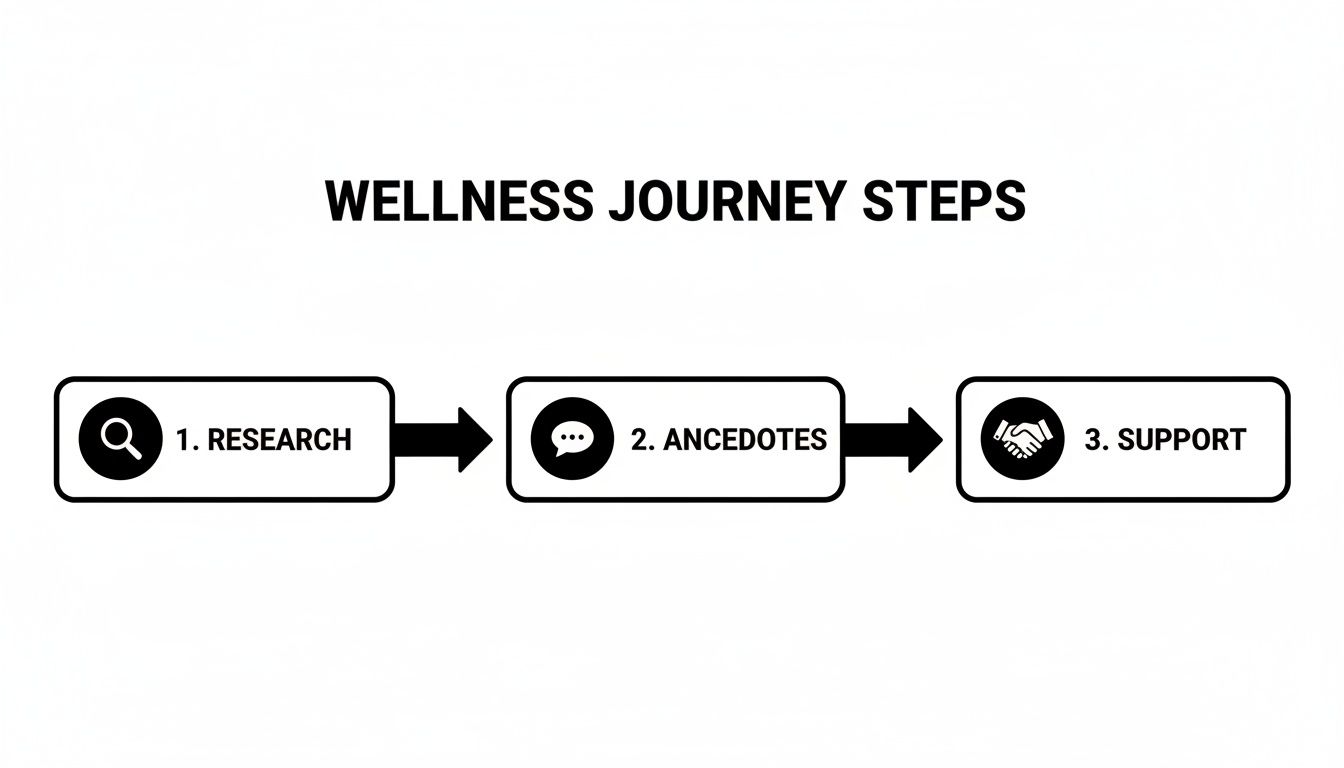
As you can see, the path is clear: start by doing your homework, learn from what others have experienced, and build a solid support system.
Choosing Your Administration Method
How you take RSO makes a big difference in how quickly you'll feel it and how it works in your body. There are a few ways to do it, and each has its own pros and cons. Knowing your options helps you pick what feels right for you.
-
Oral (Swallowing): This is the go-to method for most people. You just swallow the oil, often putting it on a cracker or piece of fruit to help with the strong, plant-like taste. It goes through your digestive system, which means it takes longer to kick in but the effects tend to last longer.
-
Sublingual (Under the Tongue): If you want faster results, this is a great option. By placing the RSO under your tongue for about 60-90 seconds, the cannabinoids get absorbed directly into your bloodstream. This bypasses the digestive tract, so you’ll feel the effects much more quickly.
-
Topical (On the Skin): You can also apply RSO directly to your skin. This is purely for localized relief and won't produce any psychoactive effects. The cannabinoids interact with receptors right where you apply them without entering your bloodstream in any significant amount.
-
Suppositories: While it's a less common method, it offers incredible bioavailability, meaning your body absorbs a very high percentage of the compounds. It completely sidesteps the liver and avoids any "high," which is a huge benefit for those who need higher doses without the psychoactivity.
Figuring all this out—the dose, the method, the timing—can feel like a lot. That’s why connecting with a trusted resource can make all the difference.
How RSO Stacks Up Against Other Cannabis Products
The world of cannabis products is vast and can be overwhelming. You've got oils, edibles, tinctures, and all sorts of concentrates. If you have specific wellness goals in mind, figuring out the differences isn't just helpful—it's essential. Rick Simpson Oil really is in a class of its own, mainly because of how it’s made and what it's designed to do.
This isn't a "which is best" competition. It’s about matching the right tool for the job. RSO was born from a specific therapeutic purpose, and its unrefined, whole-plant character reflects that mission.
RSO vs. CBD Oil
The biggest and most important difference here is the cannabinoid content. RSO is all about THC (tetrahydrocannabinol). It's designed to be a high-THC, full-spectrum oil that includes all the other good stuff from the plant. On the flip side, CBD oil is formulated to be rich in CBD (cannabidiol) and generally has next to no THC.
- RSO: A high-THC, whole-plant extract valued for its powerful, combined effects.
- CBD Oil: A high-CBD, low-THC extract used for non-intoxicating wellness support.
Think of it this way: RSO is like a potent, comprehensive herbal remedy, while CBD oil is more like a single, targeted vitamin supplement. They have fundamentally different jobs and create very different experiences.
RSO vs. FECO and Rosin
This is where the terminology can get a bit muddy, as people sometimes use these terms interchangeably. FECO (Full Extract Cannabis Oil) is really the larger category, and RSO is a specific type of FECO. The classic RSO protocol uses a specific solvent-based method to get that full-plant extract.
Where things diverge is with extracts like Rosin. While RSO relies on a solvent like ethanol to strip out the plant's compounds, Rosin is made with only heat and pressure—no solvents at all. It’s a beautifully clean and potent concentrate, but this solventless process might not pull out the same wide array of compounds (like chlorophyll) that gives RSO its famously dark, thick consistency. To get deeper into the weeds on this, check out our detailed comparison of RSO vs Rosin.
RSO vs. Edibles and Tinctures
Here, the main differences are form and concentration. You can absolutely use RSO to make your own edibles, but the ones you buy at a dispensary are often made with a refined THC distillate, not a true full-spectrum oil. That means you get the THC, but you miss out on the rich entourage effect that comes from RSO's complete profile of terpenes and other cannabinoids.
Tinctures are typically alcohol or oil-based extracts meant to be taken under the tongue. Some are full-spectrum, but they're almost always much less concentrated than RSO. A tiny, grain-of-rice-sized dose of RSO can pack a much bigger punch than an entire dropper full of a standard tincture.
At its core, RSO is defined by its unwavering focus on keeping the whole plant intact in its most concentrated form. While other products might isolate certain compounds or offer a more diluted experience, RSO is built to deliver the complete, unvarnished power of the cannabis plant.
RSO vs Other Cannabis Products: A Comparison
To make these distinctions even clearer, let's break them down side-by-side. The table below highlights the fundamental differences in composition, extraction, and common uses for RSO and other popular cannabis products.
| Product Type | Primary Cannabinoid | Extraction Method | Spectrum | Common Use |
|---|---|---|---|---|
| RSO/FECO | THC-dominant | Solvent-based (ethanol) | Full Spectrum | High-potency therapeutic protocols |
| CBD Oil | CBD-dominant | CO2, Ethanol, or Lipid Infusion | Full, Broad, or Isolate | General wellness, non-intoxicating |
| Rosin | THC or CBD | Solventless (Heat & Pressure) | Full Spectrum | Dabbing, vaporizing, connoisseur use |
| Edibles | THC or CBD | Various (often with distillate) | Often Isolate or Broad Spectrum | Recreational, long-lasting effects |
| Tinctures | THC or CBD | Alcohol or Oil Infusion | Full, Broad, or Isolate | Sublingual use, precise dosing |
Understanding these key characteristics helps you see why RSO holds such a unique place in the cannabis landscape and empowers you to choose the product that truly fits your needs.
How to Find Quality RSO and Steer Clear of Fakes
When you're looking for Rick Simpson Oil, it's wise to be sharp and a little skeptical. This isn't just any cannabis product; its potency and therapeutic purpose mean that quality is absolutely non-negotiable. Finding a pure, potent, and safe oil is the most important step you'll take, and that means knowing precisely what to look for—and what red flags to avoid.
The objective here is simple: find an oil that works and is free from anything harmful. It's a reality that low-quality or counterfeit products can be contaminated with residual solvents, pesticides, or even heavy metals. An ineffective product is bad enough, but a dangerous one is unacceptable. This is exactly why you can't just take a company's word for it; you need independent proof.
Why Third-Party Lab Testing is a Must
The single most powerful tool at your disposal for verifying quality is the Certificate of Analysis, or COA. Think of it as a report card from an independent, accredited lab that breaks down a product's exact chemical profile. It's your look behind the curtain, offering unbiased proof of what's really in that syringe.
When you get your hands on a COA, you're looking for a few key things:
- Cannabinoid Profile: This is where you confirm the potency. It shows the precise percentages of THC, CBD, and other cannabinoids. For a true RSO, you want to see a very high THC content, often 60% or more.
- Pesticide Analysis: This ensures the oil is clean and free from agricultural chemicals.
- Residual Solvents Test: This proves that the solvent used in the extraction (like ethanol) has been safely and completely purged.
- Heavy Metals Screening: This checks for contaminants like lead, mercury, and arsenic that can be absorbed by the cannabis plant.
If a seller can't—or won't—provide a recent, complete COA, it's best to walk away. Full transparency is the baseline for any trustworthy producer.
Finding Verified and Trustworthy Sources
The RSO market has grown quickly, mirroring the broader cannabis movement. You can read more about these market trends and consumer safety issues.
This is where a good guide can make all the difference. Instead of trying to sort through this crowded and confusing landscape on your own, you can lean on resources that have already done the hard work.
Services like RSOhelp.com are invaluable, acting as a bridge between consumers and reputable, verified sources. They thoroughly vet producers to make sure they meet strict standards for quality, testing, and transparency, effectively removing the guesswork for you.
Using a trusted platform helps you sidestep the risks of an unregulated market and gives you confidence that you're getting authentic, lab-tested oil. To help you narrow down your options even further, check out our guide to the best RSO oils for 2025, where we highlight top-tier products based on quality and user experiences. Confidence begins with sourcing your RSO responsibly.
Common Questions About RSO
As you dig deeper into RSO, you’ll naturally have some practical questions. Let's tackle some of the most common ones we hear, giving you clear, straightforward answers to help you move forward with confidence.
How Should I Store RSO to Keep it Potent?
Proper storage is key to making sure your RSO stays effective. Think of it like a fine wine or a sensitive medication—you want to protect it. The best way to do that is to keep it in a cool, dark, and dry place. Light and heat are the enemies here, as they can break down the valuable cannabinoids and terpenes over time.
Most RSO comes in an airtight syringe, which is already a great start. For long-term storage, popping it in the fridge is a fantastic idea to maintain its stability for months. Just a heads-up: cold RSO gets thick, so you'll probably need to warm the syringe in your hands for a minute or two to get it flowing before you dose.
Is RSO Actually Legal to Buy and Use?
This is a big one, and the answer is: it completely depends on where you are and what the RSO is made from.
If the oil is extracted from cannabis varieties high in THC, its legality is tied to your state's cannabis laws. On the other hand, RSO can also be made from hemp. While certain hemp-derived products are more widely available, state laws can vary, so always double-check the rules in your specific area.
Navigating cannabis product regulations can feel like a maze. To stay informed, it’s always smart to confirm the status where you live. This ensures you’re making safe and compliant choices.
What Are the Most Common Side Effects?
Because RSO is so potent, the most common side effects are directly related to its high THC content. People often report feeling drowsy, dizzy, or getting dry mouth and red eyes. If the dose is too high, it can sometimes trigger feelings of anxiety.
The good news is that these effects are almost always temporary. The best way to sidestep them is to live by the golden rule: "start low and go slow." Staying hydrated and using RSO in a comfortable, familiar setting can also make a huge difference. For more tailored advice on managing side effects, a knowledgeable resource like RSOhelp.com can be incredibly helpful.
Can I Give RSO to My Pets?
The short answer here is a firm no. You should never give high-THC RSO to pets. Animals like dogs and cats are incredibly sensitive to THC and can have severe reactions. Their bodies simply aren't built to process such a powerful psychoactive compound.
However, the idea of using full-spectrum extracts for animals has led to a whole market of pet-specific products. If you're considering cannabis for your pet's health, your first step must be to talk to a veterinarian who has experience with cannabinoid therapy. They can point you toward safe, vet-approved products—usually high in CBD and virtually free of THC—and give you the correct dosing instructions.
At RickSimpsonOil.info, we're dedicated to providing clear, reliable information to support you on your wellness journey. For personalized guidance and connections to verified U.S. sources for lab-tested RSO, feel free to explore our resources or book a free consultation at https://ricksimpsonoil.info.