So, what exactly is RSO? The acronym stands for Rick Simpson Oil, and if you've spent any time in wellness circles, you've likely heard of it. It’s a powerful, full-spectrum cannabis extract, easily recognized by its distinctively thick, dark, and almost tar-like appearance.
This potent oil wasn't developed in a corporate lab; it was created specifically for therapeutic use, and its story is as compelling as its properties.
The Story Behind Rick Simpson Oil
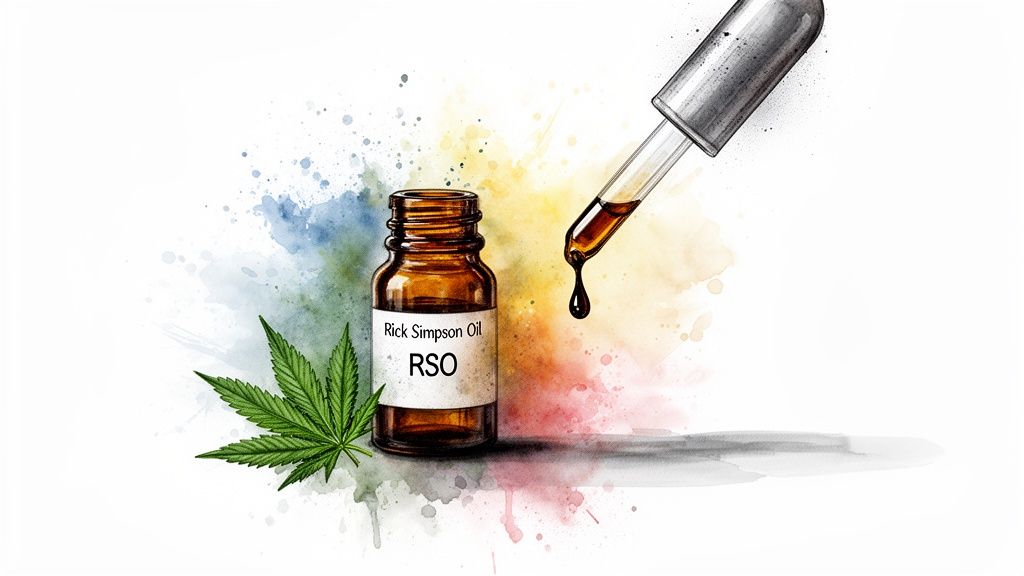
The story of RSO isn't about a corporation or a product launch; it’s the story of one man, Rick Simpson, a Canadian engineer who found himself on an unexpected path. His journey was born not from a business plan, but from a personal health crisis.
Back in 2003, after a health diagnosis, Simpson grew frustrated with the conventional options he was offered. He remembered reading about a study from 1975 that hinted at the potential of cannabis compounds in a lab setting, and that flicker of information sparked an idea.
A Wellness Movement Begins
Driven by a need for options, Simpson developed his own potent, highly concentrated cannabis oil. He applied it topically and, based on the results he saw, he made a decision that would change everything.
Instead of keeping his formula to himself, he gave it away—to anyone who asked. He shared the oil and the instructions to make it, completely free of charge. This wasn't just a kind gesture; it was the spark that ignited a worldwide grassroots movement.
Long before dispensaries were on every corner, the legend of Rick Simpson's oil spread through whispers, forums, and word-of-mouth. It became a powerful symbol for people wanting to take control of their own health. To learn more about his original methods, you can explore the Rick Simpson cannabis oil protocol.
Rick’s philosophy was straightforward: empower people with the knowledge to make their own choices. That simple idea built a community of shared stories and support that still thrives today.
From Kitchen Recipe to Modern Standards
While the RSO story starts with a DIY spirit, it's vital to connect that history with the safety standards we have today. The original recipes often used flammable solvents like naphtha or isopropyl alcohol, which can be incredibly dangerous to handle without professional lab equipment.
The focus now has rightfully shifted to safety, purity, and consistency. The original movement's spirit of empowerment lives on, but through resources that prioritize clean, lab-tested products. Reputable sources now bridge that gap, connecting people with oil that is potent, pure, and free from harmful contaminants, making the path to wellness a much safer one. For those looking to dive deeper, community resources like RSOhelp.com provide guidance for a safe and well-informed journey.
Comparing RSO to Other Cannabis Extracts
The cannabis market is crowded with oils, tinctures, and concentrates, and it’s easy to get lost in the terminology. To really understand where RSO fits in, you have to look past the name and straight to its chemical makeup. The key differentiator is its full-spectrum profile.
Think of it like an orchestra versus a solo musician. A CBD isolate product is a lone violin—pure, simple, and hitting just one note. RSO, on the other hand, is the entire symphony. Every instrument—cannabinoids, terpenes, and flavonoids—plays together, creating a complex, layered effect that's far richer than any single component.
This is what’s known as the “entourage effect,” where the whole plant works more effectively than its individual parts.
This chart shows how RSO evolved from one man’s personal mission into the standardized, lab-tested product we have today.
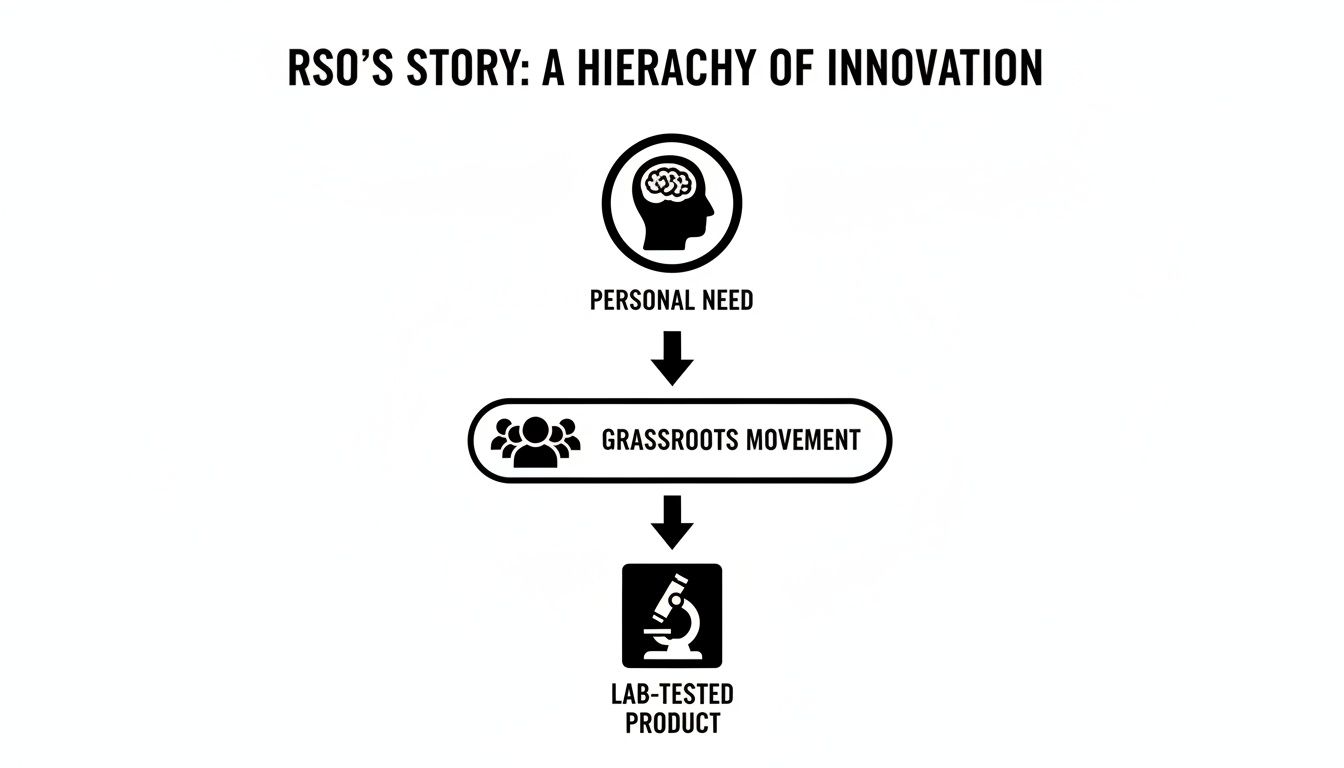
It started with a personal need, sparked a grassroots movement, and ultimately drove the demand for safe, reliable, and professionally produced extracts.
Key Differences at a Glance
Let's break down how RSO stacks up against a few other common extracts. Each one has a distinct purpose and profile, so knowing the difference is crucial for making an informed choice.
To simplify this, the table below offers a side-by-side comparison of RSO with other popular products you'll find on the market.
RSO vs. Other Cannabis Extracts
| Extract Type | Primary Cannabinoid | Spectrum | Common Use | Appearance |
|---|---|---|---|---|
| RSO | THC (high concentration) | Full-Spectrum | Potent, long-term wellness protocols | Dark, thick, tar-like paste |
| CBD Oil | CBD (high concentration) | Isolate, Broad, or Full | General wellness, non-psychoactive support | Light golden to clear liquid |
| FECO | THC (high concentration) | Full-Spectrum | Same as RSO; often implies food-grade alcohol | Dark, thick, tar-like paste |
| Other Common Extracts | Varies (e.g., CBG, CBN, Rosin) | Varies | Specific effects, recreation, or dabbing | Varies (shatter, wax, oil) |
As you can see, the main distinction lies in the cannabinoid profile and intended use. While CBD oil focuses on non-psychoactive benefits, RSO and FECO are designed to deliver the complete, unadulterated power of the cannabis plant, high-THC content and all.
Speaking of other extracts, you might also run into rosin, which is gaining popularity for its solventless extraction method. To dive deeper into the nuances, you can check out our detailed guide on RSO vs. Rosin.
Ultimately, the right choice comes down to your personal health goals. For anyone seeking the full, synergistic power of the cannabis plant for serious wellness support, RSO remains a uniquely potent and comprehensive option.
How Does RSO Actually Work? A Look at the Science

Many people turn to RSO for help with serious health issues, but what's really happening inside the body? The magic isn't just about THC. It’s about the hundreds of other compounds from the cannabis plant that come along for the ride.
Think of it like a symphony orchestra. A single violin can play a beautiful tune, but the sound becomes incredibly rich and powerful when the strings, woodwinds, brass, and percussion all play together. RSO is that full orchestra, bringing a complex blend of cannabinoids, terpenes, and flavonoids to the stage.
This teamwork between plant compounds is what we call the entourage effect. It’s the core concept explaining why a whole-plant extract can feel so different—and for many, more effective—than a product made with isolated THC. Each component amplifies the others, creating an impact far greater than any single compound could achieve alone.
The Power of Plant Synergy
So, when you ask, "what does RSO stand for," the answer goes beyond just Rick Simpson's name. It stands for a holistic, whole-plant philosophy. These compounds work together to interact with our body's endocannabinoid system, a crucial network that helps keep things like mood, sleep, and pain response in balance.
The entourage effect isn't just a buzzword; it's the fundamental principle that makes full-spectrum extracts like RSO so special. By keeping the plant's natural chemical fingerprint intact, the goal is a more complete and balanced interaction with your body.
You can see this preference for whole-plant products reflected in how people use them. A 2021 survey, for instance, revealed that 60% of certain cannabis users chose RSO specifically for pain management. Some clinical observations even suggest it may help reduce certain types of chronic pain by up to 30%.
Because RSO preserves the entire plant profile, its compounds are often more bioavailable than isolated cannabinoids. If you want to dive deeper into the clinical side, you can read the full review in JCO Oncology Practice.
Getting Started with RSO: Safety and Responsible Use
Knowing what RSO is is one thing; learning how to use it safely is what truly matters for your health journey. Getting the administration and dosing right is everything. It's the key to making sure your body adapts well to this incredibly potent extract without feeling overwhelmed.
With a concentrate this powerful, the guiding principle is simple: "start low and go slow." This isn't just a catchy phrase—it's the best way to avoid uncomfortable side effects and find the exact dose that works for your body.
The Golden Rule: Your First Dose
For anyone new to RSO, the standard recommendation is to start with a dose no bigger than a single grain of rice. It might look ridiculously small, but this is a critical first step.
This careful, gradual process is called titration. You're essentially adjusting the dose little by little over time to find your personal sweet spot.
From that tiny starting dose, you can slowly increase the amount over several weeks. This gives your body’s endocannabinoid system time to get used to it, which helps manage the potent effects and keeps you comfortable and in control. For a complete breakdown, check out our guide on how to use RSO, including dosage and timing tips.
Common Ways to Take RSO
People use RSO in a few different ways, and each has its own advantages. The most popular methods are:
- Oral Ingestion: Simply place the oil in your mouth. Many people put it on a small cracker or piece of fruit to help with the strong, earthy taste. When you eat it, the effects are long-lasting because it's processed through your digestive system.
- Topical Application: You can also apply RSO directly to the skin. This approach is great for targeted, localized support and won't cause any psychoactive effects, since the cannabinoids don't enter the bloodstream.
Starting an RSO regimen is a deeply personal process. It demands careful planning and good support, because what works for one person might not work for another. A one-size-fits-all approach just isn’t effective here.
Building a plan tailored to you is the safest way to reach your wellness goals. For professional guidance, resources like RSOhelp.com offer consultations and in-depth protocols. Speaking with someone knowledgeable ensures you can create a regimen that fits your specific needs and helps you get the most benefit out of RSO safely.
How to Find High-Quality RSO
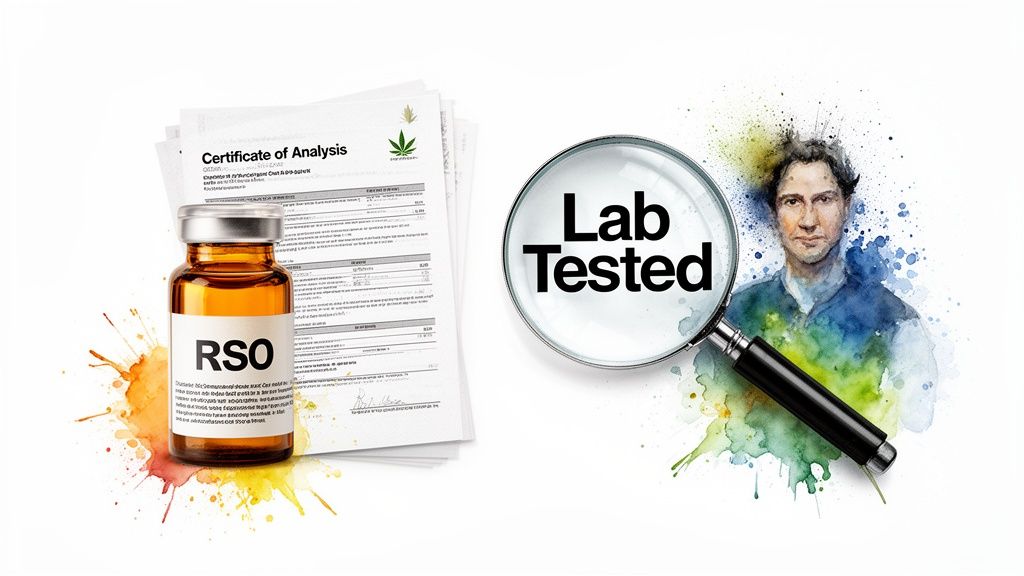
As more people learn about RSO's potential, the market has expanded. Unfortunately, with that popularity comes the risk of running into low-quality or even fake products. Knowing how to spot authentic, high-grade oil isn't just a good idea—it's absolutely essential for your well-being.
The single most important sign of a trustworthy product is transparency. A reputable provider will openly share third-party lab results, usually in a document called a Certificate of Analysis (COA). Think of the COA as a window into the oil's exact composition and purity.
This simple document is your proof of both safety and potency, making sure you get exactly what you’re paying for.
Reading a Certificate of Analysis
When you get your hands on a COA, you’re looking for two main things: the cannabinoid profile and the safety screening.
-
Cannabinoid Profile: This part breaks down the concentration of THC, CBD, and other cannabinoids. With RSO, you’re looking for a high percentage of THC, which confirms it has the potency it’s known for.
-
Contaminant Screening: This is the safety check. It confirms the oil is clean and free from harmful substances like pesticides, heavy metals, or residual solvents leftover from the extraction process. For your own safety, this section is non-negotiable.
A good provider will make these lab results easy to find. If a company is hesitant to share a COA, treat that as a major red flag and find another source.
This level of diligence is more important than ever as the global cannabis oil market grows. Forecasts predict the market will expand by 16.6% each year through 2028, with RSO being a big part of that boom. You can read more about the trends shaping the cannabis market to see just how fast things are moving.
If you’re looking for a trusted starting point in the U.S., RSOhelp.com is an excellent resource for finding organic, multi-strain, and fully lab-tested oils. Their focus on patient safety and transparency connects people with suppliers who provide complete certificates of analysis, giving you the confidence you need to move forward.
Common Questions About RSO
Even after diving into the details, a few questions always seem to come up when people first learn about Rick Simpson Oil. Let's clear up some of the most common points so you can feel completely confident about what RSO is and how it works.
Is RSO the Same Thing as FECO?
Essentially, yes. In today's market, RSO and FECO (Full Extract Cannabis Oil) are terms used almost interchangeably. Both refer to a powerful, dark, thick oil that captures the complete profile of the cannabis plant.
If you want to get technical, the main difference was originally the solvent used. FECO traditionally meant the oil was extracted using food-grade ethanol. But at the end of the day, they look the same, are used for the same reasons, and have the same wellness goals. The name on the label is less important than one critical detail: always make sure it's backed by a lab test.
Why is the RSO Starting Dose So Tiny?
RSO is incredibly potent, packing a huge concentration of cannabinoids like THC into a very small amount. That's why the classic advice is to "start low and go slow," beginning with a dose no bigger than a single grain of rice.
This isn't just a suggestion; it's a crucial safety step. It gives your body time to get used to the powerful effects. This careful process, called titration, lets you find the smallest amount that works for you without experiencing overwhelming side effects. If you need help figuring out your ideal dose, getting expert advice from a service like RSOhelp.com can make all the difference.
Can I Just Make My Own RSO?
While Rick Simpson’s original story involved making the oil at home, we strongly advise against it now. The process involves highly flammable solvents like alcohol or naphtha, which can create explosive fumes. Without a professional lab and proper ventilation, it’s a serious fire hazard.
Beyond the safety risks, there's no way to test homemade oil. You won't know its actual potency or if it contains leftover solvent residues, which can be harmful to your health. For safety and consistency, always seek out RSO from a reputable source that provides full, third-party lab reports.
Your wellness journey deserves reliable information and high-quality support. For personalized guidance, access to lab-verified products, and expert consultations, RSOhelp.com is your dedicated resource. Explore detailed protocols and find trusted providers by visiting https://ricksimpsonoil.info.