The core difference between THCA and Delta-9 THC boils down to one simple thing: heat.
THCA (Tetrahydrocannabinolic acid) is the raw, non-psychoactive compound found in fresh cannabis plants. When you heat it—through smoking, vaping, or cooking—it transforms into Delta-9 THC, the famous compound responsible for the "high." This conversion is the single most important concept to grasp, as it explains everything from their effects and medical uses to their legal status.
Comparing THCA and Delta-9: Key Differences
When you're looking at cannabinoids for therapeutic purposes, understanding the THCA vs. Delta-9 relationship is crucial. You can think of THCA as the parent molecule and Delta-9 THC as its activated, more potent offspring.
This transformation is a chemical process called decarboxylation. It's not just a tiny tweak; applying heat fundamentally alters the molecule's shape, which changes how it interacts with our body's endocannabinoid system. This is precisely why eating raw cannabis flower won't produce a psychoactive effect, but smoking or baking it into edibles will.
For anyone making their own remedies or following specific protocols like Rick Simpson Oil (RSO), getting this right is non-negotiable. An under-heated, THCA-rich oil won't provide the expected psychoactive and therapeutic effects that depend on fully activated Delta-9 THC.
THCA vs Delta-9 At a Glance
To quickly see how these two compounds stack up, the table below breaks down their main characteristics side-by-side.
| Attribute | THCA (Raw Form) | Delta-9 THC (Heated Form) |
|---|---|---|
| Psychoactivity | Non-psychoactive | Psychoactive |
| Source | Raw, unheated cannabis | Heated or aged cannabis |
| Medical Potential | Anti-inflammatory, neuroprotective | Pain relief, anti-nausea, appetite stimulant |
| Status | Varies by state; complex | Varies by state; complex |
| Activation | Inactive precursor | Active form |
This table gives a bird's-eye view, but the infographic below provides a more visual summary of their distinct properties and origins.
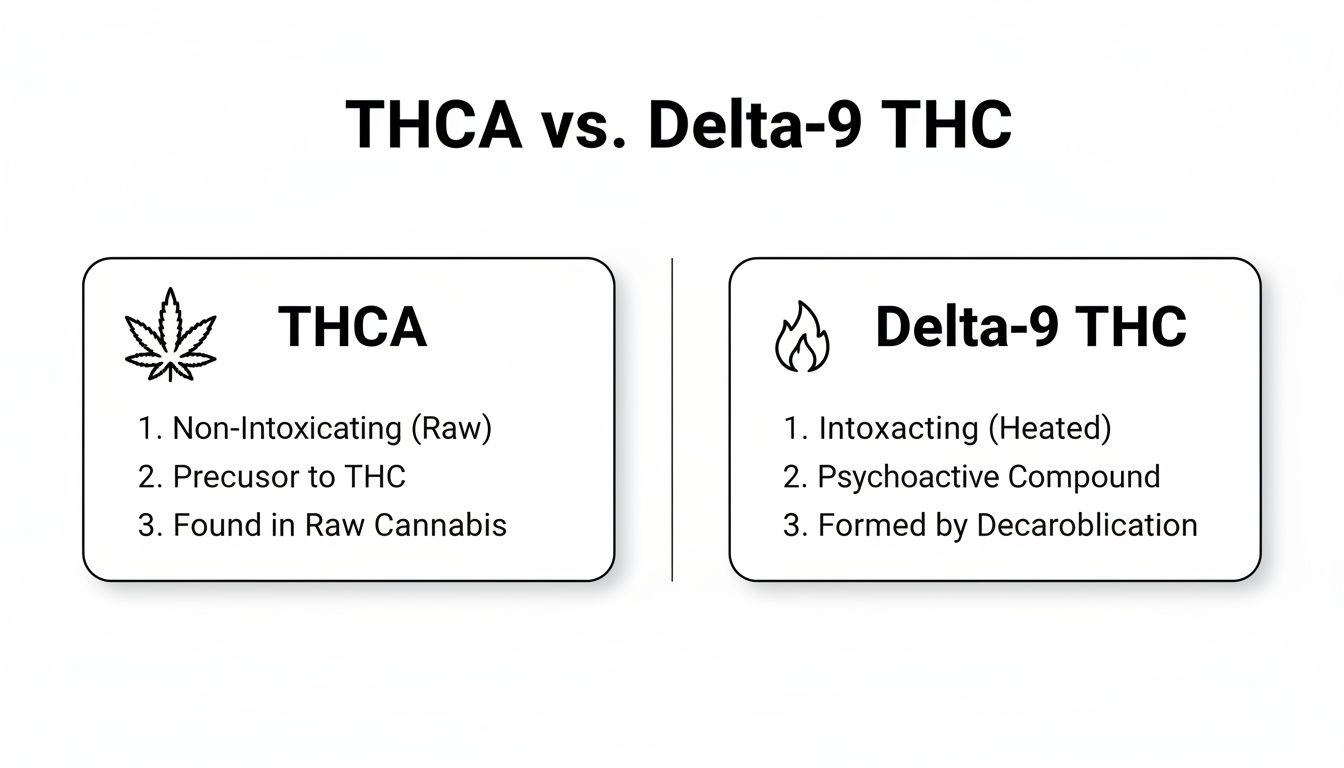
As you can see, the main split is psychoactivity. THCA is the non-intoxicating compound in the raw plant, while Delta-9 is the psychoactive result of applying heat.
The legal landscape surrounding these compounds is complex and varies significantly between jurisdictions. The 2018 Farm Bill established a framework based on Delta-9 THC concentration, which has led to different interpretations and regulations at the state level. Since THCA itself isn't Delta-9 THC, it occupies a unique position in this regulatory environment. You can find more details on this framework on the National Center for Biotechnology Information website.
Key Takeaway: The choice isn't about which compound is "better." It's about which one aligns with your specific health goals. THCA offers potential therapeutic benefits without the high, whereas Delta-9 provides the potent, well-researched effects that are central to many treatment plans. This guide will walk you through these differences to help you make the most informed decision for your wellness journey.
The Science Behind Cannabis Activation: Decarboxylation
The core difference in the THCA vs Delta 9 debate comes down to a simple but crucial chemical reaction: decarboxylation. This is the process that essentially "activates" cannabis, and understanding it is fundamental for anyone looking to achieve specific health outcomes.
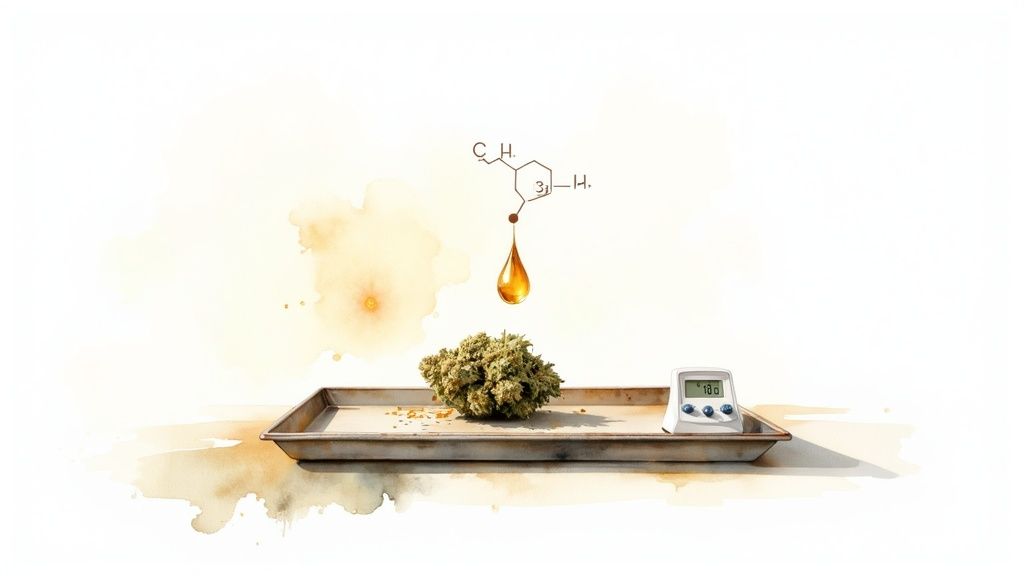
Think of THCA as the raw, non-psychoactive precursor found in fresh cannabis plants. Chemically speaking, it has an extra carboxyl group attached to it—this is the "A" (for acid) in THCA. This extra molecular piece makes the compound too bulky to properly bind with the body's CB1 receptors, which are the gateways to the psychoactive effects associated with cannabis.
How Heat Changes Everything
To get the effects most people associate with cannabis, that extra carboxyl group has to go. This is where heat comes in. Applying heat—whether by smoking, vaping, or baking in an oven—provides the energy needed to break the chemical bond holding that group in place. The group is then released as carbon dioxide and water vapor.
What's left is the smaller, more streamlined Delta-9 THC molecule. This new shape fits perfectly into our CB1 receptors, allowing it to produce its well-known effects. This is precisely why you can drink raw cannabis juice for its potential anti-inflammatory benefits without feeling intoxicated, but a brownie made with that same cannabis will have a very different result.
Key Takeaway: Decarboxylation isn't just a bit of chemistry trivia; it's the essential step for unlocking the full therapeutic and psychoactive power of cannabis. If a product isn't decarboxylated properly, it will remain high in THCA and won't deliver the intended effects of Delta-9 THC.
Decarboxylation in the Real World
Knowing how this works is vital for getting consistent results, especially if you're making your own cannabis products. The trick is to apply just the right amount of heat for the right amount of time to convert the THCA, without overheating and destroying the very compounds you're trying to activate.
Here are a few practical examples:
- Making Edibles: The heat of your oven during baking is what decarboxylates the cannabis flower, converting THCA into Delta-9 THC and making your edibles effective.
- Infusing Oils and Tinctures: Most methods for creating cannabis-infused oils involve a low, slow heating step specifically to decarboxylate the plant material before it's steeped in the oil.
- Preparing Rick Simpson Oil (RSO): Creating RSO involves a very careful heating process designed to maximize the THCA-to-THC conversion. For anyone on a strict RSO protocol, getting this step right is absolutely critical.
Why This Matters for Your Health Protocol
If your wellness plan relies on the effects of Delta-9 THC, using a product that is mostly THCA simply won't work. The difference between an activated and unactivated product is everything. This is why learning to control the decarboxylation process is such a vital skill for patients and caregivers.
For anyone preparing their own therapeutic oils, a solid grasp of this heating process is what guarantees the final product will be effective. This knowledge puts you in the driver's seat, empowering you to create the consistent, reliable products you need for your health journey.
Medical Effects, Potency, and Safety: A Practical Comparison
When we talk about THCA versus Delta-9 THC, it’s easy to get sidetracked by the psychoactive differences. But for anyone using cannabis for their health, the real story is in their unique medical effects, potency, and safety profiles. This isn't about which one is "better," but which one is the right tool for the right job.
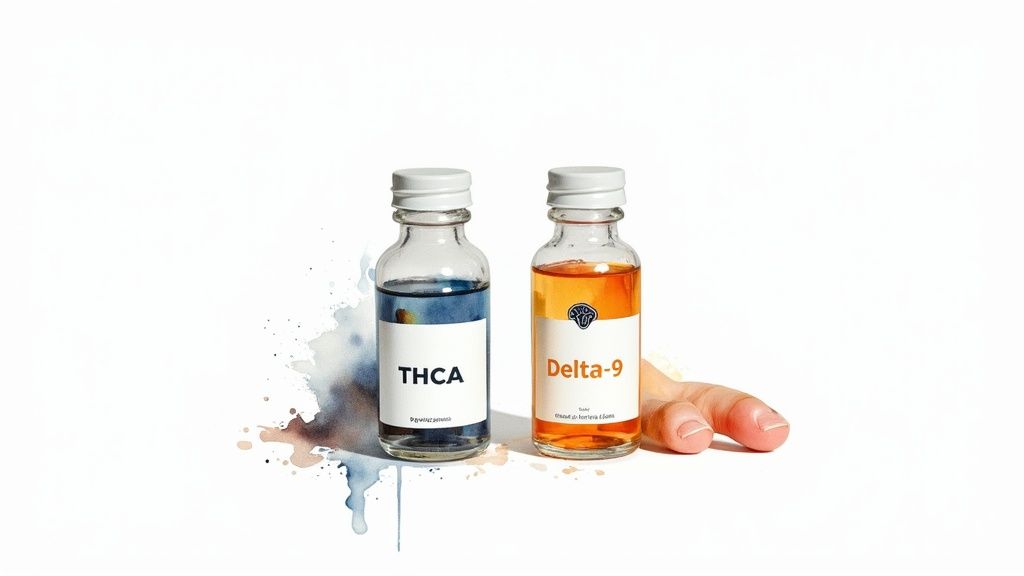
Delta-9 THC is the heavy hitter, famous for its powerful effects. It works by binding directly to the CB1 receptors in our brain and nervous system, which is precisely why it can produce such profound therapeutic results. For decades, it's been the go-to for managing severe symptoms like intense pain, appetite loss, and nausea, making it an indispensable part of many treatment protocols.
Delta-9 THC: Potency and Profile
The defining trait of Delta-9 THC is its strength. It delivers fast, potent relief that many people depend on. But that same strength is also what can lead to side effects.
While many users feel relaxed or euphoric, others can experience anxiety or paranoia, especially at higher doses. That’s why a slow, measured approach is always the best way to find a dose that works for you. This is particularly critical for those using it in a comprehensive protocol, like the strategies discussed in our guide to using RSO oil for cancer support.
Key Insight: The psychoactive and safety profiles of THCA and Delta-9 THC are worlds apart, a conclusion drawn from decades of research. We have over 30,000 studies on Delta-9 THC since the 1960s, showing it's responsible for 70-80% of the classic cannabis high. On the flip side, it's also linked to short-term paranoia and anxiety in 20-28% of users.
THCA, on the other hand, is getting attention for what it doesn't do. As a non-psychoactive compound in its raw state, it opens up a completely different avenue for wellness.
THCA: The Emerging Non-Psychoactive Powerhouse
THCA interacts with the body in a much different way, using pathways that don't cause intoxication. This makes it an incredibly attractive option for anyone who needs therapeutic support without any cognitive impairment.
Early research is starting to reveal its potential as a powerful anti-inflammatory and neuroprotective agent. These properties have made it a hot topic for managing chronic conditions where inflammation is a primary culprit.
For instance, someone managing daily joint discomfort or looking for neurological support might find THCA is a much better fit. It can be worked into a daily routine without clouding your thoughts or interfering with your day. Its non-intoxicating nature also makes it a much safer starting point for people new to cannabinoids.
A Situational Guide to Your Health Goals
Choosing between THCA and Delta-9 THC is a personal decision that hinges entirely on your specific goals. There’s no universal answer here.
Let's break it down by a few common scenarios:
-
For Potent, Fast-Acting Symptom Relief: If you need to tackle severe pain, nausea, or a complete lack of appetite, activated Delta-9 THC is usually the more effective choice. Its direct action on CB1 receptors delivers the powerful relief required.
-
For Non-Intoxicating Daily Support: If you're looking for benefits like reduced inflammation or neuroprotection without any "high," raw THCA is the clear winner. You can use it daily without any impact on your mental clarity.
-
For Those Sensitive to Psychoactive Effects: If you know you're sensitive to Delta-9 THC or are worried about anxiety, starting with THCA is a smart move. It allows you to see how your body responds without the risk of an uncomfortable experience.
Understanding this nuance is everything. The psychoactive and safety profiles are fundamentally different, a fact supported by decades of data. While raw THCA is non-intoxicating and is showing incredible promise in early trials—some animal models suggest it reduces inflammation 40% more effectively than CBD—the effects of Delta-9 THC are simply more established and understood. You can find more cannabinoid research and insights from our friends at Recovered.org.
Ultimately, this comparison gives you the power to make a truly informed choice. By understanding the distinct medical effects, potency, and safety of each compound, you can align your decision with your personal health goals and get the results you need.
Navigating The Complex Legal Landscape
Making safe, informed decisions about cannabis means getting a handle on its status, which can be complex. The situation hinges on the 2018 Farm Bill, a piece of federal legislation that defined hemp by its Delta-9 THC content (0.3% or less by dry weight).
That one definition created a significant distinction between THCA and Delta-9 THC. Since THCA isn't Delta-9 THC in its natural state, high-THCA products can technically be categorized as "hemp," provided their actual Delta-9 THC content stays below that 0.3% line.
The THCA Regulatory Landscape
This has given rise to a unique market. A product like THCA flower can be available in many states, compliant with the technical definition of hemp.
The catch? The moment you light that flower up or vape it, the heat instantly converts the THCA into Delta-9 THC—the very cannabinoid that is more widely regulated. This situation means a product's classification can change right at the moment of use, creating a confusing gray area for everyone involved.
Key Takeaway: A THCA product's status is based on its chemical makeup at the point of sale, not what it turns into when you heat it. This single distinction is the entire basis for the current THCA market.
State Rules vs. Federal Guidelines
While the Farm Bill set the stage at the federal level, it's far from the final word. States have the power to write their own rules for hemp and its derivatives, and they've gone in some very different directions.
Some states simply mirror the federal definition, which opens the door for THCA products. Many others, however, have adopted regulations for "total THC."
- Total THC Rules: These rules look at the big picture, calculating the potential Delta-9 THC that could be created from the THCA in a product. In states with these regulations, THCA is treated just like Delta-9 THC.
- A Patchwork of Rules: Because the rules can change drastically from one state to the next, you have to know what's happening locally. A product that's available in one state could be treated differently just one town over.
This web of conflicting regulations means that even if a product is federally compliant, its status might be different where you live.
Why Sourcing Responsibly Matters
For anyone using cannabis as part of a wellness plan, this maze highlights just how critical it is to get products from sources you can trust. It’s not just about navigating regulations; it’s about making sure the products you depend on are clean, properly tested, and consistent.
Knowing where your products come from is the first step toward building a safe and effective regimen. This is where good information makes all the difference. Educational resources like RSOhelp.com can help you cut through the noise, understand the market, and find products that fit your health protocol. A solid understanding empowers you to choose with confidence and keep your focus on your health.
How This Impacts Your RSO Protocol
If you're following a Rick Simpson Oil (RSO) protocol, the distinction between THCA and Delta-9 THC isn't just a chemistry lesson—it's the single most important factor for success. The entire protocol hinges on the complete conversion of non-psychoactive THCA into fully activated, psychoactive Delta-9 THC. This heating process, called decarboxylation, is what unlocks the oil's full therapeutic power.
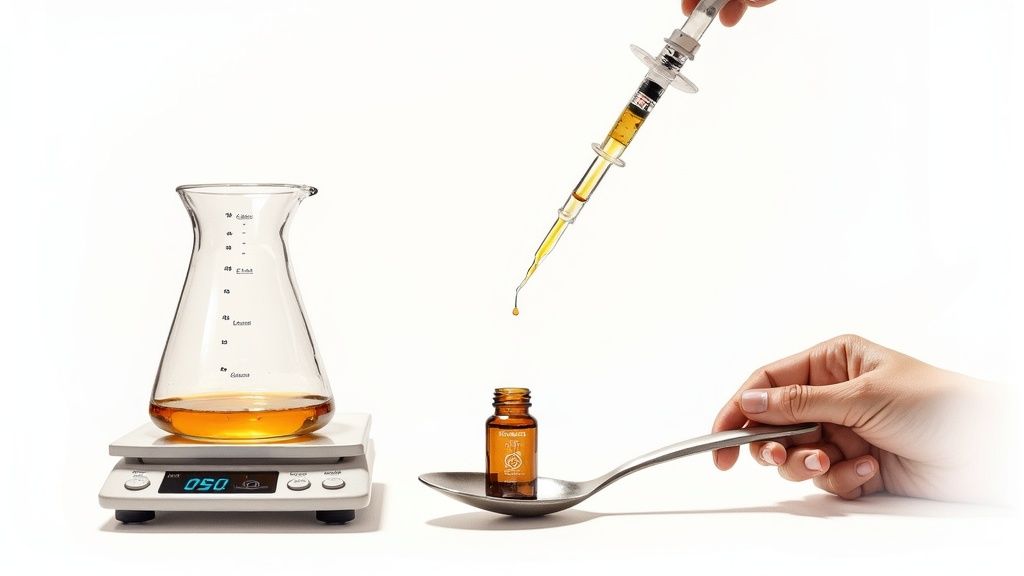
If that critical heating step is botched, you end up with an under-activated oil still high in raw THCA. While THCA certainly has its own potential benefits, it won't produce the potent effects that are the very foundation of the RSO method. In short, the oil won't work as intended for the specific goals of the regimen.
On the flip side, overheating the oil is just as bad. It can degrade the valuable Delta-9 THC into other cannabinoids like CBN, which completely changes the product's effects and reduces its potency. Finding that "just right" temperature and time is a delicate balance, and it’s why sourcing your RSO from a trusted, professional provider is absolutely essential.
The Role of Activation in Dosing and Efficacy
Starting an RSO protocol means committing to a journey of precise, careful dosing. The whole point is to gradually increase the amount of fully activated Delta-9 THC your body receives over time. If your RSO is mostly THCA, you simply don't have the right tool for the job, and you'll get inconsistent results at best.
A properly prepared, fully decarboxylated RSO guarantees that every single drop contains the intended concentration of Delta-9 THC. This is what allows for accurate dosing, starting with a tiny amount—often the size of a grain of rice—and slowly titrating up. Without that assurance, you’re just guessing at your oil's potency, making it impossible to follow a structured protocol effectively.
Key Insight for Patients: Your RSO's effectiveness is directly tied to its Delta-9 THC content. An oil high in THCA is a fundamentally different product and cannot be used interchangeably within a protocol designed for activated THC.
When it comes to an RSO protocol, the THCA vs Delta 9 debate is settled. You aren't choosing between the two; the protocol requires Delta-9 THC. This fact makes your source for RSO a non-negotiable part of your health journey.
Sourcing Quality RSO: A Critical Step
The market is flooded with products, and it's easy to get confused. A 2023 study that tested 49 hemp-derived Delta-9 products found that a staggering 66.0% of them deviated from their stated dosages by more than 10%, revealing major quality control issues. By comparison, Delta-9 products from regulated adult-use cannabis markets showed 84.9% compliance with dosing accuracy. You can read more about these findings on the CannaSpecialists website.
This data makes it crystal clear: you can't afford to leave your health to chance. Making sure your RSO is pure, potent, and accurately labeled is paramount.
For personalized guidance and support in finding verified, lab-tested RSO for your health-focused protocol, a trusted resource can make all the difference. At RSOhelp.com, we are committed to promoting health by connecting individuals with the information and support they need to approach their wellness protocols with confidence and clarity. We believe in empowering patients and caregivers with knowledge, ensuring they have access to reliable information for their journey. Your protocol's success begins with a foundation of trust and quality.
Choosing the Right Cannabinoid for Your Health Goals
When it comes to THCA versus Delta-9 THC, the conversation really boils down to your specific health objectives. This isn't about one being "better" than the other; it’s about choosing the right tool for the job. Your decision should be driven by the therapeutic outcome you're aiming for.
Making that choice requires looking at distinct, real-world scenarios. The goal is to match the unique properties of each cannabinoid to your individual needs.
Matching the Cannabinoid to the Goal
Let's break this down into a couple of practical situations where you might choose one over the other. This helps turn the science into actionable insight.
-
For managing daily inflammation without the high: If you're dealing with chronic inflammation, raw THCA could be a perfect fit. Because it's non-psychoactive, you can easily work it into your daily routine without any intoxication or mental fog.
-
For potent symptom relief during intensive therapy: A patient needing immediate, powerful relief from severe nausea or pain would likely find more benefit from fully activated Delta-9 THC. Its strong interaction with the body’s endocannabinoid system is designed to tackle acute, more challenging symptoms head-on.
This really gets to the heart of it: THCA offers non-intoxicating support, while Delta-9 THC provides powerful, psychoactive relief.
Empowering Your Health Journey
My goal here is to arm you with the information you need to have productive, confident discussions with your healthcare provider. When you understand these key differences, you can better advocate for your own health and explore options that genuinely align with your goals. The choice is deeply personal and hinges entirely on your situation.
The most crucial takeaway is this: the choice between THCA and Delta-9 is not a competition. It is a strategic decision based on desired effects, whether that is non-intrusive daily support or potent, targeted intervention for serious health challenges.
As you navigate these options, reliable information is everything. For anyone exploring a comprehensive wellness strategy, understanding what goes into different cannabis preparations is vital. You can learn more about the specifics of full extract cannabis oil to deepen your knowledge on this topic.
Ultimately, your health journey is unique. Equipping yourself with clear, accurate information is the best way to move forward with confidence. For guidance tailored to health-focused protocols, resources like RSOhelp.com are dedicated to providing the clarity and support needed to make the best decisions for your well-being. Your health is the priority, and the right knowledge makes all the difference.
Common Questions Answered
When you're digging into the differences between THCA and Delta-9 THC, a few key questions always seem to pop up. Let's tackle them head-on to clear up any confusion and help you make the right choices for your health.
Will Using THCA Show Up on a Drug Test?
Yes, you should absolutely assume that using THCA will lead to a positive drug test. It’s a common misconception that since THCA isn't psychoactive, it won't be flagged.
The reality is that standard drug tests look for THC metabolites, and they don't distinguish between those from THCA and those from Delta-9 THC. On top of that, some THCA naturally converts to Delta-9 in your body, and the heat used in certain lab testing methods can also cause this conversion. To be safe, if you're subject to drug testing, you should avoid all THCA products.
Can I Get the Therapeutic Benefits Without the High?
You certainly can, and that’s precisely why THCA has caught the attention of so many people. In its raw, unheated form, THCA is non-psychoactive, meaning it won't produce any intoxicating effects.
This opens the door to methods like juicing raw cannabis leaves or blending fresh flower into a smoothie. It's a way to tap into the potential anti-inflammatory and neuroprotective benefits of the raw cannabinoid without any mental fog, making it an interesting option for daily wellness routines.
How Does This Affect My RSO Protocol?
This is a critical point. Understanding the THCA-to-THC conversion isn't just a "nice to know"—it's fundamental to a proper Rick Simpson Oil (RSO) protocol. The therapeutic strategy behind RSO hinges on the potent, activated effects of Delta-9 THC.
The whole reason RSO is heated (decarboxylated) during production is to intentionally convert all of that raw THCA into Delta-9. If the oil is made incorrectly and isn't heated properly, you'll end up with a product high in THCA, which will deliver a completely different experience and won't align with the goals of a traditional RSO regimen.
For anyone following a health-focused RSO protocol, ensuring your oil is fully activated is non-negotiable. It's the only way to get the consistent, reliable outcomes you need for your health journey. This is why relying on trusted educational resources is so important.
At RSOhelp.com, our mission is to promote health by providing clear, reliable information for patients and caregivers. For personalized support and guidance on RSO protocols, visit RickSimpsonOil.info to learn more.