

Using RSO oil for pain management is a method that draws its strength from the raw, potent nature of the whole cannabis plant. This concentrated oil is packed with high levels of cannabinoids and terpenes that work with the body's own pain-regulating systems, offering a powerful option for those struggling with persistent pain.
Understanding How RSO Works for Pain Relief
When you're dealing with chronic pain, finding something that actually brings relief can feel like an endless search. This is where the unique makeup of RSO becomes so compelling. Unlike products that isolate single compounds like CBD or THC, RSO is a true whole-plant extract. That means it keeps the full profile of cannabinoids, terpenes, and other natural plant materials intact.

This comprehensive blend is what creates the "entourage effect." I like to explain it this way: think of a symphony orchestra versus a solo violinist. The solo violin is beautiful, but the sound of all the instruments playing together creates something far richer and more complex. It's the same idea here—the compounds in RSO work together synergistically, often enhancing each other's therapeutic benefits.
The Role of Cannabinoids and the Endocannabinoid System
The secret to RSO's effectiveness lies in its interaction with our body's endocannabinoid system (ECS). The ECS is a fascinating, complex network of cell-signaling receptors that helps regulate critical functions like pain perception, mood, and immune response. Its main job is to keep things in balance, a state known as homeostasis.
When you introduce cannabinoids from RSO, they interact directly with ECS receptors—primarily the CB1 and CB2 receptors.
- CB1 Receptors: These are mostly found in the brain and central nervous system. THC, the main psychoactive compound in RSO, has a strong affinity for these receptors. This interaction is what can help modulate pain signals, essentially turning down the "volume" on your perception of pain.
- CB2 Receptors: Located mainly in the immune system and throughout the body, these receptors are key players in managing inflammation, which is often a major driver of chronic pain.
Because RSO is loaded with a high concentration of THC alongside other important cannabinoids like CBD and CBN, it can engage both of these pathways at the same time. This dual-action approach—tackling pain signaling and inflammation simultaneously—is why so many people with complex, hard-to-treat pain find RSO to be a game-changer.
The real magic of RSO is its unrefined, whole-plant approach. By keeping the full spectrum of compounds, you're not just getting THC; you're getting an entire team of molecules working together to support your body's natural pain management systems.
RSO vs Other Cannabis Products for Pain
It can be confusing to navigate all the different cannabis products available. This quick table highlights what makes RSO stand out for pain management compared to other common options.
| Feature | RSO (Rick Simpson Oil) | CBD Isolate | Standard Edibles |
|---|---|---|---|
| Cannabinoid Profile | Full-spectrum, high THC, plus CBD, CBN, terpenes, and more | 99% pure CBD, no other cannabinoids or terpenes | Varies, often THC or CBD dominant, but rarely full-spectrum |
| Potency | Extremely high, very concentrated | Varies, but isolated compound | Moderate to high, but less concentrated than RSO |
| "Entourage Effect" | Maximized due to the whole-plant extract | None, as it's an isolated molecule | Limited, depends on the specific extract used |
| Primary Use for Pain | Severe, chronic pain, inflammation, nerve pain | Mild to moderate pain, inflammation, anxiety-related pain | General pain relief, sleep aid |
| Dosing | Requires careful titration (start with a rice grain size) | Easier to dose in milligrams (mg) | Dosed in milligrams (mg), predictable effects |
As you can see, RSO’s strength lies in its potent, full-spectrum nature, making it a unique tool specifically for those with significant pain challenges.
Anecdotal Success and Growing Interest
The story of RSO really began with personal experiences. After Rick Simpson first created his oil back in 2003, its popularity spread almost entirely through word-of-mouth. Today, you can find countless testimonials from people who have found relief with it.
This isn't just talk; the numbers are starting to back it up. For example, in Florida's medical cannabis program, which serves over 700,000 patients, RSO prescriptions for chronic pain saw a 250% jump by 2023. This mirrors a wider trend, as a 2024 poll revealed that RSO users reported an average pain reduction score of 7.2 out of 10. That's significantly higher than the 4.1 out of 10 reported for CBD isolates alone, highlighting how that full-spectrum synergy may activate our CB1 receptors more effectively. You can explore more about the history and impact of RSO to understand its journey.
Finding Authentic and Lab-Tested RSO
Navigating the world of RSO oil for pain can feel overwhelming. With quality varying so much from one product to the next, how do you know what’s real and what isn't? Your health is on the line, so making a smart, informed choice is the single most important step you can take.
The absolute key is verification. A subpar product won’t just fail to bring you relief; it could contain harmful contaminants. This is why I can't stress this enough: only consider RSO that has been thoroughly tested by an independent, third-party laboratory. It's simply not negotiable.
Why Third-Party Lab Testing Is a Must
Think of a third-party lab test as an unbiased stamp of approval. It’s your guarantee that the RSO is pure, potent, and accurately labeled. When a company proudly displays its lab results, it’s a clear sign they care about your safety and stand behind their product.
These reports, known as a Certificate of Analysis (COA), are like a nutritional label for your RSO, breaking down its exact chemical makeup. Without one, you’re essentially guessing about what you’re putting into your body.
A reputable RSO provider will always make their COAs easy to find. If a company seems hesitant to share them or buries them on their website, that’s a major red flag. Don't risk it.
How to Read a Certificate of Analysis (COA)
A COA can look a bit technical at first, but knowing what to look for is an empowering skill. It turns you into your own quality control expert.
Here’s what to focus on:
- Cannabinoid Potency: This is where you’ll see the breakdown of THC, CBD, CBN, and other cannabinoids. For pain management, you're looking for a high THC concentration, typically between 60-90%. This is the powerhouse compound doing the heavy lifting.
- Purity and Contaminant Screening: This is the most crucial section for safety. You want to see a "Pass" or "ND" (None Detected) for every single item on this list:
- Pesticides: Confirms no nasty farming chemicals made it into the final product.
- Heavy Metals: Checks for toxic metals like lead, mercury, and arsenic.
- Residual Solvents: Ensures any chemicals used in the extraction process have been completely removed.
- Microbials: Verifies the oil is free from mold, mildew, and bacteria.
- Terpene Profile: This section details the aromatic compounds—like myrcene, caryophyllene, and linalool—that work alongside cannabinoids. Many terpenes have their own anti-inflammatory and pain-relieving properties, adding another layer of therapeutic benefit.
Look for Quality from Farm to Syringe
Beyond the lab report, the quality of the cannabis itself is fundamental. The best RSO comes from organic, multi-strain cannabis. Why multiple strains? Because it creates a more complex and powerful profile of cannabinoids and terpenes, which can lead to more comprehensive therapeutic effects.
Companies that are truly dedicated to patient wellness understand that a powerful, effective RSO starts with clean, high-quality plants grown with intention. To simplify your search, our team has already done some of the legwork. You can see our findings in this guide to the best RSO oils in 2025, which highlights providers who consistently deliver on purity and potency.
Starting Your RSO Dosing Protocol Safely
When you’re first starting with RSO oil for pain, the approach needs to be methodical and, frankly, slow. RSO is incredibly concentrated, so dialing in the right amount for your body isn’t just a step—it's the most critical part of the process.
If there’s one golden rule here, it’s start low and go slow. This isn't a race.
The best way to ease into it is through microdosing. I usually recommend people start with a dose about the size of half a grain of rice, taken just once a day. This tiny amount gives your body’s endocannabinoid system a chance to get acquainted with the powerful compounds in the oil without feeling overwhelmed.
Think of it like getting into a hot tub. You don’t just jump in. You dip a toe in first to see how it feels. That initial microdose is you testing the waters.
The Gradual Titration Plan
Once you're comfortable with the starting dose, the next phase is titration. This is just a clinical-sounding word for slowly adjusting your dose until you find that sweet spot where you get relief without unwanted side effects. It’s a process built on patience and, most importantly, listening to your body.
A typical beginner's schedule might involve sticking with that half-grain-of-rice dose for a few days. If you’re tolerating it well but the pain is still there, you can slowly work your way up to a full grain of rice. The idea is to build up incrementally over several weeks until you find what works for you.
The most effective RSO regimen is one that is personalized to you. There is no universal dose that works for everyone. Your unique body chemistry, pain level, and tolerance will determine your ideal amount.
Following a slow titration plan keeps you in the driver’s seat. For a more structured schedule, you can find a comprehensive RSO oil dosing guide here that lays out more detailed timelines and helpful tips.
Practical Tips for Precise Dosing
Let’s be honest—measuring a thick, sticky oil like RSO can feel awkward at first. But a few simple tricks make it much easier. My go-to method? A toothpick. Just dip the tip into the RSO syringe to gather a tiny amount, using a grain of rice as your visual benchmark.
Here are a few other things I’ve learned that can help:
- Warm the Syringe: RSO can be as thick as tar at room temperature. Just hold the syringe in your hands for a minute or run it under warm (not hot!) water. This makes the oil flow much more smoothly.
- Use a Mirror: If you’re dosing under the tongue, a mirror is your best friend. It helps you see exactly how much you're dispensing so you don't accidentally take too much.
- Place on a Cracker: The taste of RSO is… earthy. To put it mildly. If you find it too strong, just dispense your dose onto a tiny piece of a cracker or some food. It makes it easier to swallow and helps mask the flavor.
Of course, finding the right dose only matters if you have a quality product to begin with. Making sure your RSO is clean and potent is just as crucial as how you take it.
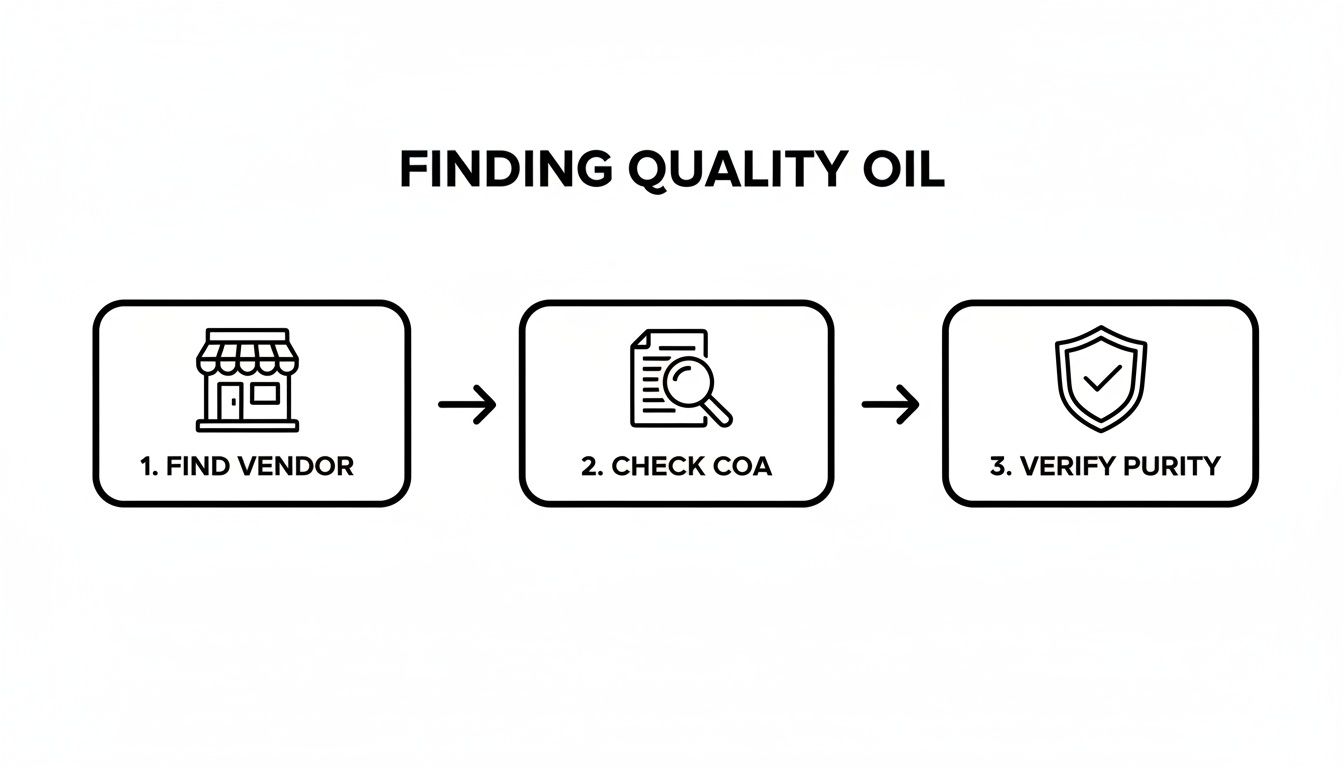
This process—finding a reputable source, carefully checking the lab reports (Certificate of Analysis), and confirming its purity—is non-negotiable. It’s your best defense against a product that’s either ineffective or, worse, contaminated.
The rising interest in potent extracts like RSO is part of a much bigger story about how people are tackling persistent pain. The global cannabis oil market was valued at US$1,048 million in 2023 and is projected to hit US$6,056 million by 2030. A huge driver of that growth is the 1.5 billion people worldwide looking for relief from chronic conditions.
With its high potency—often 700-900mg of THC per gram—RSO is a top choice for many of the 20% of U.S. adults living with persistent pain. But that same strength is why a cautious start, sometimes as low as 2.5mg, is so heavily advised by health professionals. It's all about managing the effects safely.
Choosing the Right Application Method for Your Pain
How you use RSO oil for pain makes a world of difference. It can be the deciding factor in its effectiveness and your overall experience. Once you’ve sourced a quality, lab-tested product, the next step is figuring out how to get it into your system in a way that best suits your pain and lifestyle. We generally break it down into three main paths: oral, topical, and suppositories.

Each method works differently. The choice you make impacts how quickly you feel relief, where that relief is concentrated, and how long it lasts. For widespread pain that feels like it’s everywhere, oral methods are usually the go-to. But if your pain is zeroed in on one spot, a more targeted approach might be your best bet.
Oral and Sublingual Use for Systemic Relief
Taking RSO by mouth is by far the most common method. The simplest way is to just swallow your measured dose, maybe on a small cracker or piece of fruit to help with the strong, earthy taste. When you swallow it, the RSO has to travel through your digestive system. This means it takes a bit longer to kick in—think 60 to 90 minutes—but the trade-off is that the effects often stick around for longer.
For a faster-acting alternative, you can try a sublingual application. This just means placing the RSO oil directly under your tongue and letting it sit there for at least a minute before you swallow. The tissue there is packed with capillaries, which allows the cannabinoids to absorb straight into your bloodstream. It’s a nice little shortcut that bypasses the digestive tract for quicker relief.
Pro Tip: RSO is thick and sticky. I always recommend warming the syringe in your hands for a minute to make the oil flow more smoothly for accurate dosing. Using a mirror can also help you get the dose right under your tongue where it needs to be.
Topical Application for Localized Pain
When your pain is stuck in one specific area—an arthritic knee, a nagging shoulder, or inflamed knuckles—topicals are a fantastic option. This approach delivers relief right to the source without the psychoactive effects you get from ingesting RSO. It’s all local.
You can mix a small amount of RSO into a carrier cream like coconut oil or shea butter to create your own potent pain-relief salve. Simply massage it directly onto the sore area. The cannabinoids get to work on the local receptors in your skin and tissues, helping to dial down inflammation and ease the discomfort.
This method is actually how it all started. Back in 2003, Rick Simpson was dealing with basal cell carcinoma on his skin and, out of frustration with other treatments, applied his high-THC oil directly to the lesions. He reported that they vanished in just four days. It’s a powerful reminder that RSO was born from a patient’s direct, hands-on experience.
Suppositories for High Absorption and Minimal Psychoactivity
It might not be the first method that comes to mind, but RSO suppositories are an incredibly effective delivery route with some serious advantages. They offer exceptionally high bioavailability, which means your body absorbs more of the active compounds, often with little to no psychoactive high.
This makes it a game-changer for people who need potent, systemic relief but are very sensitive to THC’s cognitive effects. By absorbing through the rectal wall, the cannabinoids enter the bloodstream while largely sidestepping the liver—the organ that metabolizes THC into a more intensely psychoactive compound.
This route can be especially useful for pelvic pain, certain digestive conditions, or for anyone needing high doses without the impairment. If you're curious about this powerful but often-overlooked option, our RSO suppositories guide breaks down everything you need to know.
Fine-Tuning Your Routine and Tracking What Works
Pinpointing your ideal dose and how you take your RSO oil for pain is a huge step, but it's really just the starting point. The secret to long-term, meaningful relief lies in consistency. When you build a steady, predictable routine, you allow the cannabinoids to accumulate in your system, maintaining their pain-fighting effects day in and day out.
This is all about creating a schedule that actually fits your life. For most people wrestling with chronic pain, that means splitting their daily RSO amount into smaller, more frequent doses. For instance, taking a small dose in the morning, another around lunchtime, and a final one before bed helps keep cannabinoid levels steady. This avoids the uncomfortable peaks and troughs that often come with one single, large dose.
Why You Should Keep a Journal
One of the most effective tools in your arsenal is a simple journal. It might feel like a tedious extra step, but meticulously tracking your experience gives you incredible insight. It’s the difference between guessing and knowing.
Think of your journal as a personalized roadmap. It shows you exactly what’s working, what isn't, and why. By logging the details every day, you'll start to see patterns emerge. You might discover that your nerve pain eases up more with a slightly larger evening dose, or that your morning joint stiffness practically disappears when you take your RSO with a spoonful of peanut butter.
Keeping a detailed log isn't just about crunching numbers—it's about learning to understand your body's unique signals. It is, without a doubt, the best way to dial in your RSO protocol for maximum relief and minimal unwanted effects.
What to Track for the Best Results
To get the most out of your journal, consistency is key. You're aiming to create a clear snapshot of your experience each day.
Here are the critical details to jot down:
- Date and Time: Note the exact time of each dose. This will help you see how long it takes to kick in and how long the relief lasts.
- Dose Amount: Be specific. Write down "half a grain of rice" or, if you're using a marked syringe, the exact measurement.
- Pain Levels: Use a simple 1-10 scale. Rate your pain right before taking your RSO and then check in again an hour or two later. This gives you a direct before-and-after comparison.
- Mood and Energy: A quick note on how you're feeling is incredibly helpful. Are you feeling relaxed, a bit anxious, energized, or sleepy?
- Sleep Quality: How did you sleep last night? Was it easy to drift off? Did pain wake you up?
- Other Notes: This is for everything else. Log any side effects (like grogginess), what you ate with your dose, or any activities that might have impacted your pain levels.
A Sample Journal Template to Get You Started
You don't need anything fancy for your journal. A basic notebook is perfect, but a simple spreadsheet on your phone or computer works just as well.
Here’s a look at how you could structure it.
A journal is your personal data hub. The goal is to collect enough information to make smart, informed decisions about your RSO regimen.
Sample RSO Pain Management Journal
A template to help you track your dosage, pain levels, and outcomes effectively.
| Date | Time | Dose (mg) | Pain Level (1-10) | Notes (e.g., Sleep, Side Effects) |
|---|---|---|---|---|
| Oct 26 | 8:00 AM | ~5 mg (1/2 grain of rice) | 7 | Slept poorly. Morning stiffness is high. Took with avocado toast. |
| Oct 26 | 9:00 PM | ~10 mg (1 grain of rice) | 5 | Pain manageable today. Feeling sleepy. Hoping for better rest. |
| Oct 27 | 8:15 AM | ~5 mg (1/2 grain of rice) | 6 | Woke up only once! Much less groggy. Morning pain is lower. |
| Oct 27 | 9:00 PM | ~10 mg (1 grain of rice) | 4 | Felt more focused today. Pain flare-up after grocery shopping. |
After a week or two of consistent tracking, you’ll have a wealth of information to guide your next steps.
By taking this disciplined approach, you shift from being a passive patient to the active driver of your own wellness. You’re making small, data-backed adjustments that can lead to profound improvements in your quality of life. This empowering process is a cornerstone of the guidance we provide at RSOhelp.com, where our focus is on giving you the tools to manage your health journey with confidence and safety.
Answering Your Questions About RSO for Pain
It’s completely normal to have questions when you first start looking into something as potent as RSO. In fact, it's smart. Being well-informed is the first step toward a safe and effective experience. Knowing what to expect, how RSO works, and what to watch out for can make all the difference.
Let's walk through some of the most common questions people have. My goal here is to give you clear, straightforward answers so you can feel more confident as you move forward.
What Are the Potential Side Effects?
Because RSO is a high-THC concentrate, any side effects are almost always tied to that psychoactive component. The good news is that most people can sidestep any unpleasantness by sticking to the golden rule: start low and go slow.
Still, it's wise to know what you might feel, particularly if you accidentally take a bit more than your system is ready for.
- Psychoactive Effects: This is the big one. Feelings of intense euphoria, paranoia, or just feeling "too high" can happen if the dose is too strong.
- Physical Sensations: You might experience the classic signs of THC, like dry mouth, red eyes, a faster heartbeat, or a little dizziness.
- Cognitive and Motor Impairment: RSO can definitely slow your reaction time and affect your coordination and short-term memory. This is why you absolutely must not drive or use any machinery after taking it.
- Drowsiness: A deep sense of sleepiness is very common. For those struggling with pain-related insomnia, this is a huge plus. For others, it’s something to plan around.
The vast majority of these effects are temporary and will fade as the RSO wears off. The best defense is a good offense: start with a tiny dose (no more than half a grain of rice) and be patient as you find what works for you.
Remember, side effects are nearly always a matter of dosage. A careful, gradual titration is your most reliable path to a positive outcome while managing your pain.
How Long Does It Take to Kick In?
This is a great question, and the answer really depends on how you take the RSO. Your own metabolism will also play a part, so your timing might be a little different from someone else’s.
Here’s a general guide to what you can expect:
| Administration Method | Typical Onset Time | How Long It Lasts |
|---|---|---|
| Sublingual (Under the Tongue) | 15-45 minutes | 4-6 hours |
| Oral (Swallowed) | 60-90 minutes | 6-8+ hours |
| Topical (On the Skin) | 20-40 minutes | 2-4 hours |
| Suppository | 15-30 minutes | 6-8 hours |
Keep in mind that when you're using RSO for chronic pain, the immediate feeling of relief isn't the only goal. You're aiming for sustained management. That’s why a consistent daily regimen is so crucial—it keeps a steady level of cannabinoids in your system for more predictable, around-the-clock comfort.
What If I Take Too Much?
First things first: stay calm. Taking too much RSO can certainly be uncomfortable, but it is not life-threatening. The most important thing is to get yourself to a safe, quiet place where you can relax and ride it out.
If you ever feel overwhelmed, here are a few simple things that can help you feel more grounded:
- Don't Panic: Gently remind yourself that the feeling is only temporary and it will pass.
- Hydrate: Sip on some water. It helps with the dry mouth and keeps you hydrated.
- Have a Snack: Some people find that a light snack helps them feel more centered.
- Find a Comforting Distraction: Put on some calming music, watch a favorite movie, or call a friend you trust.
- Rest or Sleep It Off: Often, the best remedy is to simply lie down and let yourself drift off to sleep.
Think of this experience as a lesson. Now you know exactly where your upper limit is, which is incredibly valuable information. You can simply adjust your next dose down to a more comfortable level. Learning how your own body responds is a fundamental part of the process. This is a common topic in the educational materials you'll find at RSOhelp.com, a great resource dedicated to helping people use RSO safely.
With these answers in hand, you’re much better equipped to navigate your journey with RSO. Knowledge gives you the power to make smart decisions and take control of your path toward a better quality of life.
For those who want to dig even deeper, RickSimpsonOil.info is an excellent source for practical, evidence-informed guides. You can explore more at https://ricksimpsonoil.info to find detailed articles on safe use, dosing strategies, and selecting the right products.