If you're exploring complementary options for a cancer wellness plan, you've likely come across Rick Simpson Oil, or RSO. It’s a potent, full-spectrum cannabis extract that has generated a lot of discussion. Unlike the more common CBD oil, RSO is defined by its high concentration of tetrahydrocannabinol (THC)—the main psychoactive compound in cannabis. This key difference is precisely why it’s gained so much attention in patient communities.
What Is RSO and How Is It Used for Cancer Support
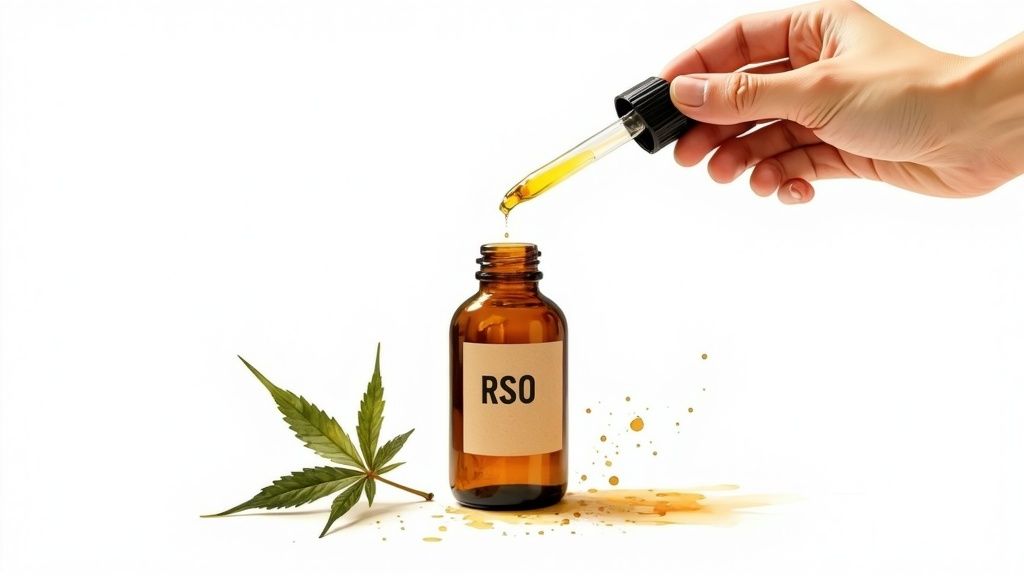
Diving into the world of RSO can feel overwhelming. You’ll find powerful personal stories on one side and a complex web of scientific information on the other. It’s crucial to approach this topic with a clear, responsible perspective. Think of RSO not as a standalone cure, but as one potential piece of a larger, professionally guided health strategy.
The conversation usually starts with anecdotes—compelling personal accounts from individuals who have used it. While these stories are moving, they aren't the same as clinical evidence. My goal here is to bridge the gap between those narratives and the need for an informed, safety-first approach.
If you’re just starting, getting the basics down is the best first step. You can get a more detailed breakdown in our foundational guide to what RSO is. Knowing what it is, how it's made, and what it contains will help you feel much more confident as you move forward.
The Origins of RSO
Rick Simpson Oil gets its name from its creator, a Canadian engineer named Rick Simpson. After a skin condition diagnosis, he developed his own method for creating a highly concentrated cannabis oil. He claimed that applying this oil directly to the spots on his skin caused them to vanish in a matter of days.
That personal experience drove him to share his formula and methods with the world in the hopes of helping others. His story spread, creating a groundswell of interest in using high-THC RSO oil for cancer support and other serious health issues. It’s this powerful origin story that continues to inspire people to explore its possibilities today.
At its core, RSO is a highly concentrated, unrefined cannabis extract. It’s designed to preserve the full profile of cannabinoids, terpenes, and other plant compounds. The idea is that these components work together synergistically—a concept known as the "entourage effect."
Understanding the Research Landscape
While you’ll find no shortage of personal testimonials, the clinical evidence for RSO as a direct cancer treatment in humans is still very much in its early days. That said, preclinical research has certainly piqued the interest of the scientific community.
Lab and animal studies have suggested that THC can inhibit tumor growth and may slow the spread of cancer cells for certain types, including lung, breast, and prostate cancers. These are promising findings that have paved the way for more research, but they haven't yet been confirmed in large-scale human trials.
This guide is here to walk you through the science as we know it, the critical safety considerations, and the practical steps for anyone considering RSO. The most important takeaway? Always work in close collaboration with your healthcare team.
Understanding How Cannabinoids Interact with Cancer Cells

To really understand why RSO oil for cancer has become such a persistent topic of conversation, we have to zoom in and look at what’s happening at a cellular level. The excitement is all rooted in how the active compounds in cannabis, called cannabinoids, seem to interact with our body's own internal machinery.
But first, a crucial disclaimer. The scientific insights we're about to explore come almost entirely from preclinical studies—think petri dishes and animal models. They give us a fascinating window into what might be possible, but they absolutely are not proof of what happens in the human body. It’s like scientists are just learning the alphabet; they can spell a few words, but they haven't written the book yet.
The Body’s Master Regulator: The Endocannabinoid System
Every one of us has a vast, body-wide network called the Endocannabinoid System (ECS). It's best to think of it as a master regulator or an internal balancing act. This system helps keep our other major biological systems in a state of equilibrium, or homeostasis, influencing everything from our mood and appetite to how we perceive pain.
This system is built on three key parts:
- Endocannabinoids: These are the messengers your own body makes to carry signals.
- Receptors: These are the docking stations (mainly CB1 and CB2) sitting on your cells, waiting to receive a message.
- Enzymes: These are the cleanup crew, breaking down the endocannabinoids after they’ve delivered their message.
Here’s where it gets interesting. The cannabinoids found in the cannabis plant, like THC, just happen to have a molecular shape that's incredibly similar to our body's own endocannabinoids. This allows them to fit into the ECS receptors like a key in a lock, giving them the ability to influence this internal communication network. This interaction is the entire foundation for why cannabis compounds might affect how our cells behave.
How Cannabinoids May Influence Cancer Cells in the Lab
When researchers introduce cannabinoids to cancer cells in a controlled lab setting, they've documented a few potential ways they might interfere with the cells' rogue behavior. These observations are central to the whole conversation around RSO oil for cancer, even though they remain highly experimental.
One of the most talked-about mechanisms is apoptosis, which is basically "programmed cell death." In a healthy body, old or damaged cells get a signal to self-destruct. It’s a clean and orderly process. Many cancer cells, however, have figured out how to ignore this signal, which is what allows them to grow and multiply without limit.
Preclinical research suggests that certain cannabinoids might be able to flip that self-destruct switch back on in some cancer cells. By signaling for apoptosis, they could potentially prompt the body to clear out these abnormal cells without harming the healthy ones around them.
Another key area of study is angiogenesis. For a tumor to get bigger, it needs its own private blood supply to deliver nutrients and oxygen. It gets this by tricking the body into growing new blood vessels directly to it.
Imagine a tumor is like an invasive weed in your garden. It can't survive without sending out roots to suck up water and nutrients. In much the same way, a tumor builds its own network of blood vessels. Lab studies have hinted that cannabinoids might disrupt the signals that tell these blood vessels to grow, potentially cutting off the tumor's supply lines and starving it.
A Clear Distinction Is Necessary
It's absolutely vital to draw a sharp line between these lab findings and proven treatments for people. The environment inside a petri dish is a world away from the incredibly complex and dynamic ecosystem of the human body. These preclinical studies give scientists good reason to keep asking questions, but they do not confirm that RSO or any cannabis product can treat cancer in humans.
Understanding these potential biological mechanisms gives you the context behind the headlines and the personal stories you might encounter. It equips you with the foundational knowledge to ask smarter questions and make more informed decisions on your journey. For those looking for a deeper dive, educational platforms like RSOhelp.com can offer more detailed resources on the science and responsible exploration of these compounds.
A Realistic Look at Human Studies and Patient Reports
After digging into the lab science, the big question is always: what happens when it’s used by actual people? When we talk about RSO oil for cancer, the human evidence is a patchwork of personal stories, patient surveys, and a handful of small, formal studies. It’s absolutely critical to look at this information with a clear and balanced eye.
Let's be upfront: there are no large-scale, randomized clinical trials—the gold standard in medicine—proving that RSO can treat or cure cancer in humans. Most of what we hear comes from individual case reports and patient stories. While these personal accounts can be incredibly compelling and are often what sparks people's interest in the first place, they don't carry the same weight as rigorous scientific proof.
These stories often lack the controlled conditions needed to draw solid conclusions. Without a comparison group or detailed medical records, it's impossible to know what other treatments, lifestyle changes, or biological factors might have influenced someone's health outcome. This is precisely why the medical community remains cautious and continues to call for structured research.
A Critical Distinction: Symptom Management vs. Cancer Treatment
One of the most important things to understand is the difference between using RSO as a potential anti-cancer agent and using it for palliative care—that is, to manage symptoms and improve quality of life. In this second area, the evidence is much stronger and more widely accepted.
In fact, many cancer patients use cannabis products not to fight the disease itself, but to cope with the grueling side effects of conventional treatments like chemotherapy and radiation.
- Nausea and Vomiting: Cannabis has a long, well-documented track record of helping ease treatment-induced nausea.
- Pain Management: For many, it offers a way to manage chronic pain, sometimes reducing the need for strong opioid painkillers.
- Appetite Stimulation: It can help bring back the appetite that often vanishes during treatment, which is crucial for keeping up strength and weight.
This role in supportive care is a huge deal. Improving a patient's day-to-day quality of life is a cornerstone of any good cancer care plan, and for many, cannabis is an invaluable tool for that.
Understanding the Quality of the Evidence
While hopeful personal stories are easy to find online, a closer look at the data shows some major limitations. Cannabis use among cancer patients is common—some surveys suggest approximately 60-70% of patients use it in some form. However, the vast majority are using it for symptom relief.
A deep dive into the existing literature found over 200 preclinical (lab) studies but only about 77 unique case reports where patients used it with the intent to fight cancer. Of those, the overwhelming majority (81%) were classified as weak evidence, often based on a person’s own account without any medical verification. You can read the full research on cannabis use in cancer care to see a detailed breakdown of these findings.
It's essential to recognize that while patient reports offer valuable insights into real-world use, they are not a substitute for controlled clinical trials. The scientific community's call for more research isn't a dismissal of these experiences, but a necessary step toward proving safety and effectiveness.
For anyone trying to make sense of all this, resources like RSOhelp.com can offer more educational context, helping you grasp the current state of the science without overblown promises. The journey of exploring RSO oil for cancer requires a thoughtful balance between the hopeful anecdotes and the scientific realities.
Prioritizing Safety And Avoiding Potential Drug Interactions
When you're looking into something like RSO oil for cancer, your safety has to be the number one priority. This isn't just a general wellness supplement; it's a potent substance, and that's especially true if you're already undergoing conventional treatments like chemotherapy, radiation, or immunotherapy. Adding anything new to your regimen needs to be done thoughtfully and, most importantly, with total honesty with your medical team.
The biggest hurdle here is the potential for drug interactions. Cannabinoids like THC and CBD are broken down in the liver by a specific family of enzymes called cytochrome P450. The thing is, these are the exact same enzymes your body uses to process a huge number of common medications. When you introduce a powerful concentrate like RSO, you run the risk of essentially overwhelming the system, which can speed up or slow down how your body metabolizes other critical drugs.
What does this mean in practical terms? It could potentially change how effective your treatments are. For example, it might cause chemotherapy drugs to be flushed from your system too quickly, meaning they don't have enough time to work. Or, it could go the other way, causing them to build up in your system, which increases the risk of toxicity. This isn't a guarantee, but it's a very real possibility that needs to be managed under a doctor's watch.
The Critical Need For Medical Supervision
Think of your oncologist as the quarterback of your cancer treatment team. They see the whole field—your specific diagnosis, your overall health, and the full playbook of your treatment plan. That's why having a completely open and frank conversation with them before even thinking about using RSO is absolutely essential.
Your medical team needs a full inventory of everything you're taking. That includes prescriptions, over-the-counter pills, vitamins, and yes, any cannabis products. Keeping this information from them can unintentionally put your safety at risk and undermine your entire care plan.
When you sit down with your doctor, be ready to talk about a few key things:
- Your "why": What are you hoping RSO can do for you? Is it for symptom management, or are you exploring its potential anti-cancer effects?
- Your current protocol: They need to know every single medication, its dosage, and the schedule you're on.
- Other supplements: Even things that seem harmless, like certain vitamins, can have a surprising impact on how other drugs work.
This conversation isn't about asking for permission. It's about building a partnership focused on your health. A well-informed doctor can help you realistically weigh the potential benefits against the very real risks. Resources like RSOhelp.com can also provide valuable information to help you feel more prepared for this crucial discussion.
Immunotherapy And Cannabis: A Special Consideration
The interplay between cannabis and immunotherapy is a particularly sensitive area that researchers are still trying to understand. Immunotherapy is designed to unleash your own immune system to attack cancer cells, a process that depends on a very delicate biological balance. Since cannabinoids are known to interact with the immune system, there's a legitimate concern they could interfere with these game-changing treatments.
This isn't just a theory. A few observational studies have raised some serious red flags. One retrospective study, for instance, followed 140 patients with melanoma, lung, and kidney cancers who were on immunotherapy. The results were concerning: patients who used cannabis had a significantly lower response rate to the therapy (15.9%) compared to those who didn't (37.5%).
Digging deeper, the median time it took for the tumors to start growing again was much shorter for cannabis users (just 3.4 months) versus non-users (13.1 months). You can learn more about these immunotherapy study findings directly from the publication to get a clearer picture of the data.
To be clear, studies like this don't prove that cannabis caused the poorer outcomes, but they absolutely highlight a potential conflict that cannot be ignored. The following table summarizes some of these key points.
Potential Considerations for RSO Use with Cancer Treatments
This table outlines key safety considerations and potential interactions between RSO and conventional cancer therapies based on observational data.
| Consideration | Potential Impact | Recommended Action |
|---|---|---|
| Metabolic Interference | RSO may affect liver enzymes (CYP450) that process chemotherapy drugs, potentially altering their efficacy or toxicity. | Disclose all cannabis use to your oncologist to monitor liver function and adjust medication dosages if necessary. |
| Immunotherapy Efficacy | Some studies suggest cannabis use may be associated with a reduced response rate to certain immunotherapies. | Discuss the latest research with your doctor. This is a critical conversation, as interference could compromise treatment outcomes. |
| Increased Sedation | The sedative effects of THC can be amplified by opioids or other medications used for pain and nausea management. | Start with microdoses of RSO and never drive or operate machinery until you know how the combination affects you. |
| Blood Thinning Effects | Cannabinoids may have mild anticoagulant properties, which could be a concern if you're on blood thinners like warfarin. | Inform your medical team, as they may want to monitor your clotting times more closely. |
This data all points back to one core message: when you're considering RSO oil for cancer, especially if you're undergoing advanced treatments, medical guidance isn't just a good idea—it's non-negotiable. Your health journey must be built on informed decisions made in full partnership with the experts managing your care.
A Practical Guide to RSO Dosing and Safe Administration
Once you've had a thorough conversation with your doctor and decided to explore RSO, the next step is to approach it with a practical, safety-first mindset. Typically, RSO is taken orally—either ingested directly or mixed into food. This allows the cannabinoids to work their way through your digestive system, which means the effects take a bit longer to kick in but tend to last much longer.
The golden rule for anyone new to RSO oil for cancer support, or any high-potency cannabis product, is a simple but critical mantra: "start low and go slow." RSO is incredibly concentrated, so even a minuscule amount can produce very strong effects. Think of it like turning up the volume on a new stereo; you do it incrementally to find that sweet spot, not all at once.
This gradual increase is a process called titration. It gives your body's endocannabinoid system time to acclimate, which helps minimize the chance of uncomfortable side effects like anxiety, dizziness, or overwhelming fatigue. It's important to remember that everyone's body is different. A dose that works perfectly for one person could be far too much for another.
Starting Your Journey with Microdosing
For a first-timer, the recommended starting dose is incredibly small—often just the size of half a grain of rice. That might sound like almost nothing, but with a product this potent, it's a very sensible and safe place to begin. This tiny amount is usually taken once every eight hours, or three times a day, for the first few days.
The goal here isn't to feel any intense effects. It's simply about introducing these powerful compounds to your system and carefully observing how your body responds. Many people find it helpful to keep a simple journal to track the dose, the time it was taken, and any feelings or effects noticed.
Here’s a look at the safety-first process that should always come before starting an RSO regimen.
This workflow highlights the essential steps: truly understanding the substance, recognizing the potential for interactions, and, most importantly, prioritizing a candid discussion with your doctor.
For those who prefer a more structured approach, you can learn more about how to plan your initial amounts by using a dedicated RSO dosage calculator to help estimate a starting point.
The Gradual Titration Process
If you handle the initial microdose well for the first few days without any issues, the next phase is to begin a slow, methodical increase. A common guideline is to double the dose every four days.
Here’s what that might look like in a cautious, hypothetical schedule:
- Days 1-4: Start with a dose the size of half a grain of rice, taken three times per day.
- Days 5-8: If all is well, increase to a dose the size of a full grain of rice, three times per day.
- Days 9-12: Double the dose again to the size of two grains of rice, three times per day.
- Continuing Onward: You can continue this pattern of doubling the dose every four days, but always pay close attention to what your body is telling you.
This slow ramp-up is designed to help you find your unique minimum effective dose—that’s the smallest amount that gives you the support you're looking for without triggering unwanted side effects. The process of using RSO oil for cancer is one that demands both patience and diligence.
The titration process is a marathon, not a sprint. The objective is to find a sustainable, comfortable level for your body. Rushing the process often leads to overwhelming psychoactive effects that can be distressing and counterproductive.
Important Administration Tips
To make the most of your RSO, it helps to keep a few practical tips in mind. Because RSO is fat-soluble, taking it with a small amount of healthy fat—like a spoonful of coconut oil, avocado, or peanut butter—can significantly improve how well your body absorbs the cannabinoids.
Consistency is also key. Taking your doses at roughly the same times each day helps maintain stable levels of cannabinoids in your system. This routine makes it easier for your body to adapt and for you to accurately gauge the effects over time.
Finally, please remember that this is a general framework. Your journey is your own, and listening to your body is the most important part of the process. Above all, always prioritize safety, professional medical advice, and a measured, patient approach.
How to Find Quality RSO and Read Lab Reports
When you're focused on your health, trying to find a high-quality RSO product can feel like an added burden. The market is flooded with options, so how do you know you're getting something that's pure, potent, and safe? The key is to look for transparency.
This is where third-party lab testing becomes absolutely critical. An independent lab gives you an unbiased look at what's in the oil—and just as importantly, what isn't. Without that outside verification, you're essentially flying blind, with no real guarantee that the product is clean or accurately labeled.
Decoding the Certificate of Analysis
Every legitimate RSO product should come with a Certificate of Analysis, or CoA. Think of it as the product's official report card. It might seem intimidating at first glance, but learning to read it is one of the most empowering things you can do for yourself.
A proper CoA will give you a detailed breakdown of a few crucial things:
- Cannabinoid Potency: This tells you the exact concentration of cannabinoids like THC and CBD. For RSO, you’ll want to see confirmation of the high THC levels it’s known for.
- Pesticide Screening: This checks for harmful agricultural chemicals that could have been used while the cannabis plant was growing.
- Heavy Metals Analysis: Cannabis is great at absorbing things from the soil, which unfortunately can include heavy metals like lead and mercury. This test ensures the final product is free of them.
- Residual Solvents: The extraction process often uses solvents, and this test confirms they've all been safely purged from the oil you'll be using.
Any trustworthy producer will make their CoAs easy to find for every single batch they produce. If you can't locate a recent lab report or the company is reluctant to provide one, consider that a major red flag.
Making an Informed Choice
You deserve to feel confident in the products you use on your health journey. By insisting on a detailed CoA, you’re not just being a savvy consumer—you’re taking an active role in your own wellness and ensuring you’re using something that meets strict quality standards.
If you’re looking to dig deeper into what makes a quality product, our guide on the best RSO oils for 2025 can help you understand what to look for in the current market. Ultimately, your best tool for navigating this landscape safely is knowledge.
Your Top Questions About RSO for Cancer
As you're thinking through all this information, it's completely normal to have a few questions pop up. Let's tackle some of the most common ones. My goal here is to circle back to the most important themes we've discussed: staying safe, working with your doctor, and keeping your expectations grounded.
How Is RSO Different From CBD Oil?
This is a great question, and the answer comes down to their core ingredients and what they're meant to do. The defining feature of RSO is its incredibly high concentration of THC, the compound in cannabis that causes a psychoactive "high." It's this high-THC, full-spectrum profile that is central to the conversation around RSO for cancer.
CBD oil, on the other hand, is made to be non-intoxicating. It’s rich in cannabidiol (CBD) and legally must contain less than 0.3% THC. While people often use CBD for things like anxiety or inflammation, RSO's potent THC content puts it in a completely different category, especially when being considered for a serious health condition.
Can I Use RSO Alongside My Cancer Treatments?
This is probably the most important question to ask, and the answer has to come from your oncologist. We've touched on this before, but it bears repeating: cannabis compounds can interfere with conventional cancer treatments. This is especially true for chemotherapy and newer immunotherapies. In fact, some early research has raised red flags that these interactions might even make life-saving treatments less effective.
Your medical team is your most important partner. Never add RSO or any other potent supplement to your regimen without talking to them first. Full transparency is the only way to protect your health and the integrity of your treatment plan.
Your oncologist knows your specific case inside and out. They are the only one qualified to give you a green light.
How Do I Find RSO That I Can Actually Trust?
Finding a reliable source is absolutely crucial for your safety. The one thing you should never compromise on is a current, third-party Certificate of Analysis (CoA) for every single batch of product you consider. Think of this lab report as your proof of quality.
A proper CoA tells you two essential things:
- What's in it: It confirms the exact potency, showing you the precise levels of THC and other cannabinoids. This ensures you're getting what you paid for.
- What's not in it: It screens for and confirms the absence of dangerous contaminants like pesticides, heavy metals, mold, and leftover solvents from the extraction process.
Look for producers who are open and honest about where their cannabis comes from and how they make their oil. For more help learning how to read these lab reports and spot high-quality products, educational resources like RSOhelp.com can be a valuable guide as you learn to navigate this space safely.
Here at RickSimpsonOil.info, our mission is to give you clear, evidence-based information so you can feel confident and safe in your health decisions. We provide educational guides and offer free, confidential consultations to help connect you with verified, lab-tested RSO producers in the U.S. Take a look around our site to learn more. https://ricksimpsonoil.info