
When you're starting with RSO, think small. Seriously small. The standard advice is to begin with an amount about the size of a quarter-grain of rice, taken three times a day. This "start low and go slow" mantra is everything with RSO because of its sheer potency. The whole idea is to let your body get used to it gradually, slowly upping the dose over time without getting hit with overwhelming side effects.
The Foundations of Safe RSO Dosing
Jumping into a Rick Simpson Oil (RSO) regimen isn't something to take lightly. It calls for a careful, measured approach. RSO isn't like other cannabis products; it's a super-concentrated, full-spectrum extract. That means you're getting high levels of THC, plus a whole symphony of other cannabinoids, terpenes, and plant compounds working together in what’s called the "entourage effect." This synergy is what makes RSO so powerful, but it's also why your dosing strategy needs to be so personal.
The absolute cornerstone of any RSO plan is to "start low and go slow." This isn't just friendly advice—it's the golden rule for a safe and effective experience. Your body needs time to acclimate. If you rush it, you risk some pretty uncomfortable side effects that a little patience can easily help you avoid.
Why RSO Requires a Different Dosing Strategy
The story behind RSO really drives home the importance of a structured plan. It all started back in 2003 with Rick Simpson, a Canadian engineer diagnosed with basal cell carcinoma. He created his own full-spectrum cannabis extract and started a personal regimen, beginning with that now-famous quarter-grain of rice dose three times daily. Over 90 days, he slowly increased his intake, setting a powerful example for why safe, incremental bumps are critical. If you're interested in the full backstory, you can find an ultimate guide to Rick Simpson Oil on cannamd.com.
So, what really sets RSO dosing apart from other cannabis products?
- Sheer Potency: RSO is incredibly concentrated. A tiny speck packs a significant cannabinoid punch, which is why precise, micro-sized starting doses are non-negotiable.
- Full-Spectrum Power: The full array of plant compounds can create much stronger effects than you'd get from isolated cannabinoids like THC or CBD on their own.
- Delayed Effects: When you take RSO orally, it has to pass through your liver. This means it can take up to two hours to feel the full effects. It's crucial to wait it out and see how you feel before even thinking about taking more.
To help you get started on the right foot, here's a quick summary of the core principles for safe and effective RSO dosing. Think of this as your reference guide as you begin your journey.
Key Principles of RSO Dosing
| Dosing Principle | Recommended Action | Why It Matters |
|---|---|---|
| Start Low | Begin with a dose no larger than a quarter-grain of rice. | Minimizes the risk of overwhelming psychoactive effects and allows your body to build tolerance gently. |
| Go Slow | Increase your dose very gradually, typically doubling it only every four days. | Prevents shocking your system and gives you time to find your unique therapeutic window without discomfort. |
| Be Consistent | Take your doses at regular intervals, usually three times per day (every 8 hours). | Maintains stable cannabinoid levels in your body for more consistent, around-the-clock support. |
| Listen to Your Body | Pay close attention to how you feel. Adjust your dose based on your personal response, not a rigid schedule. | Everyone's endocannabinoid system is different. Your experience is the most important guide to finding the right amount. |
| Be Patient | Understand that oral RSO can take up to 2 hours to take effect. Wait before redosing. | Avoids accidental overconsumption, which can happen if you take more before the first dose has fully kicked in. |
Following these principles will help you navigate the process with confidence and find the dosage that works best for you.
Understanding the Different Ways to Use RSO
How you decide to use RSO will also shape your dosing plan. We'll dive deeper into each of these later, but for now, let's get a quick overview of your options. Each method has its own pros and cons to consider.
The most common ways to use RSO include:
- Oral Consumption: This is the go-to method for most people. You can take the oil directly or mix it into food for long-lasting, systemic effects.
- Topical Application: RSO can be blended with a carrier cream and applied right onto the skin. This is great for localized issues and won't cause any psychoactive effects.
- Suppositories: Using RSO as a suppository can increase how much your body absorbs while often reducing the intense high that comes with eating it.
A personalized dosing plan isn't about sticking to a strict calendar; it's about listening to your body. The right dose is the one that gives you the benefits you're looking for with the fewest side effects—and that amount is different for everyone.
At the end of the day, finding your RSO dose is a personal journey of discovery. The goal is to find that "sweet spot" that aligns with your body and your wellness goals. Armed with these foundational principles, you can start with confidence. And if you're looking for more one-on-one guidance, resources like RSOhelp.com can offer some valuable, personalized support to help you along the way.
A Realistic Approach to Oral Rso Dosing
When it comes to oral RSO dosing, forget rigid, one-size-fits-all schedules. The best approach is a personal roadmap you develop by listening to your own body. It's a journey of careful observation and adjustment, starting with an almost laughably small amount to let your system get acquainted with the oil's potency.
Your very first dose should be tiny—think about the size of a quarter of a single grain of rice. This little speck is the foundation for a safe start, letting you gauge your body's unique reaction without feeling overwhelmed. It's a simple, practical way to introduce the powerful, full-spectrum properties of RSO into your system.
Taking it is easy. You can place the dose directly under your tongue for quicker absorption into the bloodstream. Another popular method is to mix it with a small spoonful of healthy fat, like coconut oil or avocado, which can make it easier to swallow and may even help with absorption.
Starting Your Titration Journey
After that first tiny dose, the game plan is to slowly increase the amount over time. This process is called titration, and it’s absolutely not a race. The "go slow" mantra is your most important guide here. A common strategy is to double your dose roughly every four days, but—and this is a big but—only if you feel comfortable and ready for it.
This visual guide perfectly captures the core philosophy behind a successful RSO dosing protocol.
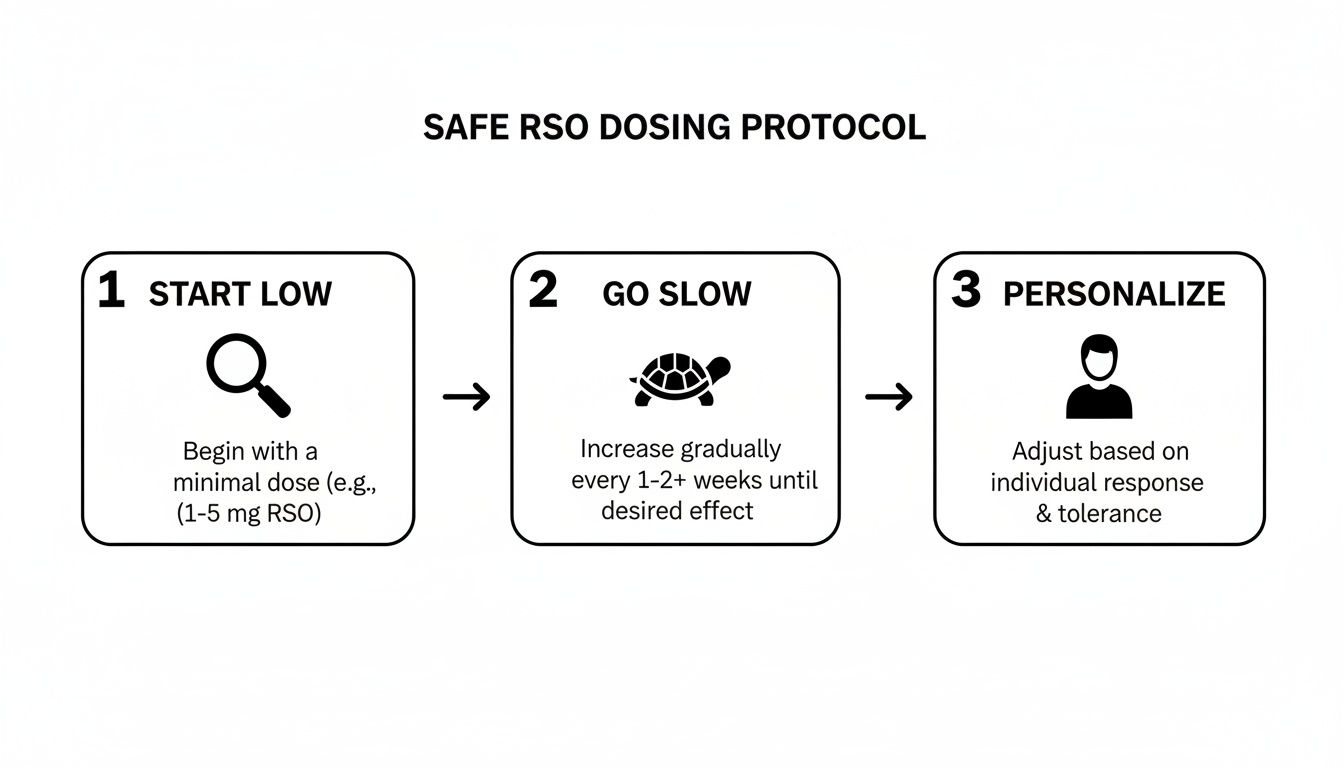
The real takeaway here is that your personal experience dictates the pace. You're blending a cautious start with a slow, observant approach to find what truly works for you.
For instance, you might start with a quarter-grain of rice three times a day. If after four days you feel fine, you could then bump it up to a half-grain of rice for the next four. If at any point the effects feel a bit too strong, just hold steady at your current dose for a few extra days until your body adjusts. There's no rush.
The most effective RSO oil dosing plan is the one you create for yourself. Rigid schedules don't account for individual differences in metabolism and sensitivity. Your comfort and therapeutic goals should always guide your decisions.
Managing the Experience and Staying Consistent
As you gradually ramp up your dose, you'll get to know how RSO affects you. It's a potent oil, so you might experience strong feelings of relaxation or drowsiness. This is completely normal and is exactly why many people take their largest dose in the evening.
Consistency is another huge piece of the puzzle. Taking your doses at regular intervals, say every eight hours, helps maintain a steady level of cannabinoids in your system. This makes for a much more predictable and supportive experience.
Here are a few practical tips for managing your oral dosing routine:
- Keep a Journal: Seriously, do this. Track your dose size, the time you take it, and how you feel. It will help you spot patterns and make smart adjustments.
- Stay Hydrated: Drinking plenty of water is always a good idea and can help if you feel any unwanted effects.
- Plan Ahead: If you have a busy day and need to be sharp, consider taking a smaller dose during the day and saving your larger dose for the evening.
What happens if you miss a dose? Don't sweat it, and definitely don't try to double up to compensate. Just take your next scheduled dose as planned and get back on track. The goal is steady, consistent progress, and one missed dose won't throw you off course.
Understanding the Dosing Protocol
A well-documented method provides a clear framework for this journey. The approach starts with a microdose: that tiny speck the size of a quarter rice grain, delivering about 3-5mg of THC. This is typically taken orally three times on the first day.
From there, users slowly increase the amount. By the second week, doses often double to half a grain (roughly 10mg THC) as you build tolerance without overwhelming psychoactive effects. For those with aggressive therapeutic goals, the full protocol can eventually escalate to one gram daily by day 90—usually split into three 1/3g doses.
For help with the math, using an RSO oil dosage calculator is a great way to estimate the cannabinoid content in each dose. It takes the guesswork out and helps you maintain precision as you adjust your intake.
Ultimately, this entire process puts you in the driver's seat of your wellness journey. By starting low, going slow, and tuning into your body's feedback, you can make informed decisions that align perfectly with your health goals.
Exploring Topical and Suppository Dosing Methods
While most people take RSO orally, that's far from the only way to use it. Alternative methods like topical applications and suppositories can offer unique, targeted benefits and a way to sidestep some of the oil’s more intense effects.
These options give you flexibility, letting you dial in your approach based on your specific health goals and comfort level. If you're looking for localized relief or trying to minimize the powerful psychoactive high that can come with oral doses, it’s worth exploring these other routes.
Applying RSO Directly to the Skin
Using RSO topically is about as straightforward as it gets. You’re simply applying the oil directly to a specific area of your body.
When used on the skin, the cannabinoids in RSO interact with local receptors but don't typically enter the bloodstream in large amounts. The upshot? You can get targeted effects right where you need them, without any psychoactive high.
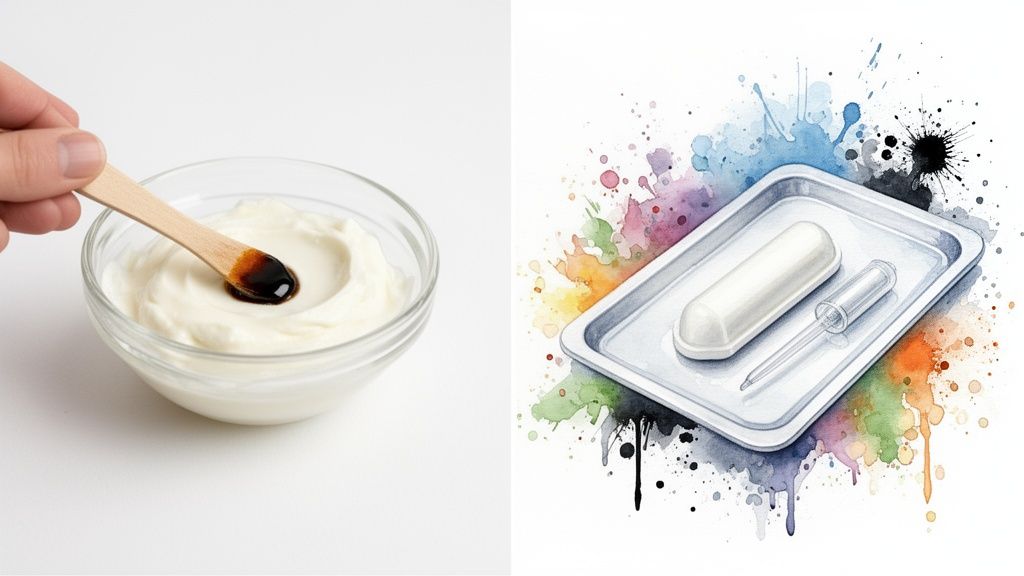
To use RSO topically, you’ll want to mix a small amount with a carrier cream or lotion. This simple step helps with absorption and makes the thick, sticky oil much easier to spread.
Here’s a practical way to do it:
- Pick a Carrier: A high-quality, unscented carrier like coconut oil, shea butter, or a basic skin cream works perfectly.
- Mix Your Blend: Start small. Mix a tiny amount of RSO—about the size of a grain of rice—into a tablespoon of your carrier. You can always adjust the ratio later as you see how your body responds.
- Apply and Observe: Gently massage the blend into the skin over the target area. A thin layer applied one to three times daily is a good starting point. Pay attention to how the area feels over the next few hours and days.
Remember, the story of RSO itself began with its topical use, which speaks volumes about its potential for this kind of localized application.
Understanding Suppository Use for Enhanced Absorption
Suppository dosing is a less common but incredibly effective method that comes with some serious advantages. When RSO is administered rectally, it’s absorbed through the intestinal walls and goes directly into your bloodstream.
This route cleverly bypasses what’s known as the liver's "first-pass metabolism," a process that breaks down many of the active compounds when you take RSO orally.
By sidestepping the liver, suppositories can deliver much higher bioavailability. This means more of the cannabinoids get into your system intact. For many people, it also means experiencing far less intense psychoactive effects compared to taking the same dose by mouth.
This makes suppositories a game-changer for anyone needing to use higher therapeutic doses without the overwhelming head high.
Making RSO suppositories at home is surprisingly manageable. You just need suppository molds and a carrier fat that stays solid at room temperature, like cocoa butter. The process usually involves gently melting the carrier, mixing in your pre-measured RSO dose, pouring it all into the molds, and letting them set in the fridge.
If you’re new to this, it can definitely seem a bit intimidating. Thankfully, there are great resources out there to walk you through it safely. Our in-depth RSO suppositories guide provides the clear, step-by-step instructions you need to get started with confidence. Choosing the right dosing strategy is all about finding what truly works for your body and your wellness goals.
Finding and Verifying High-Quality RSO
The success of your RSO protocol rests entirely on the quality of the oil you use. It’s that simple. A subpar or untested product won't just give you inconsistent results; it can completely derail your efforts before you even get started. To make sure your dosing is safe and effective, you need to know how to spot a pure, potent, and reliable oil.
Your single most important tool for this is the Certificate of Analysis (COA). Think of it as a report card for the RSO, issued by an independent, third-party lab. It gives you an unbiased look at exactly what's inside that syringe. Frankly, it's non-negotiable for anyone using RSO for therapeutic reasons.
Decoding the Certificate of Analysis
A COA might look a little intimidating at first glance, but it's pretty straightforward once you know what you’re looking for. It's your window into the product's safety and strength.
When you get a COA, you’re essentially checking three key areas:
- Potency and Cannabinoid Profile: This is where you find out how strong the oil is. Look for the THC and CBD percentages. Real, high-quality RSO should have a very high THC content, usually between 60-90%. The COA confirms the exact number, which is absolutely vital for calculating your doses accurately.
- Purity from Contaminants: The lab tests for nasty stuff you don't want. This includes pesticides, heavy metals, leftover solvents from the extraction, and microbial contaminants like mold. A clean report will show these as "Not Detected" (ND) or at levels far below the safety limit.
- Terpene Profile: This isn't always included, but it's a huge plus. Terpenes are the compounds that give cannabis its aroma and flavor, but they also play a big role in the oil's effects. A terpene report can give you clues about whether the oil will be more sedating or uplifting.
Transparency is a non-negotiable part of protecting your health. Always ensure you are reviewing a recent, comprehensive COA for any product you consider using.
Why Strain Type Matters for Dosing
Beyond the lab report, the cannabis strain used to make the oil makes a real difference. RSO is typically made from indica, sativa, or hybrid strains, and each one brings a different set of effects to the table.
- Indica-Based RSO: Generally known for its relaxing, sedating, and body-focused effects. This is why many people prefer indica-dominant oils for evening use or to help with rest and sleep.
- Sativa-Based RSO: Tends to produce more uplifting, energizing, and cerebral effects. This type is often a better fit for daytime use, especially for those who want to remain active and focused.
- Hybrid RSO: As the name suggests, this is a blend of both. The effects can lean one way or the other, giving you a more balanced experience depending on the specific genetics.
Knowing the strain helps you match the oil's effects to your personal needs and daily schedule. It’s a practical way to fine-tune your dosing plan. For example, if you find a particular oil makes you very drowsy, you’ll know to take your larger doses at night instead of in the middle of a workday.
The True Value of Authentic RSO
The intense concentration of RSO is what makes it so powerful and, surprisingly, so cost-effective. When you break it down, the cost-per-milligram of THC is often much lower than other cannabis products. A typical 1-gram syringe might cost between $60-$100 but can contain 600-900mg of THC. This often works out to less than $0.15 for a standard 10mg dose, which is significantly cheaper than most vape cartridges or edibles.
This incredible value, however, only comes from authentic, lab-verified RSO. To get a better handle on the market, our guide on RSO oil price factors breaks down what goes into the cost of a top-tier product. Ultimately, investing a little more in a verified oil from a trusted source ensures you're actually getting the therapeutic value you're paying for.
Navigating Side Effects and Safety
Figuring out your ideal RSO dose is one part of the equation; learning how to manage your body's response is the other. Because RSO is such a potent, high-THC concentrate, you can expect to feel some effects, especially as you start to increase your dose. Knowing what to expect makes the entire process smoother and more comfortable.
The most common things people report are drowsiness, dizziness, and a profound sense of relaxation. For many, especially those looking for better sleep, these are actually the intended benefits. The key is to plan for them.

Proactive Strategies for a Smooth Experience
A little preparation goes a long way in managing RSO's strong effects. You have full control over your dosing schedule, and a few simple tweaks can make a massive difference in your day-to-day experience.
One of the best strategies is timing your largest dose for the evening. When you're home for the night with no other obligations, you can let the oil’s sedative qualities work their magic and help you get a truly restful sleep.
Here are a few other practical tips that can help:
- Stay Hydrated. Sipping water throughout the day is a simple but effective way to help with any potential dizziness.
- Create a Comfort Zone. When you’re trying a new, higher dose for the first time, do it in a safe, familiar place where you can comfortably relax or lie down if you feel the need.
- Have a Snack. Taking your RSO with a small bite to eat—especially something with healthy fats like a spoonful of nut butter or a piece of avocado—can often help ease the effects and improve absorption.
Essential Safety Precautions
Your safety is paramount. The powerful nature of RSO means some activities are simply off-limits while you’re figuring out how your body responds.
Crucial Safety Guideline: Never drive or operate heavy machinery after taking RSO. The oil can significantly impair your coordination, reaction time, and judgment. This is non-negotiable for your safety and the safety of everyone around you.
This adjustment period doesn't last forever. Once you find a stable maintenance dose and become familiar with how it affects you, you'll have a much clearer picture of your capabilities. Until that point, always choose caution.
If you have any underlying health conditions or are on other medications, it's a good idea to chat with a healthcare professional who understands cannabis medicine before you start. They can offer advice tailored to your specific situation. For more information and support, websites like RSOhelp.com are an excellent resource for promoting health and wellness on your journey.
Your RSO Dosing Questions Answered
As you start working with RSO, you’re bound to have some questions pop up. It's completely normal. This section tackles some of the most common hurdles and curiosities, giving you clear, practical answers to help you move forward with confidence.
What Should I Do If I Take Too Much RSO?
First things first: don't panic. If you realize you've overdone it, the most important thing is to find a calm, comfortable space to relax. Put on some soothing music, sip some water, and just breathe. Remind yourself that the intense feelings are temporary and they will pass.
This happens to a lot of people, especially early on. It's just your body's way of telling you to ease up a bit. When it's time for your next dose, simply dial it back to the last amount that felt comfortable. From there, you can resume increasing your dose, just more gradually this time. The old "start low, go slow" mantra is truly your best friend for avoiding this kind of discomfort.
How Can I Accurately Measure Such a Small Dose?
Wrangling a tiny, precise dose from an RSO syringe can feel like a real challenge. A simple trick is to gently squeeze a small bead of oil onto a spoon or a piece of food. Many people find success using a toothpick to portion out a dab roughly the size of a quarter-grain of rice—it's a great visual guide.
Here's another great tip: dispense a thin line of RSO onto a small piece of parchment paper. Pop it in the freezer for about 10-15 minutes. Once the oil is hard, you can easily snap off tiny, consistent pieces for each dose. After a few tries, you'll get a feel for it and be able to eyeball the right amount with ease.
People often ask if you can smoke RSO. The short answer is, you shouldn't. It's not made for inhalation and can contain residual compounds that are harsh on your lungs. Oral, topical, or suppository methods are much safer and more effective.
Can This Dosing Protocol Work with CBD-Rich RSO?
Absolutely. The same "start low, go slow" principle works perfectly for RSO that's high in CBD. The main difference? You won't have to navigate the significant psychoactive effects of THC, which for many people, makes the process much more straightforward.
Instead of building a tolerance to THC, your focus is simply on finding the amount that best addresses your symptoms. You can start with a rice-grain-sized dose and increase it every few days, paying close attention to how you feel. The goal remains the same: find the lowest effective dose that brings you relief.
What Happens After the 90-Day Protocol?
The well-known 90-day protocol is really just a structured guide for reaching a therapeutic goal—it's not a finish line everyone has to cross. Once that initial period of building up the dose is complete, most people find a maintenance dose that works for them long-term.
This is a much smaller, personalized daily amount that helps sustain the benefits you've achieved. Your maintenance dose is completely unique to you. It's all about listening to your body and adjusting as needed to support your ongoing well-being.
Making informed health decisions is key. RickSimpsonOil.info is dedicated to providing patient-focused guidance and confidential consultations. We can help you learn more about using RSO safely and connect you with verified sources for high-quality, lab-tested products. Continue your research by visiting us at https://ricksimpsonoil.info.