
When you're trying to choose between full spectrum vs broad spectrum extracts, it boils down to one key ingredient: THC.
A full spectrum extract gives you everything the cannabis plant has to offer for your health, and that includes small, legally compliant amounts of THC. On the other hand, broad spectrum extracts provide a rich mix of cannabinoids and terpenes, but the THC has been intentionally removed.
That single difference is what defines the "entourage effect" you'll experience and is the most important detail to consider for your health goals.
Unpacking Full Spectrum and Broad Spectrum Extracts
As you look into cannabis extracts, you’ll constantly see the terms "full spectrum" and "broad spectrum." Getting a handle on what these mean is crucial for picking a product that actually fits your needs. This isn't just marketing speak; the label directly tells you what's inside the bottle and how it's likely to support your health.
A full spectrum extract is what we call a "whole-plant" product. It's designed to keep the entire profile of compounds from the original plant intact.
This includes:
- Cannabinoids: You get more than just CBD. Think CBG, CBN, and, most importantly, trace amounts of THC (kept under the legal limit of 0.3%).
- Terpenes: These are the aromatic compounds that give the plant its unique smell and taste, but they also come with their own therapeutic benefits.
- Flavonoids: These phytonutrients play a role in the plant's overall synergistic power.
The entire philosophy here is to preserve the plant's natural chemical teamwork for maximum health benefit.
The Broad Spectrum Alternative
Now, a broad spectrum extract actually starts its life as a full spectrum oil. It then goes through an extra processing step where the THC molecules are specifically targeted and removed.
The objective is to hold onto all the other beneficial cannabinoids and terpenes while getting rid of the THC completely. This makes it the go-to option for anyone who wants the health benefits of multiple plant compounds but can't or doesn't want to consume any THC.
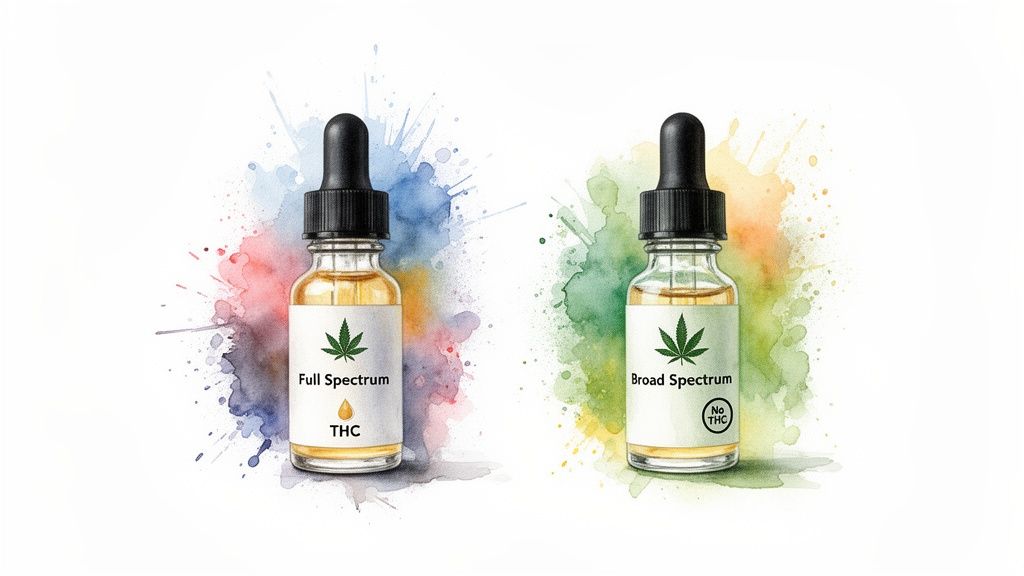
Key Takeaway: The choice between full spectrum and broad spectrum hinges entirely on THC. Full spectrum keeps it in for maximum synergy. Broad spectrum takes it out for THC-free support.
Here’s a simple breakdown of the core differences:
| Feature | Full Spectrum Extract | Broad Spectrum Extract |
|---|---|---|
| THC Content | Contains trace amounts (usually <0.3%) | Zero THC (0.0%) |
| Cannabinoid Profile | The complete, original range of cannabinoids | A wide range of cannabinoids, minus THC |
| Terpenes & Flavonoids | The full, natural profile from the plant | A rich profile of original terpenes remains |
| Entourage Effect | The complete, synergistic effect is possible | Offers a powerful, but modified, entourage effect |
Really understanding what's full spectrum THC and its function is key, since it’s the main thing separating these two types of extracts. The right choice for you will always depend on your unique needs, health goals, and how comfortable you are with consuming all of the plant's natural compounds.
Comparing Cannabinoid and Terpene Profiles
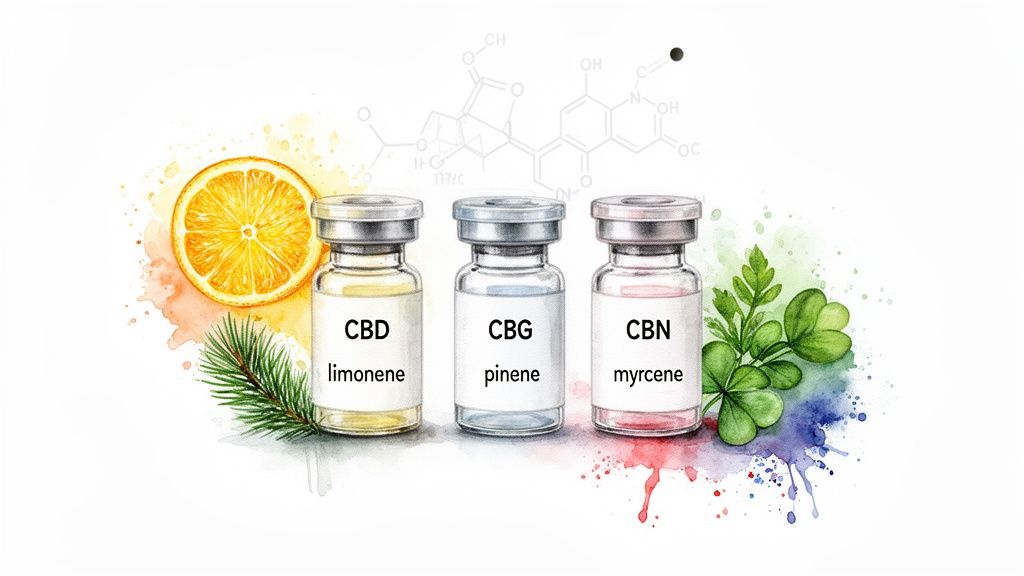
When we talk about full spectrum vs broad spectrum extracts, the conversation usually starts—and sometimes ends—with THC. But that’s just scratching the surface. To really grasp what these extracts can do for your health, you have to look at their molecular fingerprint: the complex mix of cannabinoids and aromatic terpenes that dictates their effects.
Each extract type has its own distinct chemical makeup, which directly shapes its therapeutic potential, aroma, and overall performance. These subtle differences are exactly what help you match a product to your specific wellness goals.
The Complete Profile of Full Spectrum Extracts
The whole philosophy behind full spectrum extracts is to keep the plant's natural profile as intact as possible. Think of it as bottling the plant's true essence for your health. This means you get a synergistic blend of compounds that work together, creating that powerful team dynamic we call the entourage effect.
This profile isn't just about CBD. It includes a whole cast of other important cannabinoids, each playing a unique part:
- Cannabigerol (CBG): Often called the "mother cannabinoid," CBG is a precursor to other compounds and is being studied for its own unique supportive properties.
- Cannabinol (CBN): This cannabinoid forms as THC degrades over time and is most often associated with calming and relaxing qualities.
- Tetrahydrocannabinol (THC): Even in trace amounts (typically under 0.3%), THC acts as a crucial catalyst, amplifying the effects of the other cannabinoids.
And it doesn't stop there. Full spectrum oil is also rich in terpenes—the aromatic molecules that give the plant its distinctive scent. Compounds like myrcene, limonene, and caryophyllene do more than just provide flavor; they actively contribute to the extract’s overall therapeutic impact.
The global cannabis extract market is on a trajectory to hit an incredible USD 48.08 billion by 2032, growing at a strong 16.61% CAGR. It’s no surprise that full spectrum products dominate this market; their comprehensive profile is behind their wide range of applications for health. While broad spectrum offers a THC-free version of the entourage effect, some studies suggest that full spectrum’s complete blend can lead to 25-40% improved outcomes for certain health goals.
The Refined Profile of Broad Spectrum Extracts
Broad spectrum extracts are the go-to for anyone who wants robust cannabinoid support without any THC. The process actually starts with a full spectrum oil. From there, the THC is very carefully and selectively removed.
The goal is to preserve as many of the other beneficial compounds as possible. A high-quality broad spectrum product will still deliver a diverse mix of cannabinoids like CBD, CBG, and CBN, along with a rich profile of terpenes.
However, the reality is that the process of stripping out the THC can sometimes impact the delicate ratios of other compounds. So while broad spectrum definitely provides a powerful entourage effect, it's a modified version compared to what you get from its full spectrum counterpart.
Key Insight: The main difference comes down to synergy. Full spectrum gives you the entire plant orchestra with THC acting as the conductor. Broad spectrum has most of the same musicians, but it operates without that specific conductor, resulting in a different—though still powerful—performance.
To give you a clearer picture, here’s a quick breakdown of how these two extracts stack up against each other.
Full Spectrum vs Broad Spectrum At-A-Glance Comparison
This table provides a side-by-side comparison of the key attributes of full spectrum and broad spectrum extracts, focusing on their composition and the implications for users.
| Attribute | Full Spectrum Extract | Broad Spectrum Extract |
|---|---|---|
| THC Content | Contains trace amounts, <0.3% | 0.0% THC (non-detectable) |
| Cannabinoid Profile | Contains CBD, CBG, CBN, and others | Contains CBD, CBG, CBN, and others |
| Terpene Profile | Complete, natural terpene profile | Rich terpene profile, may be slightly altered |
| Entourage Effect | The most complete and synergistic effect | Strong effect, but modified without THC |
| Employment Considerations | May trigger a positive result for THC | Very low risk of a positive result |
| Best For | Users seeking maximum therapeutic benefit | Users who are sensitive to THC or have employment testing concerns |
This table highlights the core trade-offs: full spectrum offers the complete plant profile for maximum synergy, while broad spectrum provides a potent THC-free alternative for health.
How These Differences Translate to Your Experience
These nuanced differences in cannabinoid and terpene profiles lead to very different user experiences. For some people, that tiny bit of THC in a full spectrum extract can unlock a level of effectiveness that a broad spectrum product just can't match.
On the other hand, for someone who is sensitive to THC or simply needs to avoid it for personal or professional reasons, a well-made broad spectrum product is a fantastic option. It still delivers the collaborative benefits of multiple cannabinoids and terpenes, just without the THC.
Ultimately, the right choice comes down to understanding these chemical distinctions and figuring out how they align with your body and your needs. Getting familiar with how these oils are produced can also deepen your appreciation for the final product. To learn more, take a look at our detailed guide on how to make cannabinoid oil.
Understanding The Entourage Effect
The entire discussion around full spectrum vs. broad spectrum really hinges on one core idea: the entourage effect. This isn't just marketing jargon; it's a scientific theory that suggests the dozens of compounds in the cannabis plant work in synergy. Simply put, they are more effective for your health together than they are apart.
When cannabinoids, terpenes, and flavonoids interact, they create a combined effect that can be much more impactful than any single compound could be on its own.
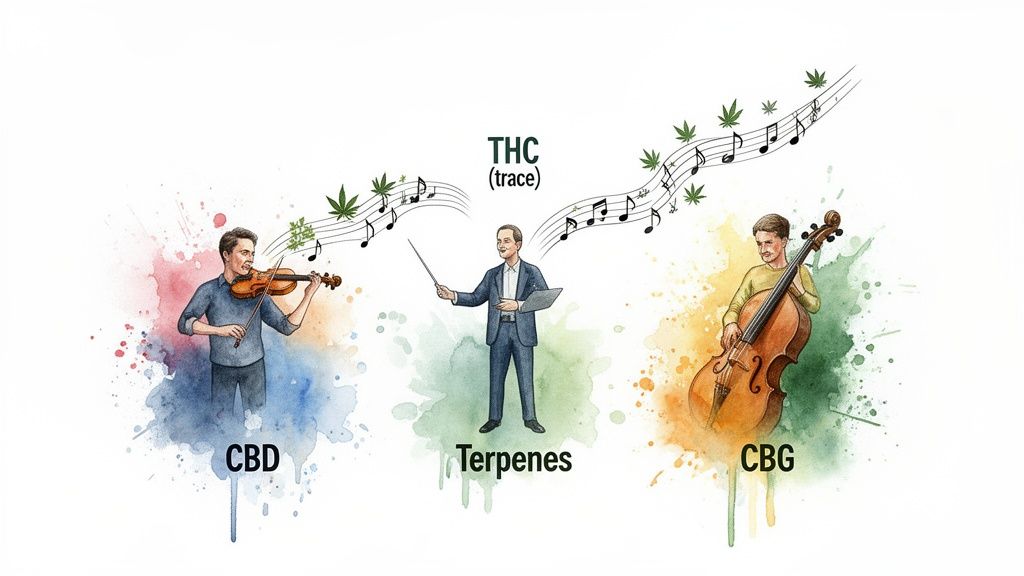
A great way to think about it is like a symphony orchestra. A solo violin can be beautiful, but the sound it produces is nothing compared to the rich, layered experience of the entire orchestra playing in concert. The strings, woodwinds, brass, and percussion all working together create something far more powerful. In the same way, the plant's compounds create a more profound therapeutic result when they work in harmony.
Full Spectrum: The Complete Orchestra
Following our orchestra analogy, a full spectrum extract is the whole ensemble. You have every musician and every instrument present. The cannabinoids like CBD, CBG, and CBN are the musicians, each playing their part, while the terpenes provide the aromatic notes and unique character of the performance.
Most importantly, the small amount of THC found in full spectrum products acts like the orchestra's conductor. It might not be the loudest instrument, but it's essential for guiding the entire ensemble, ensuring all the parts work together to create the most impactful therapeutic "music." This complete synergy is why so many people seeking significant health benefits choose full spectrum.
The market data really backs this up. Full spectrum CBD oil has long dominated the market, mainly because users report that its complete profile enhances therapeutic outcomes by an estimated 20-35%. In a global market valued at USD 22.8 billion in 2023, the preference for full spectrum products points to a strong consumer belief in whole-plant synergy for health. If you're interested, you can explore more about these market trends and what they mean for wellness.
Broad Spectrum: A Powerful Performance, Just Without The Conductor
Now, let's imagine the orchestra without its conductor. A broad spectrum extract still has nearly every musician on stage. You still get the rich interplay of cannabinoids and the aromatic depth from the terpenes. The performance is still complex, powerful, and very effective for a lot of people's health.
The one key difference? The conductor—THC—has been removed. The orchestra can still play a beautiful piece, but the final composition feels a bit different without that guiding hand. This is what we call a "modified" entourage effect. It delivers a potent, collaborative experience for anyone who needs to, or simply prefers to, avoid THC.
Crucial Insight: The entourage effect isn't an all-or-nothing deal. Full spectrum offers the complete, THC-guided synergy, while broad spectrum provides a powerful, modified version. The right choice comes down to your personal health goals and circumstances.
For anyone with a sensitivity to THC, or for those facing workplace testing or other restrictions, broad spectrum is an excellent choice. It allows you to get the cooperative benefits of multiple plant compounds without any THC. This makes it a practical and powerful tool for your health journey, giving you access to an entourage effect that's right for your specific needs. The decision isn't about which one is inherently "better," but about which version of the therapeutic symphony is right for you.
Finding the Right Extract for Your Wellness Goals
Choosing between a full spectrum and a broad spectrum extract isn't about which one is "better." It’s about figuring out which one is better for you. The right choice hinges entirely on your personal wellness goals, your body's unique chemistry, and your life circumstances. Think of it less like a simple pro-and-con list and more like a practical, personal decision based on real-world factors.
The big draw for full spectrum extract is its potential for maximum therapeutic impact. Because it keeps every single compound from the original plant—including a tiny amount of THC—it’s capable of delivering the complete entourage effect. This makes it a compelling option for anyone looking for the most robust, comprehensive health support.
However, that small amount of THC, even if it's under the typical 0.3% limit, is a critical piece of the puzzle. For many, it’s the key that unlocks the full synergistic potential of the extract. For others, it's a non-starter due to personal sensitivity, professional rules, or other personal concerns.
When Full Spectrum is the Preferred Choice
For those who want to get the most powerful health support the plant has to offer, full spectrum is usually the place to start. The synergy created by all the cannabinoids and terpenes working together, with that trace amount of THC guiding the process, is something many people find more effective for significant wellness challenges.
Here are a few situations where full spectrum might be the perfect fit:
- Seeking Maximum Synergy: You’re looking for the most potent entourage effect possible to support your body's balance and resilience.
- Complex Wellness Needs: You're dealing with multifaceted health goals and feel that the complete plant profile offers the best chance for comprehensive support.
- No THC Sensitivity: You've used cannabis products before and know for a fact that you don't have negative reactions to small amounts of THC.
In these scenarios, the goal is to harness the plant's entire chemical orchestra for your health. The trace THC acts like the conductor, making sure all the other compounds play their part in harmony. This whole-plant philosophy is the very foundation of what’s known as full extract cannabis oil, where preserving the plant’s natural integrity is the top priority.
Key Consideration: The decision to use a full spectrum product really comes down to prioritizing the complete entourage effect for your health. If your lifestyle and body chemistry are fine with trace THC, this extract gives you the most authentic representation of the plant's natural profile.
When Broad Spectrum Offers the Ideal Solution
On the other hand, a broad spectrum extract is a fantastic alternative for anyone who must avoid THC. It still provides a rich profile of cannabinoids and terpenes, delivering a strong (though slightly modified) entourage effect without any THC exposure. This makes it the go-to for a whole range of people with specific sensitivities or restrictions.
Broad spectrum is often the clear winner in these cases:
- Athletes and Professionals: Anyone subject to routine employment testing—first responders, pilots, competitive athletes—where even trace THC could jeopardize a career.
- THC Sensitivity: Individuals who are just very sensitive to THC and feel unwanted effects from even the tiniest amounts.
- Personal Choice: People who simply choose to avoid THC for their own reasons.
Take a firefighter, for example. They can't afford to have a positive employment screening. Research has shown that consistent, daily use of full spectrum products can cause THC to build up in the body over time, potentially triggering a positive result. For this person, a high-quality broad spectrum product, verified by lab tests to contain 0.0% THC, provides both effective wellness support and complete peace of mind.
A Practical Comparison for Your Lifestyle
To really see how these extracts fit into different lives, let's look at two hypothetical people.
User A: The Retiree Focused on Holistic Wellness
This person is retired, isn’t subject to employment testing, and their main goal is to get the maximum therapeutic benefit from a plant-based product for their health. For User A, a full spectrum extract is the logical choice. It offers the complete entourage effect without any professional downsides.
User B: The Commercial Truck Driver
This individual is on the road constantly and is subject to strict employment screenings. A positive result would be catastrophic for their livelihood. While they want the health benefits of a cannabinoid-rich product, THC is absolutely off the table. For User B, a broad spectrum extract is the only safe and responsible option.
Ultimately, the full spectrum vs. broad spectrum debate is deeply personal. It requires you to be honest about your health goals, listen to your body, and consider the practical realities of your day-to-day life.
How to Choose The Right Extract for You
Deciding between a full spectrum and a broad spectrum extract isn't about which one is "better." It's about which one is better for you. The right choice really boils down to your personal health goals, your body's unique chemistry, and the practical realities of your life.
To make a confident decision, we need to move past the simple definitions and ask some honest questions. Once you’re clear on what you need, the answer of which extract to choose for your health usually becomes pretty obvious.
Key Questions to Guide Your Decision
Let's break it down. To figure out whether full or broad spectrum is your best bet, you just need to think through three key areas.
1. What am I trying to achieve for my health?
If your main goal is to get the most powerful, complete effect from the plant, then full spectrum is usually the place to start. Its all-inclusive profile, including those trace amounts of THC, is built to deliver the strongest possible entourage effect for your health.
2. How sensitive am I to THC?
Some people are just really sensitive to THC and can feel off even from the tiny amounts in full spectrum products. If that's you, or if you're just starting out and aren't sure, a broad spectrum extract gives you all the other good stuff without that one variable.
3. Do I have to avoid THC for work or other reasons?
This is the big one for many people. If you're an athlete, a pilot, a commercial driver, or anyone who has to take employment tests, then avoiding THC is non-negotiable. For you, broad spectrum is the only safe choice. It’s important to remember that even small amounts of THC from daily full spectrum use can build up over time.
This flowchart lays out the thought process perfectly, showing how THC preference is the main fork in the road.
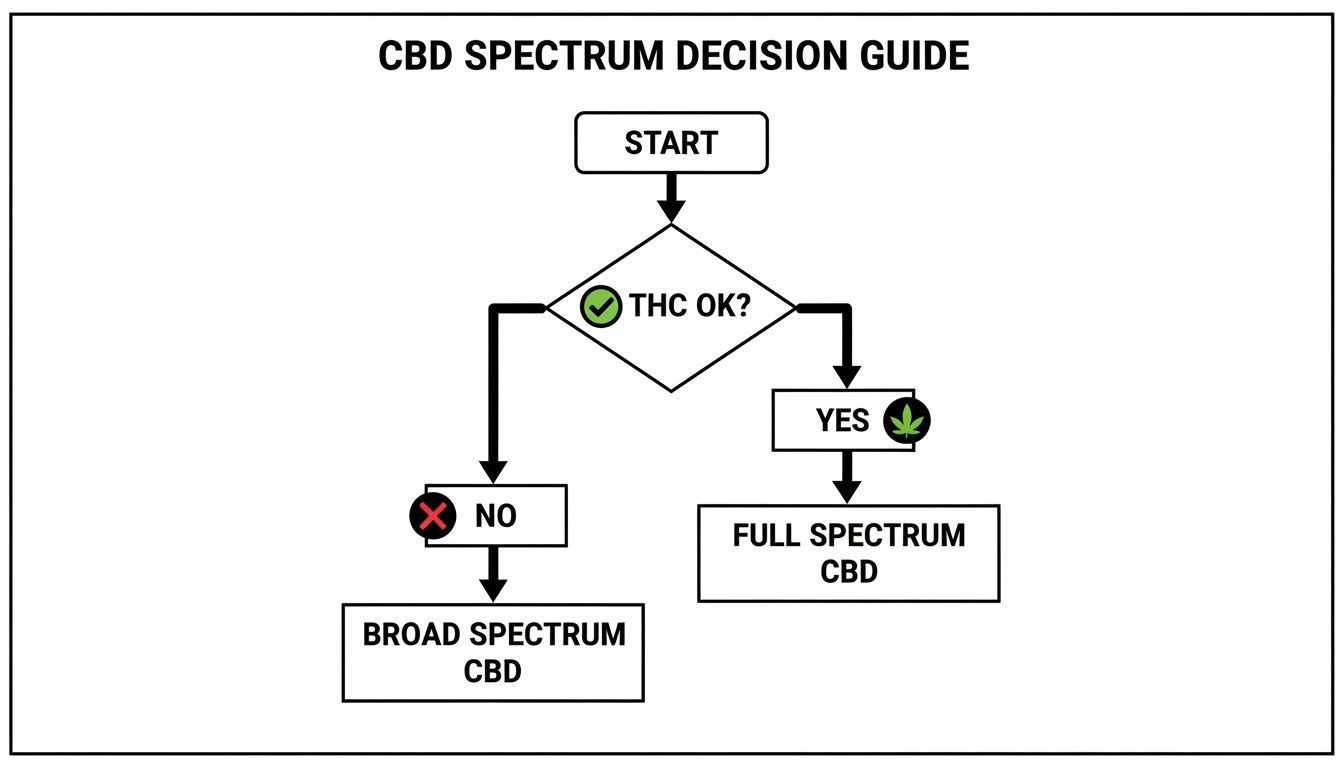
As you can see, your comfort level with THC is the primary deciding factor that splits the two paths.
Making an Informed Choice
After thinking through those questions, the path forward should be much clearer. A full spectrum extract is a fantastic option for anyone looking for maximum therapeutic potential who doesn't have any professional or personal reasons to avoid THC. The market reflects this, with the global full-spectrum oil market valued at USD 2.01 billion and expected to reach USD 3.64 billion by 2032. The cannabinoids segment alone made up 47.9% of market revenue, largely because people are learning how these synergistic compounds can help with pain, anxiety, and sleep. You can read more about the growing full spectrum market to see just how popular it's become.
On the other hand, a broad spectrum extract is the perfect solution if you want comprehensive cannabinoid support but need to be 100% THC-free. You still get a powerful, modified version of the entourage effect, giving you both effective health support and total peace of mind.
Final Takeaway: The whole full spectrum vs broad spectrum debate is settled by looking inward. Your body, your health goals, and your lifestyle are the only guides that matter.
No matter which extract you lean toward, getting advice from people who know their stuff can give you clarity and confidence. At RSOhelp.com, our goal is to provide education and support to help you find the product that truly fits your health journey.
Frequently Asked Questions
When you're trying to decide between full spectrum and broad spectrum extracts, a lot of practical questions come up. Let's tackle some of the most common ones to help you make a confident, well-informed choice for your health.
Can Full Spectrum Products Cause a Failed Employment Test?
Yes, they absolutely can. Full spectrum extracts, by definition, contain a small amount of THC—typically, it has to be under 0.3%. While that’s not enough to cause intoxication, consistent daily use can allow THC to build up in your body's fat cells over time.
This slow accumulation could eventually cross the detection threshold on a sensitive employment screening. If your job requires routine testing—think first responders, pilots, or commercial drivers—you need to be extremely cautious with full spectrum products. It’s a risk many people in those roles simply can’t take.
Is Broad Spectrum a Safer Choice for Employment Testing?
For anyone worried about employment tests, broad spectrum is a much safer bet. These extracts go through an extra step specifically to remove all detectable THC, bringing the concentration down to 0.0%. This drastically reduces your risk of a positive test result.
But a word of caution: industry standards can vary. It's critical to only buy from reputable brands that provide a recent Certificate of Analysis (COA) for their products. That lab report is your proof that the THC content is truly "non-detectable," giving you genuine peace of mind for your health and career.
Which Spectrum Is Better for Pain Support?
That really depends on what's causing the pain. THC is known for its interaction with CB1 receptors, which are densely packed in your central nervous system and play a big role in how we perceive pain. For pain that isn't primarily driven by inflammation, the trace amount of THC in a full spectrum product might offer more complete support because you're getting the full, unadulterated entourage effect for your health.
On the other hand, if inflammation is the root cause of your pain, a high-quality broad spectrum product can be incredibly effective. Its powerful mix of cannabinoids like CBD and CBG, combined with anti-inflammatory terpenes, can deliver powerful relief without any THC at all.
Situational Guidance: For aches and discomfort tied to inflammation, broad spectrum is a potent option. For other types of pain, the synergy in a full spectrum product might provide a deeper sense of relief—as long as THC is an option for you.
Will I Feel High from a Full Spectrum Product?
No, you shouldn’t feel any intoxicating effects from a compliant full spectrum product. The THC level is capped at 0.3%, which is far too low to produce the "high" people associate with other cannabis products.
The tiny bit of THC isn't there for psychoactivity. Its job is to act as a catalyst, amplifying the therapeutic benefits of all the other cannabinoids and terpenes for your health. Think of it as a key player in the entourage effect, not as an intoxicating ingredient.
Is One Spectrum Inherently More Natural Than the Other?
You could argue that a full spectrum extract is the most "natural" of the two. The entire goal of its production is to capture and preserve the plant's complete profile of cannabinoids, terpenes, and other compounds, just as they grew. It’s the essence of a "whole-plant" philosophy for health.
A broad spectrum extract is still incredibly rich in these plant compounds, but it does undergo an additional refinement process to strip out the THC. That makes it slightly more processed, but it's a necessary trade-off to create a THC-free final product.
How Do I Know Which One Is Right for Me?
The best choice for you really comes down to a few personal factors. Ask yourself these three questions:
- Your Wellness Goals: Are you looking for the most powerful, synergistic health effect possible with no restrictions? If so, full spectrum is usually the best place to start.
- Your Body's Sensitivity: Do you know you're sensitive to even tiny amounts of THC, or are you just starting out and prefer to be cautious? Broad spectrum delivers solid health benefits without that variable.
- Your Lifestyle: Are you subject to employment testing for your job or any other reason? If the answer is yes, broad spectrum is your only safe and responsible choice.
Be honest with yourself about these three areas, and the right path will become much clearer. It's less about which extract is "better" overall and more about which one is the perfect fit for your specific health needs and circumstances.
Figuring this all out can feel overwhelming, but you don't have to do it on your own. For personalized guidance and educational resources to support you on your wellness journey, RSOhelp.com is here to help. You can explore our in-depth articles or reach out for a consultation at https://ricksimpsonoil.info.