Figuring out your perfect edible dose is a highly personal process, but there’s one piece of advice that holds true for everyone: start with a very small amount. For anyone new to edibles, that means beginning with just 2.5 to 5 mg of THC. Seasoned users might start at 10 mg or more, but the golden rule is always the same—start low and go slow.
Finding Your Ideal Edible THC Dosage in Milligrams
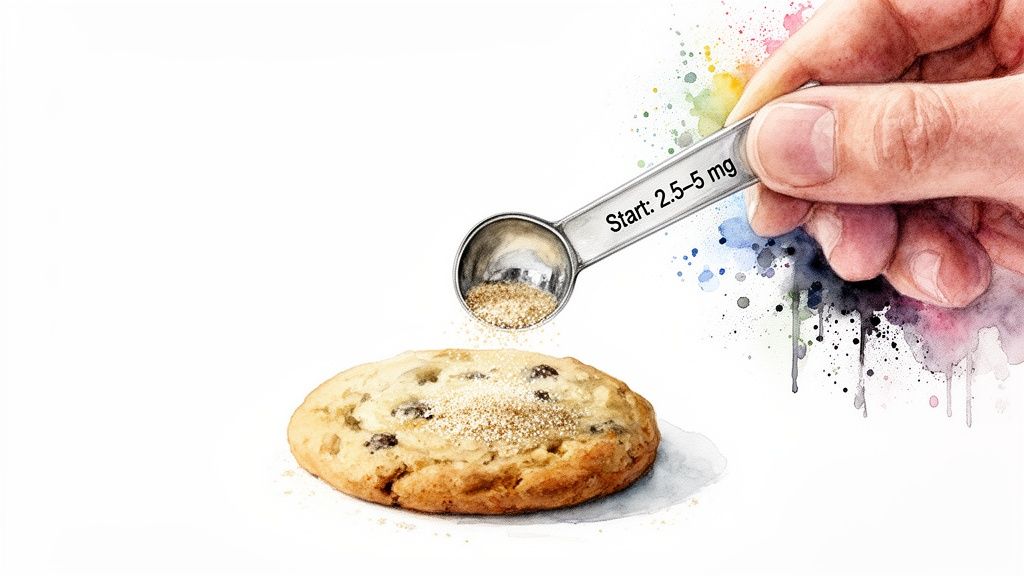
Think of dosing THC edibles like adding a powerful spice to a dish for the first time. You wouldn't just dump in a tablespoon of cayenne pepper without tasting it; you’d start with a tiny pinch, see how it feels, and then decide if you need more. This careful, step-by-step approach is the safest and most reliable way to find the amount that works best for you.
There's simply no "one-size-fits-all" dose. Your experience is shaped by a unique mix of personal factors that determine how your body processes THC.
Key Factors Influencing Your Dose
Getting a handle on these variables is the first step toward having a predictable and enjoyable experience. They explain why two people can take the exact same 5 mg edible and feel completely different effects.
Here’s what you need to consider:
- Individual Metabolism: How fast your body breaks down compounds plays a huge role in how quickly you'll feel the effects and how strong they'll be.
- Body Chemistry: We all have a unique endocannabinoid system—the internal network of receptors that THC interacts with. This system dictates your natural sensitivity.
- Previous Experience and Tolerance: If you’ve used cannabis before, your body has likely built up some tolerance. A complete beginner will be far more sensitive.
This same principle of careful, personalized dosing is central to therapeutic protocols, like those designed for Rick Simpson Oil (RSO). Just like with recreational edibles, finding the right RSO dose is a gradual process focused on health and individual response. At RSOhelp.com, we are committed to this same health-first, informed approach.
To help you visualize where you might fit in, here is a quick-reference table outlining the typical dosage tiers and what people generally report at each level.
Standard THC Dosing Tiers for Edibles
| Dosage Range (mg THC) | User Level | Commonly Reported Effects |
|---|---|---|
| 1 – 2.5 mg | Microdose / First-Timers | Mild relief of pain, stress, and anxiety; improved focus and creativity. Most users do not feel intoxicated. |
| 2.5 – 10 mg | Beginner / Occasional User | Stronger symptom relief; feelings of euphoria; may impair coordination and alter perception. This is the standard starting range. |
| 10 – 25 mg | Experienced User | Strong euphoric effects; significant impairment in coordination and perception. Recommended for those with high tolerance. |
| 25 – 50 mg | High Tolerance / Medical | Very strong psychoactive effects. Likely to impair coordination and perception significantly. |
| 50 mg + | Expert / Medical | Reserved for experienced, high-tolerance consumers or specific medical patients. Very high likelihood of adverse effects. |
This table serves as a general guideline. Your own experience will always be the most important factor in determining the right dose for your needs.
The Importance of Starting Small
The delayed onset of edibles is probably the single biggest reason to start with a low dose and be patient. Unlike smoking or vaping, it can take anywhere from 30 minutes to over two hours to feel the full effects. This time lag often tricks new users into thinking their first dose didn't work, causing them to take more too soon—a classic mistake.
The "start low and go slow" philosophy isn't just a friendly suggestion—it's the cornerstone of responsible edible consumption. It keeps you in control and helps you avoid the overwhelming discomfort of taking too much.
Recent studies are helping to formalize these long-standing recommendations. For instance, some research points to 5 mg as a safe and effective starting point for novices, while more experienced users often settle in the 20-50 mg range. This scientific backing reinforces why people are turning to edibles for precision. In fact, a 2024 survey revealed that 60% of people now prefer edibles specifically because they allow for consistent, predictable dosing. You can learn more about cannabis consumption trends and research.
Our goal here is to give you the knowledge to make safe, informed choices. As you work through this guide, you’ll learn exactly how to apply these concepts to find your own perfect edible THC dosage.
Why Edibles Feel Different Than Other Methods
If you've ever tried an edible, you know the experience can be worlds apart from smoking or vaping. It’s a common question: why does the same plant produce such a profoundly different effect when you eat it? The secret isn’t in the edible itself, but in the incredible journey THC takes through your body. Getting a handle on this process is the key to mastering your dosage and having a good experience every time.
Think of it this way: inhaling cannabis is like a direct flight. The effects land quickly, usually within minutes, but the visit is relatively short. Eating an edible is more like a long road trip. It takes a while to get to your destination, but once you're there, you're settled in for a much longer stay.
First-Pass Metabolism: The Liver's Big Role
When you eat an edible, the THC doesn't just hit your bloodstream. It has to navigate your digestive system first, with a crucial pit stop at the liver. This journey is known as first-pass metabolism, and it’s the game-changer for how edibles feel.
Your liver acts like a chemical conversion plant. It takes the standard THC you consumed (Delta-9-THC) and transforms a good portion of it into a completely different molecule: 11-hydroxy-THC. This new compound is a powerhouse. It's significantly more potent than its predecessor and crosses the blood-brain barrier much more easily, resulting in a deeper, more immersive experience. This is exactly why a small 5 mg dose in an edible can feel much stronger than a larger amount inhaled.
The conversion to 11-hydroxy-THC is the single biggest reason for the unique power of edibles. It explains not just the heightened intensity but also why the effects can last for six to eight hours, or sometimes even longer.
This metabolic detour also explains the delayed onset. It can take a while for your body to digest the edible and for your liver to work its magic. Patience is non-negotiable here. If you're curious about the specifics of timing, our guide on how long it takes for gummies to kick in dives deeper into what you can expect.
Understanding Bioavailability
Another piece of the puzzle is bioavailability. It's a technical-sounding word for a simple idea: how much of a substance actually makes it into your bloodstream to produce an effect. With edibles, not all the THC you eat gets to join the party.
Because of that long trip through the digestive system and the liver's first-pass effect, the bioavailability of oral THC is surprisingly low—somewhere between 6% and 20%. So, if you eat a 10 mg gummy, your body might only absorb and use between 0.6 mg and 2 mg of THC.
This wide range is why starting low and going slow isn't just a suggestion; it's the golden rule. Your unique metabolism, and even what you ate for lunch, can dramatically change how much THC you absorb.
This concept is especially important for anyone using cannabis therapeutically, like with RSO. The limited bioavailability of edibles means precise, careful dosing is essential for a predictable outcome. Unfortunately, the recreational market can sometimes struggle with accuracy. It is important to start with a known, low dose and stay in control of your own experience.
How to Calculate Your Dosage from Product Labels
Figuring out the label on a cannabis product is your first step toward a good, predictable experience. While many edibles thankfully list the THC content per piece, making your own at home with flower or concentrates means you’ll need to do a little math. It’s a crucial skill for getting your dose right.
Think of it like converting a recipe from cups to grams—once you get the hang of it, the process of turning a THC percentage into a specific milligram amount becomes second nature.
The Basic Conversion Formula
It all starts with the THC percentage of whatever you're working with, whether it's cannabis flower or a concentrate. From there, you can figure out the total milligrams of THC you have to play with.
The formula itself is pretty simple:
Total Weight in Milligrams × THC Percentage = Total THC in Milligrams
Remember, one gram is 1,000 milligrams. So, to calculate the total THC in a single gram of cannabis, you just multiply 1,000 by its THC percentage.
Let's use a real-world example. Say you have one gram of flower that's tested at 20% THC:
- First, convert the flower's weight to milligrams: 1 gram = 1,000 mg.
- Next, turn the percentage into a decimal: 20% = 0.20.
- Finally, multiply them: 1,000 mg × 0.20 = 200 mg of THC.
That one gram of flower contains a total of 200 milligrams of THC. This is the total potential dose you have to work with for your homemade edibles.
This simple conversion is the secret to making safe homemade edibles. It connects the raw ingredient to your final product, helping you avoid that all-too-common mistake of accidental overconsumption.
Applying the Math to a Recipe
Once you know the total THC in your infused butter or oil, the next step is dividing that number by the number of servings your recipe makes. This tells you the dose in each serving.
Let's continue with our example. You’ve infused that 200 mg of THC into a full cup of butter. But your brownie recipe only calls for half a cup, and it makes 10 brownies.
Here’s how you'd break it down:
- Total THC Used: You used half the butter, so you used half the THC: 200 mg / 2 = 100 mg of THC.
- Dose Per Serving: Now, divide the total THC you used by the number of brownies: 100 mg / 10 brownies = 10 mg of THC per brownie.
The math is straightforward, but it demands careful attention. You have to be precise with your measurements and mix everything thoroughly to make sure the THC is distributed evenly. Nobody wants one super-potent brownie and nine duds.
This visual shows what happens after you eat an edible—it goes from your stomach to your liver to be metabolized, and then you feel the effects.
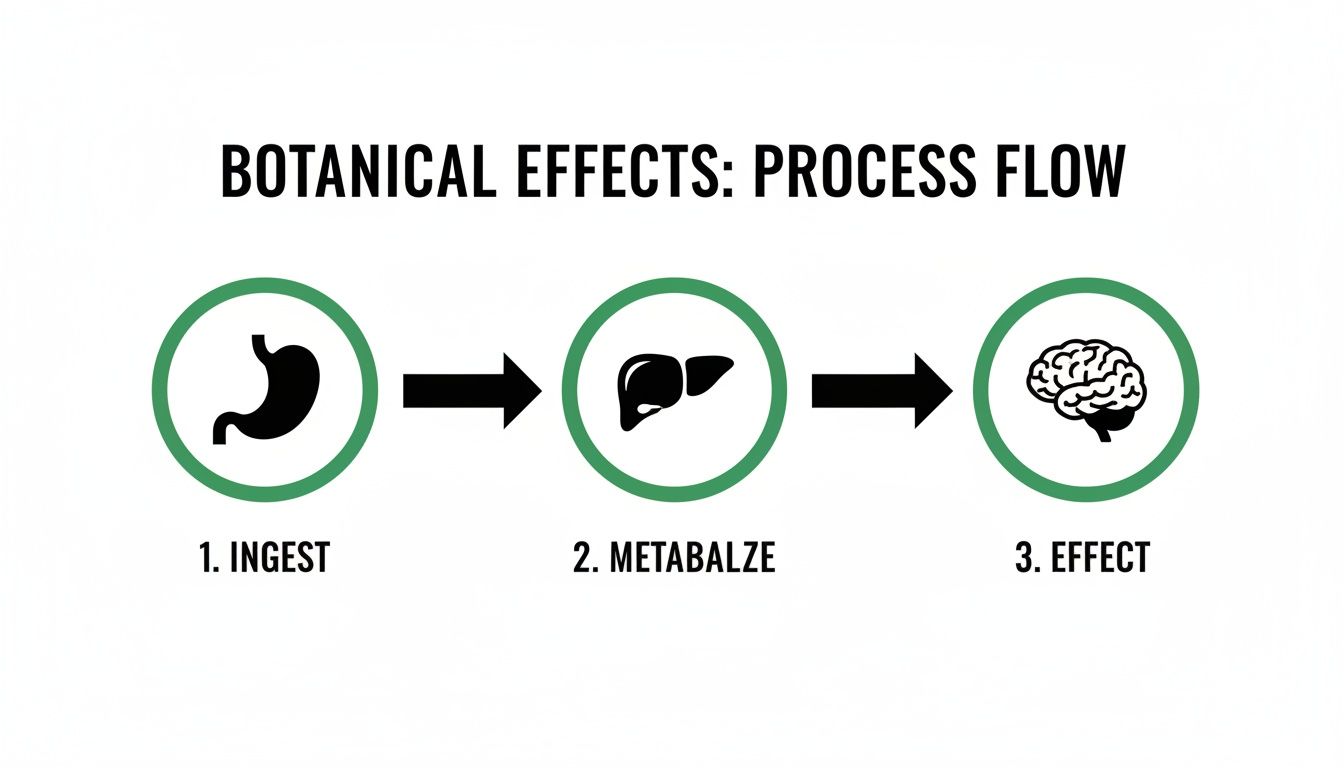
This process is exactly why getting the initial dose right is so important. When your liver metabolizes THC, it can intensify the effects, so starting with an accurate calculation is key.
A Simpler Way to Calculate Your Dose
Doing the math yourself is empowering, but let's be honest, it can also leave room for error. This is especially true if you’re tweaking recipes or working with products of different potencies. For a more reliable and less stressful way to dial in your dose, a dedicated tool is a game-changer.
To make sure your dose is always on point, we highly recommend using the tools we’ve built. You can find the best edible dosage calculator right here on our site. It's designed to give you accurate results in just a few clicks and is an incredible resource for anyone serious about their wellness routine.
Finding Your Minimum Effective Dose
Figuring out your ideal edible dosage isn't a race; it's a personal journey of discovery. The most important rule—a mantra you’ll hear from seasoned experts and healthcare professionals alike—is to “start low and go slow.” This careful, methodical approach is hands-down the safest way to find your minimum effective dose, which is simply the smallest amount that gives you the desired benefits without any unwanted side effects.
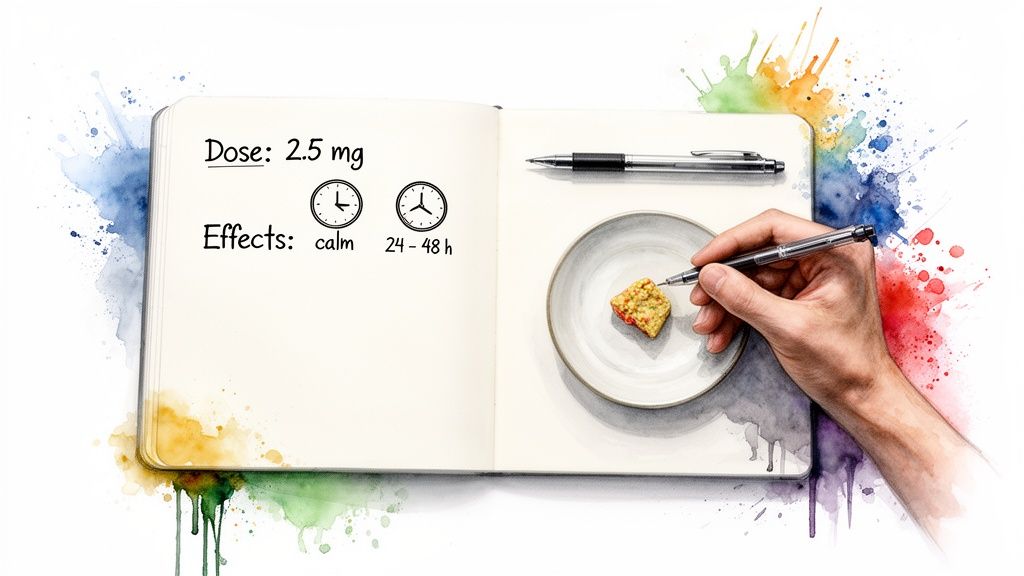
Following this principle keeps you in the driver's seat of your experience. It helps you sidestep the classic mistake of taking too much, too soon, which is the fastest way to feel uncomfortable. Think of it like tuning a guitar—you make small, precise adjustments to get the sound just right. The same logic applies to finding what works for your body.
A Titration Plan for Beginners
In the world of dosing, titration is just a technical term for gradually adjusting your intake to find what works best. For THC edibles, this means starting with a very small dose and slowly increasing it over several days or even weeks until you hit that sweet spot. A structured plan like this takes the guesswork out of the equation and puts your well-being first.
The most important ingredient here is patience. After you take a dose, you absolutely must wait at least 24 to 48 hours before considering an increase. This gives your body plenty of time to fully process the THC and lets you accurately judge the effects without any overlap from a previous dose.
To get you started, here is a sample plan designed to help new users find their footing over the first couple of weeks.
Sample 2-Week Titration Plan for New Users
This table provides a structured, step-by-step guide for safely exploring your tolerance and finding your minimum effective dose. Remember to listen to your body and adjust as needed.
| Day(s) | Suggested Dose (mg THC) | Instructions & Notes |
|---|---|---|
| 1-3 | 2.5 mg | Take your first dose and wait a full 24-48 hours. Jot down any effects you feel, no matter how subtle. |
| 4-6 | 2.5 mg | If the first dose felt fine but wasn't quite effective, stick with it for a few more days to confirm how your body responds. |
| 7-9 | 5 mg | If you still feel no effects after several days, it's time to increase the dose slightly to 5 mg. Again, wait to assess. |
| 10-12 | 5 mg | Continue with the 5 mg dose, paying close attention to its impact on your symptoms, mood, and overall sense of well-being. |
| 13-14 | 7.5 mg | If 5 mg still isn't enough, you can try another small increase. Many people find their perfect dose between 5 mg and 10 mg. |
This slow and steady process isn't just for edibles; it mirrors the careful protocols used for therapeutic concentrates like RSO, showing a real commitment to responsible, health-first education. As you approach the 10 mg mark, our guide on 10 mg edible effects can offer more insight into what you might expect.
The Power of Keeping a Journal
Your best friend in this process will be a simple notebook. Writing down your experience gives you cold, hard data to work with, helping you spot patterns and make smart decisions about your dosage. Memory can be a fickle thing, but what you write down is a reliable record.
Each time you take a dose, try to track these key points:
- The Dose: The exact milligram amount you took.
- The Time: What time of day did you consume it?
- The Effects: Be specific. Describe what you felt, both good and bad. Did it ease your pain? Did you feel a little anxious?
- Duration: How long did the feelings last?
- Other Factors: What did you eat that day? What was your mood like beforehand? These things can influence the outcome.
Keeping a detailed log empowers you to take ownership of your wellness journey. It transforms dosing from a guessing game into a methodical process of discovery, leading you directly to your unique minimum effective dose.
This personalized, data-driven approach is becoming the gold standard as the edibles market continues to boom. Projections show the industry growing significantly, a surge driven by consumer demand for reliable and predictable products. In fact, data reveals that many adults regularly enjoy edibles, and a large percentage choose them specifically for their dosing accuracy. It’s this push for precision that reinforces why the "start low, go slow" philosophy remains the best practice for both safety and success.
Edibles vs. RSO: What’s the Difference?
When you start exploring cannabis you can eat, you'll quickly run into two main players: standard edibles and Rick Simpson Oil (RSO). Both are taken orally and the same basic rules of THC dosage apply, but they’re fundamentally different products built for very different reasons. Getting this distinction right is key, especially if you have specific health goals in mind.
Think of it this way: a standard edible is like taking a vitamin C supplement. It delivers one specific thing—in this case, THC—and does it well. RSO, on the other hand, is like eating the whole orange. You get the vitamin C, but you also get the fiber, flavonoids, and all the other nutrients that work together.
Isolate vs. Full-Spectrum: The Core Distinction
The biggest difference comes down to what’s actually inside. The gummies, chocolates, and brownies you see most often are made with THC distillate. This is a super-refined cannabis extract where the THC molecule has been stripped away from almost everything else. It’s clean, predictable, and easy to dose, which makes it perfect for large-scale production.
RSO is the complete opposite. It's a full-spectrum extract, which means it keeps the entire profile of cannabinoids, terpenes, and other compounds from the original plant.
A full-spectrum product like RSO isn’t just THC. It’s a complex mix that includes other cannabinoids (like CBD, CBG, and CBN) and the aromatic terpenes that give cannabis its unique scent and flavor. This rich blend is what many believe creates a more holistic, well-rounded effect.
This natural teamwork between all the plant’s compounds is called the entourage effect. Many people seeking therapeutic benefits believe this synergy is the secret to unlocking the plant's full potential, as the different elements seem to amplify each other’s strengths. It’s a big reason why RSO is so often chosen by those with serious health goals.
Dosing and Why You're Using It
Because their makeup is so different, how you start with each one is also miles apart. For a standard edible made with distillate, a beginner dose is usually somewhere between 2.5 mg and 5 mg of THC. The goal is typically a mild psychoactive experience, relaxation, or light pain relief.
RSO is a different ballgame. It’s a thick, potent oil, so dosing is much more methodical. A starting dose is tiny—often just half the size of a grain of rice. From there, the amount is increased slowly and deliberately over weeks or months in a process called titration. The point isn’t just to "feel something," but to let your body gradually adjust to the full symphony of plant compounds.
Here’s how their typical uses stack up:
- Standard Edibles: Great for recreational fun, unwinding after a long day, managing minor aches, or helping with sleep. They provide a simple, measured dose of THC.
- RSO: Primarily used by people looking for comprehensive support for significant health challenges. The focus is squarely on using the whole plant for wellness.
At RSOhelp.com, our focus is on educating people about this full-spectrum approach. We want to give you the knowledge to make choices that truly fit your wellness journey. The careful, patient dosing that RSO requires is all about putting your health and safety first.
How They Feel Different
Since one is pure THC and the other is a complex plant extract, the experience can feel quite different. People who use distillate edibles often describe the feeling as a straightforward, heady high driven entirely by THC. It can be very direct.
The effects of RSO, however, are often described as more “full-bodied” or layered. The other cannabinoids and terpenes can smooth out the sharp edges of the THC, leading to a more balanced and less overwhelming experience that many therapeutic users prefer. Thanks to the entourage effect, the benefits can feel broader and more profound than just the psychoactivity of THC, contributing to a deeper sense of overall well-being.
Ultimately, whether you reach for a standard edible or RSO depends entirely on what you’re trying to achieve.
Common Dosing Mistakes and How to Avoid Them
Figuring out your ideal edible dose takes a bit of patience. It’s a journey of listening to your body, and even seasoned users can get it wrong sometimes. Knowing the common pitfalls ahead of time is the best way to make sure your experience is a good one.
The biggest mistake, by far, is impatience. You take an edible, wait a little while, feel nothing, and decide to take another. This almost always leads to an overwhelming experience because the delayed effects of the first dose will eventually kick in, right on top of the second.
Taking a Second Dose Too Soon
Here’s the golden rule for edibles: wait at least two full hours before you even think about taking more. Seriously. It can take anywhere from 30 minutes to over two hours to feel the full effects as the edible works its way through your digestive system and liver.
Rushing it is the number one reason people have a bad time with edibles. Giving your body plenty of time to respond isn't just a friendly tip—it's essential for staying in control and having a comfortable experience.
This "wait and see" approach is the foundation of responsible cannabis use, especially for anyone following a therapeutic plan. Here at RSOhelp.com, we always stress a careful, measured approach to help you meet your wellness goals safely.
Other Key Safety Practices
Besides getting the timing right, a few other habits are critical for keeping yourself and others safe.
-
Secure Your Stash: Always keep your products locked away where children and pets can't possibly get to them. Use clearly labeled, child-proof containers to prevent any accidents.
-
Know the Signs of Overdoing It: If you take too much, you might feel anxious, paranoid, dizzy, or notice a rapid heart rate. If this happens, find a calm, quiet place, sip some water, and remind yourself that the feeling is temporary and it will pass.
-
Be Aware of Interactions: THC can interact with alcohol and certain prescription medications. It's always a good idea to talk with your doctor or pharmacist about potential interactions before adding edibles to your routine.
By sidestepping these common mistakes, you're setting yourself up for a much more predictable and positive experience. Respecting how potent and unique edibles are is the key to using them successfully.
Your Top THC Edible Questions Answered
Stepping into the world of edibles can feel a bit like learning a new language. You have questions, and that's a good thing—it means you're being thoughtful and safe. Let’s clear up some of the most common uncertainties people have when trying to nail down their ideal edible THC dosage.
How Long Do I Need to Wait Before Taking More?
Patience is everything with edibles. You absolutely must wait at least two hours after your first dose before even thinking about taking a second one. It can take a surprisingly long time—anywhere from 30 minutes to a full two hours—for your body to process the THC and for you to feel the full effects.
Jumping the gun and taking another dose too soon is the classic mistake that leads to an overwhelming and unpleasant experience. To be extra cautious, especially if you're just starting out or trying a new product, give it a full 24 hours. This will give you a crystal-clear picture of how that specific dose really affects you.
Can Edibles Give Me the Same Benefits as RSO?
That's a great question, and the answer gets into the heart of how these products are made. While you can use both for wellness, they often work very differently. Most edibles you find in stores are made with THC distillate, which is pure, isolated THC with everything else stripped away.
RSO, on the other hand, is a full-spectrum extract. Think of it as the whole plant in a concentrated form. It contains a rich mix of cannabinoids and terpenes that create what experts call the "entourage effect"—where all the components work together, potentially enhancing the therapeutic outcome. Many people pursuing serious wellness goals prefer RSO for this very reason. It really comes down to what you’re trying to achieve.
The difference between an isolate (like distillate) and a full-spectrum extract is one of the most important concepts to grasp in cannabis wellness. Knowing this helps you choose a product that truly matches your goals.
What Should I Do If I Accidentally Take Too Much?
First things first: don't panic. Remind yourself that the feeling is temporary and will pass. The best thing you can do is find a calm, comfortable spot where you feel safe to just lie down and rest.
Sip on some water to stay hydrated and maybe have a small, simple snack if you feel up to it. Interestingly, many people report that taking some CBD can help dial down the anxiety that a high dose of THC can sometimes cause. Putting on some soothing music or a favorite comfort movie can also be a great way to ride it out until you feel back to normal.
Does My Body Weight Impact My Edible Dose?
Yes, your body weight and metabolism are definitely part of the equation, but they aren't the whole story. There’s no magic formula that can perfectly predict your ideal edible THC dosage based on weight alone.
Factors like your personal tolerance (how often you use cannabis), your diet, and your individual body chemistry are just as critical. This is why the golden rule is to "start low and go slow." It’s a tried-and-true method that empowers you to find the right dose for your unique body, plain and simple.
At RSOhelp.com, our mission is to provide health-focused education you can trust. To explore this topic further and access our helpful resources, please visit our main site at https://ricksimpsonoil.info.