Yes, THC oil isn’t immortal. Over time, its cannabinoids break down, especially when exposed to light, heat, or oxygen. Discovering an old RSO tincture tucked away in a drawer can raise big questions about its strength and safety.
RSOhelp.com brings you science-backed insights and hands-on tips for every drop—trusted health guidance to keep your oils effective, secure, and aligned with your wellness goals.
Quick Overview Of THC Oil Shelf Life
Before diving deeper, let’s map out why THC oil changes over time. You’ll see how THC converts to CBN, why carrier oils go rancid, and which factors speed up or slow down the process.
By the end of this guide, you’ll understand:
- Chemical Breakdown: From oxidation to potency loss
- Environmental Influences: Light, heat, oxygen, moisture
- Carrier Oil Impact: Which bases hold up best for health and stability
- Spoilage Signals: Visual, aroma, and taste clues
- Handling Tips: Storage tricks for RSO and FECO
- Testing Methods: COAs, lab reports, simple home checks
- Next Steps: Safe disposal or creative repurposing
Summary Of THC Oil Shelf Life
Here’s how unopened and opened bottles hold up under ideal and less-than-ideal conditions.
| Condition | Typical Shelf Life | Key Considerations |
|---|---|---|
| Unopened Optimal | 1–3 years | Keep cool, dark, and airtight |
| Unopened Poor | 6–12 months | Avoid light exposure and high temperatures |
| Opened Optimal | 6–12 months | Limit air contact and reseal tightly |
| Opened Poor | 3–6 months | Frequent oxygen exposure accelerates loss |
This snapshot helps you plan storage and know when it’s time to refresh your oils for consistent effects and safe use.
Discovering Old RSO
Picture this: you pull out a bottle coated in dust, wondering if it still packs the same punch. That curiosity is the first step in making smart choices about old tinctures and safeguarding your health.
How RSOhelp.com Guides You
At RSOhelp.com, every tip is rooted in real-world tests and lab data. You’ll find step-by-step visuals, clear explanations, and health-focused recommendations—so you can protect potency rather than gamble with guesswork.
Preview Of Deep Dive
Next up, we’ll unpack the molecular shifts behind THC’s decline. You’ll learn why some carrier oils resist spoilage, how heat and light expedite decay, and which DIY tests can flag a weak batch.
Why Expiration Dates Matter
Regulators often assign a one-year shelf life based on roughly a 10% potency drop. Beyond that window, effects can diminish, and safety margins narrow. Recognizing expiration keeps your oil reliable, therapeutic, and aligned with wellness best practices.
Understanding Key THC Oil Concepts
THC oil is essentially a blend of cannabis compounds suspended in a carrier oil, creating a smooth, potent extract you can dose with precision and peace of mind.
Think of cannabinoids as messengers and the carrier oil—often MCT or hemp seed—as their trusty vehicle. Without that oily chassis, those messengers scatter, lose strength or even spoil.
Oxidation works a bit like slicing an apple: expose it to air and it turns brown. When THC meets oxygen, it slowly converts into CBN and other byproducts, nudging potency downward over time.
- Messenger Analogy: Cannabinoids riding in an “oily car”
- Molecule Shift: THC → CBN alters the experience
- Rancidity Risk: Carrier oils, like nuts, can go off if left unchecked
Key Chemistry Components
Potency doesn’t vanish overnight. Under stable conditions, THC degrades at a predictable pace. You might notice milder effects as those molecules break apart.
Carriers also play a role. A fully saturated oil resists oxidation better, while unsaturated fats can accelerate the breakdown.
Studies in regulated markets confirm measurable losses. In Nevada, tests showed about a 10% drop in THC content over 12 months, prompting the Marijuana Enforcement Division to cap shelf life at one year—a rule that aligns with pharmaceutical standards.
Learn more in the full Nevada shelf-life bulletin.
Regulators often adopt a one-year limit to ensure therapeutic value and safety remains consistent.
Why Shelf Life Matters
Most full-spectrum, unopened oils keep close to label potency for up to three years if stored correctly. In contrast, simple tinctures may show signs of oxidative rancidity within six to eighteen months.
Effective storage makes all the difference. Cool, dark, airtight conditions slow down chemical changes, while minimizing headspace air preserves potency.
- Choose amber or opaque containers
- Avoid temperature swings and direct heat
- Seal tightly after every use
For a deeper dive into extraction techniques and stability, check out our guide on full extract cannabis oil.
Understanding these basics lays the groundwork for smart storage and reliable testing. In the next section, we’ll explore the specific factors that shorten or extend THC oil’s usable life.
RSOhelp.com offers detailed, health-focused guidance every step of the way. Remember, healthy handling starts with solid chemistry knowledge—analogies and real-world examples make those storage tips stick. Stay tuned for practical tests and troubleshooting.
Factors Affecting THC Oil Shelf Life
THC oil longevity isn’t magic—it’s science. A handful of variables determine whether your tincture stays vibrant or fades into insignificance. Light, heat, oxygen, moisture, carrier choice, extraction quality, and even microbes all play starring roles.
Keeping these factors in check can stretch your oil’s usefulness by months—or even years.
Light And Heat Influence
Sunlight is like kryptonite for cannabinoids. Exposing a clear bottle to direct rays kick-starts photodegradation, slashing potency in mere weeks.
Heat works just as insidiously. For instance, oil stored at 86°F can lose around 5% of its strength each month. Contrast that with roughly 1% monthly at a cooler 70°F, and the difference is eye-opening.
- Incandescent and infrared bulbs mimic the effects of high temperatures.
- Aim to keep your stash below 25°C (77°F) to dramatically slow cannabinoid breakdown.
Oxygen And Moisture Effects
Every time you crack open the seal, you invite oxygen to convert THC into less active byproducts like CBN. Early on, opened bottles can show a 10–15% drop in potency within the first few months.
Moisture is a double threat: it accelerates hydrolysis and creates a haven for microbes in the oil. Stashing your bottle next to a steamy sink or shower is a recipe for trouble.
- Use airtight containers to minimize air contact.
- Transfer oil into smaller vials as levels drop to reduce headspace.
- Slip a desiccant pack into the storage area to keep humidity at bay.
Key Insight
Every seal break introduces oxygen that accelerates THC-to-CBN conversion.
Studies suggest a 10–16% potency reduction after one year under typical conditions. At 21°C (70°F), you’re looking at about 1% loss each month—but as much as 5% per month at 30°C (86°F). Opened bottles fare worse, with additional 10–15% drops after each unsealing and further quarterly declines.
Explore more of these storage impacts in this industry analysis: Read more about storage impacts
Carrier Oil Type Comparison
Not all carriers are created equal. Saturation level and natural antioxidants influence how quickly an oil turns rancid.
| Carrier Oil | Saturation Level | Oxidation Rate | Estimated Shelf Life |
|---|---|---|---|
| MCT Oil | High | Low | 12–18 months |
| Olive Oil | Medium | Medium | 6–12 months |
| Hemp Seed Oil | Low | High | 3–6 months |
Extraction And Microbial Safety
The cleaner the extraction, the longer your oil lasts. Leftover solvents or water can fuel microbial growth, turning your high-potency oil into a petri dish.
Laboratory-grade methods and thorough filtration strip out unwanted moisture and contaminants. That leaves your oil pure, safe, and built to endure.
At home, you can:
- Mark the date you open each bottle.
- Store oil in amber or opaque containers.
- Keep it away from ovens, pipes, and other heat sources.
Practical Storage Tips
A few simple routines can extend your oil’s active life span.
- Stash oil in an amber dropper bottle, out of sunlight.
- Maintain a steady temperature between 16°C–25°C (60°F–77°F).
- Transfer leftover oil into smaller vials to limit air exposure.
- Label each container with its open date.
- Tuck silica gel packs nearby to control moisture.
Pro Tip
Transferring oil to smaller containers can cut oxidation by up to 30% in the first three months.
Real-World Example
Picture an RSO jar left next to a shower vent for three months. Users reported a musty smell and around a 20% drop in potency.
That same jar, stored in a dark drawer, retained almost full strength—proving that where you keep your oil matters.
Infographic Overview
Below is a concept map showing how oil, cannabinoids, oxidation, and carrier interact.
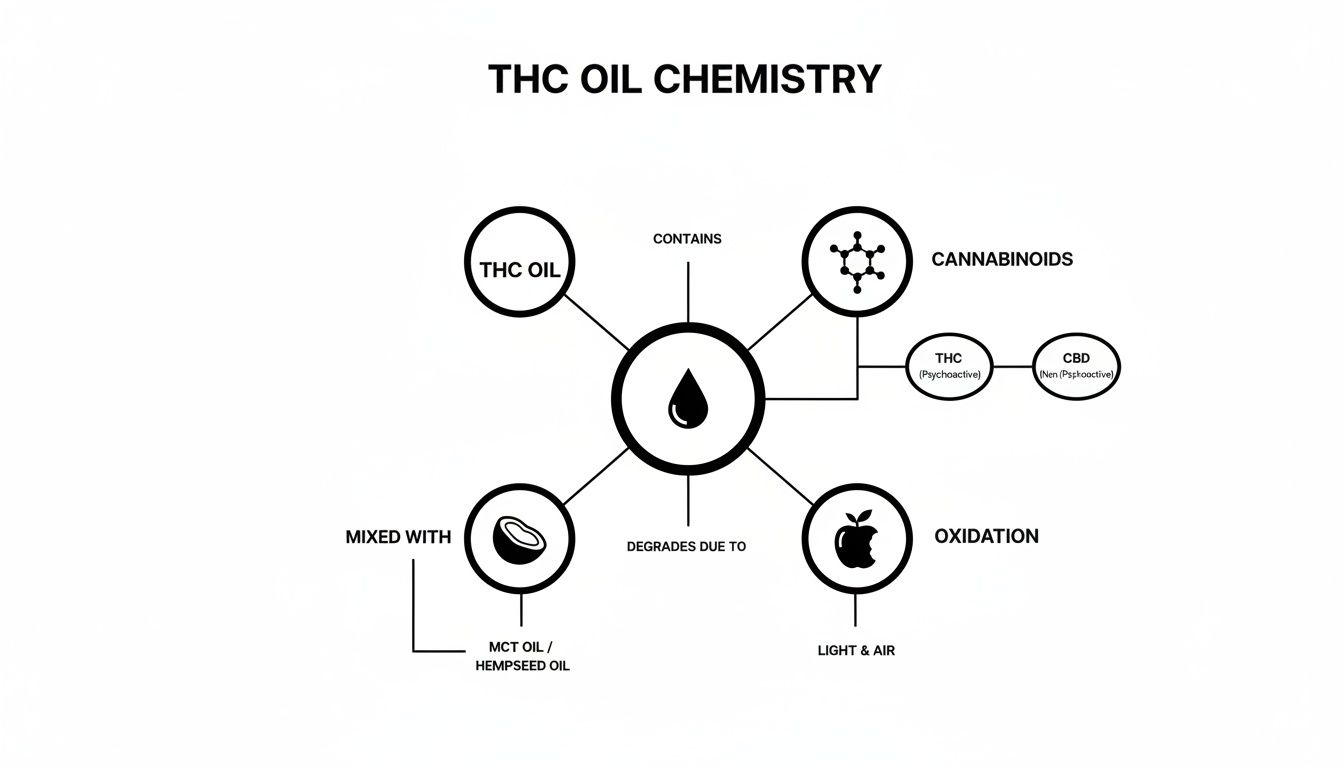
This graphic underlines the fact that oxidation rate and carrier type are the primary drivers of THC oil stability.
By controlling temperature, blocking light, limiting oxygen, and choosing a robust carrier, you hold the keys to preserving both potency and flavor in your RSO or FECO.
For more in-depth storage strategies and health-focused tips, visit RSOhelp.com.
Signs THC Oil Has Expired
Spotting spoiled THC oil not only keeps you safe but also guarantees the effects you expect. A few simple sensory tests can help you dodge weird flavors and wasted product.
One afternoon, Casey dropped some oil onto a spoon. When a burnt, grassy aroma filled the air, she knew her tincture had passed its prime.
Here’s a quick at-home check to spot expired oil:
- Color Shift: Hold the bottle up to light. Fresh oil shines clear gold; old oil turns amber or brown.
- Aroma Test: Open the dropper and inhale gently. A rancid, earthy or grassy smell points to oxidation or carrier breakdown.
- Texture Inspection: Place one drop on a clean white ceramic spoon. Separation, pooling or thick globs mean degradation.
- Taste Check: Sample cautiously. Any off-flavor that strays from citrus or mint suggests it’s time to replace.
- Shake Test: Give it a good shake. Persistent cloudiness or particles that don’t dissolve signal further spoilage.
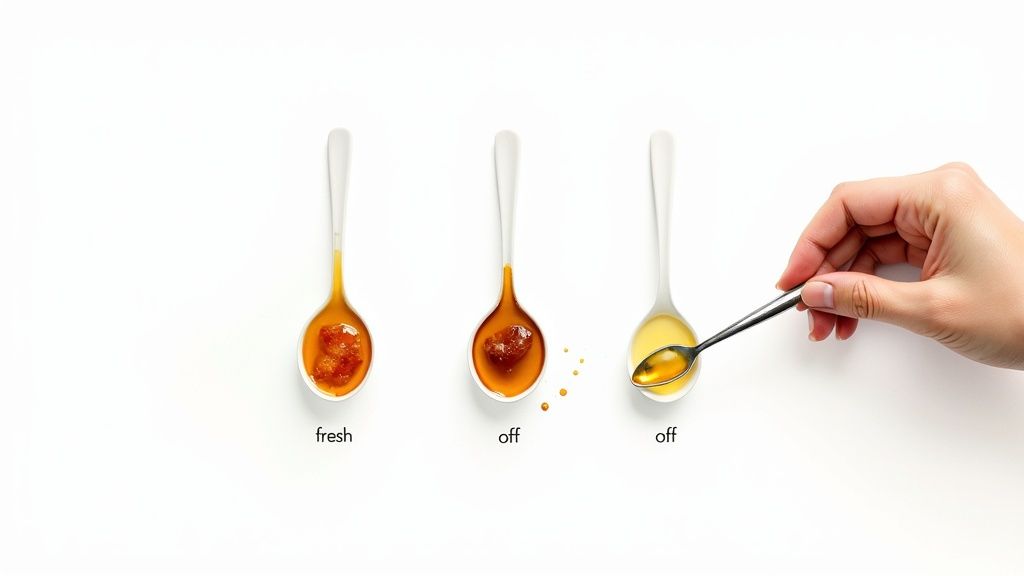
Visual Cues To Watch
Color often gives you the first hint that THC oil is past its prime. Sunlight and heat can trigger photodegradation, turning clear gold oil into murky brown.
Next, look at the texture. If you spot layers of separation or gritty sediment, the carrier fats have likely gone rancid.
“If oil loses its smooth consistency or shows particles, it’s safest to discard it,” says a specialist at RSOhelp.com.
| Sign | Fresh Oil | Expired Oil |
|---|---|---|
| Color | Clear gold | Dark amber or brown |
| Aroma | Earthy or citrus | Rancid or grassy |
| Texture | Smooth and uniform | Thick, separated, cloudy |
Smell And Taste Check
Your nose and palate often catch spoilage before any calendar date does. Rancid notes come from oxidized fatty acids and broken-down terpenes.
A sharp, bitter taste is your red flag. Even if cannabinoids remain, a bad flavor can ruin the experience.
When To Dispose Of Oil
1. You notice mold or fuzzy spots on the glass or dropper.
2. A harsh, rancid odor lingers after a quick air-out.
3. Oil separates into thick layers that won’t recombine when shaken.
Trust Your Senses Safely
Always perform these checks in a well-ventilated area, using a clean spoon or dropper tip. Never share tasting tools to avoid cross-contamination.
If you’re still unsure, RSOhelp.com recommends lab testing or comparing against a verified fresh sample. Regularly discarding suspect oil protects against digestive upset and keeps your routine consistent.
Next Safe Steps
- Consult RSOhelp.com support for side-by-side comparison photos of fresh versus degraded oil.
- Store questionable oil separately, then follow local disposal guidelines.
- Consider arranging a Certificate of Analysis (COA) to verify potency and purity.
These actions help you stay informed and safeguard each batch of THC oil.
Case Study Quick Test
Maria noticed her tincture looked cloudy and pulled up reference images on RSOhelp.com. The contrast was striking—and saved her from a bitter experience.
“Matching your oil to a reference image is like comparing fruit to know when it’s ripe—instant clarity,” notes an RSOhelp.com expert.
Trust your senses and act swiftly for consistently safe doses.
THC Oil Storage Best Practices
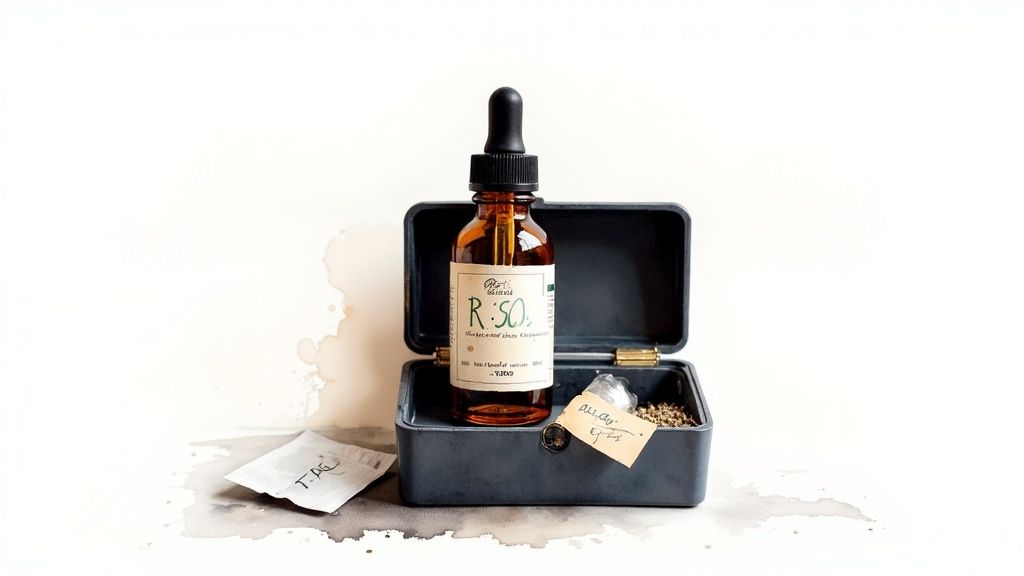
Storing THC oil the right way not only preserves its potency but also keeps it free from contaminants—supporting both safety and wellness. The optimal range is 16°C to 25°C with humidity under 50%.
Storage Checklist
To get started, follow this quick checklist:
- Keep containers tucked away in a dark cabinet to block out light.
- Choose amber or opaque glass to shield your oil from UV rays.
- Seal lids firmly and reduce headspace to limit oxygen contact.
- Label each bottle with the date you opened it to track freshness.
- Reserve small, daily-dose vials separately so you avoid frequent jar openings.
In addition, placing silica gel packs nearby helps soak up any excess moisture.
Temperature Management
Heat and THC oil don’t mix. For instance, spots near ovens or sunny windows can spike temperatures and accelerate degradation.
Maintaining a steady 20°C can slow breakdown by up to 80% compared to hotter areas. Refrigeration is optional—just let the oil return to room temperature before each use for best results.
“Use a calibrated thermometer to ensure stable storage conditions for optimal THC preservation,” advises RSOhelp.com.
Container Choice
Picking the right vessel makes all the difference. Amber glass blocks harmful rays, while stainless steel tins nearly eliminate light and oxygen contact. Avoid plastics, since they can leach unwanted chemicals and muddy the flavor.
Daily Dose Handling
Measuring doses accurately keeps your main stash uncontaminated. A calibrated syringe or dropper makes portioning easy without risking the entire batch. Then, transfer single servings into sterile vials marked with the date and dosage.
| Storage Type | Condition | Best Practices |
|---|---|---|
| Long-Term | Dark, cool cabinet at 16–20°C | Amber glass, minimal oxygen |
| Travel-Friendly | Leak-proof case, pocket-safe vials | Silicone caps, small volume |
When traveling, pack several small vials in a padded case to shield them from bumps and temperature swings.
“Packing vials in insulated pouches can prevent heat spikes during travel,” notes RSOhelp.com.
Labeling And Rotation
Good labeling takes the guesswork out of daily use. Always jot down open and expiry dates, then rotate so older batches get used first.
Check out our guide on how to make cannabinoid oil in our article for tips on choosing a stable carrier oil.
Recommended Tools
For reliable storage, consider these essentials:
- Digital thermometer to log ambient temperature
- Digital hygrometer for cabinet humidity readings
- Silica gel packs to keep moisture in check
- Leak-proof amber micro-vials for travel
- Label printer with durable, water-resistant tags
- Thermal insulating sleeves and silicone vial holders
A small portable cooler bag also comes in handy for longer trips.
Long-Term Storage Solutions
If you’re storing oil for months at a time, vacuum-seal your main containers to slash oxygen exposure. Alternatively, a wine fridge or dedicated mini-fridge ensures a steady cool setting. Just remember to reserve this gear exclusively for THC oil to avoid cross-contamination.
“A single-degree variation can change degradation rates by 10%, so consistency is key,” says RSOhelp.com.
Travel Tips
Pack oils in shock-absorbent pouches and opt for TSA-friendly containers. Always carry on rather than check your THC oil. Include a small log sheet to jot down temperature readings on multi-day trips.
Summary Of Best Practices
Consistent temperature, low humidity, minimal light, and airtight seals are non-negotiable. Well-labeled, rotated stock and the right tools will keep your oil potent and hygienic, whether you’re at home or on the move.
Monitoring And Maintenance
Every month, peek at your bottles for any color shifts or cloudiness. Give a small sniff—if you detect rancid notes, it’s time to dispose of that batch.
Always err on the side of caution when shelf life doubts emerge, notes RSOhelp.com.
Frequently Asked Storage Questions
- What Is The Best Temperature For THC Oil Storage?
- How Often Should I Check My Stored Oil?
- Can I Freeze THC Oil For Extra Shelf Life?
- When Should I Discard Partially Used Bottles?
- What Tools Help Reduce Contamination?
Answers to these questions can guide you to consistent quality and effectiveness.
Safe Disposal Practices
Never pour old THC oil down the drain. Mix it with coffee grounds or cat litter, seal it in a bag, and toss it in the trash according to local regulations.
Proper disposal protects public health and the environment, reminds RSOhelp.com.
Final Pro Tip
Invest in a compact humidity and temperature data logger for continuous monitoring. Regularly review the data to catch issues before they affect potency.
Adopt these best practices today to ensure your THC oil remains potent, safe, and reliable. For detailed checklists, side-by-side comparisons, and health-focused updates, visit RSOhelp.com.
Testing THC Oil Potency And Contamination
Accurate testing is your window into what’s inside every drop. When you’re using RSO or FECO, a Certificate of Analysis (COA) from a third-party lab is essential to confirm strength and safety.
A COA can look dense at first glance, but it breaks down into clear, actionable data points. Once you know where to look, you’ll quickly spot THC levels, cannabinoid ratios, and any unwanted contaminants.
- THC Content: Check the total delta-9 THC percentage in the executive summary.
- Cannabinoid Profile: See how THC stacks up against CBD and minor cannabinoids for full-spectrum balance.
- Contaminant Screening: Scan for residual solvents, heavy metals, pesticides, mold, and bacteria.
Certificate Of Analysis
Sending a sample to an ISO-certified lab removes guesswork and marketing spin. Follow these simple steps to get reliable, unbiased results:
- Prepare Sample: Use a clean syringe or dropper with at least 1 mL of oil.
- Complete Forms: Record the sample ID, collection date, and requested tests.
- Ship Securely: Seal the oil in leak-proof vials and include lab request documents.
- Track Submission: Save your tracking number and note the expected delivery date.
Interpreting Lab Reports
When the report arrives, focus on bold or highlighted figures. These call attention to your oil’s potency and purity.
| Test Type | Cost Estimate | Turnaround Time |
|---|---|---|
| Potency and Cannabinoids | $50–$100 | 5–7 days |
| Microbial Screen | $30–$60 | 3–5 days |
| Full Panel COA | $100–$200 | 7–10 days |
- If residual solvents exceed 100 ppm, discard or retest your sample.
- Compare delta-9 THC against other cannabinoids to gauge overall strength.
- Check pass/fail markers for heavy metals, pesticides, and microbial growth.
If you need a quick sanity check, DIY potency strips cost around $15–$25 and deliver results in minutes. Remember, they’re convenient but not as precise as a lab analysis.
Key Insight
An annual lab validation can safeguard consistency and spot hidden potency loss.
DIY Contamination Checks
Before you commit to a full panel, simple at-home tests can catch obvious issues. These won’t replace professional testing but act as an early warning system:
- Visual Inspection: Cloudiness or particles often signal microbial growth.
- Smell Test: A sour or musty odor points to bacterial or fungal activity.
- Solvent Reagent Strips: Basic kits reveal common leftover solvents.
If potency dips below 80% of the labeled claim, it’s time to consider fresh oil. Minor microbial hits might be addressed with gentle filtration or UV sterilization—but only a lab can give a definitive answer.
Case Study Of A Sample Report
In one real-world example, a patient sent a 2 mL RSO vial to an ISO-certified lab after eight months of storage. The COA revealed a 12% drop in delta-9 THC—right on track for imperfect conditions.
- Replace oil if potency falls below 20% of the label claim.
- Transfer leftovers into smaller, airtight vials to limit air exposure.
- Adjust your storage area: aim for cool, dark, and stable humidity.
A full-panel COA can cost up to $200, but verifying purity and potency is often worth the investment. RSOhelp.com guides you through choosing a lab, submitting samples, and interpreting results—so you spend less time guessing and more time healing.
Turnaround times and fees will vary by lab and region. As a rule of thumb, plan lab tests annually or before a new treatment cycle to ensure reliable dosing and safety.
Learn more about advanced extraction stability in our guide on THC Extraction Oil.
Regular, third-party testing gives you the confidence to know whether your oil has truly expired or simply shows predictable potency drift.
FAQ On THC Oil Expiration
Does THC oil ever go completely bad or just lose potency?
Over time, THC oil slowly loses its strength rather than becoming unsafe. By following proper storage methods, you can dramatically slow down that degradation.
How long is opened RSO safe to use?
Once the seal is broken, plan on about 6 to 12 months of reliable potency if you store it correctly. Be diligent about dating each jar as soon as you open it.
- Note the open date on every container
- Store in amber or opaque glass to shield from light
- Include a small desiccant pack to keep moisture at bay
These simple steps echo the storage guidelines we covered earlier.
Practical Tips
Is flavored THC oil prone to faster spoilage?
Yes—natural flavor compounds tend to oxidize quicker than unflavored oils. To minimize risk, stick with MCT-based carriers and always check the latest Certificate of Analysis (COA).
Can I restore potency in old oil?
Once cannabinoids begin to break down, you can’t reverse that chemical change. However, a gentle warm-up and airtight resealing will improve texture and slow further decay. Always confirm potency with a COA or home-testing strips.
What’s the safest way to dispose of expired THC oil?
Mix the leftover oil with used coffee grounds or cat litter, seal it inside a sturdy bag, and follow your local waste disposal guidelines. Never pour oil down the drain—this simple step protects waterways and treatment systems.
Expert Insight
Accurate testing and responsible disposal are key to health and safety when handling RSO.
For deeper dives on storage strategies and lab testing, visit RSOhelp.com. You’ll find step-by-step guides, visual examples, and health-focused tips tailored to RSO and FECO users.
Keep this FAQ bookmarked for quick reference on your RSO journey. Always stay informed and safe.