Yes, cannabis oil does go bad, but probably not in the way you’re imagining. It doesn't spoil like a carton of milk. Instead, its quality gracefully declines over time, primarily through a loss of potency and flavor.
When stored correctly, a high-quality cannabis oil can stay effective for years. However, understanding how and why it ages is the key to getting consistent, reliable results from your wellness regimen.
Understanding Cannabis Oil Shelf Life
If you've found yourself asking, "does cannabis oil go bad?" you're on the right track. It's a critical question for anyone who relies on it for their well-being.
The aging process for cannabis oil is subtle. The active compounds we rely on—cannabinoids like THC and CBD, and the aromatic terpenes—gradually break down. This natural process is called degradation.
As degradation occurs, the oil slowly loses its therapeutic punch. The rich, distinctive aroma might start to fade, and more importantly, its effects can weaken. For someone focused on their health, this can lead to frustratingly inconsistent results.
How Long Does Cannabis Oil Last?
So, what’s a realistic shelf life? Most cannabis oils, including full-spectrum extracts like RSO and FECO, typically hold their potency for about 1 to 3 years. This is, of course, assuming you’re storing it properly in a cool, dark, and airtight container.
We know this from stability studies where these thick, potent concentrates have proven to be quite resilient under the right conditions.
The main thing to remember is this: when cannabis oil "goes bad," it's not about safety, it's about effectiveness. An old oil is unlikely to harm you, but it's also unlikely to provide the therapeutic benefits you need.
To get a closer look at the science behind how THC breaks down, you might find our specific guide on whether THC oil expires helpful.
Ultimately, your goal is to preserve the oil’s original chemical profile for as long as possible. Good storage habits ensure that every dose you take is as potent and effective as the first one, which is fundamental to any successful health regimen. You're not just protecting the oil; you're protecting your investment in your own well-being.
Cannabis Oil Shelf Life At a Glance
To make it even clearer, here’s a quick breakdown of what you can generally expect from different types of cannabis oil products, assuming they are stored perfectly.
| Oil Type | Typical Shelf Life (Unopened) | Key Influencing Factor |
|---|---|---|
| RSO/FECO | 1-3 years | High concentration of cannabinoids provides natural stability. |
| CO2/Solvent Extracts | 1-2 years | Purity and lack of plant matter help preserve longevity. |
| Carrier Oil Tinctures | 1-2 years | The stability of the carrier oil (e.g., MCT, olive) is a major factor. |
| Cannabis Vape Cartridges | 1-1.5 years | Exposure to heat, air, and light from use accelerates degradation. |
Remember, these are just general guidelines. The clock really starts ticking once you open the product and expose it to air, light, and fluctuating temperatures. Proper storage from day one is your best bet for maximizing its lifespan.
Why Does Cannabis Oil Go Bad?
Think about a high-quality olive oil. Fresh out of the bottle, it's fragrant and full of flavor. But if you leave that same bottle uncapped on a sunny windowsill, it won't take long for it to turn rancid and unpleasant. Cannabis oil is no different.
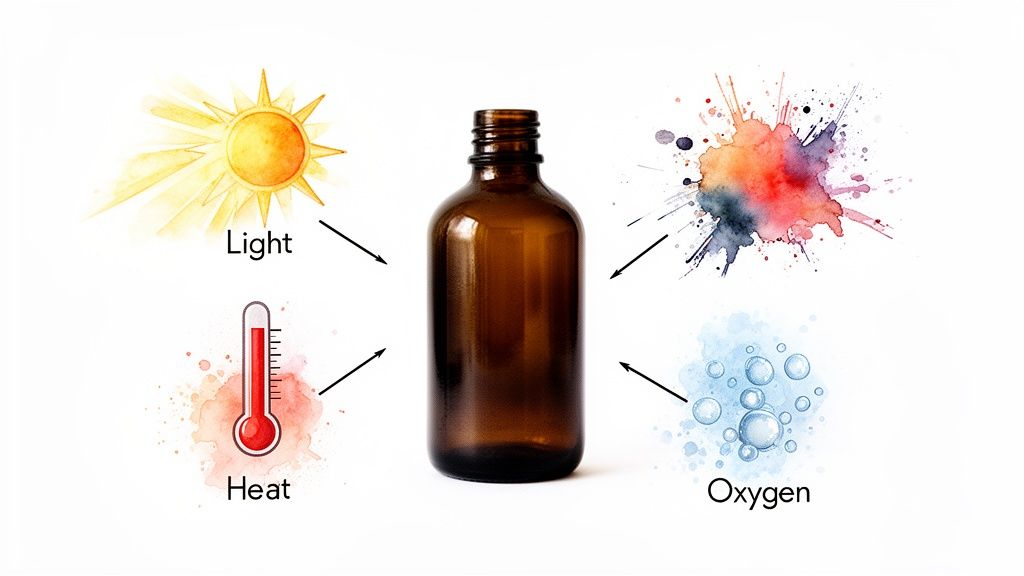
When we talk about it "going bad," we're really talking about a natural breakdown process. This isn't some strange mystery; it's a series of chemical reactions, and they’re kicked into overdrive by three common culprits: oxygen, light, and heat. Getting a handle on these three things is the key to preserving the potency and quality of your oil. Each one chips away at the cannabinoids and terpenes that give the oil its therapeutic punch.
Oxygen: The Potency Thief
While we need it to breathe, oxygen is one of the biggest enemies of fresh cannabis oil. The chemical process at play here is called oxidation, and it slowly but surely changes the very structure of the active compounds in your oil. If you've ever seen a sliced apple turn brown on the kitchen counter, you've seen oxidation firsthand.
In cannabis oil, this process has a very specific target: THC. Over time, as oxygen gets to it, THC gradually converts into a different, much less psychoactive cannabinoid called cannabinol, or CBN. While CBN has its own set of mild therapeutic properties, it's not what most people are looking for when they use a THC-rich product. This conversion is a direct hit to your oil's potency.
Every time you expose your oil to the air, you’re accelerating the conversion of its valuable THC into the far less potent CBN. This directly undermines the oil’s intended effects.
This is exactly why an airtight container is so critical. Each time you open the bottle, you’re letting in a fresh wave of oxygen, essentially giving the degradation process a new burst of energy.
Light: The Fastest Way to Lose Potency
Light, especially the UV rays from the sun, is probably the single most aggressive force working against your cannabis oil. Think of it as pure energy that blasts apart the delicate chemical bonds holding cannabinoids and terpenes together. This process, known as photodegradation, can tank your oil's potency faster than anything else.
It works just like a photograph left out in the sun—the vibrant colors will fade and wash out in no time. In the same way, light literally "fades" the active compounds in your oil.
This is where smart packaging becomes a product's first line of defense:
- Dark-Colored Glass: You'll notice that reputable cannabis oils almost always come in amber, cobalt, or other dark, opaque containers. That's not an aesthetic choice; it’s a functional shield designed to block out damaging UV light.
- Clear Containers: An oil sold in a clear bottle is already at a major disadvantage. Even the ambient light in a room can contribute to a slow and steady decline in its effectiveness.
Simply keeping your oil in its original dark container, tucked away in a cool, dark place like a cabinet or drawer, is one of the most important steps you can take.
Heat: The Chemical Accelerator
Heat is the final piece of the puzzle. Think of it as an accelerator for every chemical reaction, including the ones breaking down your oil. Storing your cannabis oil anywhere it might get warm—near a stove, on top of the fridge, by a sunny window, or in a hot car—is a surefire way to shorten its life.
The sweet spot for storage is a consistent room temperature, somewhere between 60 and 70 degrees Fahrenheit (or 15-21°C). Some people choose to refrigerate their oil, which can slow degradation even more, but this isn't always necessary. It can also cause some oils to thicken, making them a pain to dispense accurately. The main goal is just to avoid heat spikes and warm spots.
High temperatures don't just speed up the THC-to-CBN conversion; they also cause the volatile terpenes to evaporate. Terpenes are what give the oil its unique aroma and flavor, and they also contribute to its overall therapeutic profile through the entourage effect. Lose the terpenes, and you lose a key part of what makes the oil work.
By controlling for these three factors—oxygen, light, and heat—you're no longer a passive observer. You're taking active control over the freshness and effectiveness of your oil, ensuring it's ready to work when you need it.
How to Tell If Your Cannabis Oil Has Gone Bad
You don't need a high-tech lab to get a good read on your cannabis oil's quality. In fact, your own senses are surprisingly powerful tools for spotting when a product is past its prime. By knowing what to look for—and what to smell, taste, and feel—you can get a pretty clear idea if your oil is still delivering the full therapeutic benefits you need.
Think of it like checking fresh produce. You know what a crisp apple looks and feels like, and you can definitely tell when it's turned mealy and soft. The same principles apply here. Learning to spot the subtle (and sometimes not-so-subtle) signs of degradation is a crucial skill for anyone focused on their health.
The Sensory Checklist: Using Your Eyes, Nose, and Palate
When you're not sure about a bottle of oil, run it through this quick sensory checklist. These cues will give you a solid indication of its current condition.
- Changes in Appearance: A fresh, well-made cannabis oil usually has a vibrant, clear appearance, with a color ranging from light gold to a deep, dark amber. If your oil starts looking cloudy, murky, or develops a hazy film that doesn't go away, that’s a red flag for degradation.
- An Unpleasant Aroma: Good cannabis oil has a distinct aroma—it can be earthy, pungent, or even a little floral, thanks to its rich terpene profile. When that characteristic smell fades and is replaced by something musty, stale, or rancid, it's a sign the terpenes have evaporated and the carrier oils might be spoiling.
- A "Rancid" Taste: While taste can be subjective, fresh oil typically has a clean, grassy, or nutty flavor. If you notice a harsh, sharp, or acrid taste that reminds you of old cooking oil, it's almost certainly expired. That off-flavor is a clear signal that the oil is no longer at its best.
- Thick or Tacky Consistency: Some concentrates, like RSO, are naturally quite thick. But if an oil that was once fluid and easy to dispense becomes unusually sludgy, sticky, or gunks up the dropper, it could be a sign of spoilage, especially if it's happening at normal room temperature.
This diagram breaks down the three main culprits behind these sensory changes: light, heat, and air.
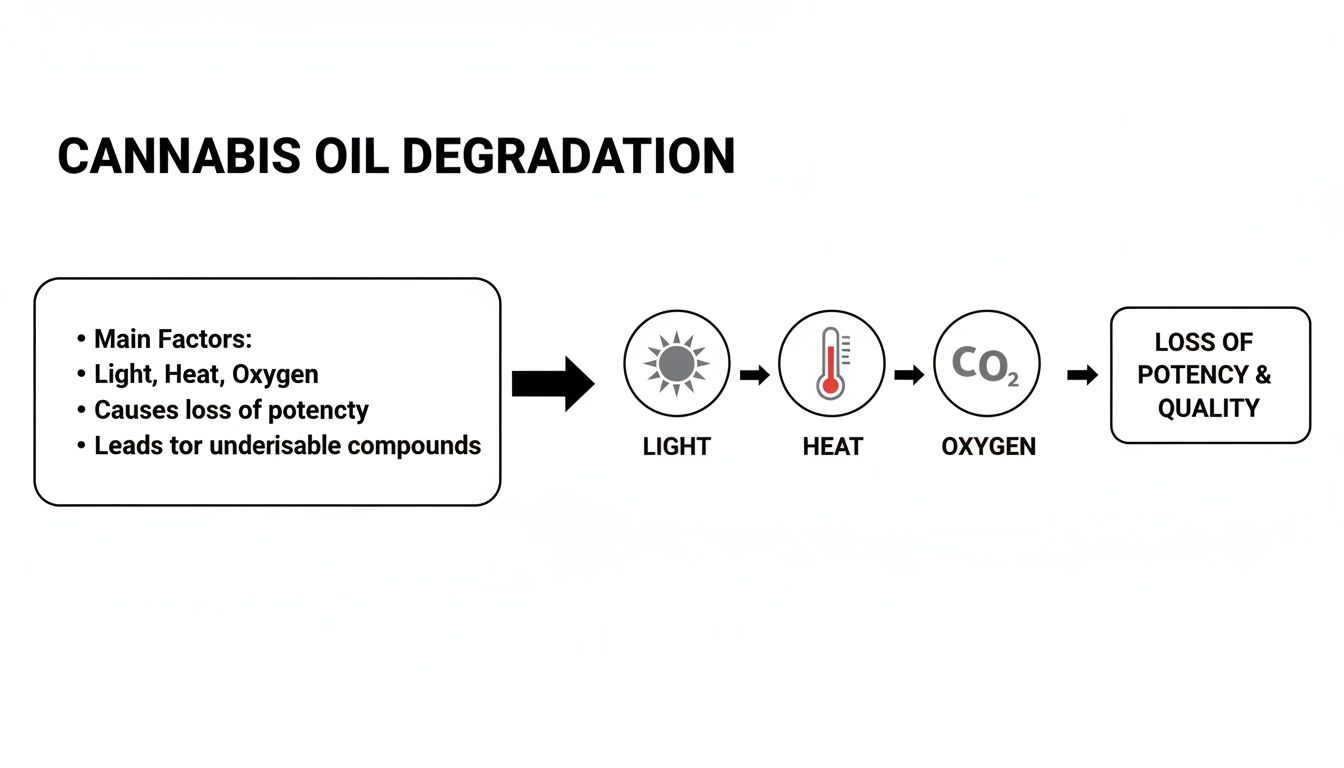
As you can see, each of these environmental factors directly attacks the oil’s chemical structure, causing the cannabinoids and terpenes to break down and leading to the loss of potency and quality you can detect with your senses.
To make it even clearer, here's a simple side-by-side comparison of what to look for.
Signs of Fresh vs. Degraded Cannabis Oil
| Characteristic | Fresh High-Quality Oil | Degraded or Expired Oil |
|---|---|---|
| Color & Clarity | Clear, consistent color (gold to dark brown) | Cloudy, murky, or separated layers |
| Aroma | Earthy, pungent, characteristic cannabis smell | Musty, stale, or rancid odor |
| Taste | Grassy, nutty, or clean plant-like flavor | Sharp, harsh, or like spoiled cooking oil |
| Consistency | Fluid and appropriate for the product type | Overly thick, tacky, sticky, or sludgy |
This table provides a quick reference, but remember to trust your own judgment as the final deciding factor.
When in Doubt, Trust Your Gut
At the end of the day, your personal experience is your most reliable guide. If your oil just seems "off"—whether it's the color, the smell, or how it feels—it probably is. While using a slightly degraded oil isn't likely to be harmful, it absolutely compromises the effectiveness of your regimen.
For anyone relying on cannabis oil for consistent therapeutic support, using a fresh and potent product isn't just a preference—it's essential. An expired oil means you're not getting the full, intended dose of active compounds, which can seriously undermine your health goals.
At RSOhelp.com, our experience has shown that consistent quality is the foundation for consistent results. By trusting your senses, you empower yourself to maintain the integrity of your treatment. If you're ever on the fence, it's always the smarter choice to start fresh and ensure you’re giving your body the full support it needs.
Key Factors That Influence Oil Shelf Life
If you’ve ever wondered whether your cannabis oil can go bad, the short answer is yes. But how quickly it goes bad is a different story altogether. The reality is, not all oils are created equal, and their longevity depends on a handful of critical factors that are decided long before the product ever reaches your hands.
Think of it like cooking. The final dish is only as good as the ingredients you start with. The same principle applies here. An oil's journey from a living plant to a concentrated therapeutic product involves a series of steps, and each one leaves its mark on how stable and potent that final oil will be.
The Quality of the Starting Material
It all begins with the plant. The initial quality of the cannabis itself is the foundation for everything that follows. A vibrant, well-tended plant, bursting with cannabinoids and terpenes, is going to produce a far more robust and resilient oil.
Conversely, if an oil is made from subpar or improperly cured cannabis, it’s already starting at a disadvantage. It’s simply more susceptible to breaking down quickly. This is precisely why sourcing is so important and why health-focused producers emphasize organic cultivation and meticulous handling—they're preserving the plant's natural chemical integrity from the get-go.
Extraction Method and Purity
How the oil is pulled from the plant material plays a massive role in its stability. Different extraction techniques create products with vastly different levels of purity and chemical integrity, which directly impacts how long the oil stays fresh and effective.
- CO2 Extraction: This method is often considered a top-tier choice because it produces an incredibly clean and pure extract without leaving behind residual solvents. That purity is a major plus for shelf life.
- Ethanol Extraction: When performed skillfully, ethanol extraction yields a high-quality, potent oil. The catch? If the ethanol isn't completely purged from the final product, it can negatively affect both the flavor and the oil's long-term stability.
- Full-Spectrum vs. Isolate: An oil like a full-extract cannabis oil (FECO), also known as RSO, is a whole-plant extract. It contains a rich array of cannabinoids, terpenes, and other natural compounds. These components don't just work together to create therapeutic synergy (the "entourage effect"); they also help protect each other, making the oil naturally more stable. Isolates, which contain just one cannabinoid like CBD, are missing this protective team and can degrade in different ways.
The most stable oils tend to be those that are highly concentrated and minimally processed, keeping the plant's natural synergy intact. A pure, full-spectrum extract is inherently more resilient than a diluted tincture or a heavily processed isolate.
The Role of Carrier Oils and Additives
Many cannabis oil products, particularly tinctures designed for dropper-based dosing, are mixed with a carrier oil. Common choices include MCT, coconut, or olive oil. While this makes the oil easier to measure and take, it adds another variable to the shelf-life puzzle. Suddenly, the stability of the carrier oil can become the weakest link.
For instance, MCT oil is very stable and doesn't oxidize easily. Olive oil, on the other hand, can go rancid much faster, potentially dragging the entire product's lifespan down with it. Pure extracts like RSO or FECO, which have no carrier oils, are different. Their stability is determined entirely by the cannabinoids themselves. In fact, studies have shown that high-potency THC distillates can be more stable than standard food-grade oils.
Packaging and Storage Containers
Last but not least, the container holding your oil is its first line of defense against the elements. As we've established, light and oxygen are the biggest enemies of cannabinoid stability.
The gold standard for packaging is dark, airtight glass. There’s a good reason for this:
- Amber or Cobalt Glass: These dark colors aren’t just for looks. They are specifically chosen to block out damaging UV rays from light, which prevents the rapid breakdown (photodegradation) of cannabinoids.
- Airtight Seal: A truly secure, airtight cap is non-negotiable. It keeps oxygen out. Every single time you open the bottle and expose the oil to fresh air, you accelerate the oxidation process.
If you see a cannabis oil product packaged in a clear bottle or a container that doesn’t seal properly, it’s a red flag. That product is set up for a much shorter shelf life, no matter how good the oil inside might be. Paying attention to the packaging is a simple but powerful way to assess a producer's commitment to quality.
The Best Way to Store Your Cannabis Oil
If you want to protect your cannabis oil's potency and get the most out of every drop, proper storage is non-negotiable. You have complete control over the environmental factors that chip away at its effectiveness. By following a few simple guidelines, you can keep your oil just as potent and reliable from the first dose to the very last.
Think of your cannabis oil like a high-quality olive oil or a fine spice—its complex chemical profile is delicate and easily damaged by its surroundings. The goal is simple: create a stable environment that shields it from its three biggest enemies: light, heat, and oxygen.
The Three Golden Rules of Storage
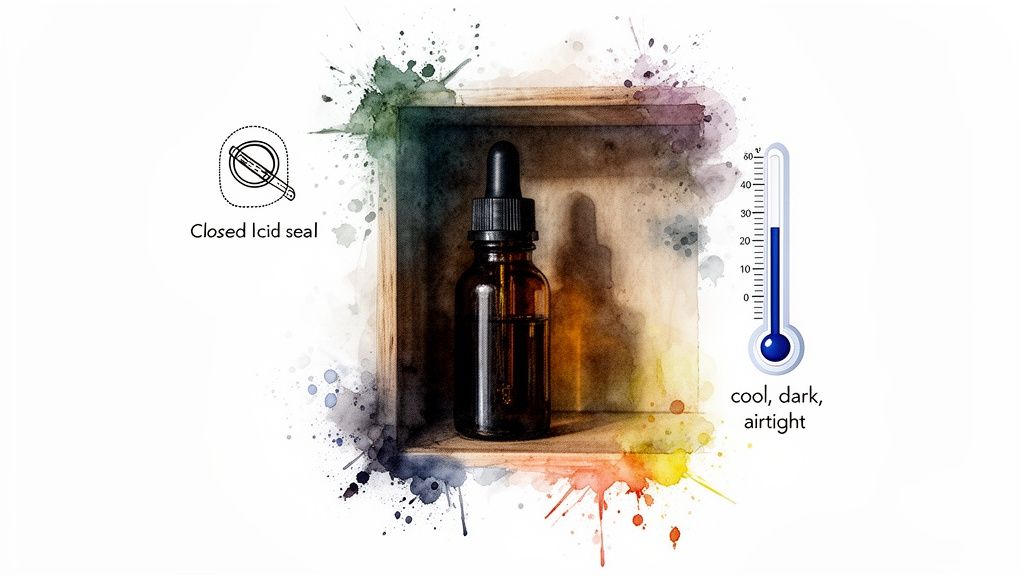
Mastering cannabis oil storage really just comes down to three core principles. Stick to these, and you'll dramatically slow down the degradation process, preserving the oil’s therapeutic integrity for as long as possible.
-
Keep It Dark: Light is a killer. The sun's UV rays, in particular, act like tiny wrecking balls, breaking down precious cannabinoids and terpenes. Always store your oil in its original dark glass container and tuck it away somewhere light can't reach it.
-
Keep It Cool: Heat is an accelerator, speeding up the chemical reactions that make your oil lose its punch. The sweet spot for storage is a consistent 60-70°F (15-21°C). Steer clear of any spot with big temperature swings, like near a stove, on top of the fridge, or next to a sunny window.
-
Keep It Airtight: Oxygen is the final piece of the puzzle. Exposure causes THC to convert into CBN, a less effective cannabinoid. It’s a simple fix: just make sure the cap on your bottle is screwed on tightly after every single use. This one step prevents fresh oxygen from getting in and speeding up oxidation.
Following these guidelines isn't just about storing a product; it’s about actively preserving your wellness tool.
Best and Worst Storage Locations
Choosing the right spot in your home is half the battle. To make it easy, here are some practical examples of where to keep your oil—and where to run from.
-
Excellent Choices: A pantry, a medicine cabinet (away from the shower's humidity), a kitchen cupboard (far from the oven), or a dresser drawer are all fantastic options. They're dark, maintain a stable room temperature, and are easy to get to.
-
Places to Avoid at All Costs: Never, ever leave your oil on a windowsill, on a kitchen counter bathed in sunlight, in your car's glove compartment, or near heat sources like radiators or electronics.
For the many people who rely on cannabis oil as part of their health regimen, proper storage is a non-negotiable part of their routine. It ensures the product’s quality and efficacy stay consistent, which is fundamental for getting predictable results.
Long-Term Storage and Best Practices
If you're looking to store your oil for a longer period, the refrigerator is a great choice. The consistently cold temperature slows molecular breakdown even further, helping to lock in potency for months. Just be aware that some oils can thicken when chilled, so you may need to let the bottle sit at room temperature for a few minutes before use.
Data shows that RSO and other oil formulations can have a 12-24 month shelf life, with high-quality products typically lasting around 18 months. However, storage mistakes can shrink that window dramatically. For example, research shows that storing oil in certain plastic tubes can cause a significant loss of THC in less than a week, while stable glass containers protect it far more effectively.
This means that while expired oil isn’t necessarily toxic, it can lose up to 20% of its efficacy each year if stored improperly.
Ultimately, how you store your oil is just as important as the quality of the product itself. If you're interested in the entire journey from plant to product, you can also check out our guide on how to make cannabinoid oil. Proper care from creation to consumption is the key to getting the full benefit you're looking for.
Time to Toss It: When to Discard Your Cannabis Oil
Knowing how to properly store your cannabis oil is half the battle; knowing when to throw it out is just as crucial. While using old oil isn't typically dangerous, the real problem is that it simply stops working as it should. Using an expired, degraded product is like trying to navigate with a broken compass—you're not going to end up where you need to be.
For anyone relying on cannabis oil for therapeutic reasons, that lack of potency and predictability is a major setback. You’re no longer getting the reliable, consistent dose you need to manage your health. This can be incredibly frustrating and can derail your entire wellness plan. Recognizing when your oil has gone bad is a fundamental part of taking your regimen seriously.
Clear Signs Your Oil Is Past Its Prime
Deciding when to get rid of old oil really comes down to a few tell-tale signs. If you spot any of these, it's a clear signal that the product is no longer effective and it's time for a replacement.
- Your Senses Don't Lie: The most obvious clues are a rancid, musty, or "off" smell and a harsh, unpleasant taste. If the oil looks cloudy or murky (and doesn't clear up when it warms to room temperature), that’s another red flag. These aren’t subtle changes; they’re clear warnings that the oil has degraded.
- Check the Calendar: A good quality cannabis oil will typically last for 1 to 2 years. If you're well past that date, you can be certain its cannabinoid content has taken a significant hit, even if you stored it perfectly.
- Storage Mishaps: Let’s be honest, mistakes happen. If you know the oil was forgotten in a hot car, left sitting on a sunny windowsill, or stored in a container that wasn't sealed tight, its shelf life has been cut dramatically. In these situations, it’s far better to start fresh with a new bottle than to guess at the potency of a compromised product.
Your health is too important to leave to chance. Sticking with a fresh, potent product is the cornerstone of any successful therapeutic plan. Replacing old oil isn't a waste—it's a smart investment in your well-being.
Here at RSOhelp.com, we always stress that quality and efficacy are non-negotiable for personal wellness. Understanding that cannabis oil does go bad and knowing when to replace it is a vital part of that. It ensures that every single dose you take is as effective as you need it to be, keeping you on track toward your health goals. Trust your senses, respect the expiration date, and don't think twice about discarding an oil that's no longer up to the task. Your results depend on it.
Your Top Questions About Cannabis Oil Answered
It's only natural to have questions when you're navigating the world of cannabis oil. Let's tackle some of the most common ones about storage, safety, and shelf life to give you more confidence in managing your health journey.
Is It Safe to Use Expired Cannabis Oil?
Generally, yes, but it's probably not a good idea. As long as you don't see any obvious mold, expired cannabis oil isn't likely to harm you, but it’s not going to do its job either. The real issue here is potency.
Over time, THC naturally breaks down into a different cannabinoid called CBN (cannabinol). CBN has very different, much milder effects and is often associated with drowsiness. If you’re counting on a specific cannabinoid profile for your health, using old oil will deliver weak and unpredictable results. A good rule of thumb: if it smells off, tastes harsh, or looks funky, just throw it out.
Can I Freeze My Cannabis Oil to Make It Last Longer?
You can, but it's a bit of a gamble. While freezing sounds like a great way to preserve things, it introduces a major risk for cannabis oil: moisture. When you thaw it out, condensation can form inside the container, creating a perfect breeding ground for mold and bacteria.
Freezing can also mess with the oil's consistency, making it a real headache to get your dose right. Honestly, for its typical 1-2 year shelf life, storing it in a cool, dark place like a cabinet or even the fridge is all you really need to do. If you absolutely have to freeze it for long-term storage, use a perfectly airtight container and let it come all the way back to room temperature before you even think about opening it.
Sticking to proper storage in a cool, dark place is the most reliable way to preserve your oil. Simplicity and consistency are key to maintaining its quality and effectiveness for your health regimen.
Does the Type of Carrier Oil Affect Shelf Life?
It absolutely does. When a cannabis extract is mixed with a carrier oil, the stability of that carrier becomes a huge factor in the final product's shelf life.
- MCT Oil: This is a popular choice for a reason. Derived from coconuts, MCT oil is incredibly stable and resists oxidation well, which helps extend the life of the product.
- Hemp Seed or Olive Oil: While great oils in their own right, they can go rancid much faster. Products using these carriers often have a shorter shelf life, sometimes around 12 months.
This is one of the main reasons pure extracts like RSO are so durable. With no carrier oil, their longevity comes down to the cannabinoids themselves, which are surprisingly resilient when kept away from their enemies: light, heat, and air.
At RSOhelp.com, our goal is to give you clear, evidence-based information to help you make the best decisions for your health. For personalized guidance on finding high-quality, lab-tested RSO and building a safe, effective regimen, check out the free resources on our sister site at https://ricksimpsonoil.info.