
When you’re weighing distillate vs RSO, you're looking at two entirely different philosophies of extraction. One aims for a pure, isolated compound, while the other captures the whole essence of the plant for health and wellness.
RSO is a full-spectrum extract. The entire point is to get every last therapeutic compound from the plant into the final oil for a holistic effect. Distillate, on the other hand, is all about refinement—isolating a single cannabinoid, usually THC, to achieve the highest possible purity and potency.
Understanding The Fundamental Differences
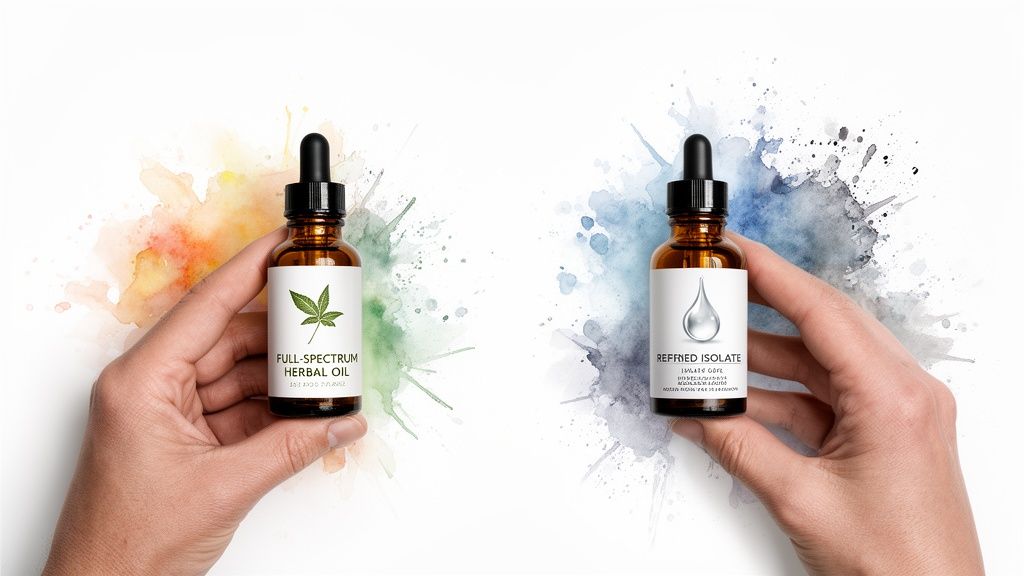
The world of cannabis concentrates can feel overwhelming, but the line between Rick Simpson Oil (RSO) and distillate is pretty sharp once you see what each is designed to do. The right choice for you boils down to your personal health goals.
RSO, often called Full Extract Cannabis Oil (FECO), is intentionally produced to keep the plant's natural synergy intact. It’s packed with a huge range of cannabinoids, terpenes, flavonoids, and other plant materials. This "whole-plant" philosophy is crucial for individuals who believe the true health benefit comes from all these elements working together.
Distillate is at the opposite end of the spectrum. It goes through a rigorous refinement process that strips away everything but the target cannabinoid. The result is a clean, potent, and typically flavorless oil, which makes it incredibly versatile but removes the comprehensive profile that RSO is known for.
Key Distinctions at a Glance RSO vs Distillate
To make the decision clearer, it helps to see their primary traits side-by-side. This table breaks down the core differences that really define each extract and influence how they're used for specific wellness needs.
| Characteristic | Rick Simpson Oil (RSO) | Cannabis Distillate |
|---|---|---|
| Spectrum | Full-spectrum; contains all plant compounds | Isolate; contains one primary cannabinoid |
| Appearance | Dark, thick, tar-like consistency | Clear or amber, viscous liquid |
| Flavor Profile | Strong, earthy, and plant-like | Odorless and tasteless |
| Primary Goal | Therapeutic wellness via the entourage effect | High potency and purity of a single cannabinoid |
| Common Uses | Oral ingestion, topical application for health | Vaping, dabbing, edibles |
Looking at this, the choice becomes more intuitive.
The fundamental choice is between a comprehensive, whole-plant extract (RSO) designed for systemic support and a purified, high-potency isolate (distillate) suited for specific, targeted effects.
Ultimately, individuals often turn to RSO for long-term health regimens where the full spectrum of cannabis compounds is thought to offer the most benefit. For anyone needing guidance, resources like RSOhelp.com provide crucial information for making safe, educated health decisions.
Distillate serves a completely different purpose. It's often the choice for someone who needs discreet use, very high THC levels for immediate effects, or a neutral ingredient for making other cannabis products.
How Extraction Methods Shape The Final Product
The deep-seated differences between RSO and distillate really start with how they’re made. The extraction method isn't just a step in a recipe; it's the core philosophy that dictates everything about the final product—its chemical profile, its appearance, and its intended purpose. One approach is all about capturing a snapshot of the whole plant for wellness, while the other is a relentless pursuit of a single, pure compound.
For Rick Simpson Oil, the goal is total preservation. The process typically relies on a solvent like ethanol to gently wash the full range of compounds from the cannabis plant material. This isn't just about grabbing the main cannabinoids like THC and CBD; it's about pulling out the minor cannabinoids, the rich spectrum of terpenes, flavonoids, and even the plant's natural waxes and lipids.
This technique is what gives us a true Full-Spectrum Cannabis Oil (FECO). The dark, thick, almost tar-like look of RSO is a direct giveaway of its comprehensive and unrefined nature. The extraction is designed to be just gentle enough to keep the plant's delicate chemical symphony intact, operating on the belief that all these compounds work better together for health.
The Whole-Plant Approach of RSO
The philosophy behind RSO extraction is built on the idea of capturing the plant’s natural synergy. By keeping this wide array of molecules in the final product, the aim is to create an oil that delivers a more complete, well-rounded effect. Every compound is believed to have a part to play in the oil's overall character and potential benefits.
This whole-plant methodology is precisely why RSO is so often the choice for individuals pursuing specific, long-term wellness goals. The process values completeness over refinement, ensuring nothing valuable is left behind. You can get a much deeper look into the various methods in our guide on THC extraction for oil.
The guiding principle of RSO production is to create an honest representation of the source plant. The extraction method is kept intentionally simple and direct to avoid stripping away the synergistic compounds that give the plant its unique therapeutic identity.
Distillate’s Path to Purity
Distillate production, on the other hand, is a completely different ballgame. It's a multi-stage journey of aggressive refinement and isolation. While it starts with a basic extraction, it quickly moves into sophisticated purification steps designed to strip away everything that isn't the target cannabinoid—which is usually THC.
The key stages in creating distillate include:
- Winterization: This step uses a solvent and freezing temperatures to solidify and filter out unwanted compounds like plant waxes, fats, and chlorophyll.
- Short-Path Distillation: Next, the refined oil is heated under a vacuum. This allows individual cannabinoids to be separated based on their distinct boiling points, isolating the desired compound with incredible precision.
This meticulous process results in a clear or light-amber, incredibly thick liquid that’s virtually tasteless and odorless. What you're left with is an isolate, often testing at a stunning 90-99% purity for a single cannabinoid. While that level of purity is technically impressive, it comes at the cost of the broad spectrum of compounds you'd find in RSO.
Ultimately, the choice between distillate vs. RSO comes down to understanding their origins. RSO is crafted to be a complete, whole-plant oil for comprehensive support, whereas distillate is engineered from the ground up for isolated potency and purity.
Comparing Cannabinoid and Terpene Profiles
When you get right down to it, the biggest difference between cannabis distillate and RSO is what’s actually in the oil. One is a complex, whole-plant extract, a true chemical mosaic. The other is a highly refined, almost pure, single compound. This core distinction in their cannabinoid and terpene profiles is everything—it dictates their effects and explains why they're used for such radically different purposes.
RSO's reputation as a therapeutic powerhouse is built on its rich, unadulterated chemical profile. It’s a full-spectrum extract, meaning it keeps the vast array of cannabinoids from the original plant, not just THC. You’ll find compounds like CBD, CBG, and CBN in there, all working together. This is a big deal because these cannabinoids interact with each other and our own endocannabinoid system in complex ways, creating a more sophisticated, well-rounded effect than any single molecule ever could on its own.
But it’s not just about the cannabinoids. RSO is also loaded with terpenes—the aromatic compounds that give cannabis its distinctive smell and taste. Terpenes are much more than just scent, though. They are bioactive molecules that contribute significantly to the oil's therapeutic properties. This dynamic, synergistic dance between cannabinoids and terpenes is what we call the entourage effect, a concept that is absolutely central to understanding why RSO is so valued for health.
This diagram offers a great visual breakdown, contrasting the whole-plant philosophy behind RSO with the isolationist approach of distillate.
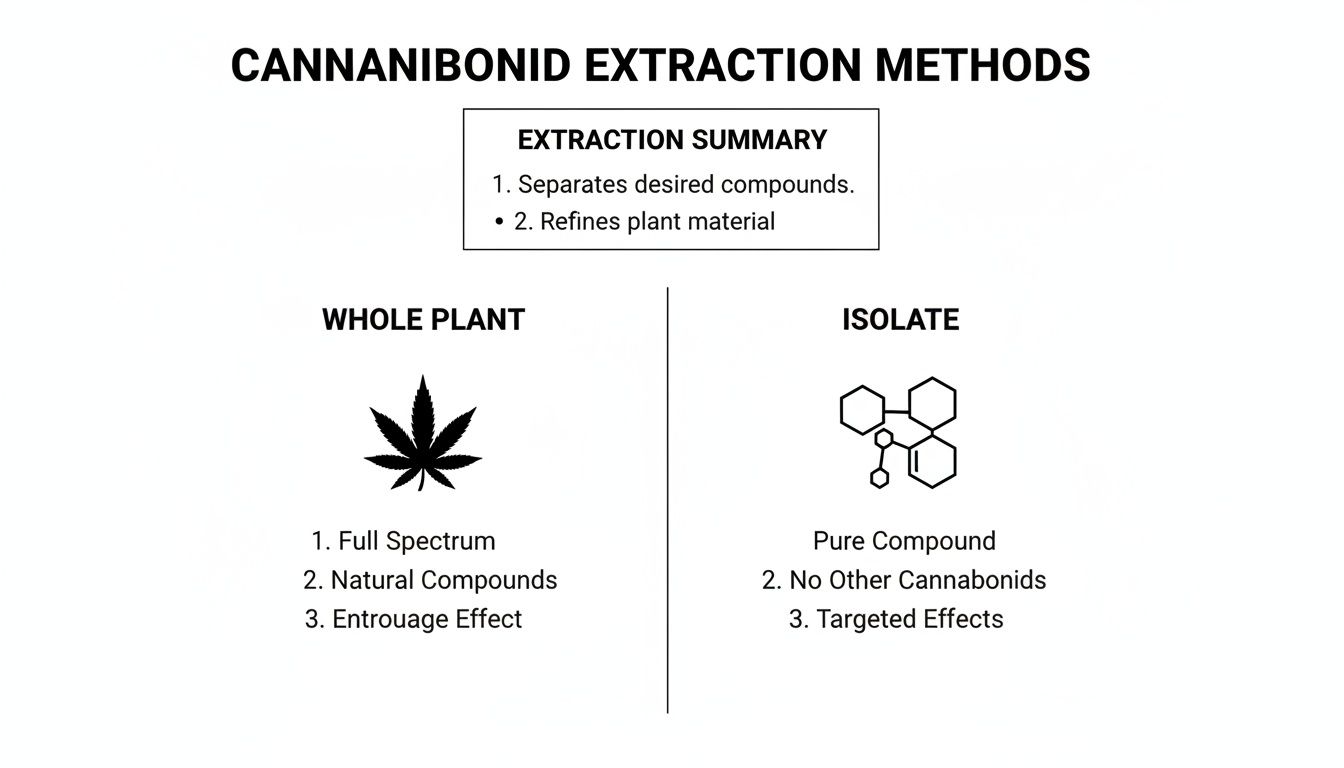
As you can see, RSO aims to preserve the plant's entire natural profile for wellness, while distillate’s goal is to zero in on a single molecule, stripping away all the supporting compounds in the process.
The Power of Terpenes in RSO
The exact terpenes you find in RSO will depend on the specific cannabis strain used to make it, but their presence is a non-negotiable hallmark of a quality, full-spectrum product. Each terpene brings its own unique therapeutic potential to the table, adding another layer of complexity and benefit.
Some of the key players you’ll often find in RSO include:
- Myrcene: Known for its earthy, musky scent, myrcene is widely studied for its calming and sedative properties. It's often the most abundant terpene in cannabis.
- Limonene: With its bright citrus aroma, limonene is commonly associated with mood elevation and stress reduction.
- Caryophyllene: This peppery terpene is unique. It can behave like a cannabinoid by directly engaging with the endocannabinoid system, which may help support a healthy inflammatory response.
- Linalool: Also found in lavender, linalool has a delicate floral scent and is often linked to relaxing and calming effects.
The rich terpene profile in RSO isn't just a nice bonus—it's fundamental to how the oil works. These compounds operate in concert with cannabinoids to produce a holistic effect that a single, isolated compound simply cannot mimic.
For anyone looking to dive deeper into the science, learning what makes an oil full-spectrum is a critical next step. This knowledge helps you appreciate why keeping the plant’s natural chemical signature intact is so crucial for certain therapeutic goals.
Distillate: A Potent But One-Dimensional Profile
Distillate sits at the complete opposite end of the spectrum. The entire process is designed to strip away all that natural complexity. The end goal is to achieve the highest possible purity of one single cannabinoid—usually THC—resulting in a product that often boasts 90-99% potency. This makes it incredibly strong, but also chemically one-dimensional.
During the aggressive heating and refinement steps, nearly all terpenes, flavonoids, and other minor cannabinoids are completely removed or destroyed. What’s left is a thick, transparent, and odorless oil that is almost pure THC. While that level of purity offers predictable potency, it comes at the cost of the entourage effect. The synergistic web of benefits found in RSO is entirely absent in a standard distillate.
Some producers try to compensate for this by reintroducing terpenes into the final product. These can be cannabis-derived (CDTs) or sourced from other plants (botanical). While this can improve the flavor and add some targeted effects, it’s really just an approximation of nature. Artificially recreating the plant’s original, intricate chemical symphony is next to impossible, meaning these reconstituted products rarely match the genuine full-spectrum experience RSO provides.
Chemical Profile Breakdown: RSO vs. Distillate
To really see the difference, it helps to put their chemical makeup side-by-side. This table breaks down what you can typically expect to find in each product, highlighting why they offer such distinct therapeutic avenues.
| Component | Rick Simpson Oil (RSO) | Cannabis Distillate |
|---|---|---|
| Primary Cannabinoid | High THC, but varies based on strain (60-90%). | Extremely high in one cannabinoid, typically THC (90-99%). |
| Minor Cannabinoids | Present. Contains a wide array of compounds like CBD, CBG, CBN, THCa, etc. | Generally absent. Most are removed during the refinement process. |
| Terpenes | Abundant. The full, natural terpene profile of the source plant is preserved. | Removed. Terpenes are destroyed by heat; sometimes re-added later. |
| Flavonoids/Other | Present. Includes other plant compounds like waxes, lipids, and chlorophyll. | Absent. These compounds are filtered out to achieve purity. |
| Entourage Effect | Fully activated. The primary mechanism behind its therapeutic action. | Not present. Lacks the necessary compounds for synergistic effects. |
| Appearance & Aroma | Dark, thick, tar-like consistency with a strong, pungent plant aroma. | Clear to light amber, thick, and typically odorless and flavorless. |
This comparison makes it clear: RSO is a whole-plant product designed for comprehensive, multi-compound therapy, whereas distillate is an isolate designed for high-potency, single-compound effects.
Ultimately, the choice comes down to therapeutic philosophy. Are you seeking the powerful, targeted effect of a single molecule, or do you need the holistic, all-hands-on-deck approach of a whole-plant extract? For many people pursuing serious, long-term health goals, the complete and unadulterated profile of RSO provides a far more aligned solution.
Potency, Bioavailability, and Administration Routes
When comparing distillate and RSO, it's easy to get fixated on the THC percentage printed on the label. Distillate often boasts an impressive 90-99% THC, leading many to assume it's automatically "stronger." The reality is that true therapeutic potency is far more complex than a single number.
RSO's strength isn't just about isolated THC; it's about the synergistic power of the entourage effect. Its full-spectrum profile means all the cannabinoids, terpenes, and other plant compounds work together. This collaboration can create a more profound and well-rounded therapeutic impact than a high dose of THC could ever achieve on its own—a crucial distinction for anyone pursuing specific wellness goals.
Understanding How Your Body Uses Each Extract
Bioavailability—the rate and extent to which your body absorbs and uses a substance—is another critical piece of the puzzle. This is where RSO’s unique, thick consistency gives it a distinct advantage for certain delivery methods.
RSO is a dense, lipid-rich oil. When ingested, those natural fats can help improve how cannabinoids are absorbed through the digestive system. For individuals managing chronic conditions, this enhanced bioavailability can be a significant benefit. Oral absorption rates for RSO are often higher than for isolates precisely because of its lipid base.
Distillate, on the other hand, is a pure isolate stripped of these fatty compounds, which changes how it's processed when taken orally. Its bioavailability truly shines with inhalation, where it enters the bloodstream almost instantly.
A Critical Note on RSO Dosing: Given its potency and full-spectrum nature, it's absolutely essential to start with an extremely small dose of RSO. A common recommendation for a beginner is an amount no larger than a single grain of rice, taken once or twice a day. Careful, slow titration is the only way to find the right personal dosage.
Choosing the Right Administration Route
The physical form and chemical makeup of RSO and distillate dictate their ideal applications. Their administration routes are fundamentally different, aligning with very different needs and preferences. Understanding these methods is crucial for using each product safely and effectively.
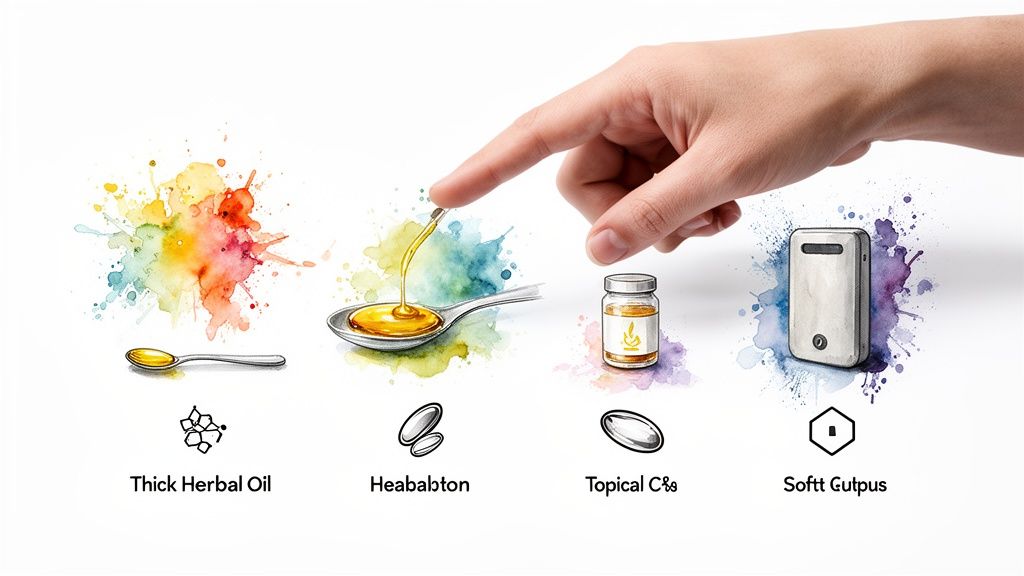
Common Administration Routes for RSO
RSO’s versatility is one of its greatest assets, especially for those who want to avoid inhalation.
- Oral Ingestion: This is the most common method. The oil is typically placed under the tongue (sublingually) or swallowed directly, often with food to improve absorption.
- Topical Application: RSO's thick, sticky consistency makes it well-suited for direct application to the skin, allowing users to target localized issues. You can read our guide on whether THC can be absorbed through the skin to learn more.
- Suppositories: For individuals who cannot take RSO orally, suppositories offer an alternative that bypasses the digestive system and provides a different absorption profile.
This flexibility makes RSO a cornerstone of many long-term therapeutic protocols where inhalation isn't an option.
Common Administration Routes for Distillate
Distillate’s refined nature makes it perfect for methods where purity, lack of flavor, and rapid onset are the main priorities.
- Vaping and Dabbing: This is the primary use for distillate. Its purity allows for clean, smooth vaporization that delivers immediate effects.
- Edibles: As a completely tasteless and odorless ingredient, distillate is the go-to for creating precisely dosed edibles without adding the strong, earthy flavor of a full-spectrum extract.
Ultimately, the best delivery method depends entirely on what you're trying to achieve. If you need the holistic, full-plant benefits delivered orally or topically for your health journey, RSO is the clear choice. If you're looking for fast-acting effects from inhalation or a flavorless base for edibles, distillate is the more suitable option.
Making an Informed Choice for Your Wellness Goals
Choosing between distillate and RSO isn't about deciding which one is "better." It's about picking the right tool for the job. Now that you understand how they're made and what they contain, you can match their unique characteristics to your personal health journey.
The decision really boils down to your goals. Are you looking for long-term, systemic support that uses the full power of the cannabis plant? Or do you need a more targeted, fast-acting solution for a specific, immediate symptom? Answering that question will almost always point you in the right direction.
Matching the Product to Your Purpose
The best way to settle the distillate vs. RSO debate for yourself is to think through real-world scenarios. Each of these extracts shines in different situations. Recognizing which is which is the key to making a confident choice that truly serves you.
When to Reach for RSO
People often turn to RSO when they're looking for comprehensive, whole-plant support. Its full-spectrum nature is, without a doubt, its greatest strength.
- For Systemic, Long-Term Wellness Plans: When the goal is to support the body's overall balance over a long period, RSO's complete profile of cannabinoids, terpenes, and flavonoids is typically the ideal choice.
- For Non-Inhalation Protocols: If you can't—or simply prefer not to—inhale your chosen product, RSO’s versatility for oral, sublingual, and topical use makes it a far better option.
- To Get the Full Entourage Effect: If you believe in the synergy that comes from the entire plant working together for health, then RSO is the only logical path forward. Distillate simply doesn't have this property.
RSO is purpose-built for a holistic approach. It’s for people who want the unadulterated, full-spectrum power of the cannabis plant to support their long-term health, valuing comprehensive synergy over isolated potency.
When Distillate Might Be a Better Fit
Distillate has its own set of strengths, particularly in applications where purity, high potency, and a lack of flavor are what matter most.
- For Acute Symptom Management via Inhalation: For rapid relief from sudden discomfort, the clean vaporization of distillate offers one of the fastest and most efficient delivery methods available.
- For Making Flavorless Edibles: If you want to create precisely dosed edibles without any cannabis taste or aroma, distillate’s neutral profile is perfect for the job.
- For Predictable, High-Potency Dosing: When the main objective is to consume a very high and consistent dose of a single cannabinoid like THC, distillate provides a level of precision that is hard to beat.
The Non-Negotiable Step: Verifying Product Quality
No matter which path you take, the single most important step is ensuring the product you buy is clean, safe, and accurately labeled. This is where a Certificate of Analysis (COA) becomes your most valuable tool. A COA is an official report from a third-party lab that verifies exactly what's in the product.
Think of a comprehensive COA as your final checkpoint. It gives you the crucial information you need to make a safe and truly informed decision.
What to Look for on a COA:
- Cannabinoid Potency: This confirms the exact percentage of THC, CBD, and other cannabinoids.
- Terpene Profile: For an RSO product, this report validates its full-spectrum nature by listing the specific terpenes present.
- Contaminant Screening: For your safety, this is the most critical part. It tests for harmful substances that have no business being in your product, like:
- Residual Solvents
- Pesticides
- Heavy Metals
- Mold and Mildew
Navigating your wellness journey requires clear, reliable information. For those who need guidance finding quality RSO and learning how to read lab reports, a free consultation can connect you with trusted resources. At RSOhelp.com, our mission is to provide the educational support you need to make choices that truly align with your health and well-being.
RSO vs. Distillate: Your Questions Answered
When you're exploring cannabis extracts, a lot of questions come up. Even after you get the basics down, figuring out the practical side of choosing between RSO and distillate can be tricky. Here, we'll tackle some of the most common questions to clear up any confusion.
Our goal is simple: to help you feel confident in choosing the right product for your own wellness plan. Let's dive into how these extracts work in the real world.
Can I Use Distillate the Same Way I Use RSO?
Not really. While they're both powerful concentrates, their makeup and consistency mean they are built for entirely different jobs. If you try to swap one for the other, you'll likely be disappointed with the results.
RSO is made for oral or topical use. Its thick, unrefined, full-spectrum nature—complete with all the plant's original waxes and lipids—is perfect for these methods.
Distillate, on the other hand, is refined to a high purity that makes it ideal for vaping or dabbing. Its clean, often tasteless profile also makes it a popular ingredient in edibles. But if you take distillate orally hoping for the same deep, synergistic effects as RSO, you’ll miss out on the entourage effect that is so central to RSO's therapeutic purpose.
Is RSO "Stronger" Than Distillate?
The word "stronger" can be tricky because it means different things to different people. When comparing distillate and RSO, you’ll find that each one is incredibly potent in its own way.
If we're talking pure THC concentration, distillate is the clear winner, often clocking in at 90% THC or higher. For anyone seeking a powerful dose of just that one cannabinoid, distillate delivers.
But ask an experienced user, and they might tell you RSO feels stronger and offers a more complete therapeutic benefit. This perceived strength comes from the entourage effect—the idea that all the cannabinoids, terpenes, and other plant compounds work together to create a more profound impact than THC could ever have on its own. It really comes down to whether you're after isolated potency or whole-plant synergy.
Why Does RSO Look So Different From Distillate?
That stark visual difference tells you everything you need to know about how they're made. One process is about preserving the whole plant, while the other is about purifying a single compound.
- RSO is dark and thick because the extraction process is designed to capture and hold onto as many of the original plant compounds as possible. That deep, almost black color comes from chlorophyll, waxes, and lipids that are intentionally kept.
- Distillate is clear or light amber because it goes through an intensive refinement process that strips away everything else. Chlorophyll, terpenes, waxes, and minor cannabinoids are all removed, leaving behind a pure, isolated cannabinoid.
The appearance is a dead giveaway of the product's philosophy. RSO’s dark, tar-like look signals a whole-plant extract, while distillate’s clarity signals a highly refined isolate.
How Do I Know I'm Getting a Quality RSO Product?
Making sure your RSO is clean and safe is non-negotiable, especially if you're using it for your health. The most important tool you have is the third-party Certificate of Analysis (COA). Never buy a product that doesn't have one.
A COA is your proof of quality, offering unbiased lab data that tells you exactly what’s in the syringe. It's the only way to be sure a product is potent, pure, and safe.
Here's what to look for on a COA:
- Cannabinoid Potency: This confirms the THC percentage and presence of other cannabinoids, so you know the label is accurate.
- Terpene Profile: A good lab report will show you the terpene content, which confirms it's a true full-spectrum product and gives clues about its potential effects.
- Purity and Safety: This is the most critical part. It screens for nasty contaminants like residual solvents, pesticides, heavy metals, and mold.
If a company won't share a full COA, consider it a major red flag. Trustworthy producers are always transparent about their product's quality and safety.
Finding your way through the world of cannabis extracts is easier with reliable guidance and access to products you can trust. At RSOhelp.com, we’re focused on providing the education and support you need to make the best decisions for your health.
For one-on-one help and connections to trusted U.S. sources for organic, lab-tested RSO, you can book a free RSO consultation at RSOhelp.com.