When you peel back the layers of the cannabis plant, you find a fascinating world of compounds, and the CBG vs. THC discussion gets right to the heart of it. The most critical distinction is straightforward: THC is psychoactive, creating the famous "high," while CBG is non-psychoactive, meaning it delivers potential therapeutic effects without any intoxication. This single difference shapes everything from legal status to how you might use them.
Answering the Core Questions

While THC has soaked up the spotlight for decades, another crucial cannabinoid, Cannabigerol (CBG), is now getting the recognition it deserves from researchers and consumers alike.
Interestingly, CBG is often called the "mother of all cannabinoids." This isn't just a catchy nickname; it’s a scientific reality. In young cannabis plants, CBG exists in its raw, acidic form (CBGA). As the plant grows and matures, specific enzymes transform this CBGA into other cannabinoids, including THC and CBD.
This precursor relationship is why the cannabinoid profile in a final product—especially a full-spectrum one like RSO—is so important. The specific blend of these compounds dictates the ultimate effect.
Key Distinctions: CBG vs THC at a Glance
For anyone trying to make an informed choice, a side-by-side look at their core differences is incredibly helpful. This table cuts through the noise and highlights what really separates them.
| Attribute | Cannabigerol (CBG) | Tetrahydrocannabinol (THC) |
|---|---|---|
| Psychoactivity | Non-psychoactive; does not produce a "high." | Highly psychoactive; responsible for euphoria. |
| Primary Role | Biochemical precursor to other cannabinoids. | Primary intoxicating compound in cannabis. |
| Common User Goal | Supporting focus, calm, and general wellness. | Managing pain, stimulating appetite, and sleep. |
| Legal Status | Generally accessible when derived from hemp. | Heavily regulated and restricted in many areas. |
This growing appreciation for non-intoxicating options is creating a real shift in the market. While THC continues to dominate the recreational space, CBG is carving out a serious niche in wellness. Projections show the global CBG market is expected to grow from USD 890.0 million in 2025 to a massive USD 2,050.0 million by 2035. You can learn more about cannabigerol market trends in this detailed report.
Having this foundational knowledge is the first step. It clarifies why the right cannabinoid isn't a one-size-fits-all solution. As we dive deeper, you’ll see exactly how these differences translate to their effects on the body, helping you make smarter decisions for your own health.
How CBG and THC Interact with Your Body

To really get to the bottom of the CBG vs THC conversation, we have to look at how they talk to our bodies. Both cannabinoids work with our endocannabinoid system (ECS), a vast internal network that keeps everything from our mood to our immune system in check. But how they interact is fundamentally different, and that’s what gives them such distinct effects.
Think of your ECS receptors as locks and cannabinoids as keys. THC is like a master key for CB1 receptors, which are densely packed in the brain and central nervous system. It binds to them tightly, and that strong connection is precisely what triggers the powerful psychoactive effects—the "high"—that THC is known for.
CBG, on the other hand, is much less direct. It doesn't bind as strongly to CB1 or CB2 receptors. This is a critical distinction and the primary reason CBG is non-psychoactive. It influences the system without causing that characteristic intoxication.
A Direct Hit vs. A Gentle Nudge
THC's approach is direct and potent. By locking onto those CB1 receptors, it flips a switch that directly alters neurotransmitter release in the brain. The result can be euphoria, a new perspective on sensory input, and deep relaxation.
CBG’s influence is more of a gentle nudge. By interacting with both receptor types more subtly, it helps fine-tune the overall function of the ECS. I often describe it as a regulator that helps the whole system run more smoothly, rather than forcing a specific, dramatic outcome.
CBG's unique way of engaging with receptors without causing intoxication is exactly why it's gaining so much traction. It offers a way to support the body’s innate balance—a core goal for many people turning to RSO and other full-spectrum products. At RSOhelp.com, our goal is to help people understand these critical differences on their path to wellness.
This difference in how they bind to receptors is central to why a balanced RSO formula can feel so different. The presence of CBG can often temper some of THC's more intense effects, leading to a more grounded, functional experience.
Looking Beyond the Endocannabinoid System
The story doesn’t stop with the ECS. Both cannabinoids interact with other systems in the body, adding another layer of complexity to their effects. CBG, for instance, is also known to interact with serotonin receptors, which play a huge role in regulating mood and anxiety. This may be why so many people report that CBG helps them feel a sense of calm, focused clarity.
THC has its own set of interactions outside the ECS, but its primary, most noticeable impact remains tied to that powerful CB1 receptor activity. Understanding these broader mechanisms is vital for anyone trying to tailor a cannabinoid protocol to meet specific health goals.
A Tale of Two Receptors
Let's break down their primary actions to make it crystal clear. This comparison highlights the science behind their different effects and why one user's experience can be so different from another's.
THC's Primary Interaction:
- Target: Primarily CB1 receptors in the brain.
- Action: It’s a strong partial agonist, meaning it binds to the receptor and activates it very effectively.
- Result: This leads to significant psychoactive effects, including euphoria, altered perception, and sometimes anxiety, especially at higher doses.
CBG's Primary Interaction:
- Target: Interacts with both CB1 and CB2 receptors, plus others like serotonin receptors.
- Action: Its interaction is much more nuanced; it often acts as an antagonist or weak partial agonist at ECS receptors.
- Result: It produces non-psychoactive effects that support balance without intoxication. Users often report improved focus and a sense of calm.
This scientific distinction gives you a solid foundation for making informed choices. When you're looking at a full-spectrum product like RSO, the specific ratio of THC to CBG can dramatically shift the therapeutic outcome. For anyone wanting the benefits of cannabis without a powerful high, a profile rich in CBG is an excellent place to start. This knowledge empowers you to find a product that truly aligns with your body and your wellness objectives.
Comparing Therapeutic Potential and User Effects
When you move past the lab and into real-world application, the CBG vs THC discussion becomes less about science and more about finding the right tool for the job. THC has a long-standing reputation for its powerful, sometimes intense, effects, making it a go-to for serious physical issues. CBG, on the other hand, is carving out a niche as a supportive, non-intoxicating compound that enhances daily function and mental clarity without the high.
Think of it this way: THC is well-known for its heavy-hitting ability to manage significant pain, kick-start a lagging appetite, and quell nausea. These are potent benefits that come directly from its strong bond with CB1 receptors, but they're inseparable from its signature euphoric high. For some, that psychoactivity is part of the therapy; for others, it's an unwelcome side effect.
CBG offers a completely different experience. People who use it often describe a feeling of calm, focused energy, almost like turning down the background noise in their minds. This makes it an ideal choice for daytime use or for anyone who finds THC’s cognitive effects too disorienting.
Mood and Neurological Support
If your goal is to support your mood or maintain sharp cognitive function, CBG is often the more logical choice. It seems to work beyond the endocannabinoid system, interacting with pathways like serotonin receptors, which may help foster a greater sense of well-being and mental equilibrium.
It's for this reason that many people are weaving CBG into their daily wellness routines to help navigate stress and keep a clear head. It offers a way to support neurological health without the distracting mental fog that THC can sometimes create.
CBG's potential as a neuroprotective agent is one of its most exciting frontiers. For anyone looking to support long-term brain health and day-to-day cognitive clarity, a CBG-dominant product could become an indispensable part of their strategy.
Of course, THC can also affect mood, often delivering a temporary burst of euphoria. But it's not always a reliable straight line to feeling good. For some people, particularly at higher doses, THC can trigger anxiety or paranoia, making it a less predictable option for consistent mood management.
Addressing Physical Discomfort and Inflammation
When it comes to acute or chronic pain, THC has a much deeper track record and a mountain of anecdotal evidence backing it up. It works directly on the central nervous system to change how we perceive pain, which is why it can be so effective for immediate relief.
CBG, in contrast, seems to work more subtly. The latest research highlights its significant anti-inflammatory and antibacterial properties. So instead of just masking the pain signals, CBG may be working at the source by helping to calm the inflammation that often causes the discomfort in the first place. It’s a more foundational approach to physical wellness.
This is a critical distinction, especially when working with something like full extract cannabis oil (FECO), where you can find products with specific cannabinoid ratios designed for different outcomes. You can learn more about how these potent oils are made in our deep dive on Full Extract Cannabis Oil.
Appetite, Nausea, and Sleep Considerations
For stimulating appetite and controlling nausea, THC is the undisputed champion. Its effects on the parts of the brain that manage hunger are direct, potent, and well-documented.
CBG’s role in this area is still being explored, but it doesn't appear to have the same powerful appetite-boosting effects. When it comes to sleep, THC is known to help people fall asleep faster, but there are questions about its impact on long-term sleep quality. CBG isn't really a sedative; instead, its calming properties can help quiet a racing mind, making it easier to drift off naturally.
The market itself tells this story. In the biomass production world, combined CBD/CBG products are expected to grow faster than pure CBG, showing that CBG is on the rise but often used in concert with other cannabinoids. The growing demand for cannabinoid biomass shows the global CBD and CBG market is projected to start at USD 1.03 billion in 2025 and climb to USD 3.00 billion by 2034. THC, meanwhile, remains a cornerstone of the established USD 1.6 billion cannabis concentrate market.
Ultimately, the choice isn't about which one is "better," but which is better for you, right now. If you need powerful, immediate relief from something like intense pain and you’re comfortable with the psychoactive effects, THC is a proven option. But for steady, non-intoxicating support for focus, inflammation, and a sense of calm balance, CBG is an exceptional and increasingly popular choice.
Side Effects and Legal Status: A Tale of Two Cannabinoids
When you're exploring cannabinoids, understanding the potential benefits is only half the story. You also need a clear picture of the possible side effects and the often-confusing legal landscape. In the CBG vs. THC discussion, these two areas are where the cannabinoids diverge most dramatically, and it's a critical piece of the puzzle for anyone making a wellness decision.
THC is known for its powerful psychoactive effects, which means it also comes with a more pronounced set of potential side effects. These are almost always dose-dependent—the more you take, the more likely you are to feel them. For many people, managing these effects is the main challenge.
CBG, on the other hand, is generally seen as very well-tolerated. The existing research, backed by a growing mountain of user reports, points to a strong safety profile with very few known adverse effects. This makes it a much more approachable option, especially for newcomers or those who are particularly sensitive to THC.
The Well-Known Side Effects of THC
The side effects tied to THC are a direct result of its strong bond with the brain's CB1 receptors. While some people find these effects to be part of the therapeutic experience, others find them unpleasant.
Common THC-related side effects include:
- Cognitive Impairment: This can show up as trouble with short-term memory, difficulty concentrating, or a general feeling of mental fog.
- Anxiety and Paranoia: In higher doses, THC can sometimes trigger feelings of unease or paranoia, which is more common in new users or those prone to anxiety.
- Increased Heart Rate: A temporary spike in heart rate is a common reaction, which is something for anyone with a heart condition to consider.
- Dry Mouth and Red Eyes: These are the classic, harmless physical tells that most people are familiar with.
The golden rule with THC is always "start low and go slow." Finding the right dose that delivers the benefits without overwhelming side effects is the key, a principle we constantly emphasize for responsible RSO use.
CBG’s Much Milder Profile
In sharp contrast, CBG’s side effect profile is remarkably tame. Because it doesn’t cause an intoxicating high, it sidesteps the cognitive and psychological side effects that can come with THC.
The most frequently reported side effects from CBG are mild and uncommon. When they do occur, they typically involve slight drowsiness, a change in appetite, or minor digestive upset. This makes CBG an excellent choice for daytime use or for anyone who needs to stay sharp and functional.
This is a core difference in the CBG vs. THC debate. If your goal is to support your well-being without interfering with your daily responsibilities, CBG carries a much lower risk of unwanted effects.
Navigating the Legal Labyrinth
Perhaps the biggest difference between these two cannabinoids is their legal status, which is a major source of confusion. The legality almost always comes down to one question: was it derived from hemp or from marijuana?
The 2018 Farm Bill was a game-changer in the United States. It federally legalized hemp and all its derivatives, with the crucial condition that they contain less than 0.3% Delta-9 THC by dry weight. This legislation opened the floodgates for hemp-derived CBG products, making them widely available across the nation.
THC’s legal standing is much murkier. It remains a federally controlled substance. However, a growing number of states have passed their own laws, legalizing it for either medical or recreational purposes. This has created a patchwork of regulations that can change drastically just by crossing a state line. To dive deeper into these kinds of legal and chemical nuances, you might find our detailed comparison of THCA vs. Delta-9 THC helpful.
This legal split has very real consequences. You can generally buy hemp-derived CBG online or in stores anywhere in the country. Getting THC, however, typically means going to a licensed dispensary in a legal state, often with a doctor's recommendation. For many people, this fundamental difference in access is the deciding factor in their choice between CBG and THC.
Making Informed Choices with CBG and THC Products
Moving from theory to practice with cannabinoids is where the real work begins. When you're standing in front of countless products, the basic CBG vs. THC comparison is just the starting point. Making a truly informed choice means digging into a product's composition, verifying its quality, and adopting a smart, responsible approach to dosing—especially with something as potent as Rick Simpson Oil (RSO).
The single most important factor is the specific ratio of CBG to THC. This isn't a trivial detail; it’s the blueprint for the product's effects. What you choose should line up perfectly with what you’re trying to achieve. A high-THC formula is generally for those seeking powerful, well-known cannabis effects, while a CBG-dominant blend is better suited for functional support without the high.
This decision tree is pretty straightforward, as you can see in the flowchart below. It all boils down to your primary goal.
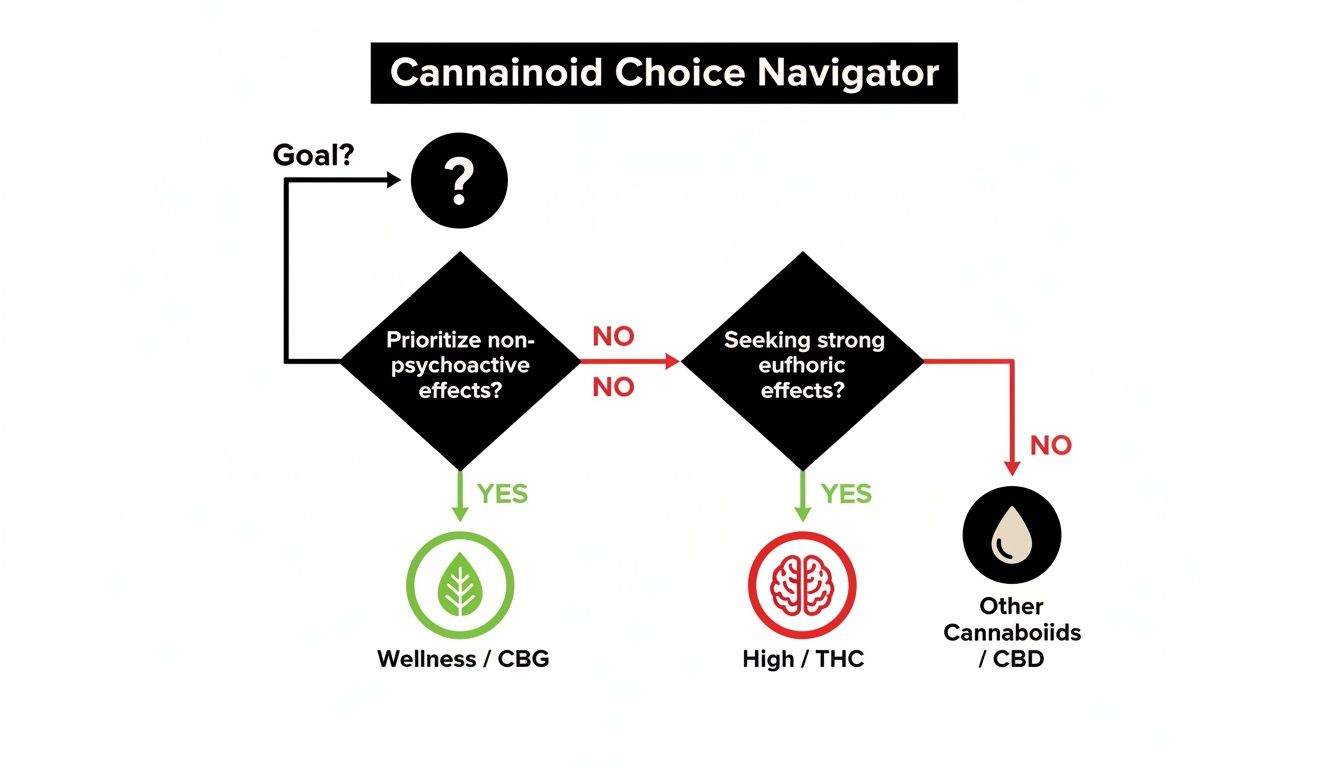
As the chart shows, the path splits right away: do you want an experience that includes psychoactive effects, or are you looking for wellness support without any intoxication? Answering that one question is the critical first step in finding a product that will actually work for you.
Verifying Quality with Lab Testing
No matter which cannabinoid profile you land on, third-party lab testing is absolutely non-negotiable. It's the only way to be certain of what you’re getting in terms of safety, purity, and potency. Any reputable producer will have a Certificate of Analysis (CoA) available for every single product batch.
Think of the CoA as the product's report card. When you look at one, you need to check for a few key things:
- Cannabinoid Profile: Does it clearly list the percentages of CBG, THC, and other cannabinoids? The numbers should match what’s advertised on the label.
- Purity Analysis: The report must confirm the product is clean and free from contaminants like pesticides, heavy metals, or residual solvents left over from the extraction.
Learning to read a CoA is a crucial skill for anyone using RSO. It’s what empowers you to confirm you're buying a clean, potent, and honestly labeled product. Our goal at RSOhelp.com is to provide the resources you need to look at these documents with total confidence.
Your best bet is always to source from trusted providers who are completely transparent with their testing. It’s the only way to ensure the product you're using is both effective and safe.
The Importance of Full-Spectrum RSO
For many people focused on specific health outcomes, full-spectrum products like RSO are the gold standard. These oils aren’t just about CBG and THC; they contain the entire symphony of cannabinoids, terpenes, and flavonoids found in the original plant. The synergy between these compounds—the entourage effect—is widely believed to create more powerful and well-rounded results than isolated cannabinoids can deliver on their own.
Historically, THC has been the star of the show in the extract world, but we're seeing a significant shift. The cannabis extract market, projected to hit USD 16.56 billion in 2025 and an astonishing USD 73.28 billion by 2034, tells a compelling story. While THC concentrates are still king, the explosive growth of CBG products in the wellness space shows a clear consumer demand for non-psychoactive options without the stigma. You can read more about the trends in the cannabis extract market to understand how these dynamics are evolving.
Smart Dosing: The Foundation of Success
Finally, none of this matters without a smart dosing strategy. The golden rule, especially with a concentrate as potent as RSO, is to start low and go slow. This isn’t a suggestion; it’s a requirement for success. Begin with a tiny amount—often no bigger than a grain of rice—and increase it gradually over days or even weeks.
This methodical approach gives you the space to observe how your body is responding and to find your unique therapeutic sweet spot. It dramatically reduces the risk of unwanted side effects (particularly from THC) and helps you achieve consistent, sustainable results. For those curious about how these concentrates are created, our guide on THC extraction for oil offers a look into the process.
Ultimately, making the right choice comes down to aligning a high-quality, verified product with your personal needs and using it with care. If you focus on the right ratio, demand transparency, and stick to a cautious dosing plan, you can confidently explore everything that CBG, THC, and full-spectrum RSO have to offer.
Frequently Asked Questions About Using CBG and THC
When you're exploring cannabinoids for your wellness plan, a lot of practical questions come up. It's personal, so you need clear, direct answers. Here, we'll tackle some of the most common things people ask about combining CBG and THC, drug testing, and which one might be better for your daily routine.
Can I Use CBG and THC Together in an RSO Protocol?
Yes, absolutely. In fact, many people specifically look for full-spectrum products that have both. The thinking behind this comes down to the "entourage effect"—the idea that these compounds often work much better together than they do in isolation. Combining them can lead to a more balanced and effective result.
For example, CBG has a reputation for tempering some of THC's more intense psychoactive effects. What this means for you is that you might get the therapeutic benefits you're looking for from THC without feeling uncomfortably high. The end result is a more functional, grounded experience, which is incredibly important when you're following a specific RSO protocol.
The key is finding a high-quality, lab-verified RSO with a cannabinoid profile that suits your needs. At RSOhelp.com, we focus on providing information to help you understand these nuances so you can make choices that feel right for you. As always, it’s smart to start with a very small dose to gauge how your body responds to a new cannabinoid ratio.
Will Taking CBG Show Up on a Drug Test?
This is a critical question and a totally valid concern. The short answer: pure CBG isolate should not make you fail a drug test. Standard drug screens are built to look for THC metabolites, not CBG.
However, the real world is a bit more complicated. Most CBG products on the market are not pure isolates; they’re often "full-spectrum" or "broad-spectrum." This means they contain a whole host of other cannabinoids, which can include trace amounts of THC—legally up to 0.3% in the United States.
While a single dose of a full-spectrum CBG product is highly unlikely to trigger a positive test, consistent daily use could theoretically allow THC metabolites to accumulate in your system. This buildup might just be enough to cross the detection threshold on a sensitive drug test.
If you can't take that risk, your best bet is to find products explicitly labeled "THC-Free CBG Isolate." Don't just take the label's word for it, though. You need to verify this by carefully reviewing the product's third-party Certificate of Analysis (CoA). It should clearly show that THC levels are non-detectable ("ND").
Which Is Better for Daytime Use: CBG or THC?
For most people trying to stay sharp and productive during the day, the choice is pretty clear. CBG is almost always the superior option. The reason is simple: it's non-psychoactive. It offers potential benefits without the cognitive impairment or "high" that comes along with THC.
Many people find that CBG helps create a sense of calm alertness and focus. It’s a unique effect that makes it a great fit for work, errands, or any task that requires your full attention. It supports your system without getting in the way.
THC, on the other hand, can be tricky. It can noticeably affect judgment, short-term memory, and concentration. While some experienced users might successfully microdose certain THC-dominant products during the day, it's far less predictable. For most, CBG offers a reliable way to incorporate cannabinoid support into a daily routine without sacrificing productivity.
Ultimately, understanding these practical differences in the CBG vs THC comparison is what allows you to build a routine that truly works for your lifestyle and health goals.
At RSOhelp.com, our mission is to provide clear, reliable information to help you make confident decisions about your health. If you're seeking guidance on finding verified, lab-tested RSO from trusted U.S. sources, consider our free consultation services. Find out more at RSOhelp.com.